
← Back To Blog
Top 12 Alternatives to Upwork for Freelancers & Agencies in 2026

Upwork is a giant in the freelance world, but it's far from the only game in town. Whether you're a freelancer feeling the sting of intense competition or an agency struggling to stand out, the landscape of remote work is rich with opportunity. Relying on a single platform can limit your growth, income stability, and access to ideal clients. Diversifying your client acquisition channels is no longer a luxury; it's a core business strategy.
This guide is your roadmap to finding the best alternatives to Upwork for your specific needs. We’re moving beyond simple feature lists to provide a comprehensive resource that helps you make strategic decisions. We will explore a curated list of marketplaces, specialized platforms, and even non-platform strategies to help you build a more resilient and profitable business.
Inside, you will find a detailed breakdown of 12 powerful platforms. For each option, you'll get:
- A practical overview: We'll explain who the platform is best for, from individual freelancers to growing agencies.
- Honest pros and cons: Understand the real-world advantages and limitations before you invest your time.
- Strategic insights: Learn about pricing structures, quality of talent, and key differentiators.
- Visual aids and direct access: Each entry includes screenshots and direct links to help you explore further.
We will analyze the usual suspects like Fiverr and Freelancer.com, but also dive into premium talent networks like Toptal and niche-specific marketplaces such as MarketerHire. This resource is designed to help you find not just a replacement, but the right combination of platforms to augment or fully move beyond Upwork. Let's get started.
1. Fiverr
Fiverr has carved out a distinct niche as a go-to platform for project-based services, making it a strong alternative to Upwork for specific types of work. Instead of bidding on client-posted jobs, freelancers and agencies package their services into "gigs" with clear, fixed-price tiers. This model is ideal for clients who need well-defined, quick-turnaround tasks completed, such as a logo design, a short voiceover, or a 500-word blog post.
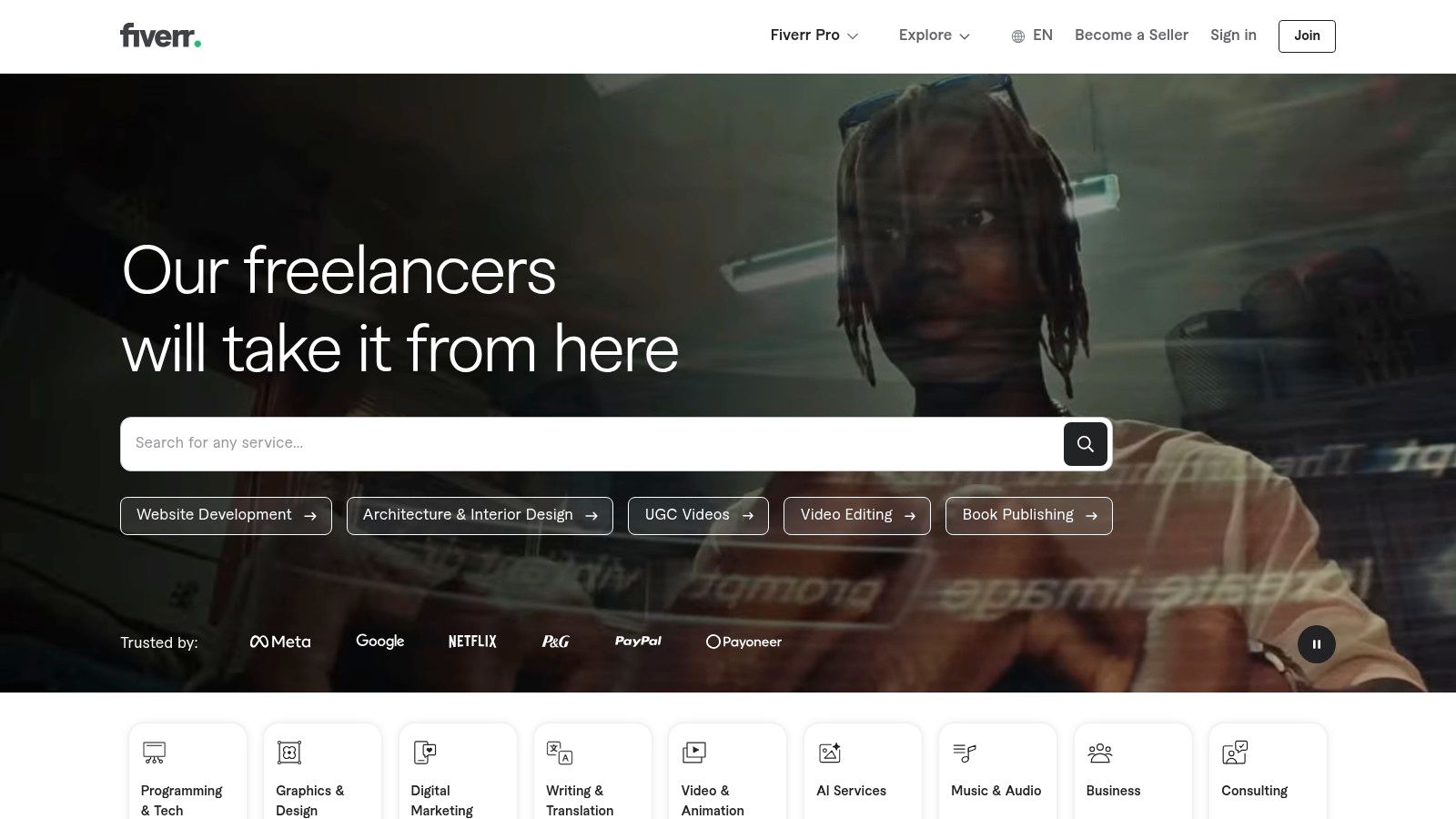
The platform excels at transparency. Clients can see exactly what they get, for how much, and when it will be delivered before they ever place an order. This productized service approach significantly reduces the back-and-forth negotiation and scope creep often found on other platforms. While it’s known for lower-cost gigs, Fiverr has also cultivated a premium "Fiverr Pro" tier, featuring hand-vetted, top-tier talent for businesses requiring a higher level of expertise and quality assurance.
Key Considerations for Fiverr
- Best For: Clearly scoped, one-off projects with defined deliverables. It’s a great starting point for testing new freelancers or getting small tasks done quickly.
- Pricing Model: Fixed-price gigs. Sellers set their own prices, and clients pay a service fee on top of the gig price at checkout. Payment is held in escrow until the work is approved.
- Pros: The checkout process is incredibly fast and straightforward. The vast selection of services allows for easy price and quality comparison.
- Cons: The sheer volume of sellers can make it difficult to find top-quality talent amidst the noise. Quality can be inconsistent, especially at lower price points. Unlike Upwork’s project proposals, Fiverr’s communication tools can feel less suited for complex, long-term collaborations. For those who prefer the proposal-based model, mastering the art of the pitch is key; you can find excellent cover letter examples that apply principles relevant to any platform.
Website: https://fiverr.com
2. Freelancer.com
As one of the oldest and largest global freelance marketplaces, Freelancer.com operates on a traditional bidding model similar to Upwork’s core functionality. Clients post projects, and freelancers submit bids, making it a direct competitor and a familiar alternative for those accustomed to proposal-based work. The platform is known for its sheer volume of projects across a vast range of categories, from web development and design to data entry and content writing.
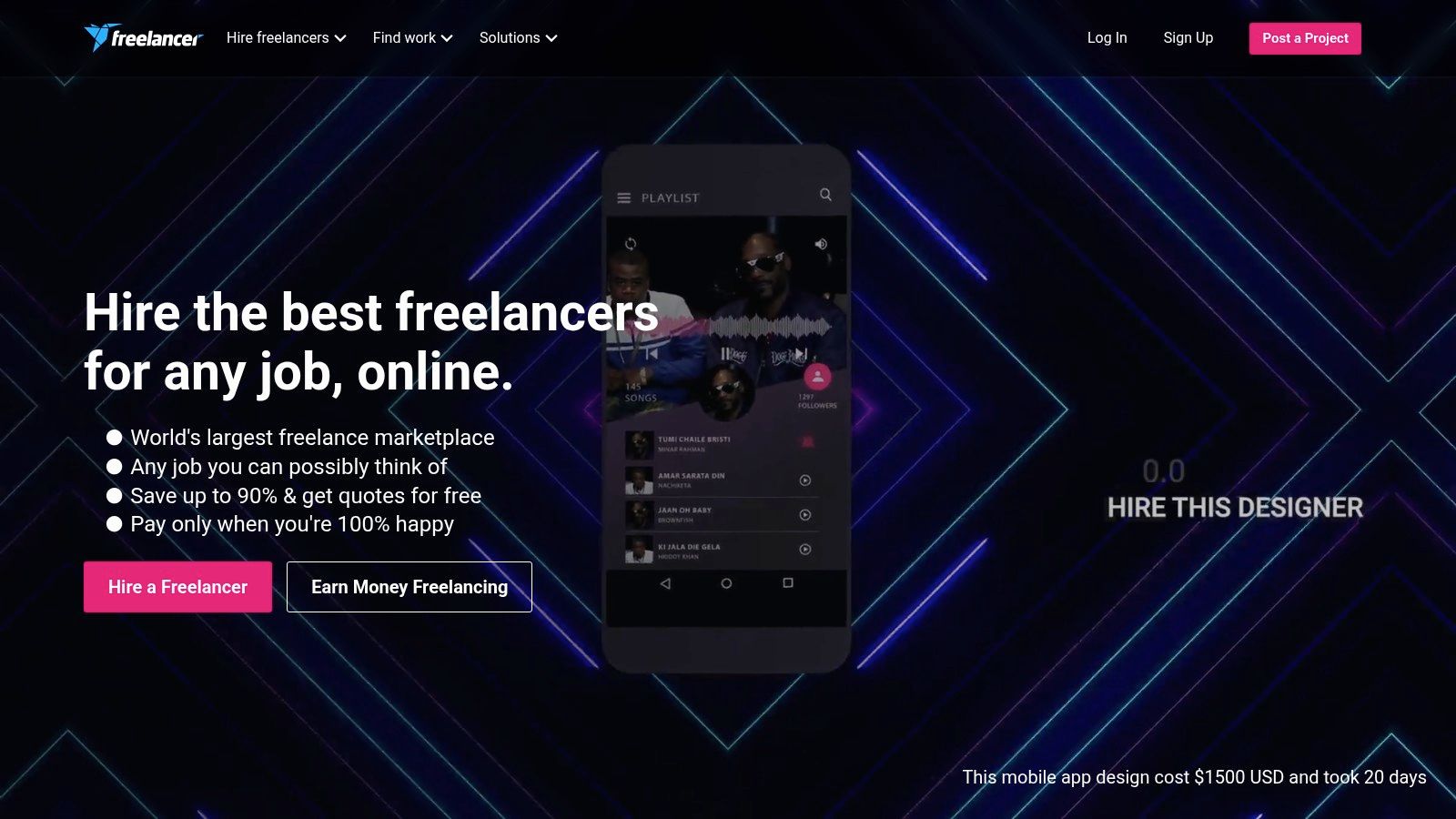
One of its unique features is the "Contest" system, where clients can post a design brief and have freelancers submit concepts, paying only for the winning entry. This is an effective way to crowdsource a variety of creative ideas quickly without committing to a single freelancer from the start. The platform's structure, much like others in the space, necessitates a careful approach to vetting, a topic further explored in discussions about whether platforms like Upwork are legit. You can find out more about the legitimacy of Upwork and apply similar principles here.
Key Considerations for Freelancer.com
- Best For: Clients and agencies comfortable with managing a high volume of bids to find competitive pricing. Also ideal for sourcing creative concepts quickly through contests.
- Pricing Model: A mix of fixed-price and hourly projects with a competitive bidding system. Clients pay a project fee, and freelancers also incur fees on their earnings. Escrow is used for milestone payments.
- Pros: The massive user base means a large pool of talent and a high number of posted jobs. Contests offer a low-risk way to generate diverse creative options.
- Cons: The platform is highly competitive, which can drive prices down and sometimes lead to a "race to the bottom" on bids, requiring careful screening to ensure quality. The fee structure can be complex for both clients and freelancers.
Website: https://www.freelancer.com
3. Toptal
Toptal positions itself as a premium, exclusive network for the top 3% of freelance talent, making it a powerful alternative to Upwork for businesses that prioritize expertise over cost savings. The platform focuses on high-skilled professionals in fields like software development, design, finance, product management, and project management. Unlike open marketplaces, Toptal handles the sourcing and vetting process for clients, providing a white-glove matching service that connects businesses with pre-screened experts, often within 48 hours.
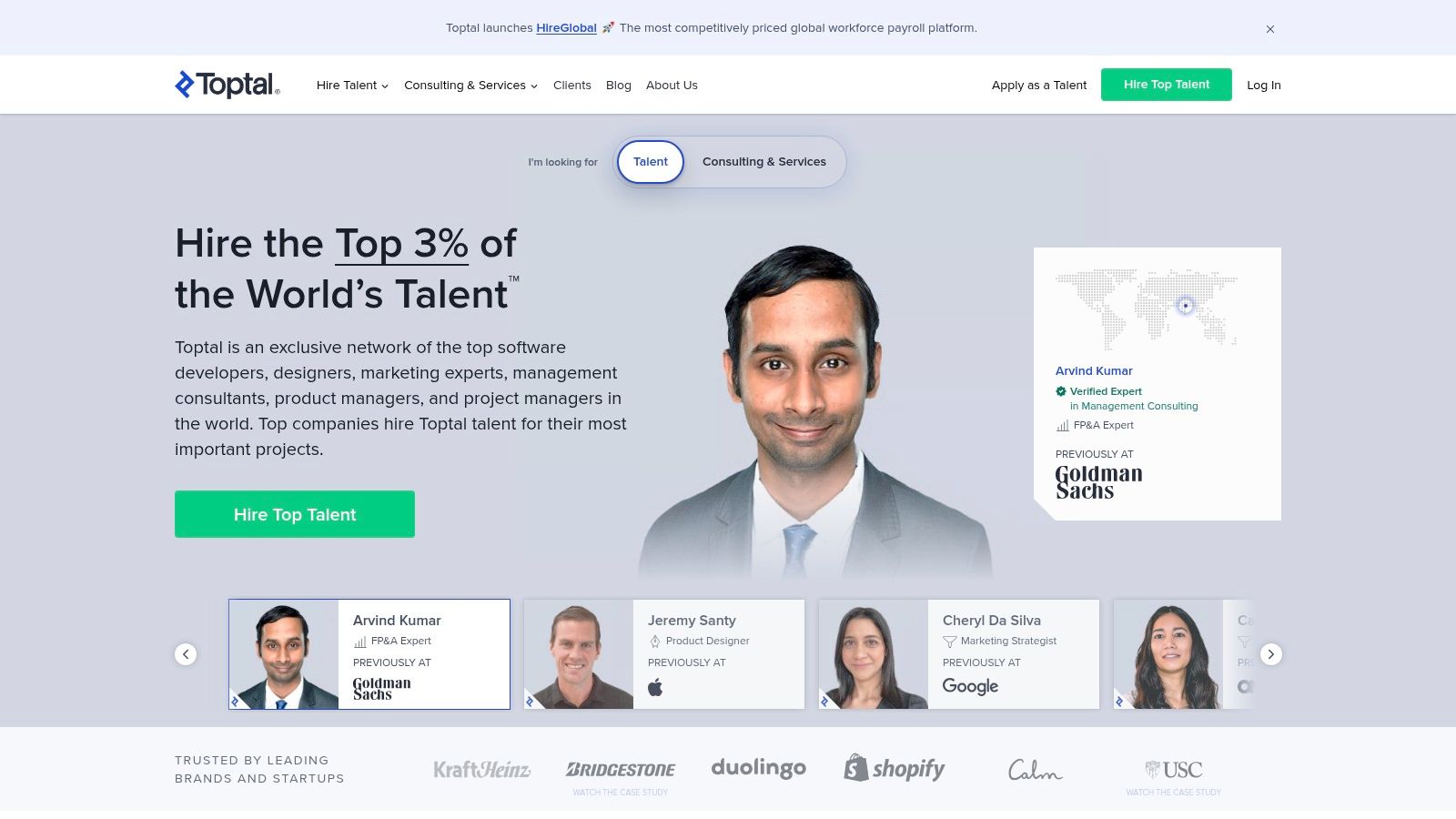
This curated approach is Toptal’s key differentiator. Instead of sifting through countless proposals, clients receive a shortlist of one to three candidates handpicked for their specific project needs. The platform's rigorous five-step screening process ensures that every freelancer possesses elite technical skills, professional experience, and strong communication abilities. This model is ideal for companies needing senior-level talent for complex, mission-critical projects without the overhead of a traditional, lengthy hiring cycle. For agencies building specialized teams, understanding this high-caliber talent model is crucial, similar to the strategic thinking needed when starting an SEO agency and aiming for top-tier client work.
Key Considerations for Toptal
- Best For: Businesses requiring senior, pre-vetted talent for complex, long-term, or mission-critical projects. It excels in tech, finance, and high-level design roles.
- Pricing Model: Hourly, part-time, or full-time rates set by Toptal, reflecting the top-tier talent. Clients make an initial deposit (which is refundable) to start the engagement process.
- Pros: Access to an elite, heavily screened talent pool saves significant time and reduces hiring risk. The no-risk trial period allows you to work with a freelancer before committing financially.
- Cons: The premium pricing makes it less suitable for businesses with tight budgets or simple, one-off tasks. The talent pool is specialized and not as broad as on open platforms like Upwork.
Website: https://toptal.com
4. Guru
Guru is one of the more established freelance marketplaces, offering a robust platform that gives clients significant control over how they structure and pay for work. As an alternative to Upwork, it stands out with its flexible agreement and payment options, particularly the SafePay escrow system. This feature provides a secure financial framework for both long-term projects and one-off tasks, giving clients confidence that funds are only released upon milestone approval.
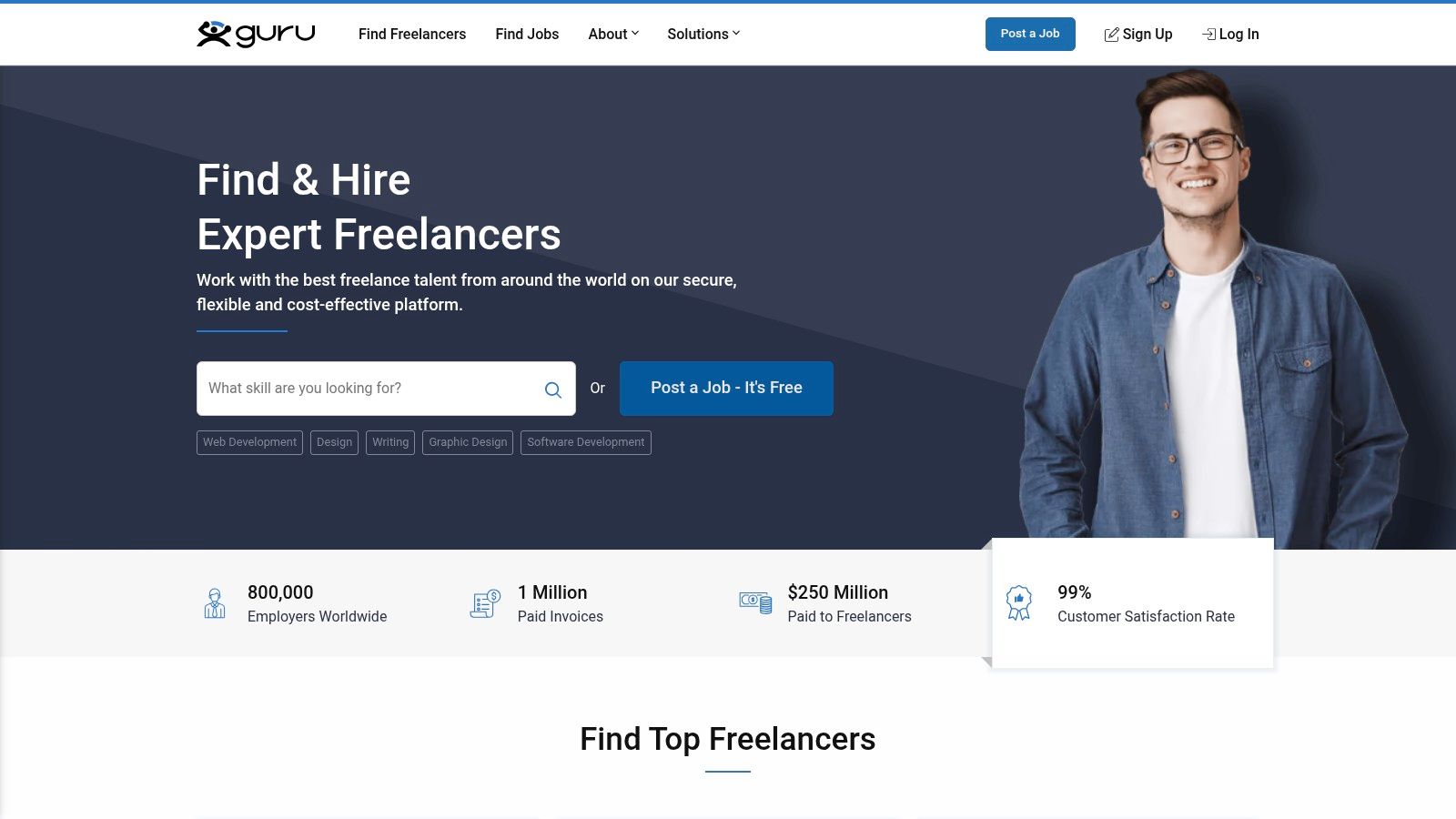
The platform is built around customizable work agreements, allowing for detailed terms covering hourly rates, fixed-price milestones, or even recurring payments for ongoing retainers. This level of detail makes it well-suited for clients who need to manage complex projects with specific legal or financial requirements. While its interface may feel less modern than newer competitors, its emphasis on security and contractual clarity makes it a reliable choice for businesses that prioritize process and payment protection over a sleek user experience.
Key Considerations for Guru
- Best For: Clients and agencies that require highly customized work agreements and secure, milestone-based payments for complex or long-term projects.
- Pricing Model: Clients post jobs for free and pay a low 2.9% handling fee on invoices. Freelancers pay a sliding scale commission based on their membership tier and lifetime earnings with a client.
- Pros: The SafePay escrow system offers excellent payment protection. Flexible fee-sharing options allow clients to absorb a portion of the freelancer's commission, which can attract higher-quality talent.
- Cons: The user interface and freelancer profiles can feel dated compared to platforms like Upwork or Fiverr. The curation is less intensive, placing more responsibility on the client to vet and verify freelancer quality.
Website: https://www.guru.com
5. PeoplePerHour
PeoplePerHour, a UK-founded platform, offers a hybrid model that blends features from both Upwork and Fiverr, making it a compelling alternative for those seeking flexibility. Freelancers can bid on projects posted by clients or sell pre-packaged, fixed-price services called "Offers." This dual approach serves both clients who know exactly what they need and those who have a custom project requiring a more traditional proposal process.
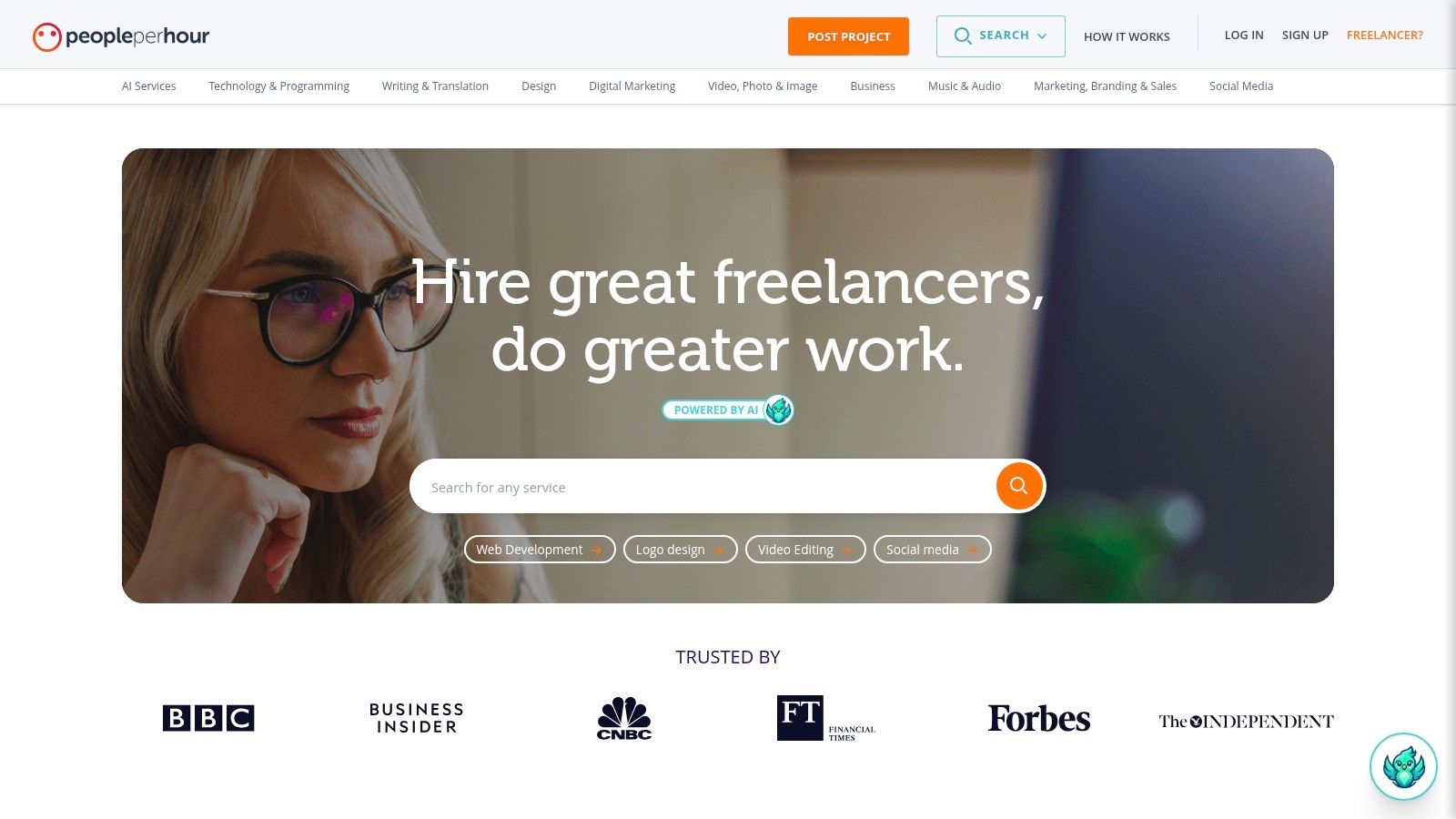
The platform is particularly well-suited for small to midsize businesses with defined scopes, especially in creative fields like design, development, marketing, and content. A unique feature is its tiered service fee structure for freelancers, which decreases as the lifetime billing with a single client increases. This model actively encourages and rewards the development of long-term, ongoing relationships between freelancers and clients, a distinct advantage over platforms geared more toward one-off transactional projects.
Key Considerations for PeoplePerHour
- Best For: Small and medium-sized businesses looking for skilled European talent for both fixed-price and hourly projects. It's a solid choice for building lasting freelance partnerships.
- Pricing Model: Supports both hourly contracts and fixed-price "Offers." Freelancer fees are on a sliding scale based on lifetime earnings with a client, and clients pay a small processing fee. All payments are secured through an escrow system.
- Pros: The emphasis on long-term relationships via its fee structure is a significant benefit. The hybrid "Offers" and project bidding system provides great flexibility for different project types.
- Cons: It has a smaller talent pool and client base compared to giants like Upwork, particularly in the US market. The tiered fee system, while beneficial long-term, can be confusing for new users to navigate at first.
Website: https://www.peopleperhour.com
6. Contra
Contra is carving out a space among alternatives to Upwork with its freelancer-first, commission-free model. The platform is designed for independent professionals who want to manage their entire workflow-from portfolio to payments-without sacrificing a percentage of their earnings. Instead of charging freelancers, Contra’s revenue comes from flat fees paid by clients for managing contracts and processing payments, making it a highly attractive option for talent.
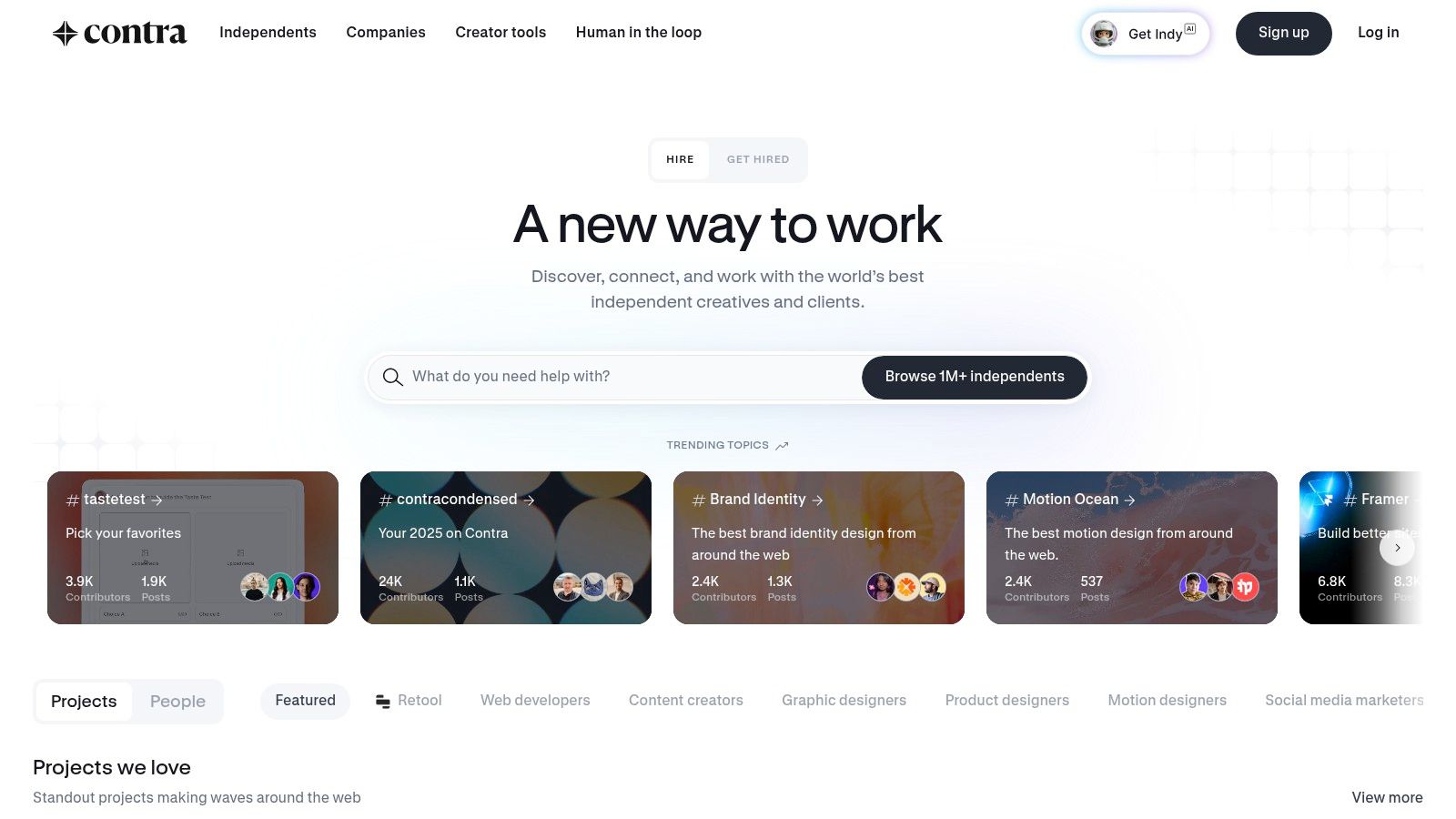
This modern, lightweight platform integrates tools for project discovery, contracts, invoicing, and secure payments powered by Stripe. Its user interface is clean and emphasizes visual portfolios, allowing talent to showcase their work effectively. For clients, this means finding high-quality professionals in a more curated environment. Contra’s focus on building a professional community rather than just a transactional marketplace makes it a refreshing choice for long-term collaborations.
Key Considerations for Contra
- Best For: Independent freelancers and clients who prefer a simple, commission-free structure for managing projects and payments. It's particularly well-suited for creative and tech professionals.
- Pricing Model: 0% commission for freelancers. Clients pay a flat fee per contract or invoice, plus standard payment processing fees for card transactions.
- Pros: Freelancers keep 100% of their earnings, a major advantage over most platforms. The integrated toolset for contracts and invoicing streamlines the entire project lifecycle.
- Cons: As a newer platform, its marketplace is smaller, meaning fewer job opportunities and a smaller talent pool compared to giants like Upwork. Clients still incur fees, though they are predictable.
Website: https://contra.com
7. Braintrust
Braintrust introduces a unique, decentralized model to the freelance marketplace, positioning itself as a compelling alternative to Upwork, especially for tech professionals. It operates as a user-owned talent network where freelancers, called "talent," keep 100% of their earnings. The platform is governed by its community through a token system, giving members a direct say in its future and creating a strong sense of ownership and alignment.
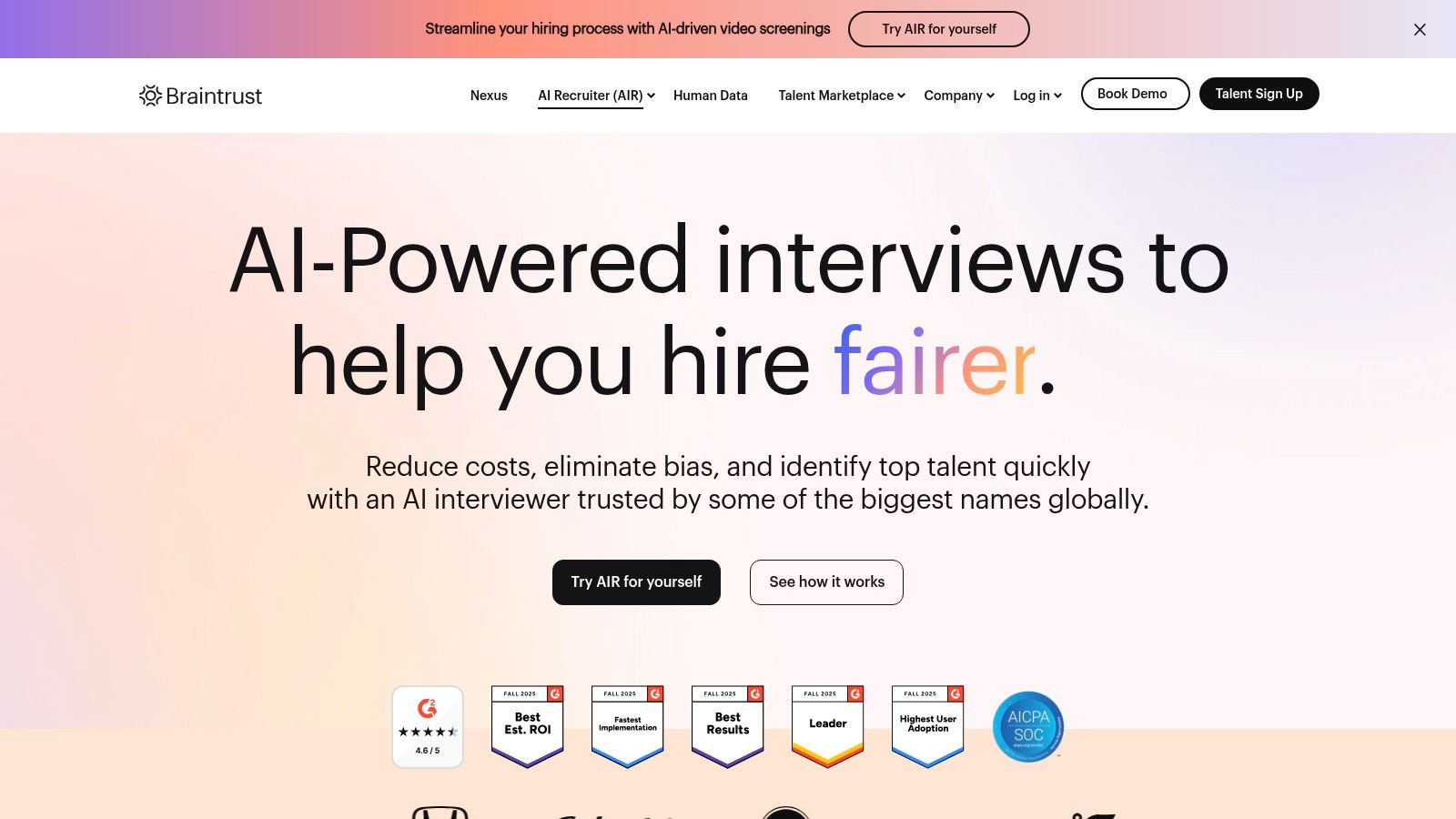
This structure is designed to attract top-tier talent by eliminating platform fees for them, which in turn attracts high-quality clients, including major enterprise companies. Clients pay a flat 10% network fee, which funds the network's operations and rewards community contributors. Braintrust focuses heavily on roles in engineering, design, and product management, offering a vetted pool of professionals ready for significant projects. The platform’s emphasis on Web3 principles and community governance makes it a forward-thinking choice.
Key Considerations for Braintrust
- Best For: Experienced tech professionals (engineers, designers, product managers) and enterprise clients seeking highly skilled, vetted talent without the high commission fees of traditional platforms.
- Pricing Model: Talent pays 0% in platform fees, taking home their full rate. Clients pay a 10% network fee on top of the talent's rate. Invoicing and payments (ACH, wire, card) are handled on the platform.
- Pros: The 0% fee structure significantly increases earning potential for freelancers. Its enterprise-friendly contracting and robust vetting process ensure high-quality engagements for both sides.
- Cons: The platform is highly specialized in tech and product roles, offering fewer opportunities in other fields like marketing or writing. The token-based governance model, while innovative, may have a learning curve for those unfamiliar with decentralized networks.
Website: https://www.usebraintrust.com
8. Worksome
Worksome positions itself as a comprehensive freelance management system, moving beyond simple talent sourcing to address the complex needs of enterprises and large agencies. This platform is designed for businesses that manage a significant number of contractors and require robust tools for compliance, global payments, and worker classification. It serves as a powerful alternative to Upwork for organizations where administrative and legal overhead is a primary concern. Instead of just being a marketplace, it integrates contractor management directly into a company’s workflow.
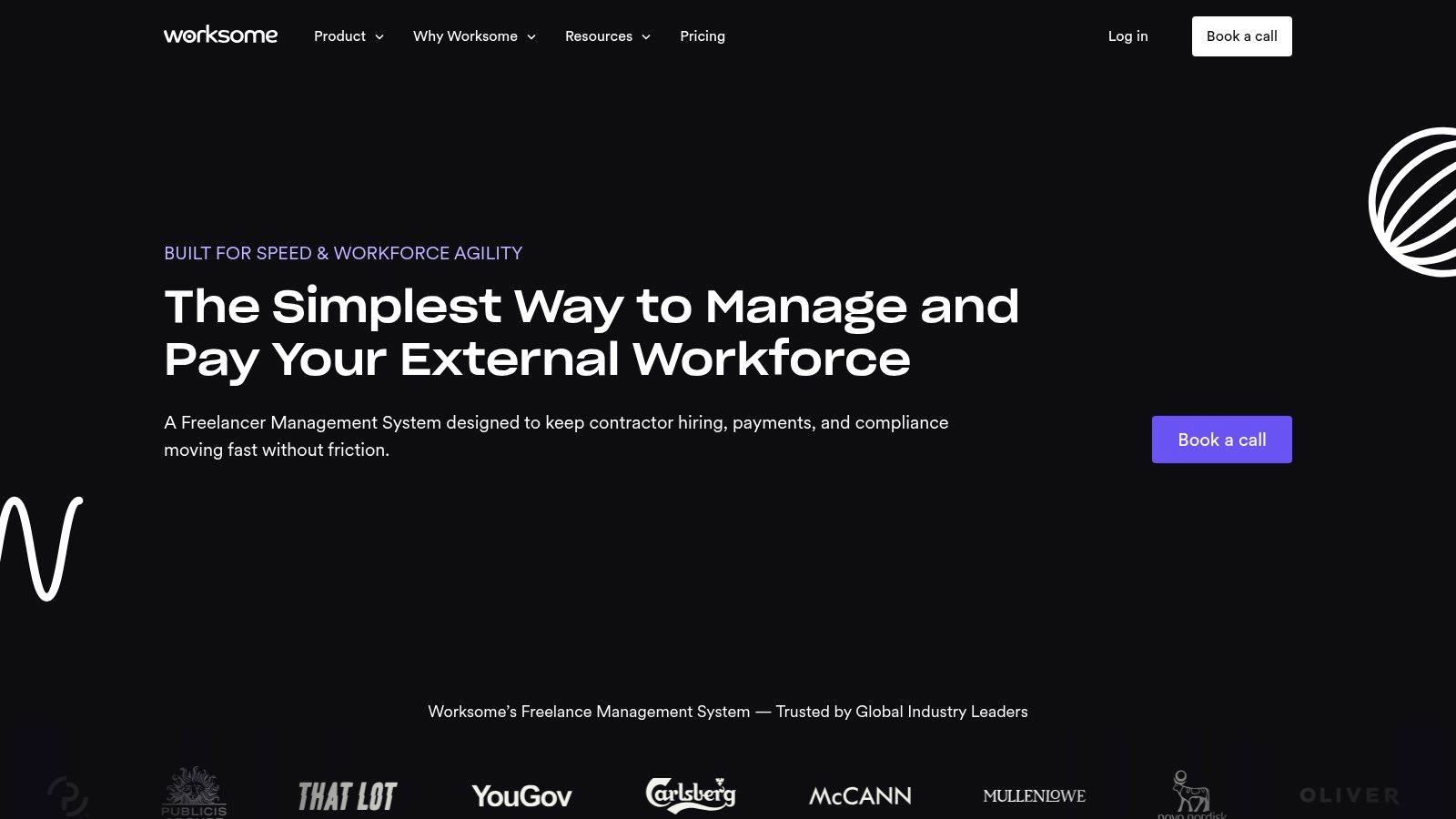
The platform combines a public marketplace for sourcing new talent with the ability for companies to onboard and manage their existing private network of freelancers. Its standout features include automated contract generation, background checks, and Employer of Record (EOR) services, which simplify the process of engaging contractors across different countries. This focus on the entire freelance lifecycle, from hiring to payment and offboarding, makes it a strategic tool rather than just a place to find gig workers.
Key Considerations for Worksome
- Best For: Medium to large businesses and agencies that need to streamline the management of a diverse, global contractor workforce and ensure full legal and tax compliance.
- Pricing Model: Worksome operates on a custom pricing model tailored to the client's needs, often based on a percentage of contractor spend. This is a more involved, enterprise-level sales process.
- Pros: The platform’s infrastructure for compliance and global payouts is exceptional, solving major pain points for companies operating internationally. It consolidates all freelance-related administrative tasks into a single system.
- Cons: The custom pricing and enterprise focus can make it inaccessible or overly complex for small businesses or solo entrepreneurs. It's a much heavier and more integrated solution compared to straightforward gig platforms.
Website: https://www.worksome.com
9. Catalant
Catalant serves the high-end consulting market, positioning itself as a premium alternative to Upwork for businesses needing strategic expertise. The platform connects enterprises with a curated network of independent consultants and boutique firms specializing in strategy, finance, marketing, and operations. It is designed for complex, high-stakes projects that require seasoned professionals with deep industry experience, moving far beyond the typical freelance tasks found on broader marketplaces.
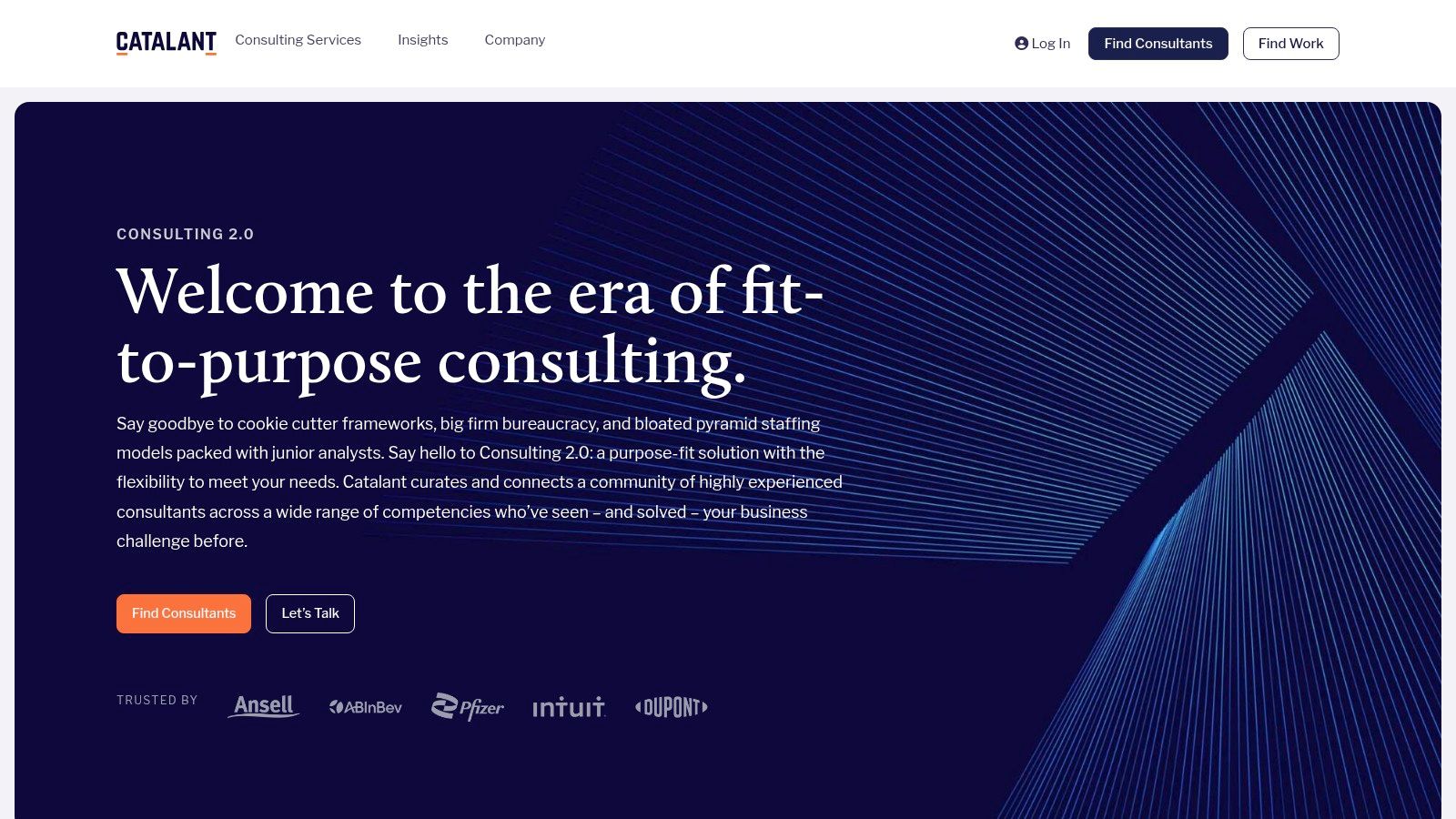
The platform's model is built for corporate needs, offering features like enterprise-grade contracting, compliance support, and consolidated billing. Clients can expect white-glove support, with matches often delivered within days for well-defined project scopes. This focus on enterprise-level service and top-tier talent makes Catalant an ideal choice for companies looking to engage a management consultant without the overhead of a traditional consulting firm, filling a crucial gap for specialized project leadership and execution.
Key Considerations for Catalant
- Best For: Mid-market and enterprise clients needing senior, independent consultants for strategic projects in finance, market research, or business transformation.
- Pricing Model: Project-based or hourly rates set by consultants, which are significantly higher than generalist platforms, reflecting the caliber of talent. The platform provides guidance on market rates by function.
- Pros: Access to an elite, pre-vetted pool of senior consultants and boutique firms. The platform streamlines contracting, compliance, and billing for large organizations.
- Cons: Primarily geared towards enterprise budgets and complex scopes, making it unsuitable for small businesses or one-off tasks. The talent pool is highly specialized and not intended for general freelance work.
Website: https://gocatalant.com
10. MarketerHire
MarketerHire positions itself as a premium, niche-specific alternative to Upwork, focusing exclusively on connecting businesses with pre-vetted marketing talent. Instead of an open marketplace where clients post jobs and sift through countless proposals, MarketerHire uses a matchmaking process. They pair clients with expert marketers for roles like paid social media, SEO, content strategy, and even fractional CMOs, typically within 48 hours. This model is built for companies that need to quickly onboard proven marketing specialists without the lengthy hiring and screening process.

The platform’s core value lies in its rigorous vetting process, which it claims accepts less than 5% of applicants. This ensures that clients are only connected with high-caliber professionals, saving significant time and reducing the risk of a bad hire. The service includes hands-on kickoff support to ensure projects start smoothly, and engagements are structured with month-to-month flexibility. This approach is ideal for businesses needing specialized, ongoing marketing expertise rather than small, one-off tasks.
Key Considerations for MarketerHire
- Best For: Companies needing to hire expert-level marketing specialists quickly for specific, ongoing initiatives or fractional leadership roles.
- Pricing Model: Fixed-rate, recurring engagements. Pricing is tiered based on the required hours per week (e.g., 10, 20, or 40 hours) and the role's seniority, making budgeting predictable.
- Pros: Access to a highly curated pool of elite marketing talent saves immense screening time. The quick matching process and hands-on support streamline onboarding.
- Cons: Carries a premium price tag that is significantly higher than generalist marketplaces like Upwork. It is not designed for small, single tasks or clients with tight budgets.
Website: https://marketerhire.com
11. 99designs by Vista
For businesses where visual identity is paramount, 99designs by Vista offers a specialized, design-centric alternative to Upwork. The platform is built around two primary engagement models: design contests and direct 1-to-1 projects. The contest model is its most distinct feature, allowing clients to receive dozens of design concepts from multiple designers for a single brief, making it ideal for exploring creative directions for logos, websites, or packaging.

This approach is fundamentally different from Upwork's proposal-based hiring. Instead of sifting through freelancer profiles, clients can see tangible creative outputs before selecting a winner. The platform also vets and categorizes its designers into levels (Entry, Mid, and Top), helping clients filter for quality and experience. For those who already know which designer they want to work with, the 1-to-1 Projects feature provides a more traditional, direct hiring experience with transparent fees and project management tools.
Key Considerations for 99designs by Vista
- Best For: Clients needing visual assets like logos, branding packages, or web design who want to see multiple creative concepts before committing to a single designer.
- Pricing Model: Fixed-price contest packages (Bronze, Silver, Gold, Platinum) with guaranteed prizes to attract designers. 1-to-1 projects involve designer quotes plus a platform fee for the client.
- Pros: The contest format quickly generates a wide variety of design ideas. Designer quality is curated through a leveling system, simplifying the selection process.
- Cons: Running a successful contest requires significant client involvement to provide a clear brief, review submissions, and give feedback. Platform fees for direct projects can add to the overall cost.
Website: https://99designs.com
12. Malt
Malt is a European freelance marketplace that has expanded into the US market, offering a curated experience that strongly appeals to businesses prioritizing compliance, security, and administrative efficiency. The platform focuses on high-demand tech and creative fields like product management, data science, engineering, and design. It distinguishes itself from broader platforms by building trust through features like professional liability insurance included on all projects and a system for centralized invoicing.
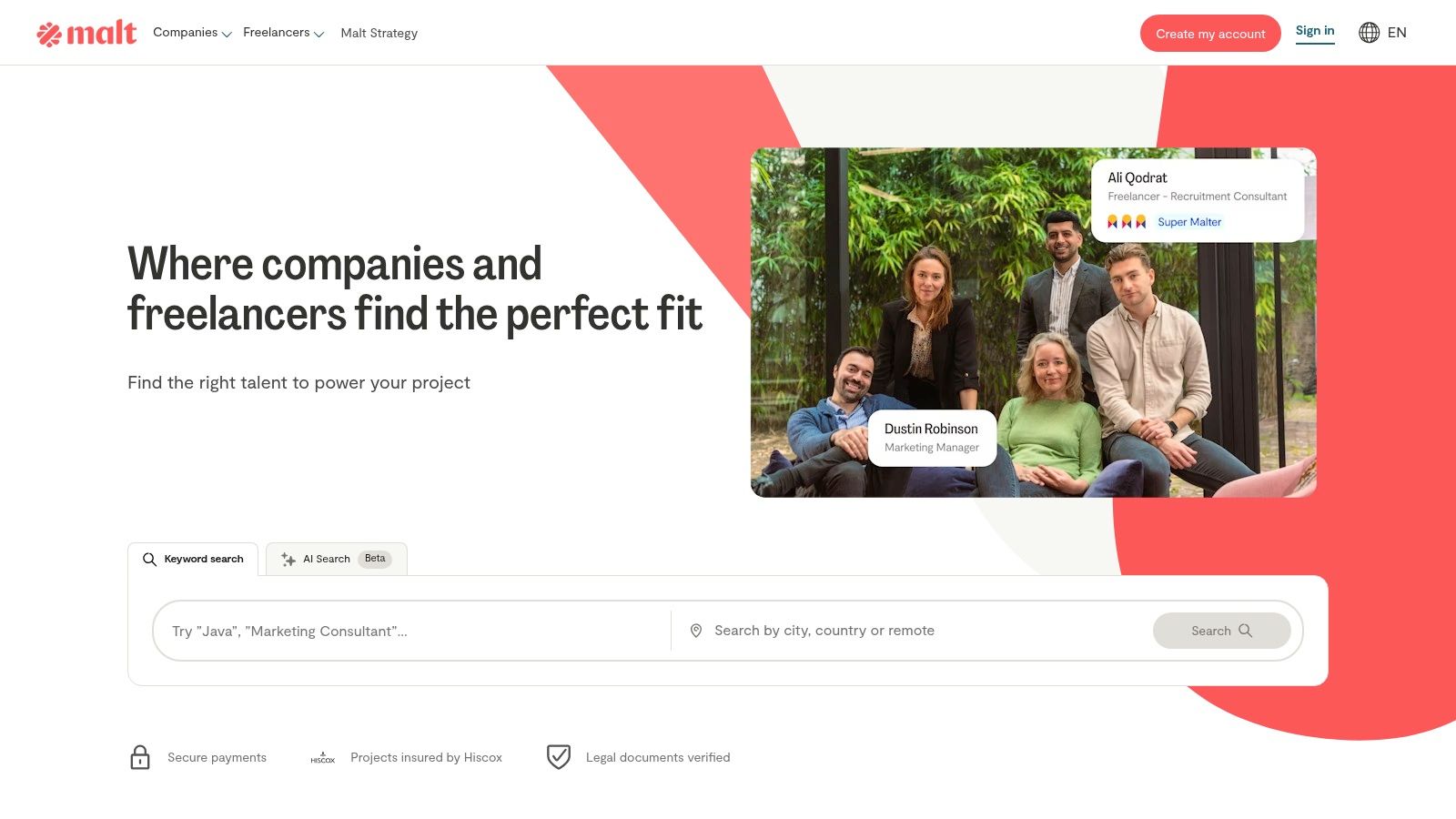
The platform is designed to streamline the client experience. Businesses can directly contact verified freelancers, and all contracts and payments are handled centrally, which simplifies vendor management. A standout feature is "Malt Open," which allows companies to onboard and manage their existing independent contractors through the platform, consolidating all freelancer payments and paperwork in one place. This makes Malt one of the more business-friendly alternatives to Upwork for companies managing a blended team of marketplace and independent talent.
Key Considerations for Malt
- Best For: Companies in Europe and the US seeking vetted tech and creative talent, with a strong need for consolidated invoicing, compliance, and included project insurance.
- Pricing Model: Client-side service fees. Freelancers in certain regions may pay a low or zero percent commission, shifting the cost to the client. Client fees can vary based on the engagement or subscription plan.
- Pros: The emphasis on centralized billing, contracts, and insurance is a major benefit for businesses. The ability to manage existing contractors via Malt Open simplifies administration.
- Cons: As Malt is newer to the US, its talent pool is still growing and is more concentrated in Europe. The client-side fee structure requires businesses to review the total cost carefully.
Website: https://www.malt.com
Top 12 Upwork Alternatives Comparison
PlatformCore offeringUX / Quality (★)Pricing & Value (💰)Target audience (👥)Unique selling points (✨🏆)FiverrFixed‑price gig marketplace across many categories★★★☆☆ — fast discovery💰 Wide price range; platform fees👥 Buyers of quick, scoped tasks; gig sellers✨ Gig packages & add‑ons; 🏆 huge supplyFreelancer.comBid‑based marketplace for hourly & fixed projects★★★☆☆ — high volume, mixed quality💰 Low entry pricing; client/freelancer fees👥 Clients screening many bids; volume hiring✨ Contests & open bidding; 🏆 large project volumeToptalVetted senior talent with white‑glove matching★★★★☆ — consistent senior quality💰 Premium rates; subscription/overhead👥 Teams needing senior, complex hires✨ Rigorous screening; 🏆 no‑risk trialGuruLong‑running marketplace with SafePay escrow★★★☆☆ — reliable but dated UI💰 Low client fees; variable freelancer fees👥 Clients wanting payment/control flexibility✨ SafePay escrow; fee‑sharing optionsPeoplePerHourPre‑scoped "Offers" + hourly projects for SMBs★★★☆☆ — SMB friendly workflows💰 SMB budgets; tiered freelancer fees👥 Small businesses seeking defined scopes✨ Lifetime billing incentivesContraCommission‑free platform with contracts & invoicing★★★★☆ — modern, lightweight UX💰 Freelancers keep 100%; client flat fees👥 Independents wanting full earnings✨ 0% freelancer commission; simple contractsBraintrustDecentralized, user‑controlled tech talent network★★★★☆ — strong tech/product fit💰 0% talent fee; client pays network fee👥 Tech/product freelancers & enterprises✨ Token governance; 🏆 higher net take‑homeWorksomeEnterprise contractor management, compliance & EOR★★★★☆ — robust for enterprise ops💰 Custom enterprise pricing👥 Agencies/enterprises managing global contractors✨ Compliance, EOR & private talent poolsCatalantCurated marketplace for senior consultants★★★★☆ — high consultant quality💰 Enterprise pricing & engagement rates👥 Enterprises needing senior operators✨ Curated experts; consolidated billingMarketerHireVetted marketing specialists with fast matching★★★★☆ — marketing‑centered quality💰 Premium for vetted talent👥 Teams needing marketing specialists/fractionals✨ Role scoping & fractional CMO options99designs by VistaDesign contests plus 1‑to‑1 projects★★★☆☆ — many creative options💰 Contest packages; platform fees👥 Clients wanting multiple design concepts✨ Contests for rapid ideation; curated designersMaltEuropean marketplace with compliance & insurance★★★★☆ — verification & invoicing focus💰 Client‑side fees; regionally low freelancer fees👥 EU companies; firms needing consolidated invoices✨ Liability insurance; centralized contracts/invoicing
Build Your Ideal Client Pipeline: Combining Upwork Automation with Smart Alternatives
The journey through the landscape of Upwork alternatives reveals a crucial truth: the quest for the perfect freelance platform isn't about finding a single replacement. Instead, it's about strategically diversifying your client acquisition channels to build a resilient, multi-faceted business. Your goal is not to abandon Upwork, but to augment it, creating a system where you are no longer dependent on a single source for your next project.
We've explored a wide spectrum of options, from the gig-based economy of Fiverr and PeoplePerHour to the highly vetted, elite networks of Toptal and Braintrust. We've also touched on niche-specific platforms like MarketerHire and 99designs, which offer access to highly qualified, industry-specific clients. The key takeaway is that each platform serves a distinct purpose and caters to a different stage of your freelance or agency growth.
Synthesizing Your Strategy: From Platform Hopping to Pipeline Building
Relying solely on manual bidding and searching, whether on Upwork or any of its alternatives, is a recipe for burnout. The most successful freelancers and agencies treat client acquisition like a system, not a lottery. This means moving from a reactive "job hunting" mindset to a proactive "pipeline building" approach.
Your ideal strategy involves a two-pronged attack:
- Optimize and Automate Your Core Channel: For many, Upwork remains a primary source of high-quality leads. The challenge is the sheer volume and competition. This is where automation tools like Earlybird AI become indispensable. By automating the tedious, top-of-funnel activities of lead sourcing and proposal drafting on Upwork, you reclaim your most valuable asset: time.
- Strategically Diversify Your Efforts: With your Upwork engine running efficiently in the background, you can reinvest that reclaimed time into higher-leverage activities on the very alternatives to Upwork we've discussed. This could mean nurturing long-term relationships on LinkedIn, applying for highly selective projects on Toptal, or building a strong profile on a niche marketplace like Malt.
This dual approach creates a powerful flywheel effect. The consistent lead flow from an automated Upwork provides stability, while your strategic efforts on other platforms build long-term enterprise value and open doors to new, potentially more lucrative opportunities.
Actionable Next Steps: Choosing Your Path Forward
To put this into practice, start by assessing your current situation and future goals.
- For High-Volume Agencies: Your primary challenge is scale. Use automation to manage multiple Upwork accounts and filter for high-value projects. Then, dedicate a team member to explore enterprise-focused platforms like Worksome or Catalant to land larger, recurring contracts.
- For Specialized Freelancers: Focus on quality over quantity. Automate your Upwork presence to catch every relevant project without spending hours searching. Use that extra time to build your personal brand and portfolio on a curated platform like Contra or engage in direct outreach to your dream clients.
- For those new to freelancing: Start by optimizing one or two platforms. Use Upwork as your testing ground, leveraging automation to learn what works. Simultaneously, build a presence on a more accessible platform like Fiverr to generate initial reviews and case studies.
Ultimately, the best alternatives to Upwork are the ones that complement your strengths and align with your business objectives. The modern freelance landscape isn't about choosing one platform over another; it's about building an integrated, intelligent, and partially automated system that consistently brings ideal clients to your door.
Ready to stop spending hours searching for jobs and start winning more projects? Earlybird AI transforms your Upwork process by using AI to find the perfect jobs and write personalized proposals for you, freeing you up to focus on client work and exploring the very alternatives we’ve discussed. See how you can build a more powerful and diversified client pipeline by visiting Earlybird AI today.