← Back To Blog
10 Best Sales Automation Tools for 2026
More than 30% of all sales-related activities can be handled with automation, and companies that integrate it into their sales process often see up to a 10% increase in revenue, according to industry-cited McKinsey findings summarized by Better Proposals. That's the clearest reason to take sales automation seriously in 2026. It isn't just about saving clicks. It's about reclaiming rep time, tightening follow-up, and making sure good opportunities don't die in the gap between systems.
The best sales automation tools don't all solve the same problem. Some are built for enterprise sequencing and forecasting. Some are CRM-first. Some are best when you need data plus outreach in one place. And a small group is built for marketplace selling, where the primary advantage comes from speed, personalization, and consistency rather than classic outbound cadences.
That distinction matters. I've seen teams buy a powerful platform and still underperform because the tool matched the category, not the motion. A field sales team needs governance and forecasting. A lean agency needs simple deployment and solid pipeline visibility. An Upwork-heavy services business needs a system that can react fast and still stay compliant.
Below are the tools I'd shortlist by use case, team shape, and implementation reality. Some are broad platforms. Some are narrow but extremely effective in the right environment. That's the only useful way to evaluate best sales automation tools.
1. Earlybird AI
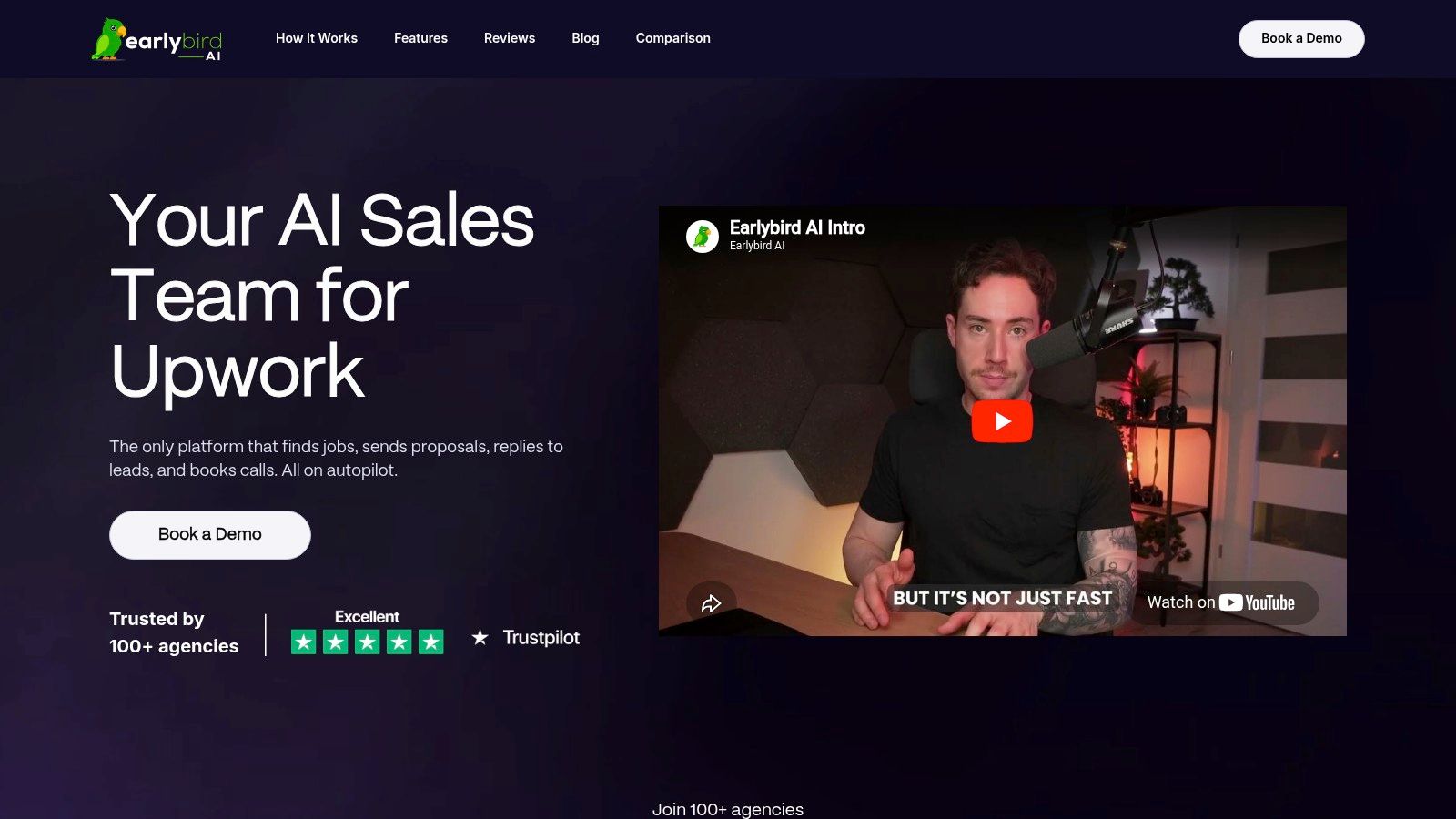
Earlybird AI earns its spot here because it solves a different sales problem than the rest of this list. It is not an all-purpose sales engagement platform for SDR teams. It is built for Upwork and similar marketplace motions where speed, proposal quality, and reply handling determine whether you get a conversation at all.
That category distinction matters. Teams selling through a marketplace do not need the same stack as a mid-market outbound org. They need a tool that can spot the right jobs quickly, respond in a way that still feels relevant, and keep inboxes active without turning the process into a full-time manual task. For that use case, Earlybird is one of the few tools designed around the actual workflow instead of forcing marketplace selling into an email-sequencing model.
Why Earlybird fits this motion
Earlybird automates the parts of Upwork selling that usually break first as volume grows. It learns from simple thumbs-up and thumbs-down feedback, finds matching projects, drafts personalized proposals, and continues handling replies after the first touch. That makes it more useful for marketplace operators than a general sales automation platform with no native understanding of bidding behavior.
For teams evaluating this niche against broader prospecting tools, this guide to AI for sales prospecting is useful context because it shows where classic outbound automation stops being a fit.
Practical rule: If your pipeline starts inside a freelance marketplace, choose software built for marketplace timing, inbox patterns, and account safety. Generic outbound tools usually add process, but not results.
Best for
Solo consultants, small agencies, and Upwork-first service teams that want a repeatable system instead of manual bidding. It is especially useful for agencies running multiple bidder profiles and needing shared visibility into proposal activity, response handling, and performance by account.
What stands out in practice:
- Fast proposal coverage: Earlybird is designed to react quickly to relevant new jobs, which is often the difference between getting seen and getting buried.
- Reply management: It keeps conversations moving after the initial proposal instead of treating the first submission as the end of the workflow.
- Agency usability: Shared workflows and analytics make it workable for teams, not just individual freelancers.
- Account protection focus: The product emphasizes human-like activity patterns, clean regional IPs, and avoiding password storage.
The trade-off is control. You still need to train the system well, review proposal quality, and stay close to platform policy so automation does not drift away from how your team wins work. Pricing is not publicly listed, which slows down evaluation a bit, but that is common with niche tools that are selling into a narrower use case than mainstream sales platforms.
2. Outreach
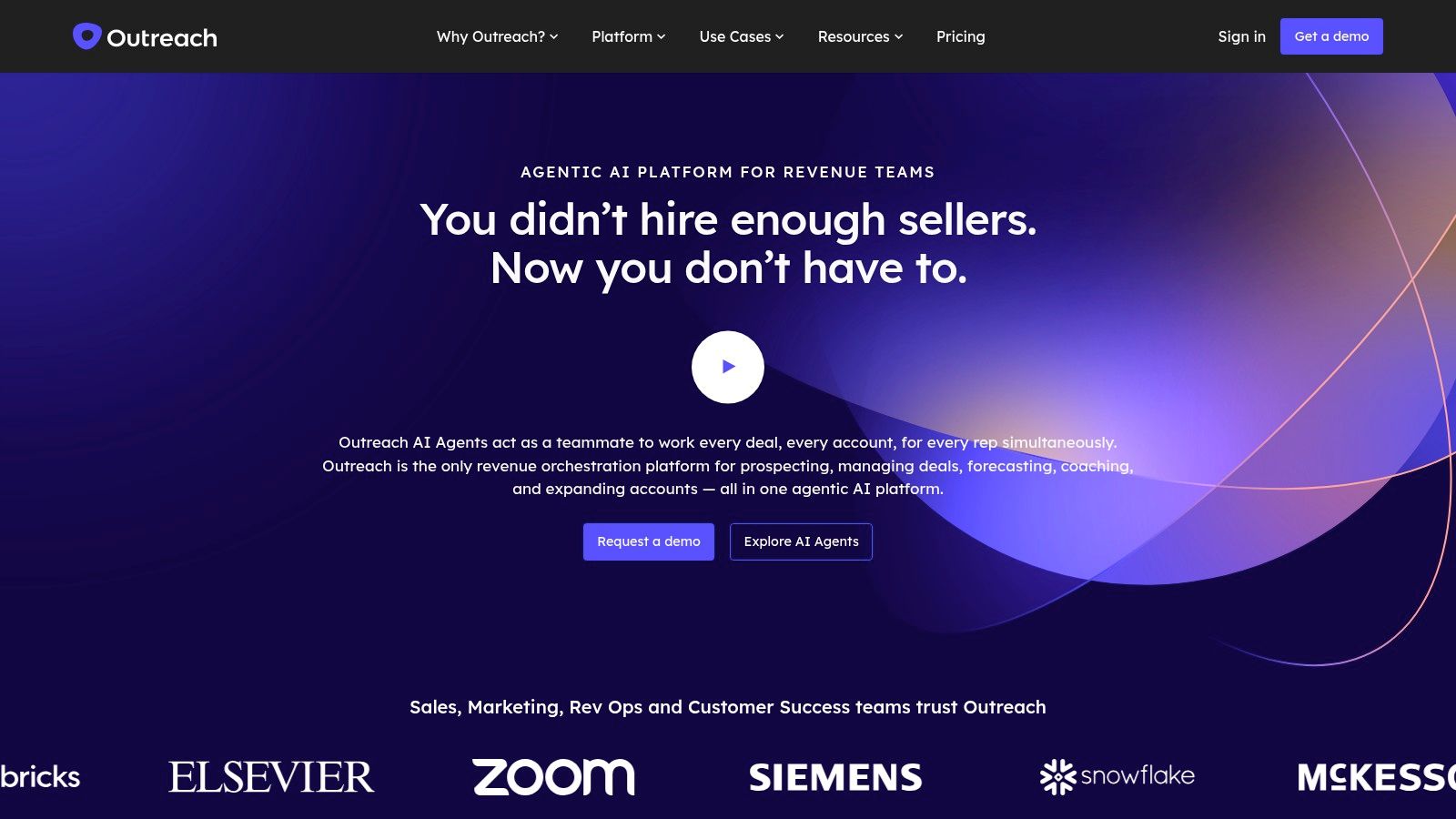
Outreach is one of the strongest choices for companies that want sales engagement, deal execution, forecasting, and coaching in one system. It's best when your sales org has defined roles across SDRs, AEs, managers, and RevOps, and you need one platform to coordinate all of them without patching together separate tools.
The platform's big strength is operational control. You can govern sequences, manage pipeline activity, connect engagement with forecasting, and use conversation intelligence inside the same environment. That matters more than feature count. In practice, fewer disconnected systems usually means better adoption.
Where it wins
Outreach is a fit for teams that need more than prospecting automation. If leadership cares about coaching, forecasting discipline, meeting prep, and coordinated execution across the revenue org, Outreach proves its worth.
A lot of teams looking at Outreach are really trying to answer a prospecting question first. If that's your starting point, this primer on AI for sales prospecting gives useful context before you evaluate workflow depth.
Outreach makes sense when sales leadership wants one command center. It's overkill if you only need lightweight sequencing.
Best for
Mid-market and enterprise revenue teams that need governance, SSO-ready administration, forecasting visibility, and rep coaching tied directly to sales activity.
What to expect:
- Strongest use case: Multi-rep B2B teams with formal process management.
- Main advantage: Broad workflow coverage inside one platform.
- Main drawback: Quote-based pricing and a higher implementation burden than SMB tools.
Outreach usually disappoints only when companies buy it before they've defined process ownership. If no one owns sequence governance, reporting standards, and coaching adoption, the platform won't fix that on its own.
Use the platform site for current product details at Outreach.
3. Salesloft

Salesloft is one of the steadier picks for teams that care about execution quality more than adding another layer of prospecting data. I've seen it work best in outbound orgs where managers want reps following a clear cadence structure, call review is part of coaching, and activity standards matter.
That focus is the point.
Salesloft is a sales engagement platform first. It handles multichannel cadences, calling, meeting follow-up, analytics, and coaching in a way that reps usually learn quickly. For SDR teams and commercial sales pods, that matters because adoption drops fast when the workflow feels slow or overbuilt.
Where Salesloft earns its place is operational consistency. If your team already has lead sources, CRM rules, and outbound messaging in place, Salesloft helps enforce the motion day to day. It is less attractive for companies trying to buy one system for CRM, marketing automation, and customer support. You are buying structure for outbound execution, not an all-in-one revenue stack.
Best fit in the field
Salesloft fits teams with a defined outbound process and a manager who will actively own governance. That includes sequence hygiene, CRM sync rules, reply handling, reporting standards, and coaching cadence. Without that ownership, the platform can become an expensive activity tracker.
- Best for: SDR teams, BDR orgs, and outbound-heavy B2B sales teams with established process
- What it does well: Cadence management, call workflows, rep coaching, and manager visibility into execution
- Where it can frustrate: Ongoing admin work, contract-based pricing, and less flexibility for teams still experimenting with their motion
The trade-off is straightforward. Salesloft is usually a better fit than lighter SMB tools when consistency, coaching, and rep accountability matter. It is usually a worse fit when a lean team just needs fast list building plus basic sequencing.
Current plan and platform information lives at Salesloft.
4. Apollo.io
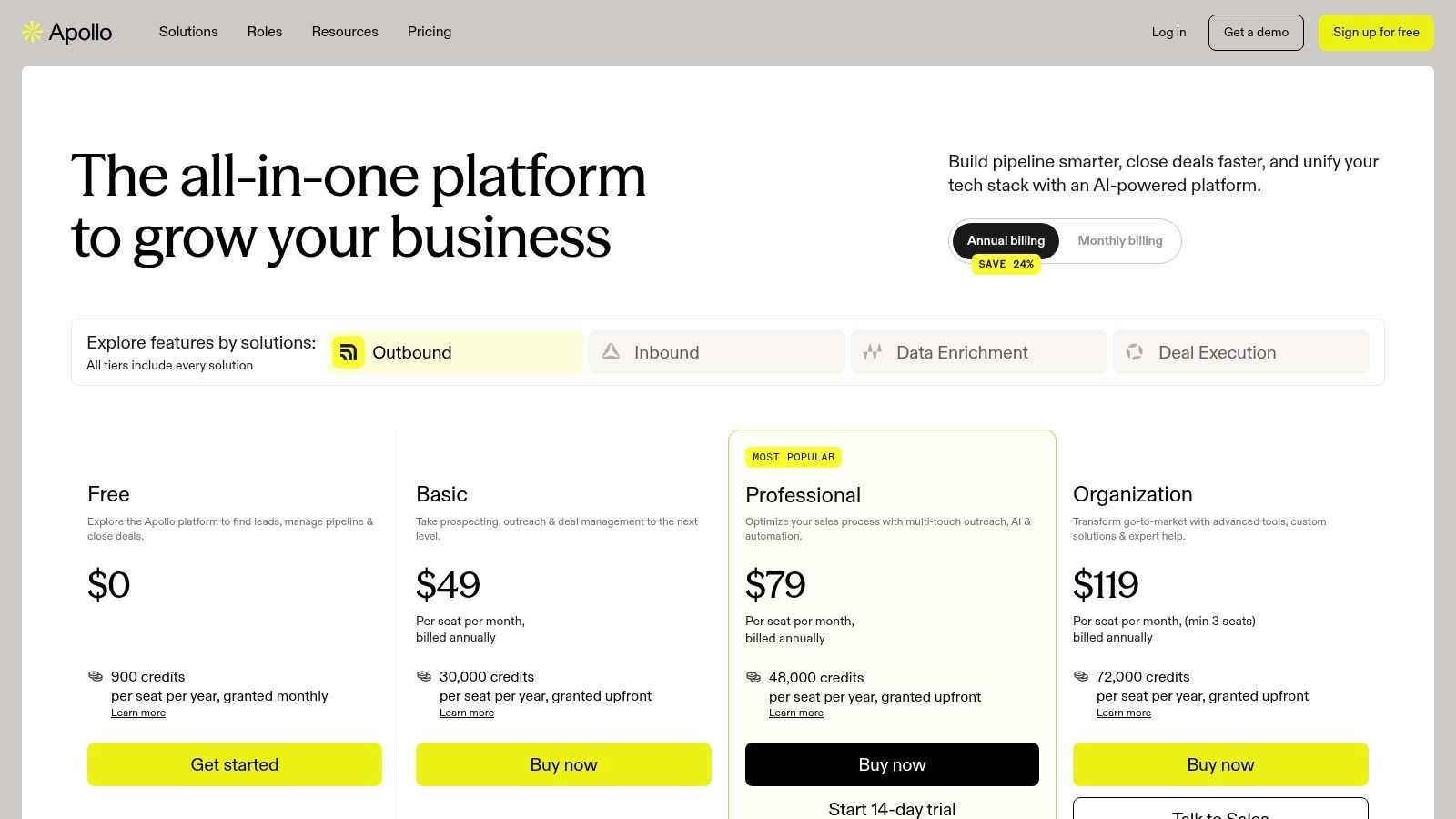
Apollo.io earns its spot on this list because it solves a specific problem well. Lean sales teams often need prospect data, enrichment, sequencing, and basic calling in one place, and Apollo gives them that without forcing a multi-tool rollout.
That makes it one of the stronger all-in-one options in this guide, especially for SMBs, agencies, and founder-led outbound teams. If your sales motion is still forming, buying one platform that handles list building and outreach is often the fastest way to get reps working.
The practical appeal is simple. Apollo combines a large contact database, email sequencing, a dialer, meeting booking, and workflow automation inside one interface. For teams building outbound from scratch, that cuts setup time and reduces the number of handoffs between tools.
The trade-off shows up later. Apollo can help a team launch fast, but speed does not fix weak targeting, poor messaging, or sloppy stage definitions. If your pipeline stages are loose, clean sales pipeline management processes matter more than adding another automation rule.
Why teams buy Apollo
Teams usually choose Apollo for convenience and coverage, not because every individual feature is best in class. The data is useful, the sequencing is good enough for many SMB motions, and the Chrome extension fits reps who prospect directly from LinkedIn, company sites, and live research.
I have seen Apollo work best when one person owns list quality and usage controls. Without that, reps burn credits too freely, export weak-fit accounts, and create noise faster than pipeline.
Best fit in the field
Apollo is best for teams that want outbound infrastructure quickly and can accept some variation in data quality by segment.
- Best for: SMB sales teams, agencies, fractional sales operators, and founder-led outbound motions
- What it does well: Prospecting, enrichment, sequencing, browser-based workflows, and fast rollout
- Where it can frustrate: Credit management, inconsistent record quality in some niches, and less depth than specialized sales engagement platforms
The decision comes down to team shape. Apollo is usually a better fit than heavier enterprise platforms when a small team needs one system to prospect and run outreach. It is usually a worse fit when a larger org already has strong data vendors, strict governance, and managers who need deeper coaching and execution controls.
Current options are listed at Apollo.io.
5. HubSpot Sales Hub
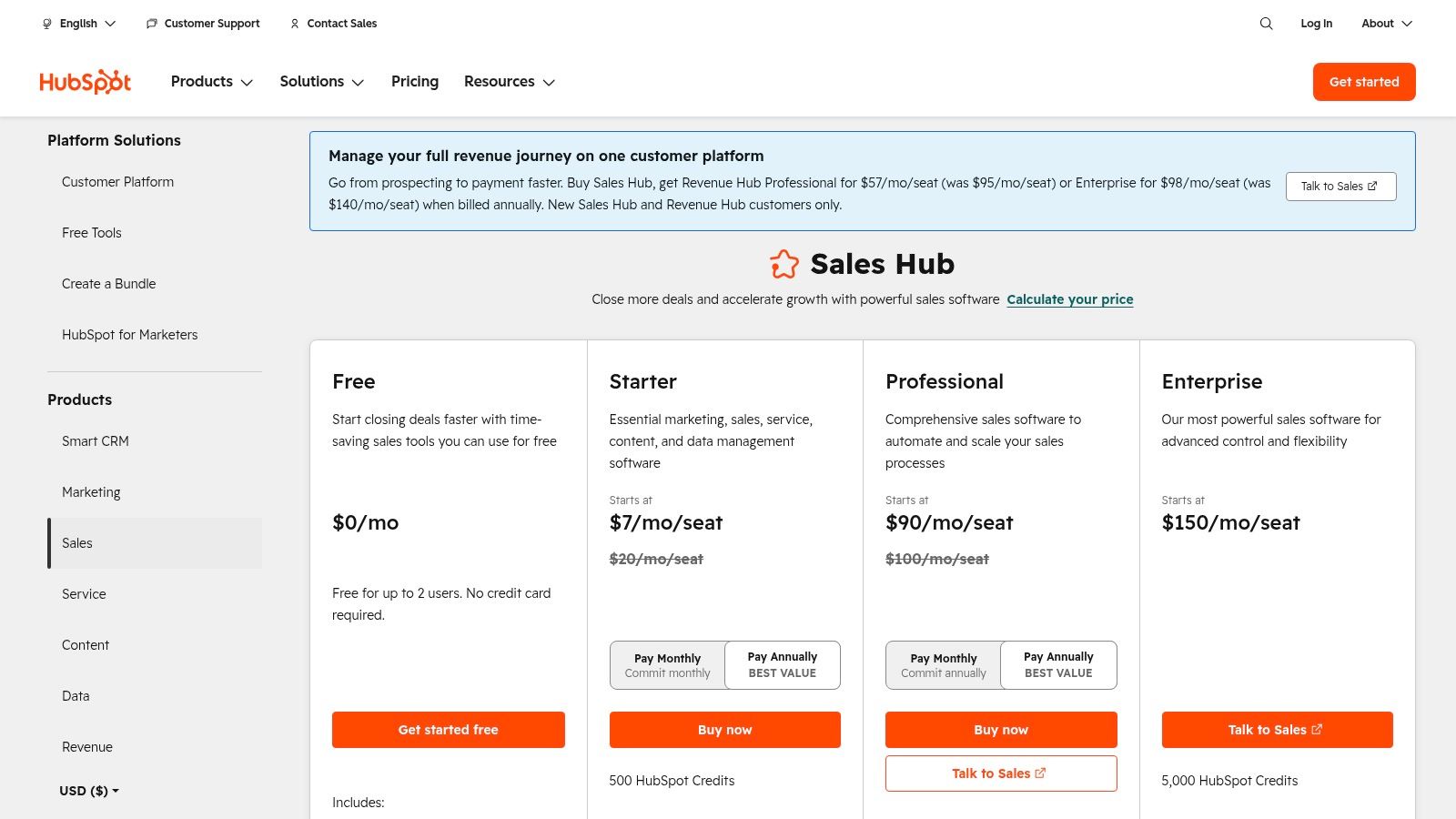
HubSpot Sales Hub works best when you want sales automation inside a broader go-to-market system. If marketing, sales, and service all need shared data and a shared operating model, HubSpot is one of the easiest ecosystems to align around. That's why it often wins internally even when another point solution has deeper sales engagement features.
The strength here is continuity. Lead handoff, task creation, pipeline management, playbooks, quotes, and reporting all happen in the same environment. For many revenue teams, that lowers friction more than any single advanced feature can.
Best for unified revenue teams
HubSpot is especially strong for organizations that don't want sales automation to live in a silo. If your team already depends on HubSpot for marketing automation or service workflows, adding Sales Hub is often cleaner than introducing a separate engagement layer.
That connection between marketing and sales matters. Marketing automation platforms can track qualified leads and customer progress through the journey, with documented case studies showing 20% to 30% higher lead-to-customer conversion rates, according to Upwork's overview of marketing automation. HubSpot is one of the vendors that benefits most when teams use that cross-functional data well.
For pipeline context specifically, their workflows pair naturally with the fundamentals in this guide to sales pipeline management.
- Best for: Companies that want marketing, sales, and service under one vendor
- Core advantage: Native data continuity across teams
- Main drawback: Costs can climb as you add hubs, seats, and higher-tier features
HubSpot usually pays off when you commit to the ecosystem. If you only want lightweight sequencing, it can be more platform than you need. Pricing and packaging are available at HubSpot Sales Hub.
6. Pipedrive
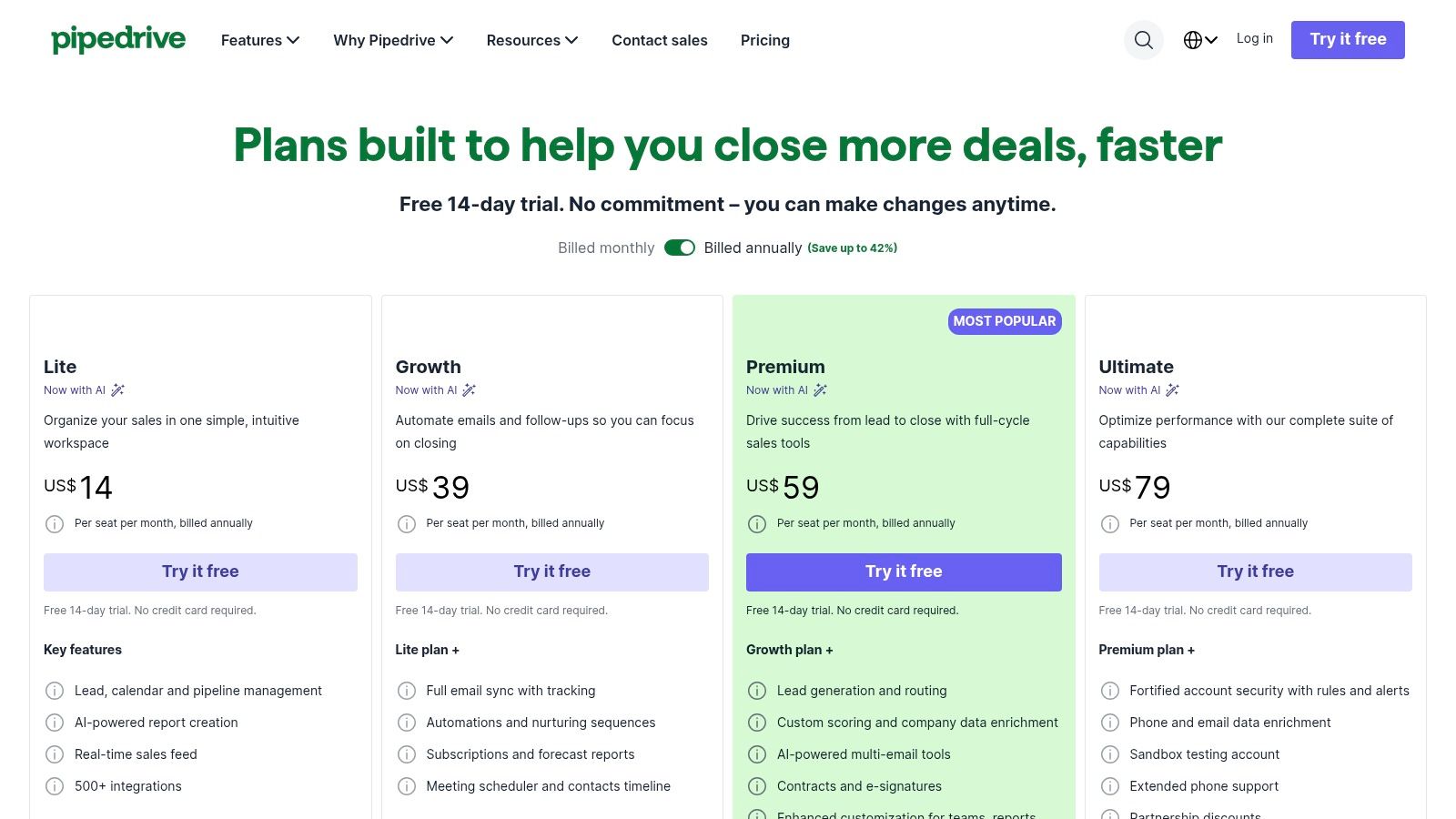
Pipedrive is the tool I recommend when a team needs sales automation without a heavy admin project. It's a sales-first CRM, and it keeps that focus. The visual pipeline is clear, automations are approachable, and most SMB teams understand the system quickly.
That usability matters because the best sales automation tools fail when reps won't work inside them. Pipedrive generally avoids that problem. Teams can automate activities, sync email, schedule meetings, and manage documents without building a giant RevOps machine first.
Why it works for SMBs
Pipedrive gives managers real-time dashboards for activity, conversions, and pipeline movement. That visibility helps teams identify what's working and adjust faster. It also aligns with a verified claim from Pipedrive's sales automation overview that this kind of dashboard-driven sales activity tracking can help boost SMB revenue by up to 25% within six months.
I wouldn't choose Pipedrive for complex enterprise outbound. I would choose it for agencies, owner-led sales teams, and growing companies that want visibility and process hygiene without a major implementation.
If your CRM has to teach itself to every new rep, adoption drifts. Pipedrive stays attractive because most people can use it on day one.
Best for
SMBs and agencies that want pipeline visibility, simple automations, and low admin overhead.
What stands out:
- Easy rollout: Reps usually adopt it quickly.
- Clean visual pipeline: Good for managers who coach from stage movement and activity.
- Practical automation: Useful for reminders, stage changes, and repetitive follow-up tasks.
- Lighter engagement depth: Not the best option if your team needs advanced sequencing and multichannel outbound at scale.
Current tiers and add-ons are on Pipedrive.
7. Reply.io
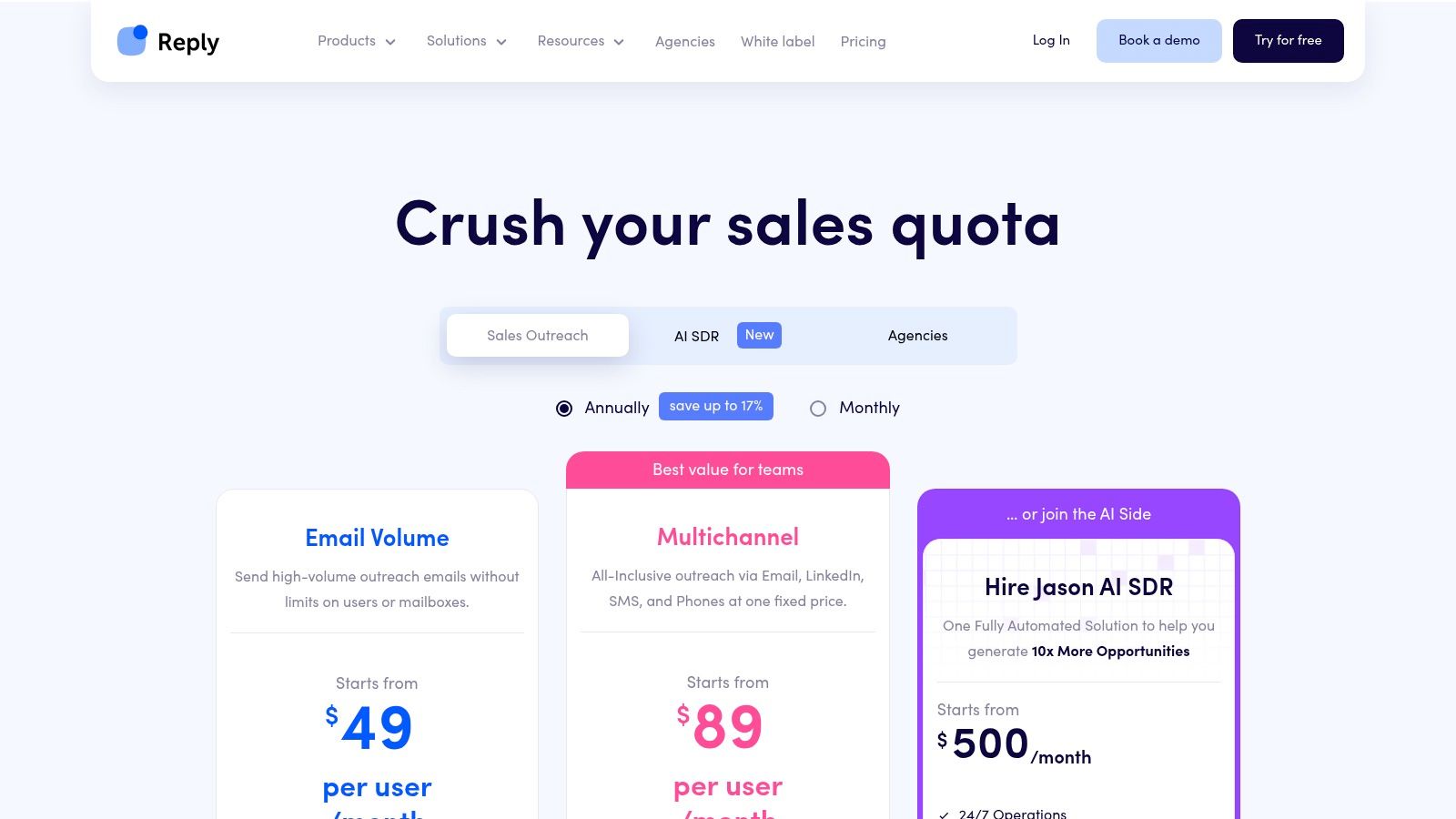
Reply.io fits a specific lane in this list. It works well for teams that have outgrown basic email sequencing but do not need the admin load, governance layers, or price point that usually come with enterprise sales engagement platforms.
The practical appeal is channel coverage. Teams can coordinate email, calls, LinkedIn touches, SMS, and WhatsApp from one system, which is useful for SDR pods, outbound agencies, and lean sales teams running high activity across several client accounts or territories. In real implementations, that matters less for the headline feature list and more for execution discipline. Reps stay in one workflow, managers can review activity in one place, and RevOps avoids stitching together four separate point tools just to run a standard outbound motion.
Best for multichannel outbound teams that need speed without enterprise overhead
Reply.io is a strong option for companies that want faster deployment than Outreach or Salesloft, but still need more channel flexibility than a lighter CRM-native setup usually offers. I would shortlist it for agency environments, outsourced SDR teams, and growth-stage companies building outbound with a small operations bench.
Its trade-offs are clear. Reply.io covers a lot, but teams should review mailbox limits, fair-use policies, and the actual cost of add-ons before committing. It can handle serious outbound volume, yet it is still better suited to execution-focused teams than to large organizations with strict governance, layered approvals, and complex reporting requirements.
What stands out:
- Best for: Outbound agencies and SDR teams running multichannel sequences
- Useful strengths: Broad channel support, centralized inbox management, and deliverability tools that help keep campaigns on track
- Main trade-off: Costs and usage policies need close review as volume grows
- Less ideal for: Enterprise teams that need heavy governance, advanced permissions, or highly customized reporting structures
Reply.io earns its place in this category because it sits between lightweight sequencers and full enterprise platforms. That middle ground is valuable if your team wants to launch quickly, keep outbound coordinated, and avoid building a larger RevOps system than the sales motion requires.
See current plans at Reply.io.
8. lemlist
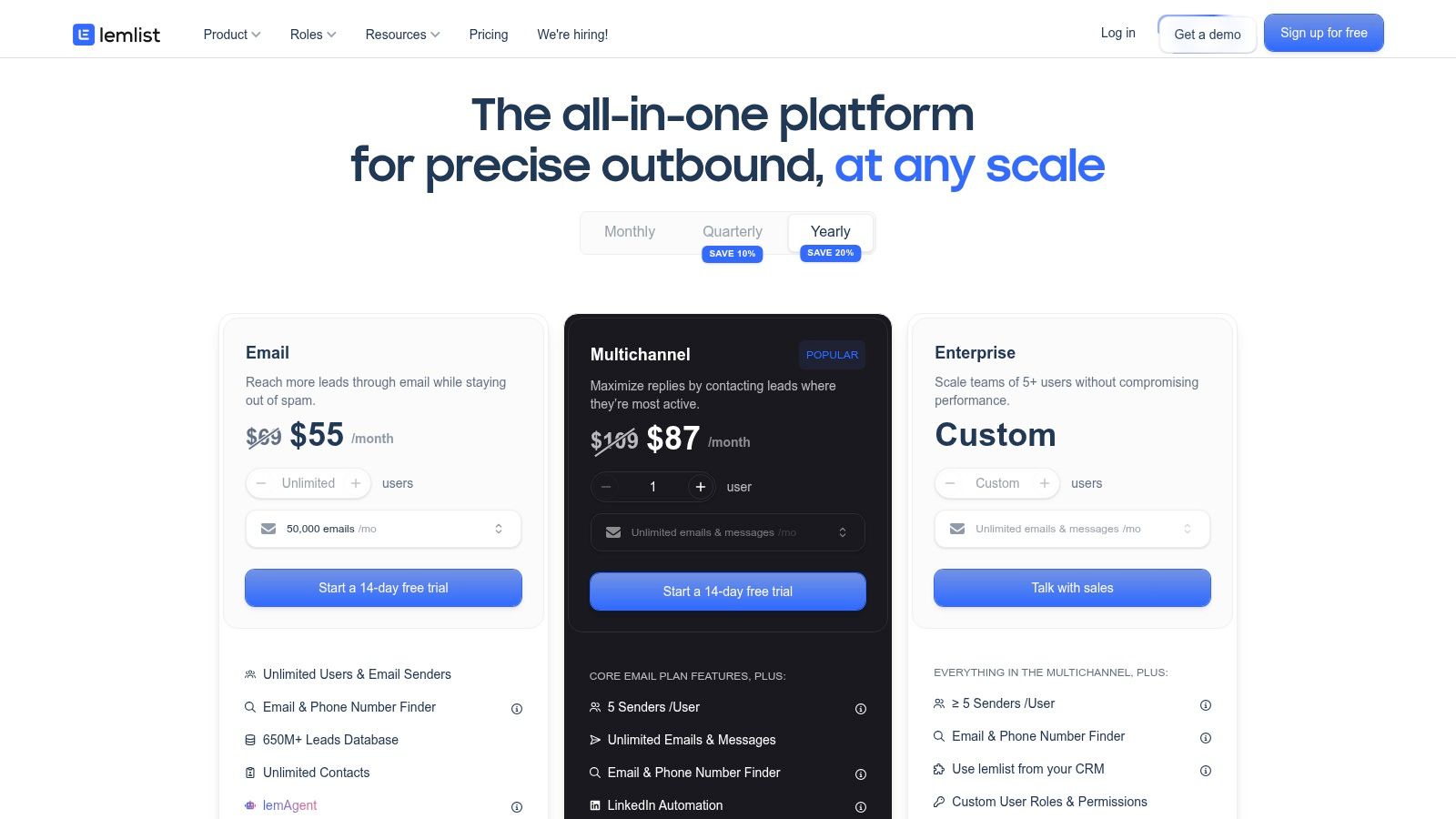
About 1 in 6 marketing emails never reach the inbox, according to Validity's email deliverability research. That matters even more for outbound sales teams, where a weak sending setup can sink performance before reps ever get a reply.
lemlist fits teams that treat deliverability as part of the sales process, not a side task for ops to clean up later. It brings sequencing, lead data, warm-up, and personalization into one outbound workflow, which makes it a strong match for agencies, outbound consultancies, and small SDR teams that do not want to stitch together four separate tools.
The practical advantage is speed with fewer handoffs. Teams can source contacts, launch campaigns, monitor sender health, and adjust messaging without bouncing between vendors or asking RevOps to maintain a fragile stack of integrations.
Best for outbound teams that need deliverability controls built in
lemlist works best for teams running cold outbound at meaningful volume, especially if multiple reps or clients are sending from different inboxes and domains. In that setup, inbox placement and account health affect results as much as copy quality. lemlist handles that part better than many lighter sequencers.
I would not put it in the same bucket as enterprise sales engagement platforms. Its value is different. lemlist is better for execution-heavy teams that need campaigns live quickly and want stronger deliverability tooling than a CRM-native sequencer usually offers.
Good outbound software protects inbox placement, not just send volume.
Best for
Agencies, lead gen shops, and outbound teams that want sequencing, lead sourcing, and deliverability management in one platform.
Key trade-offs:
- Best strength: Strong fit for outbound-first teams that want fewer moving parts in the stack
- Where it helps most: Personalization, warm-up, and sender health management for cold email programs
- Cost consideration: Multichannel and team usage can get expensive once more reps, inboxes, or client workspaces are added
- Less ideal for: Enterprises that need deeper governance, advanced permissions, or tighter CRM control across large teams
lemlist earns its spot in this category because it is not trying to be the system of record for every sales motion. It is built for teams that live at the top of funnel and need a bundled outbound platform that stays usable as volume rises. Pricing details are on lemlist.
9. Close CRM
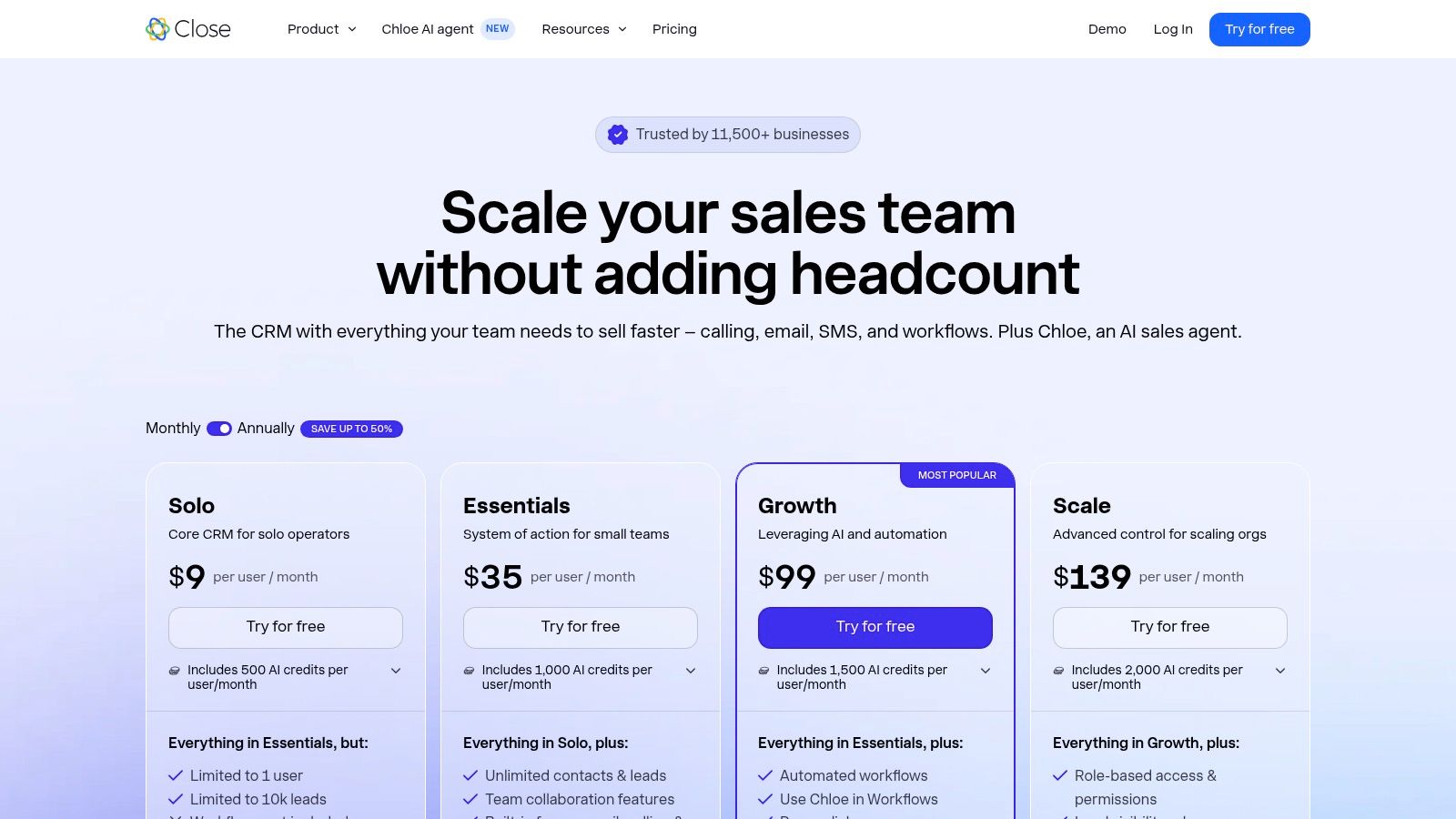
Call-heavy teams still close a meaningful share of deals by phone and text, especially in SMB sales, agency services, and high-velocity inside sales. Close CRM is built for that motion. Instead of bolting calling onto a general-purpose CRM, it puts the dialer, SMS, sequences, and contact history in the same daily workspace reps already use.
That setup changes the implementation trade-off. Teams with a small RevOps bench usually get more value from fewer handoffs between CRM, telephony, and sequencing than from a wider feature set they may never configure properly. Close is strongest when speed to adoption matters more than building a highly customized system.
Best for call-first SMB teams
I'd shortlist Close for teams that run a rep-led motion and want the CRM itself to support outreach, follow-up, and pipeline management without adding a separate calling stack. Reps spend less time switching tools, managers get cleaner activity data, and onboarding is usually easier because the workflow is obvious.
The trade-off is ecosystem depth. Close covers the core sales workflow well, but it is not the best fit for organizations that need extensive third-party integrations, complex territory design, or deeper cross-functional processes spanning marketing, support, and post-sale operations.
- Best for: SMB sales teams, agencies, and inside sales groups that rely on calls and SMS to create and advance pipeline
- Main advantage: CRM, dialer, messaging, and sequences in one product, with less setup overhead
- Main limitation: Narrower ecosystem and less flexibility for larger, process-heavy RevOps environments
Close earns its place in this list because it fits a specific use case better than many broader platforms. If your team wants a CRM-native communication workflow rather than a bigger all-in-one system, it is one of the clearest options in that category. For current packaging, visit Close CRM.
10. Freshsales
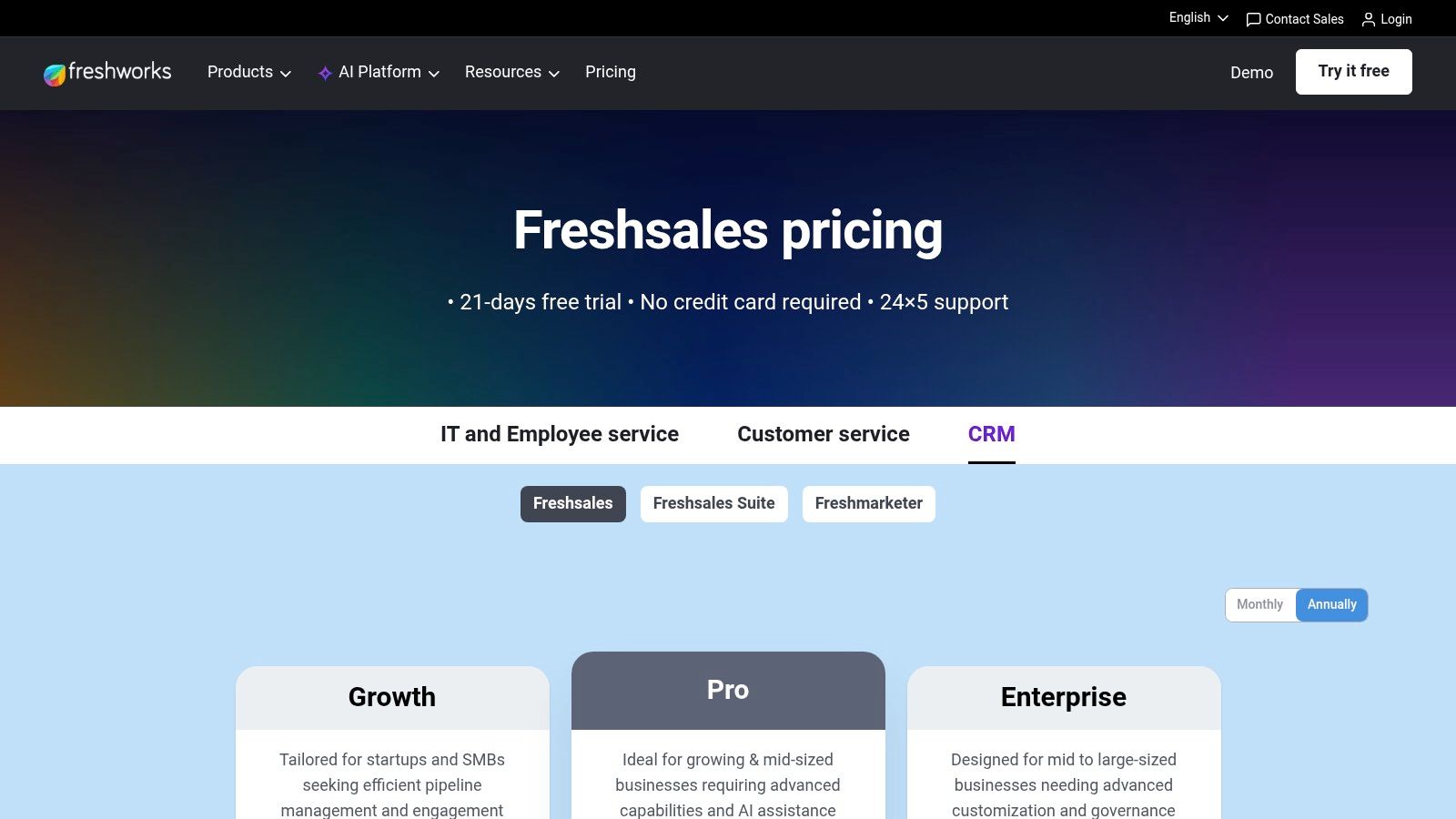
Sales teams lose hours each week to basic admin, follow-up gaps, and tool switching. Freshsales earns attention because it brings a lot of that work into one place at a price many SMBs can support.
I usually put Freshsales in the CRM-native, budget-conscious category. It combines contact management, email, phone, chat, workflow automation, lead assignment, and Freddy AI without pushing teams into the cost and setup burden that comes with more enterprise-heavy systems. For smaller sales orgs, that matters more than having the deepest possible feature catalog.
Best for SMBs that want one practical system
Freshsales works best for companies that need coverage across the full day-to-day sales workflow, but do not have a dedicated RevOps team to manage a highly customized stack. A rep can work leads, run follow-up, log calls, and update pipeline from the same system. Managers get cleaner visibility because activity is captured closer to where the work happens.
That is the appeal. Breadth with less operational overhead.
The trade-off is depth. Freshsales can handle the core motion for many SMB teams, but organizations with complex routing logic, layered permissions, heavy reporting requirements, or a large integration footprint will usually hit limits sooner than they would in HubSpot or Salesforce-based environments.
Freshsales tends to win when the goal is simple. Give reps one system that covers the essentials, keep implementation manageable, and avoid buying separate tools too early.
Best for
SMBs and growing sales teams that want CRM, communication, and automation in one product with clearer pricing than quote-led enterprise platforms.
A few practical trade-offs:
- Best advantage: CRM, email, phone, chat, lead routing, and basic AI assistance in one platform
- Best fit: Small to mid-sized teams that want faster rollout and lower software sprawl
- Main limitation: Less flexibility for complex RevOps design, advanced governance, and broader ecosystem needs
- Buying consideration: Strong value if you want one vendor. Less compelling if you already have a mature CRM and only need a specialist engagement layer
For current plans, go to Freshsales.
Final Thoughts
Teams that put sales automation in the right part of the workflow usually see faster execution and better consistency. Analysts at MarketsandMarkets found that teams using AI-powered sales platforms can improve win rates, shorten sales cycles, and raise productivity, based on this MarketsandMarkets sales transformation analysis. The practical question is which kind of tool fits your sales motion, team structure, and operating discipline.
That is the primary split across this list. Outreach and Salesloft fit structured outbound teams that need manager oversight, process control, and rep-by-rep accountability. Apollo.io works well for teams that need prospecting data and outreach in one place, and can accept some trade-offs in depth. HubSpot, Pipedrive, Close, and Freshsales are better choices when CRM adoption and day-to-day usability matter as much as automation volume.
The agency and specialist cases matter too.
Reply.io and lemlist are better evaluated by use case than by feature count. Reply.io is a better fit for teams coordinating multichannel outbound across email, calls, SMS, and LinkedIn. lemlist makes more sense for agencies that care strongly about deliverability and want lead data bundled into the stack. Earlybird AI belongs in a different bucket altogether. It is the specialist option for freelancers and agencies whose pipeline depends on Upwork rather than classic SDR outbound.
Choose by motion first, then by features. A 20-person SDR org, a founder-led sales team, an outbound agency, and an Upwork-focused service business should not buy from the same checklist.
If your team wins business on Upwork, Earlybird AI is the clearest specialist pick in this list. It is best for freelancers and agencies that need faster job discovery, quicker proposal turnaround, and a repeatable follow-up process built around that channel. Review the product details and request a demo if that is your primary growth path.