
← Back To Blog
Start an Ad Agency: Launch, Niche, and Scale
Before you even think about landing your first client, you need to lay the groundwork for your agency. This isn't just about picking a catchy name or designing a logo; it's about making the critical strategic decisions that will set you up for long-term success, not just a flash in the pan.
Build a Resilient Ad Agency Foundation

The temptation to jump straight into client work is huge, I get it. But the agencies that thrive are the ones built on a solid foundation. Think of this initial phase as pouring the concrete for your skyscraper—get it right, and you can build as high as you want.
So many new agency owners fall into the "jack-of-all-trades" trap, offering every service under the sun to anyone with a checkbook. It feels safe, but it's actually the fastest way to become a commoditized, burnt-out freelancer. Real success comes from making deliberate choices about who you are, what you do best, and who you're here to serve.
Identify Your Profitable Niche
Specialization is your superpower in a crowded market. It’s the difference between being a small, forgotten fish in a massive ocean and becoming the go-to expert in a smaller, more profitable pond. When you have a clear niche, your marketing becomes laser-focused, your services become more streamlined, and you can command higher rates because you’re not just another generalist.
Here are a few ways to think about niching down:
- By Industry: Do you have experience in a specific field? Focus there. Think SaaS companies, local craft breweries, or e-commerce brands selling pet products.
- By Service: Master one high-value service and become the best at it. Instead of "digital marketing," you could be the expert in YouTube Ads for course creators or technical SEO for law firms. If you're leaning this way, our guide on starting an SEO agency has some great insights.
- By Audience: Zero in on businesses that serve a specific type of customer. For example, you could specialize in helping brands that market to new moms or financial advisors who target pre-retirees.
The sweet spot is where your expertise, genuine passion, and market demand all collide. When you can solve an expensive, painful problem for a clearly defined group of people, you’ve struck gold.
Craft Your Unique Value Proposition
Okay, you know who you’re serving. Now, why should they hire you? This is your unique value proposition (UVP), and it needs to be crystal clear. A weak UVP is generic fluff like, "We deliver results-driven marketing solutions." Yawn.
A strong UVP is specific and compelling: "We help B2B software companies get qualified demo requests from Fortune 500 prospects using targeted LinkedIn ad campaigns." See the difference?
Your UVP should instantly answer three questions for a potential client:
- What problem do you solve for me?
- What specific outcome can I expect?
- Why are you uniquely equipped to deliver it?
This single statement becomes the backbone of your website, your sales pitches, and your entire brand. It’s what makes you stick in a prospect’s mind long after they've closed the 20 other agency tabs they had open.
Navigate the Legal and Financial Setup
With your strategy locked in, it’s time to make things official. This is the unsexy but absolutely critical part of building a real business. Getting your legal and financial ducks in a row protects you and signals to clients that you’re a professional, not a hobbyist.
First, choose a business structure. A Sole Proprietorship is easy to set up, but it offers zero liability protection. An LLC (Limited Liability Company) is usually the way to go for new agencies, as it separates your personal assets from your business debts.
Next, you need a basic client contract. This doesn't have to be a 20-page legal document drafted by a high-priced lawyer (at least not at first). A simple agreement that clearly outlines the scope of work, payment terms, deliverables, and timelines is enough to prevent a world of headaches later on.
Setting this foundation is essential as you step into a massive market. The U.S. advertising agency sector is projected to reach $78.2 billion in revenue by 2025, with over 105,000 businesses in the mix, according to market research from IBISWorld. There’s plenty of room to succeed, but only if you build your agency the right way from day one.
To help you stay on track, here's a quick checklist of these foundational milestones.
Core Agency Setup Checklist
This table breaks down the non-negotiable first steps. Use it as a quick reference to make sure you haven't missed anything critical before you start chasing clients.
Completing these steps isn't just busywork—it's the act of building a real, defensible business that’s ready to grow.
Develop Irresistible Service Packages and Pricing
Once you’ve nailed down your niche, the next real challenge is turning your expertise into service packages that clients actually want to buy. This is where the rubber meets the road. How you package and price your work will make or break your profitability, your ability to scale, and even the quality of clients you attract.
If your packages are confusing or your pricing seems pulled out of thin air, you'll lose deals before you even get a chance to show what you can do. The goal is to create simple, clear offers that your team can deliver like clockwork. This isn't just about making a sale; it's about building trust and setting the stage for a great partnership. It’s a fundamental shift from thinking like a freelancer trading hours for dollars to an agency owner selling value and results.
Choosing the Right Pricing Model
Before you can slap a price tag on anything, you have to decide how you’re going to charge. There’s no single right answer, and each model comes with its own pros and cons. Getting this right is foundational to your agency's financial health.
Here are the most common pricing structures you'll see in the wild:
- Monthly Retainer: This is the holy grail for most agencies because it creates predictable, recurring revenue. A client pays you a set fee every month for an agreed-upon scope of work, like managing their Google Ads or running their social media. It’s perfect for ongoing work and helps you build solid, long-term relationships.
- Project-Based Fee: Got a client who needs a one-off thing, like a new website or a specific campaign launch? A flat project fee is the way to go. It’s great for work with a clear beginning and end, and a detailed scope of work protects you from the dreaded scope creep.
- Performance-Based: This one is high-risk, high-reward. You tie your pay directly to the results you generate—think a percentage of ad spend, a cut of the revenue you bring in, or a fee per lead. It shows you have serious skin in the game, but you better have rock-solid tracking and a crystal-clear definition of what "success" looks like.
A lot of successful agencies I know use a hybrid model, mixing a base retainer for stability with a performance bonus to incentivize knocking it out of the park.
Structuring Tiered Packages
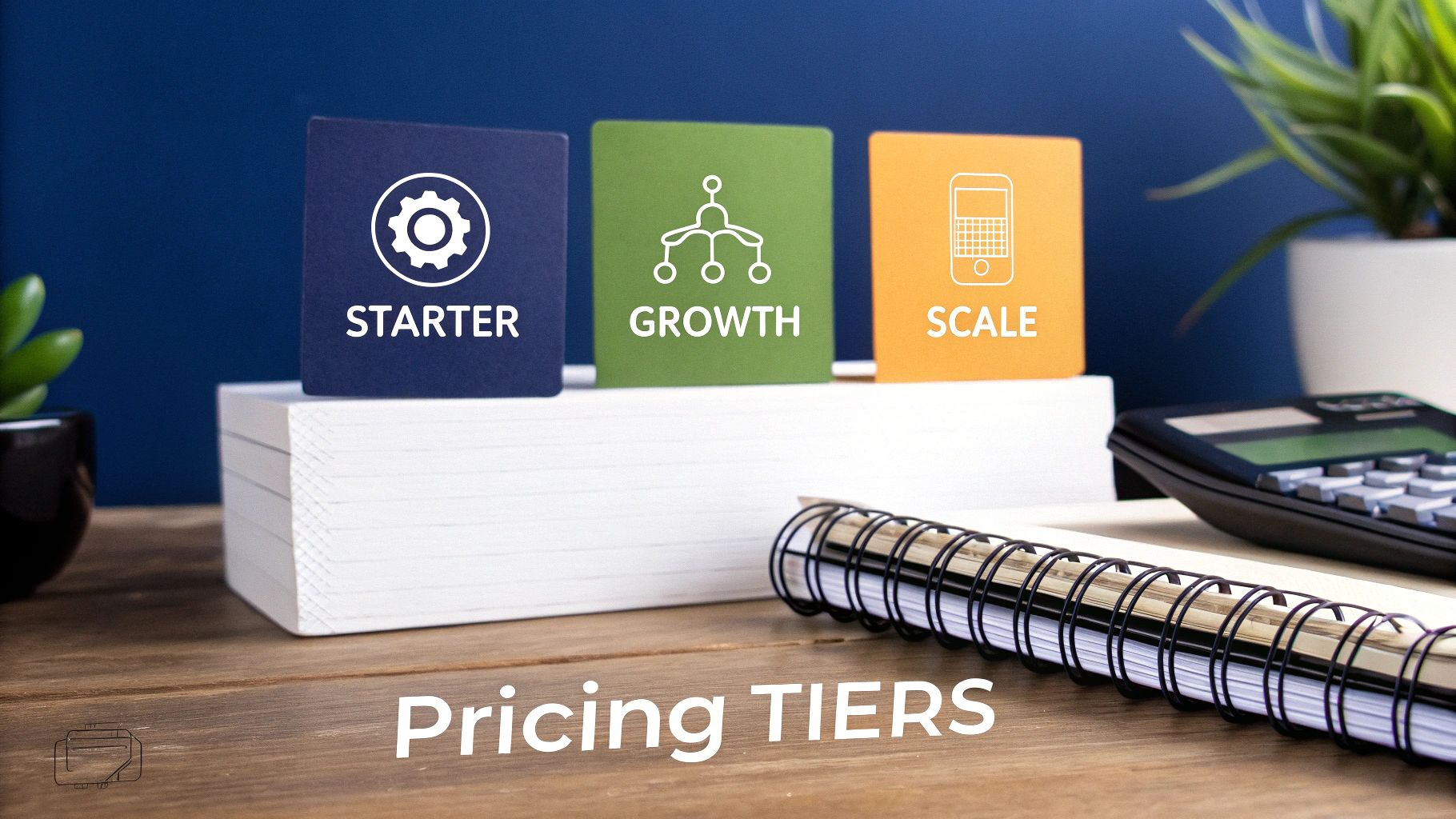
One of the smartest things you can do is present your services in tiered packages. It just makes the buying process so much easier for clients. Instead of a custom quote for every single lead, you give them clear options that fit different needs and budgets. It also gives you a built-in way to upsell clients as they grow.
A simple three-tier structure works wonders:
This setup naturally frames your middle tier as the "best value" option, gently guiding most clients to the package that’s often the best fit for them and the most profitable for you.
Remember, your prices are a direct reflection of the value you provide. Don't calculate your rates based solely on your time; factor in your expertise, the tools you use, and most importantly, the tangible business results you generate for your clients.
Calculating Your Profitability
Pricing can feel like a shot in the dark, but it needs to be a strategic decision. You have to start by knowing your numbers. Figure out all your costs—your time, software subscriptions like Ahrefs or Asana, and any money you pay to freelancers or contractors.
Once you have your Cost of Goods Sold (COGS) for each package, you can tack on a healthy profit margin. A good target for service-based businesses is a 50-70% gross margin.
For instance, let’s say the total cost to deliver your "Growth" package is $1,500 a month (that includes your time, tools, etc.). Pricing it at $4,000 means you make $2,500 in gross profit, giving you a 62.5% margin. Being able to confidently state a price because you know it's profitable is a massive step toward building an agency that lasts.
Building Your Client Acquisition Machine
An agency without a steady flow of clients is really just an expensive hobby. To build a real business, you need a predictable, repeatable way to land new work. This isn't about becoming a slick, high-pressure salesperson; it's about building a machine that consistently brings in leads, even when you're not actively hunting for them.
When you're just starting out, speed and efficiency are everything. You don't have the luxury of waiting months for word-of-mouth to build or spending all your time chasing cold leads. You need a direct line to clients who are actively looking for help right now. That's where platforms like Upwork can be absolute game-changers, if you know how to use them correctly.
Turning Upwork Into Your Agency's Secret Weapon
Think of Upwork less as a freelancer job board and more as a high-intent lead generation engine. The trick is to treat it like a strategic sales channel, not just a place to bid on random gigs. This means getting smarter and more sophisticated than the folks who just fire off a dozen generic proposals a day.
Success on a platform like this boils down to two things: speed and relevance. The moment a great project gets posted, you’re competing with dozens of other agencies. The first handful of proposals a client sees have a massive advantage. Being first in the door with a proposal that actually speaks to their problem is the winning formula.
This is where automation becomes your unfair advantage. Manually refreshing the job feed and writing custom proposals all day is a one-way ticket to burnout. You need a system that does the heavy lifting for you.
A well-oiled acquisition system isn't about working harder; it's about building a process that works for you. It automates the tedious parts of sales, freeing you up to focus on strategy and actually closing deals.
Automating Your Outreach to Get in First
Tools built specifically for this can act as your always-on digital sales team. For example, a platform like Earlybird AI hooks directly into your Upwork account. You teach it what your ideal project looks like, and it automatically submits highly personalized proposals just moments after a matching job is posted.
Here’s a peek at what that kind of automated dashboard looks like, tracking and managing proposals without you lifting a finger.
This level of automation means your agency is effectively "applying" for perfect-fit jobs 24/7. You're almost always going to be one of the first candidates a client sees. Some systems even handle the initial follow-ups, gently nudging the conversation along to get that first meeting booked on your calendar.
This isn’t just about saving time; it's a massive competitive edge. While other agencies are still typing up their proposals, yours is already sitting in the client's inbox. This systematic approach is the core of what sales automation is all about—scaling your agency's growth without having to scale your manual effort.
The opportunity here is huge. The global advertising market is on track to hit $1.158 trillion by 2025, with digital eating up the biggest piece of the pie. For a small agency, automating your bidding process on a platform like Upwork gives you a direct line into this massive market, helping you land projects and generate revenue way faster than you could with old-school methods.
Don't Put All Your Eggs in One Basket
While an automated Upwork funnel can be your primary engine for new business, it's always smart to have a few other channels working for you. Here are two simple, effective strategies to round out your client acquisition plan.
- Go Spear-Fishing on LinkedIn: Make a "dream client" list of 10-15 companies that are a perfect fit for your niche. Find the key decision-makers (like a Head of Marketing or CEO) and connect. Don't pitch them immediately. Instead, engage with their posts and build a little rapport first. Then, send a short, value-packed message offering a specific insight about their business.
- Build a Simple Referral Program: Don't just hope for referrals—ask for them. After you’ve knocked a project out of the park and the client is ecstatic, make it official. A simple email works wonders: "We absolutely loved working with you on this. Do you know anyone else in your network who could use similar results? We offer a 10% referral bonus for any new client you send our way."
By combining the 24/7 power of an automated strategy with targeted personal outreach and a formal referral process, you create a robust system that keeps your pipeline full. This gives you the stability and confidence you need to grow your agency without constantly worrying about where the next project is coming from.
Master Your Client Onboarding and Delivery Process
Winning the client is just the first domino to fall. The real work—the stuff that builds long-term partnerships, gets you those glowing testimonials, and drives referrals—starts the moment the contract is signed. A chaotic, thrown-together onboarding experience plants seeds of doubt immediately. A smooth, professional system, on the other hand, makes them feel like they just made the smartest hire of the year.
Delivering great results consistently is what separates a flash-in-the-pan agency from a long-term business. This means you have to move beyond just "winging it" and build a repeatable, scalable process for everything you do. Think of it as your agency's operating system. It ensures every client gets the same high standard of care, whether you or your newest hire is running the account.
Blueprint for a World-Class Onboarding Experience
The first 30 days of a new client relationship are everything. Your mission is to completely erase any potential buyer's remorse and cement their decision as a brilliant one. A structured, well-thought-out onboarding process is how you get it done.
This isn't just a "welcome aboard" email. It's a meticulously planned sequence, from the initial payment to the launch of their first campaign. You're systematically gathering the right information, aligning on expectations, and setting a clear rhythm for communication. Get this right, and you'll avoid those frantic, last-minute emails and misunderstandings later.
A great onboarding process isn't just about collecting login details. It's a strategic ritual that transforms a new sale into a true partnership, making the client feel heard, understood, and confident in their investment.
Here's what a killer onboarding sequence should include:
- The Welcome Packet: As soon as the contract is signed, fire off a professional, branded PDF. This should say thank you, outline the immediate next steps, include a link to book the kickoff call, and list out everything you need from them (brand assets, account access, etc.).
- The Kickoff Call: This is your most important meeting. Come prepared with a tight agenda. The goal is to review their objectives, define what success looks like (KPIs), clarify who does what, and agree on how and when you'll communicate.
- Project Management Setup: Get them into your project management tool, whether it's Asana, Monday.com, or something similar. A shared space for tasks, files, and updates creates transparency and keeps everyone on the same page.
- Communication Channels: Be crystal clear about the best way to get in touch. Is it through comments in your project tool? Email? A dedicated Slack channel? Setting these boundaries early prevents communication from getting messy.
Creating Scalable Service Delivery Systems
As your agency grows, you simply can't afford to reinvent the wheel for every client. The only way to scale without letting quality slip is by systemizing everything. This means creating standard operating procedures (SOPs) and templates for every core task your team touches.
Just think about all the repetitive actions you take. From the technical setup of a new Google Ads campaign to compiling a monthly performance report, each of these workflows should be documented so clearly that anyone on your team can follow the steps and get the same result.
The client acquisition process itself is the front door to your delivery system.
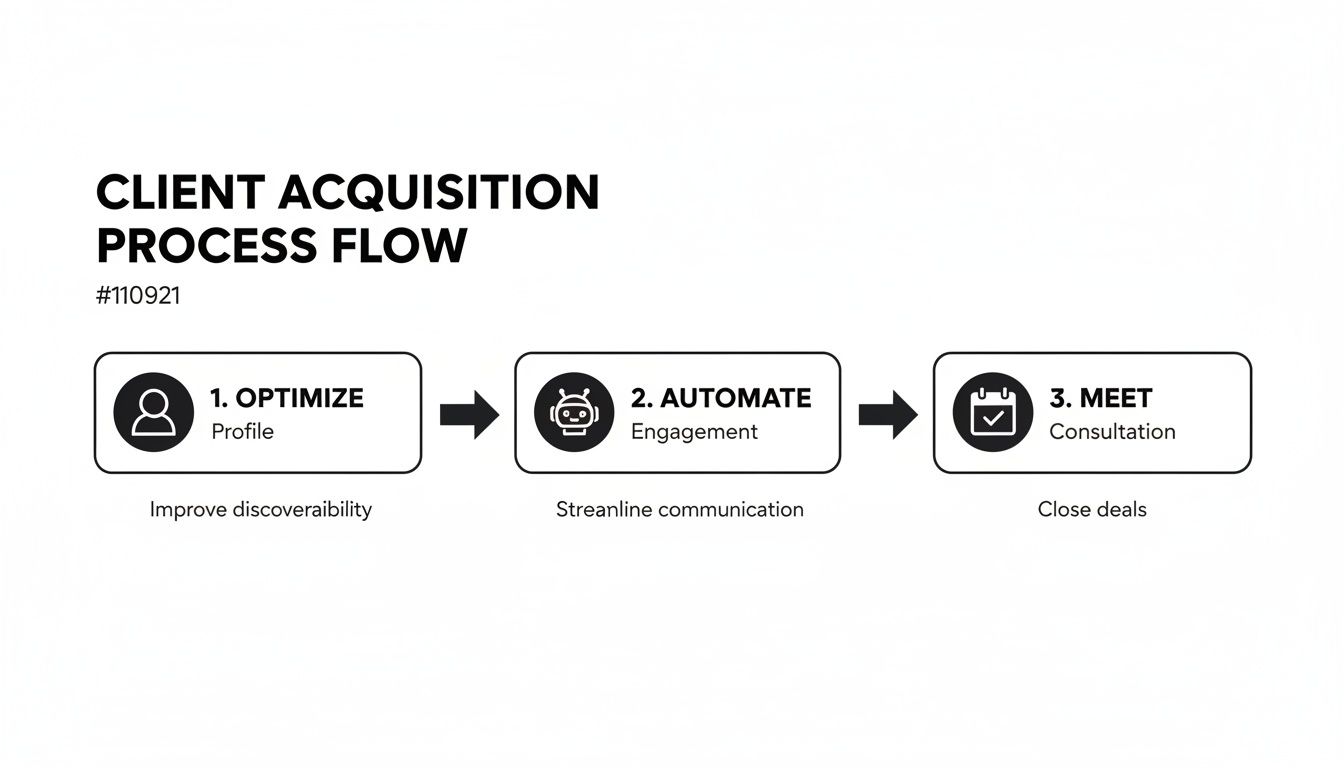
Once a lead moves through this funnel and becomes a client, they need to be plugged directly into your standardized delivery machine.
Here’s how to build that machine:
- Map Out Your Core Processes: Make a list of every single recurring task your agency performs to deliver its services. Get granular—from client setup to final reporting.
- Document Everything: Create a simple document or a quick Loom video for each task. Use checklists, screenshots, and painfully clear instructions. Store all of this in a central hub like Notion or a shared Google Drive.
- Build Your Template Library: Don't start from scratch. Create templates for your most common deliverables—ad copy frameworks, report layouts, project plans, you name it. This saves hundreds of hours and keeps your brand looking sharp.
- Refine and Improve: Your SOPs aren't meant to be set in stone. Revisit them every quarter with your team. Find the bottlenecks, ask what could be better, and keep making the system smoother.
By building these systems, you’re doing more than just ensuring consistency. You’re building a real asset. An agency with documented processes is easier to manage, simpler to scale with new hires, and ultimately, far more valuable.
This mindset extends to the entire client lifecycle, including how you end a project. A professional offboarding process is just as important as your onboarding.
Onboarding vs Offboarding Key Differences
A comparative look at the critical elements of starting and ending a client relationship professionally, ensuring a positive experience at every stage.
Ultimately, a polished offboarding can turn a departing client into a future advocate for your agency, proving that a great process matters from the first day to the very last.
Scale Your Agency With People, Processes, and Tools
Growth is a funny thing. It’s what you’re aiming for, but it’s also the very thing that can cause a promising new agency to implode. The scrappy systems you built as a solo founder juggling a few clients will absolutely buckle under real pressure.
If you want to scale without the quality of your work tanking or burning yourself out completely, you have to get serious about three things: your people, your processes, and your tools. This isn’t about just throwing bodies at a problem or buying fancy software. It’s about deliberately building a growth engine that can handle the weight of new business. More clients shouldn't mean more chaos.
Making Your First Hire The Smart Way
The idea of bringing someone on board can feel pretty daunting. It’s a huge commitment, both financially and in terms of your time. But let’s be real—you can’t do it all forever. The trick is to hire strategically, starting with flexible talent that keeps your overhead lean while giving you an immediate boost in capacity.
This is exactly where freelance platforms like Upwork come in handy. Instead of immediately taking on a full-time employee with a salary and benefits, you can tap into a global pool of specialized freelancers on a project-by-project basis. This lets you dial your delivery capabilities up or down depending on your client load, which is a lifesaver for protecting your profit margins early on.
So, who should that first hire be? Think about the most repetitive, time-sucking tasks on your to-do list. What’s the one thing that, if you could delegate it, would free you up to focus on what really moves the needle, like sales and high-level client strategy?
- Go for a specialist, not a generalist. If you're bogged down managing ad campaigns for 15 hours a week, your first hire should be a freelance media buyer, period. If content is your bottleneck, find a killer freelance writer.
- Look for a proven track record. Don't just take their word for it. Dive deep into their portfolio and read every piece of past client feedback. A seasoned freelancer can get up to speed fast with very little hand-holding.
- Always start with a small, paid test project. Before you sign them on for a bigger engagement, give them a small, clearly defined task. It's the single best way to judge their work quality, communication style, and reliability.
Your first hire isn't just about getting work off your plate; it's about buying back your own time. Delegate the tasks you might be good at but that don't actually grow the business. This frees you up to do the things only you, the founder, can do.
The Essential Tech Stack for a Modern Agency
Once you have people helping you, that messy collection of spreadsheets and Google Docs just won't fly anymore. You need a centralized tech stack to keep everyone on the same page, projects on schedule, and clients in the loop. The right tools aren't an expense; they're an investment in efficiency and a single source of truth for your whole operation.
I like to think about the tech stack in a few key buckets:
Your sales and outreach tools are especially critical for keeping the growth engine humming. You can’t just rely on manual effort forever. This is where you systemize client acquisition. A tool like Earlybird AI, for example, is designed to automate your proposal process on Upwork, making sure you’re one of the first to respond to top-tier job posts. You get the benefit of scaled outreach without chaining yourself to your keyboard.
Processes: The Glue That Holds It All Together
Hiring people and paying for software is the easy part. The real work is creating the documented processes that make everything click. As soon as you bring on your first freelancer, you'll see why we hammered on Standard Operating Procedures (SOPs) earlier. Those documented workflows are no longer just for you—they’re your agency’s training manual.
A clear, well-documented process for client onboarding, setting up a new campaign, or pulling a monthly report ensures every client gets the same great experience, no matter who is doing the work. It cuts down on mistakes, makes training a breeze, and allows you to maintain quality as you grow. This operational backbone is what lets a small, nimble agency punch way above its weight.
The market is actually shifting in your favor. Independent ad agencies are projected to make a huge comeback in 2025, largely because 91% of brands are now unbundling their ad work and looking for specialized partners. This is creating massive opportunities for nimble startups. The agencies that win will be the ones that use automation and specialized freelance teams to deliver incredible results without all the corporate bloat. You can dive into the full 2025 agency trends research to see where the industry is headed.
Ultimately, that's the formula: smart hiring, the right tools, and rock-solid processes. Get those three things right, and you'll be built for sustainable growth.
Got Questions? Let's Talk Agency Startup Realities
Jumping into the agency world brings up a ton of questions. It's totally normal. You're probably wondering about everything from startup cash to actually landing those first few crucial clients. Let's get straight to the answers you need.
How Much Money Do I Really Need to Start an Ad Agency?
Forget the old-school image of a swanky downtown office. You can get an ad agency off the ground today with a surprisingly small investment, especially if you start remote.
Your main costs at the beginning are just the essentials:
- Business Registration: Setting up an LLC usually runs between $100-$500.
- Your Website: A professional-looking site to showcase your work.
- Essential Software: Your core tools for marketing, project management, and communication.
Honestly, you can get the whole thing launched for well under $2,000. The real game-changer is landing that first client quickly. Once you have cash flow, the initial investment feels tiny because the business starts paying for itself almost immediately.
What Services Actually Make Money for a New Agency?
Profitability comes from high-value services you can sell on a recurring basis. Right now, the demand is massive for specialties like paid media management (think Google and Meta Ads), SEO, and marketing automation. These are perfect for a monthly retainer model.
That retainer is your agency's lifeblood—it gives you predictable income, which is everything for staying stable and planning your growth.
The secret isn't offering a dozen different services. It's getting really good at one high-impact service for a very specific type of client. That’s how you become the go-to expert they can't afford to lose, not just another vendor they can easily replace.
For instance, specializing in "PPC for e-commerce brands" will always be more profitable than being a generalist offering a bit of everything.
Okay, How Do I Get My First Three Clients?
Those first three clients are pure gold. They're your proof that this whole thing works. Don't overthink it; just focus on these three paths.
Start with Who You Know: Tell your friends, family, and old work buddies what you're building. It sounds simple, but your first client is often someone who already trusts you. A warm introduction is powerful.
Fish Where the Fish Are: Pick one platform where clients are actively looking for help—Upwork is a fantastic starting point. The trick is to be fast and relevant. A killer proposal is non-negotiable. If you need some inspiration, check out these cover letter examples for Upwork to see what works.
Turn One Win into Three: The moment you get amazing results for client #1, ask for a testimonial and a referral. Don't be shy about it. That social proof is your most effective sales tool for landing clients two and three.
Should I Hire Freelancers or Full-Time Employees First?
For almost every new agency founder, the answer is freelancers. It's not even a close call.
Hiring specialists from platforms like Upwork gives you the power to deliver amazing work without the crushing weight of full-time salaries and benefits. You stay lean, flexible, and protect your profit margins.
You can bring in an expert for a specific project and only pay for what you need. Once your revenue is stable enough to comfortably cover a salary month after month, then you can think about making your first full-time hire—usually someone to manage clients or handle core operations.
Ready to build a system that brings clients to you? Earlybird AI works like a 24/7 sales assistant on Upwork, sending out personalized proposals seconds after a perfect-fit job is posted. You'll always be first in the client's inbox. Sign up and land your next client faster at https://myearlybird.ai.