
← Back To Blog
Automation Platform for Agencies: The 2026 Guide
If you're running an agency on a freelance marketplace, the sales grind probably looks familiar. Someone on the team is refreshing job feeds, someone else is rewriting the same proposal for the fifth time that day, and a founder is jumping in to answer messages because speed matters and nobody trusts the handoff. By the time the proposal goes out, a faster shop is already in the client's inbox.
That routine breaks teams in slow motion. It eats senior time, creates messy handoffs, and turns business development into a daily reaction loop instead of a system. Agencies don't lose only because their offer is weak. They lose because manual outreach is inconsistent, late, and hard to scale across multiple bidders or freelancer profiles.
An automation platform for agencies changes that operating model. It doesn't just save clicks. It handles the repetitive parts of top-of-funnel sales so your team can spend more time on qualification calls, proposal strategy, and closing. That's the difference between using automation as a convenience and using it as infrastructure.
Zapier reports that in 2026 the top three roles using AI automation across workflows are marketing, IT, and project management, which matters for agencies because reporting, lead routing, and client communication are exactly the kinds of repetitive workflows that automation handles well, turning it into a core operational layer rather than a back-office add-on, as outlined in Zapier's business automation statistics.
If you need a broader primer on the category before thinking specifically about marketplace outreach, this overview of what sales automation means in practice is a useful starting point.
Introduction The End of the Agency Sales Grind
A small agency owner usually notices the problem before they name it. The team is busy, proposals are going out, inboxes are active, and yet growth still feels unstable. Some weeks look strong. Other weeks stall because nobody had time to monitor the feed, rewrite proposals, or chase old conversations.
That instability is worse on platforms like Upwork because speed and relevance are tied together. You can't send a generic pitch and expect good buyers to respond. You also can't wait hours to review every posting manually if the strongest opportunities get flooded early.
What the grind actually looks like
For most agencies, the daily pattern is predictable:
- Project hunting fills the gaps between real work. Account managers or founders keep checking for new jobs instead of focusing on delivery or closing.
- Proposal writing gets duplicated. Different bidders rewrite similar positioning over and over, usually with uneven quality.
- Message handling becomes fragmented. One person replies fast, another forgets, and nobody has a clean view of where conversations stand.
- Team capacity becomes invisible. You may have more demand than you think, but the sales process is too manual to surface it.
Agencies rarely hit a growth ceiling because they run out of talent first. They hit it because their sales workflow depends on too many manual decisions.
The result is a bad trade. You pay for business development with senior attention. Founders become traffic controllers. Closers spend time formatting proposals instead of handling objections. Specialists who should be improving delivery are pulled into outreach because the team needs coverage.
Why this changed from optional to necessary
A few years ago, agencies could treat automation as a side experiment. Now that approach is outdated. Buyers expect fast replies. Teams need cleaner coordination. Marketplace sellers need account-safe systems that can support personalization without turning every bid into a custom writing assignment.
The practical shift is simple. Agencies that automate the repetitive layer of sales can build a more predictable pipeline. Agencies that don't are still relying on hustle, memory, and whoever happens to be online.
Defining the Agency Automation Platform
An agency-focused automation platform is easy to misunderstand because the term sounds broader than the actual job. It isn't just a connector between apps. It isn't just a CRM. And it isn't just a marketing suite for email drips and landing pages.
For agencies selling through freelance platforms, the right system acts more like an automated SDR layer built for marketplace behavior. It helps identify relevant opportunities, generate personalized proposals, route conversations, manage follow-up, and keep multiple users aligned inside one workflow.
What it is not
A lot of teams start with familiar tools and then wonder why the process still feels broken.
Zapier is useful for connecting apps. It can move data from one system to another. But it doesn't understand bidding logic, proposal quality, account safety, or how multiple agency users should collaborate around one marketplace sales process.
HubSpot is strong for CRM management, lifecycle tracking, and inbound marketing. It helps once leads are in your pipeline. It isn't built to operate natively inside a freelance marketplace where timing, message sequencing, and bidder coordination decide whether a conversation starts at all.
General AI writers can produce text, but they don't create a governed sales workflow. Without controls, they often create the exact problems agencies are trying to reduce: inconsistent tone, weak qualification, duplicate activity, and no audit trail.
What a specialized platform does
A real automation platform for agencies in this context should own the messy top-of-funnel work that usually sits between job discovery and booked call.
That means it should be able to:
- Surface the right opportunities based on your agency's service fit
- Personalize proposals at scale so bids feel relevant without forcing a team member to write from scratch every time
- Handle early messaging in a way that keeps response time tight
- Track bidder activity across users so the team doesn't overlap or lose context
- Feed outcomes back into the system so targeting and messaging improve over time
Practical rule: If the platform only automates sending, it isn't enough. Agencies need help with selection, personalization, coordination, and follow-through.
Why orchestration matters more than isolated features
The technical line between a decent tool and a scalable one is orchestration. Modern platforms are designed for cross-system orchestration, connecting CRMs, analytics tools, and marketing stacks so workflows like client intake, proposal generation, and reporting don't rely on brittle one-off integrations, as explained in Celigo's overview of modern automation platforms.
That matters for marketplace agencies because sales rarely stops at the proposal. A lead becomes a message thread, then a call, then a CRM record, then a project handoff, then an invoice. If those transitions live in separate disconnected tools, your “automation” still creates manual cleanup.
A specialized platform closes that gap. It doesn't replace every tool in your stack. It becomes the operational layer that keeps outbound sales moving cleanly across them.
Key Business Outcomes of Adopting Automation
The case for automation isn't that your team gets to do less. The case is that your team gets to do the right work.
When agencies automate marketplace sales properly, the biggest gain is not convenience. It's increased efficiency. The team stops spending prime hours on searching, formatting, routing, and chasing, and starts spending them on diagnosis, positioning, and closing.
Faster execution creates better sales conditions
In competitive marketplaces, speed changes the quality of the conversation. A fast, relevant proposal gets seen earlier. A quick reply keeps momentum alive. A follow-up that lands on time saves a thread that would otherwise disappear.
That's why the strongest outcome from automation is often cycle compression. You reduce the lag between project posting, proposal delivery, client response, internal assignment, and booked meeting. When that lag shrinks, agencies usually get cleaner pipelines and less dead time between stages.
A 2026 marketing automation data summary says teams adopting agent workflows report 27% faster campaign build times and 19% lower cost per qualified lead, which supports the broader point that automation in acquisition workflows drives speed and efficiency, according to Digital Applied's 2026 marketing automation data summary.
Better use of expensive human time
Manual sales work looks cheap until senior people start doing it. Then it gets expensive quickly.
Founders shouldn't be triaging every opportunity. Sales leads shouldn't be rewriting opening messages. Specialists shouldn't be pulled into repetitive proposal work just because nobody has built a repeatable system.
A strong automation layer changes the staffing equation:
- Closers stay in closing work. They spend time on live objections, deal structure, and final conversion.
- Account managers keep context. They can review active conversations without managing every early touch manually.
- Founders regain strategic time. Instead of supervising bid volume, they can refine offer positioning and pricing.
- Bidders work from one system. That reduces duplicate outreach and uneven quality.
Scale without recreating the same bottleneck
A manual process often looks fine at low volume. Then growth makes it fragile. More freelancer accounts, more bidders, and more proposals usually create more confusion unless the workflow itself scales.
The right automation platform for agencies helps in three ways:
- It standardizes quality. Proposal structure, qualification logic, and follow-up behavior become more consistent.
- It widens capacity. Small teams can cover more opportunities without adding the same amount of headcount.
- It makes performance review possible. Once activity is tracked centrally, you can see which bidders, proposal types, and job categories produce meetings.
The agencies that get the best result don't use automation to remove humans from sales. They use it to remove low-value repetition from the first half of the process.
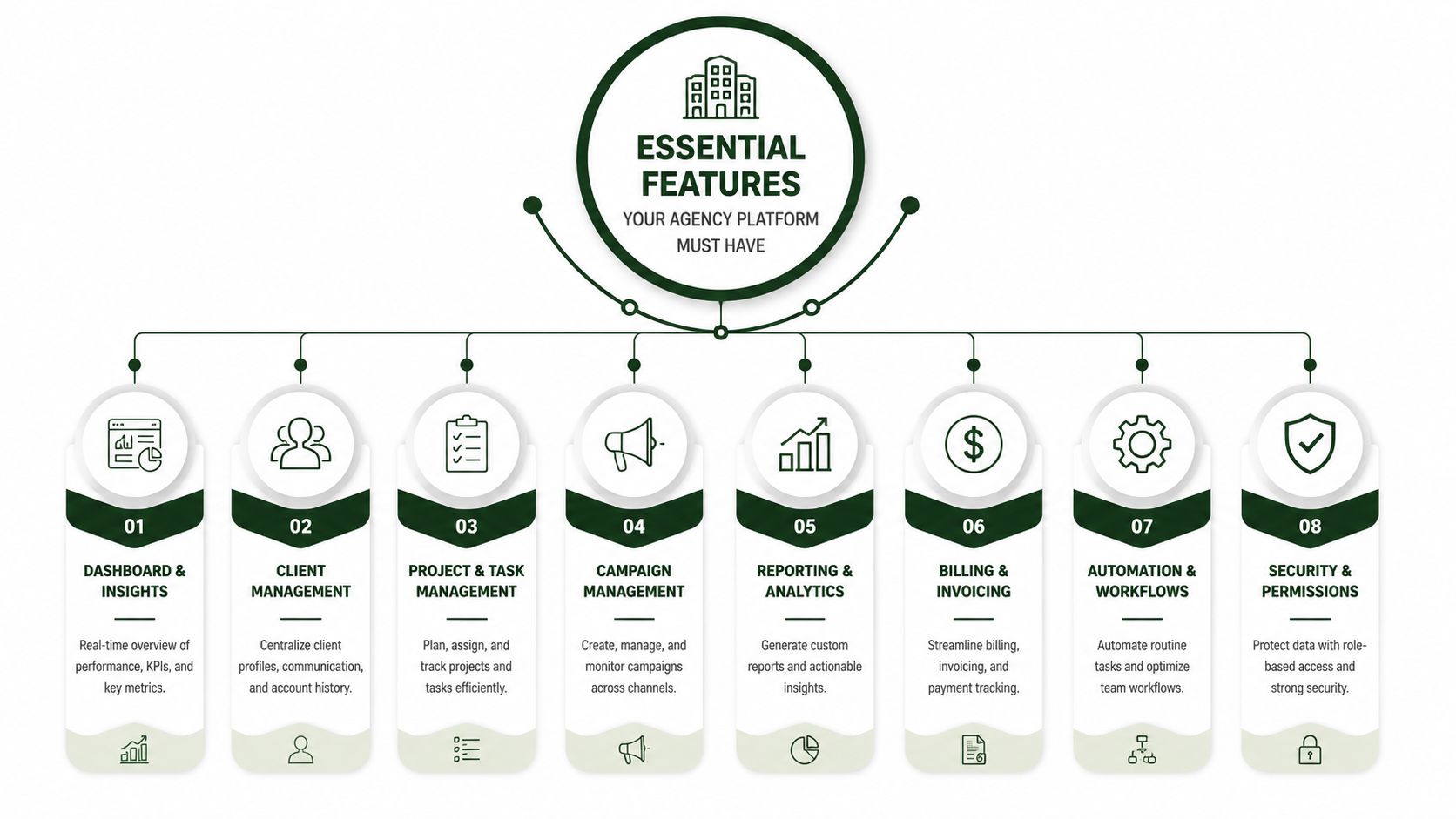
Essential Features Your Agency Platform Must Have
A feature list by itself isn't useful. Plenty of tools check boxes in a demo and still create operational headaches once a team starts using them. For freelance platform agencies, the question is simpler. Does the platform support the way your sales process works?
Multi-user workflows that fit agency reality
Single-user automation is not enough once more than one person is bidding. Agencies need shared visibility across freelancer profiles, active proposals, message threads, and booked calls.
Without that, teams run into the same failures repeatedly:
- Two bidders chase the same lead
- A client reply sits unanswered because everyone assumes someone else saw it
- The founder has no reliable picture of pipeline activity
- Performance depends on private inbox habits instead of process
A good platform should make ownership obvious. It should show who touched what, when they touched it, and what happens next.
Personalization that goes beyond templates
Proposal automation fails when it turns into mail merge. Buyers on freelance platforms can spot generic outreach immediately. Agencies need AI assistance that adapts to the client brief, project type, service line, and likely buying intent.
That doesn't mean every proposal needs to read like a custom strategy document. It does mean the platform should help your team produce responses that feel specific, relevant, and aligned with your positioning.
What works
- Dynamic messaging based on project details
- Reusable positioning blocks shaped by service and niche
- Human review for high-value or sensitive opportunities
What doesn't
- One prompt for every proposal
- Fully generic intros
- Automation that values volume over fit
Message automation with handoff controls
Proposal sending is only one part of the system. Agencies also need structured follow-up and reply handling. If a platform can submit proposals but can't manage early conversation flow, your team still has to babysit the pipeline.
The useful model is mixed automation. Let the system handle routine early-stage responses, reminders, and basic routing. Keep human review available for strategy-heavy questions, pricing issues, or client signals that need judgment.
One example in this category is Earlybird AI, which connects to an Upwork account and automates project search, proposal drafting, and message replies while also supporting analytics and multi-user workflows for agencies.
Cross-system orchestration and reporting
Sales activity shouldn't end in a silo. Marketplace leads often need to flow into your CRM, reporting layer, and internal ops stack. If the platform can't connect cleanly, your team ends up exporting data manually and rebuilding context after the fact.
That's why the broader stack matters. Your agency may also need a CRM to manage downstream relationships. If you're evaluating that side of the stack too, this guide to the best CRM for agencies is a practical companion.
Account safety and governance
Many buyers get too casual at this stage. For agencies operating on freelance platforms, safety is not a side feature. It's part of the core product.
The platform should give you confidence around:
- Behavior controls that don't create reckless automation patterns
- Permissions so not every user has the same level of control
- Logging so activity can be reviewed
- Error visibility so failures don't stay hidden
- Approval paths for higher-risk actions
If a tool talks endlessly about speed but says very little about controls, treat that as a warning sign.
Good automation doesn't just move faster. It stays governable while moving faster.
Your Vetting Checklist for Choosing a Platform
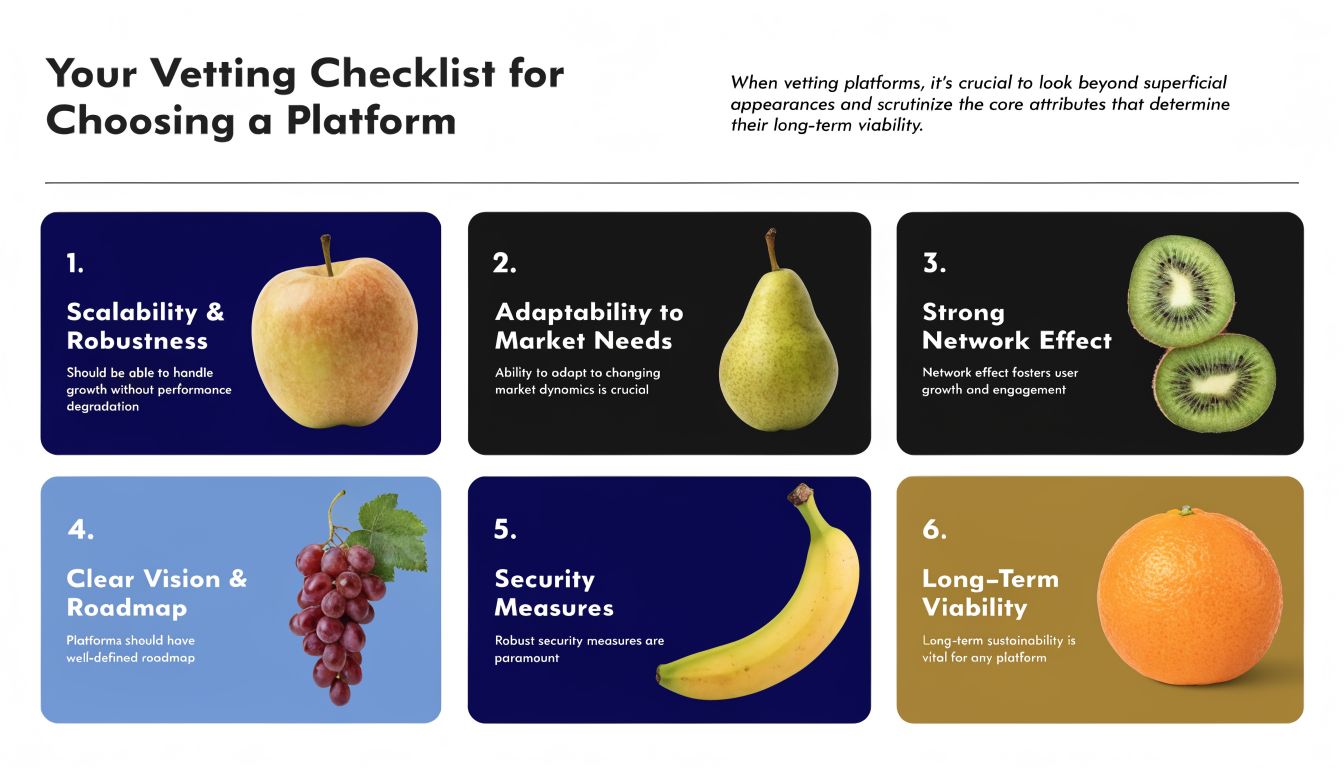
Most agency buyers spend too much time on front-end features and too little time on operating risk. A polished demo can hide serious problems. The better test is whether the platform behaves safely, supports team collaboration, and holds up once more than one bidder is involved.
Ask how the platform handles control, not just automation
The most important question isn't “What can it automate?” It's “What can it automate safely, and what still needs approval?”
A key differentiator is whether the platform supports agentic automation with secure access to live data and collaborative no-code building, because that allows agencies to mix human-in-the-loop decisions with fully automated repetitive steps under centralized policy control, as described in UiPath's explanation of agentic automation.
That matters in real agency workflows. Some actions are low risk and should run automatically. Others need review. If the platform can't separate those two categories, your team will either over-automate or avoid automation entirely.
The practical vendor questions worth asking
Use the sales process to test whether the vendor understands agency operations or is just selling generic AI language.
Ask questions like these:
- How do approvals work? Can you require review for certain proposal types, accounts, or message categories?
- What does the audit trail show? If a bidder sends the wrong message, can a manager see the sequence and intervene?
- How are permissions handled? Can junior bidders work inside the system without having full account control?
- What happens on failure? Are there alerts, retry rules, and visible logs, or do errors disappear without notice?
- How does the tool support collaboration? Can multiple users operate cleanly across the same agency setup?
Check for platform-native behavior
This point gets missed constantly. A workflow can be technically impressive and still be a bad fit for the environment it operates in.
Marketplace selling has its own rhythms. Proposal timing matters. Messaging etiquette matters. Account history matters. The tool should respect that context instead of treating the platform like a generic outbound channel.
A tool built for email outreach can be excellent at email and still be wrong for freelance marketplace sales.
You also want to know how the product handles multi-account agency structures, not just one freelancer login. If the vendor avoids that topic or gives vague answers, they probably haven't built for agencies first.
Evaluate support like it's part of the product
For most agencies, implementation success depends partly on support quality. Software alone won't fix weak targeting, sloppy offers, or poor handoff discipline.
A strong vendor should be able to help with:
- initial setup,
- workflow design,
- performance interpretation,
- and safe rollout across a team.
That doesn't mean you need hand-holding forever. It means you need a partner who can help the first implementation go right. In this category, human support often matters more than another dashboard widget.
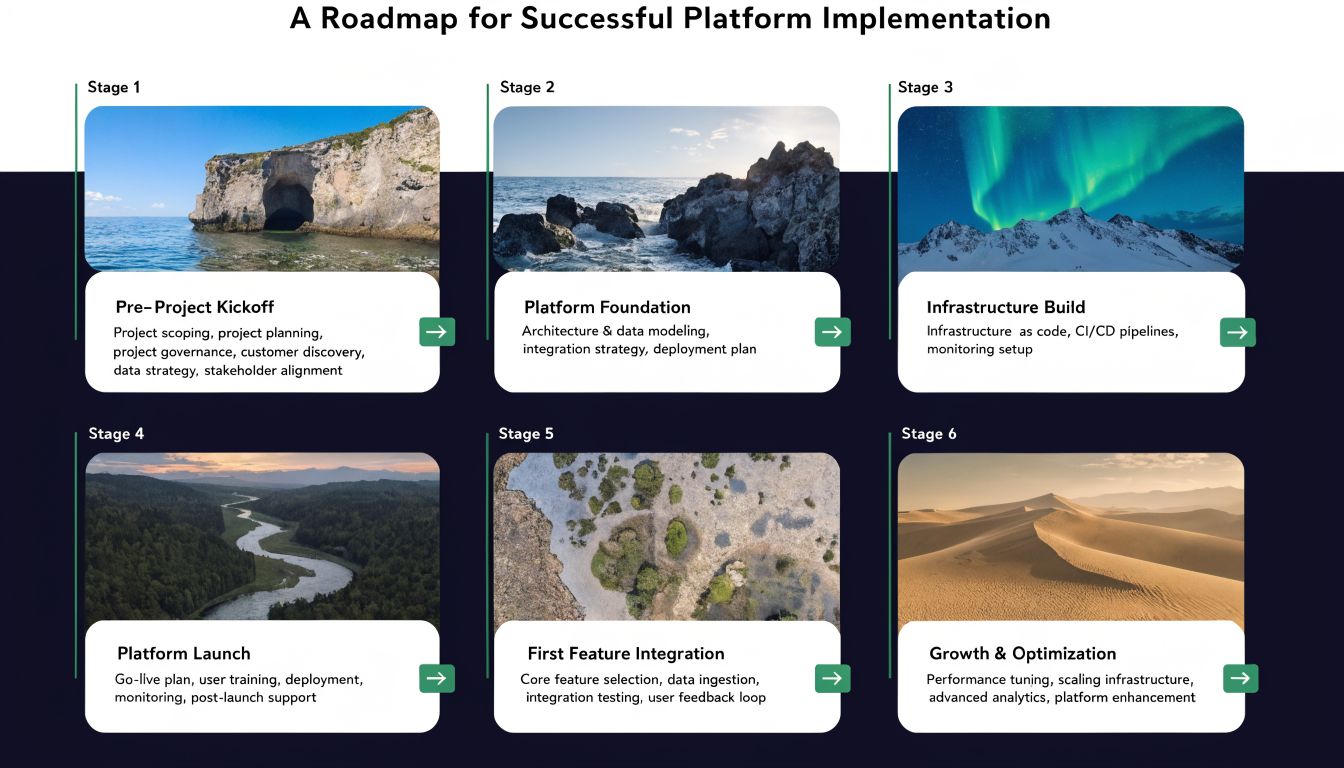
A Roadmap for Successful Platform Implementation
Most automation rollouts fail for boring reasons. The workflow isn't mapped clearly, nobody defines review rules, or the team tries to automate everything in one shot. Good implementation is usually slower at the start and faster later.
Start with one controlled pilot
Pick one service line, one account, or one bidder group. Keep the scope narrow enough that you can review outcomes manually.
Track practical signals, not vanity metrics:
- Reply quality
- Time to first response
- Meetings booked
- Proposal acceptance patterns
- Internal handoff errors
The purpose of the pilot is to expose friction. You want to learn where personalization needs tightening, which actions require approval, and what your team keeps forgetting to document.
Build governance before expanding volume
Many agencies rush at this stage. They see early efficiency and immediately widen usage. That creates hidden risk.
A better sequence is:
- Define approval rules for sensitive proposals, pricing language, and account-specific exceptions.
- Set logging expectations so managers can review actions and troubleshoot mistakes.
- Clarify permissions by role, especially if founders, bidders, and account managers all use the same environment.
- Document rollback steps for workflows that need to be paused or adjusted quickly.
Most public discussions of automation focus on efficiency, but the actual implementation gap is governance. Effective rollout requires controls for approvals, logging, and compliance when automation touches client intake or bidding workflows, a point reflected in VisionPoint's discussion of AI governance in operational settings.
Train the team on decisions, not just buttons
Bad adoption often looks like a training problem when it is a process problem. Teams don't just need to know where to click. They need to know when to trust the workflow and when to intervene.
Focus training on scenarios:
- when to edit a proposal manually,
- when to escalate a client reply,
- when to pause automation for a specific account,
- and who owns the next action after a meeting gets booked.
If your team is still doing too much repetitive manual work outside the platform, this guide on how to automate repetitive tasks can help you identify the next candidates for cleanup.
Rollout works better when the team understands the decision model behind the automation, not just the interface.
Expand in layers
After the pilot proves stable, widen adoption carefully. Add more bidder seats. Add more freelancer accounts. Connect CRM and reporting flows. Standardize review cadences.
The pattern that works is layered expansion:
- first reliability,
- then consistency,
- then scale.
That order matters. If you skip it, you just automate chaos faster.
Conclusion The Future of Agency Growth is Automated
Freelance-platform agencies don't need more hustle. They need a cleaner system for turning fit opportunities into qualified conversations. That's the core role of an automation platform for agencies.
The strong version of automation is not mass sending. It's structured execution. The platform handles job discovery, repetitive proposal work, early routing, follow-up logic, and team coordination. Humans stay focused on judgment, positioning, and closing. That split is what makes growth more predictable.
Generic automation advice usually misses the realities that matter most in this niche. Marketplace selling is not standard inbound. Agencies need account safety, bidder coordination, proposal personalization, and clear governance around who can do what. When those pieces are missing, automation creates as many problems as it solves.
The agencies pulling ahead are the ones that treat automation as part of their sales infrastructure. Not a side tool. Not a shortcut. A real operating layer.
If your current sales process depends on founders jumping into inboxes, bidders working from memory, and proposals being sent whenever someone has time, you've already found the limit of manual growth. The next step isn't more effort. It's a better system.
If you want a platform built specifically for agency sales on Upwork, Earlybird AI is designed for that workflow. It helps agencies automate project search, proposal drafting, replies, and follow-up while supporting multi-user collaboration, analytics, and account-safe operations.