← Back To Blog
10 Client Communication Best Practices for Upwork Freelancers in 2026

On competitive platforms like Upwork, your technical skills are only half the story. The other half, the part that gets you noticed, hired, and rehired, is the quality of your client communication. From the initial proposal to the final project delivery, how you interact with clients directly influences your response rates, project success, and ultimately, your freelance income. Exceptional communication is not merely about being polite; it is a strategic advantage that builds trust, prevents costly misunderstandings, and converts one-off gigs into valuable, long-term partnerships.
Many talented freelancers and agencies struggle to maintain the necessary speed, personalization, and consistency required to stand out. This often means leaving significant opportunities and revenue on the table. Without a defined strategy, proposals get ignored, client relationships falter, and growth stagnates. The key to breaking this cycle lies in implementing proven client communication best practices that are specifically adapted for the fast-paced Upwork environment.
This comprehensive guide breaks down 10 essential communication strategies, providing actionable frameworks tailored for winning more work on Upwork. You will learn how to master everything from crafting personalized messages and setting clear expectations to leveraging data for better outreach. By implementing these techniques, you can effectively cut through the noise, connect with high-value clients, and build a more predictable and profitable freelance business. We will cover:
- Personalization and Client-Specific Messaging
- Rapid Response Time and First-Mover Advantage
- Two-Way Conversation and Active Listening
- Multi-Channel Communication Strategy
- Setting Clear Expectations and Transparency
- Consistent and Timely Follow-Up Sequences
- Professionalism and Brand Consistency
- Data-Driven Communication and Analytics
- Client-Specific Research and Preparation
- Proactive Communication and Progress Updates
1. Master the Art of Personalization and Client-Specific Messaging
The fastest way to get your Upwork proposal archived is to make it feel generic. Effective client communication best practices begin long before you land the interview; they start with a proposal that proves you’ve paid attention. True personalization goes beyond a simple name drop. It involves a deep dive into the client's job post, business, and stated pain points to craft a message that resonates on a personal level.
This approach shifts your proposal from a list of your skills to a direct solution for their specific problem. Instead of saying, "I have five years of experience in SEO," you say, "I see you're aiming to improve search rankings for your e-commerce store in the competitive fitness apparel niche. My experience driving a 150% organic traffic increase for a similar brand by targeting long-tail keywords will be directly applicable here." This demonstrates genuine interest and immediately establishes your value.

How to Implement Client-Specific Messaging
Successfully personalizing your outreach requires a strategic, repeatable process. Whether you're writing proposals manually or using automation, the goal is to show you understand the client's world better than your competitors.
Actionable Tips:
- Deconstruct the Job Post: Don't just skim it. Identify specific keywords, desired outcomes, and pain points. If a client mentions they "struggled with a previous developer's slow communication," make sure to highlight your commitment to daily check-ins.
- Reference Their Business: Do a quick search for the client’s company. Mentioning their latest blog post, a recent product launch, or an industry trend shows you’ve done your homework and aren't just spamming applications.
- Connect Your Experience to Their Needs: For every skill you list, connect it directly to a requirement in their job description. Frame your case studies and portfolio pieces as solutions to problems just like theirs.
- Leverage Smart Automation: For agencies managing high proposal volume, AI-powered tools like Earlybird can analyze job posts and auto-generate personalized drafts that reference client needs, saving hours while maintaining a handcrafted feel. This approach is fundamental to scaling outreach without sacrificing quality, a core principle detailed in high-performing lead generation strategies.
2. Rapid Response Time and First-Mover Advantage
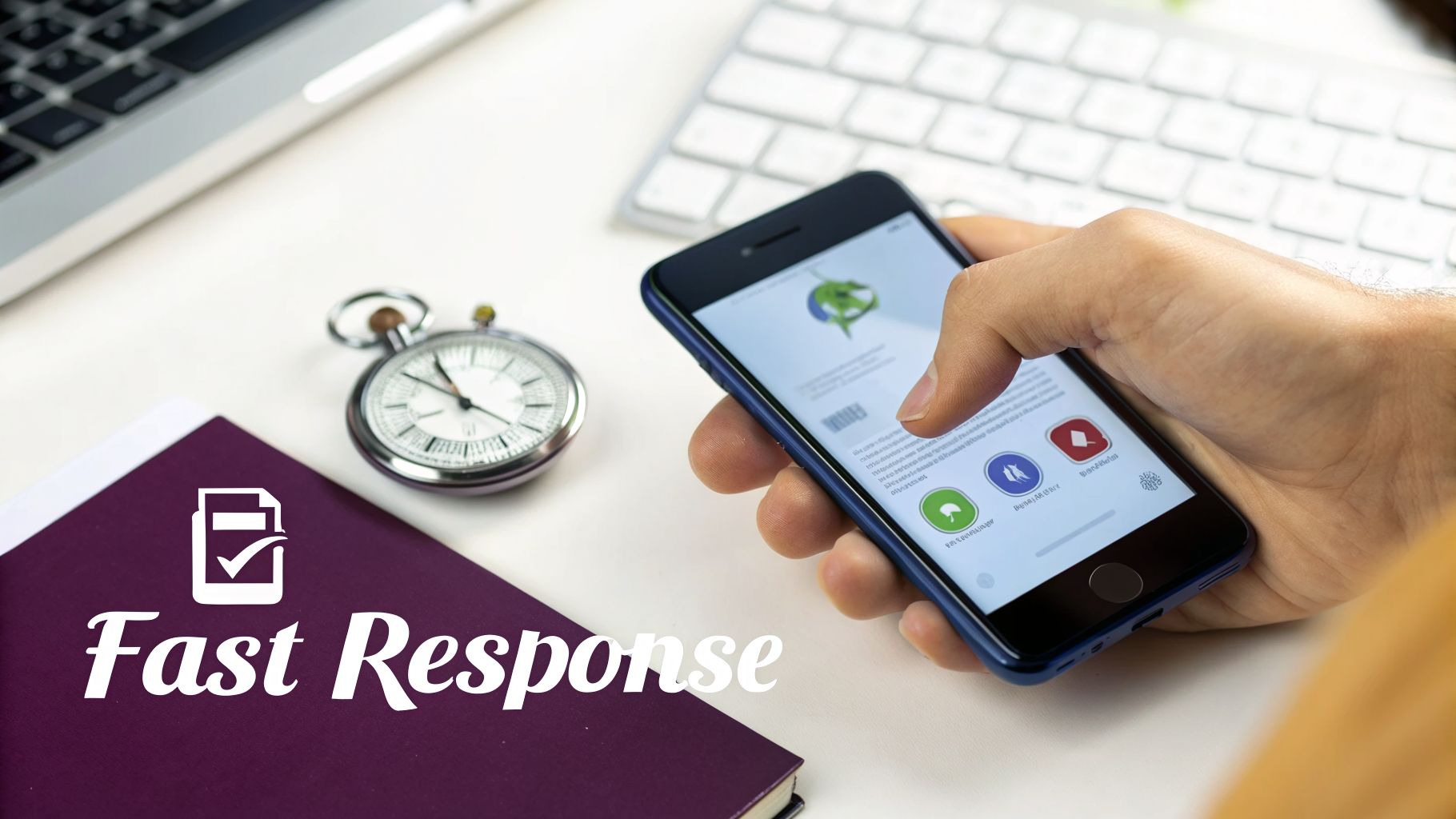
In the competitive Upwork marketplace, speed is a decisive factor. The best client communication best practices recognize that a high-quality proposal submitted hours after a job is posted often goes unseen. A rapid response creates a powerful first-mover advantage, placing your proposal in front of the client while their attention is still fresh and they are actively reviewing candidates. Responding within minutes, not hours, signals professionalism and eagerness.
This strategy is about capturing the client's attention before your competitors do. Data consistently shows that the first few freelancers to apply receive the most consideration. For example, Upwork freelancers who respond within the first 5-10 minutes often see significantly higher response rates. This isn't just a platform quirk; it's a fundamental principle of modern sales where the first compelling solution presented often sets the standard for all others.
How to Implement a Rapid Response Strategy
Achieving consistent, near-instant response times requires a proactive system that blends preparation with technology. The goal is to eliminate manual delays and ensure you are always among the first to engage, whether submitting an initial proposal or replying to a client's message.
Actionable Tips:
- Set Up Instant Notifications: Configure your Upwork account and any connected tools to send real-time alerts for new jobs that match your precise criteria. This is your first line of defense against delays.
- Prepare Proposal Templates: Create several high-quality, pre-written proposal variations for your most common project types. This allows you to quickly customize a strong foundation instead of writing from scratch every time.
- Leverage Mobile Access: Ensure you can receive notifications and send responses from your mobile device. A client's message can arrive at any time, and a quick reply from your phone keeps the conversation moving.
- Automate for Speed and Scale: For agencies, manually monitoring and responding to every opportunity is impossible. AI-powered platforms like Earlybird can submit highly personalized proposals within minutes of a job posting, securing that critical first-mover advantage. You can learn how to effectively automate Upwork proposals without sacrificing the custom-tailored quality clients expect.
3. Foster Two-Way Conversation Through Active Listening
The most effective client communication best practices transform your sales process from a monologue into a dialogue. Instead of simply pitching your services, the goal is to establish a genuine conversation where you listen more than you speak. This approach positions you as a strategic partner who seeks to understand before prescribing a solution, a key differentiator in a crowded marketplace.
This consultative method involves asking insightful questions and actively processing the client's answers to uncover their true needs, motivations, and unstated concerns. Rather than leading with your portfolio, you might start with, "What does success look like for this project in six months?" This simple question shifts the dynamic, proving you care about their outcomes, not just the task list. It builds rapport, reveals crucial project details, and helps you tailor a solution that perfectly matches their definition of success.
How to Implement Active Listening
Integrating active listening requires a conscious shift from "selling" to "solving." It's about demonstrating through your questions and responses that you've heard and understood the client's perspective, making them feel valued and confident in your abilities.
Actionable Tips:
- Lead with Strategic Questions: Include one or two open-ended questions in your initial proposal. For example, "You mentioned timeline is a critical factor. Would exploring a phased MVP approach be beneficial to get key features to market faster?"
- Mirror Client Language: When you respond, use the specific terminology and phrases the client used. This is a subtle yet powerful way to show you are paying close attention and are on the same page.
- Confirm and Clarify: Before offering a solution, summarize your understanding of their problem. A simple, "So, if I'm hearing correctly, the main priority is reducing customer support tickets by improving the user onboarding flow. Is that right?" can prevent costly misunderstandings.
- Balance Questions with Expertise: While asking questions is crucial, don't overdo it. The goal is to gather information to inform your expert recommendation. Pair your questions with brief insights that showcase your experience and build credibility.
4. Multi-Channel Communication Strategy
Relying solely on Upwork's messaging system can limit your reach and leave opportunities on the table. A multi-channel communication strategy expands your touchpoints, meeting clients on platforms where they are most active and responsive. This approach isn't about spamming; it's a coordinated effort to build rapport and demonstrate persistence, increasing visibility and engagement beyond the initial proposal.
This method transforms a one-dimensional interaction into a dynamic conversation. For example, after sending a strong proposal on Upwork, you might send a connection request on LinkedIn with a brief, non-salesy note referencing your proposal. This client communication best practice reinforces your professionalism and keeps you top-of-mind. It shows you are a serious business professional who understands how to operate in a modern B2B environment, not just another freelancer bidding on a job.
How to Implement a Multi-Channel Strategy
A successful multi-channel approach is subtle, respectful, and strategic. The goal is to create a cohesive brand presence that supports your primary pitch on Upwork, not to overwhelm a potential client.
Actionable Tips:
- Lead with the Primary Channel: Always initiate contact on the platform where the job was posted, like Upwork. Your first message must be strong enough to stand on its own, providing clear value and personalization.
- Time Your Follow-ups: Space out your touchpoints appropriately. Wait at least 24-48 hours after your initial proposal before attempting contact on a secondary channel like LinkedIn or a professional email.
- Adapt Your Message: Your LinkedIn connection request shouldn't just repeat your Upwork proposal. Instead, keep it concise: "Hi [Client Name], I just sent a proposal on Upwork regarding your [Project Name] post. Your company's work in [Their Industry] is impressive, and I'd be glad to connect here as well."
- Respect Client Preferences: If a client responds on one channel, concentrate your communication there. The goal is to find their preferred method of contact, not to force them to interact across multiple platforms.
- Track Channel Performance: Monitor which channels yield the best results. You may find that certain types of clients respond better to LinkedIn, while others prefer to keep everything strictly on Upwork. Use this data to refine your outreach process.
5. Set Clear Expectations with Radical Transparency
The root of most client disputes isn't poor work; it's a mismatch between expectations and reality. The most effective client communication best practices involve establishing radical transparency from day one. This means clearly defining the project scope, timeline, deliverables, communication cadence, and pricing upfront to eliminate ambiguity and prevent scope creep.
Transparency isn't just about what you will do; it's also about what you won't do and what potential roadblocks exist. Instead of vaguely promising "a new website design," you should specify, "a 5-page responsive website design including 2 rounds of revisions on the initial mockups." This level of detail builds trust, positions you as a professional partner, and creates a solid foundation for a successful engagement, preventing misunderstandings down the line.

How to Implement Radical Transparency
Building a framework for transparency ensures nothing is left to interpretation. It's about creating a single source of truth that both you and the client can reference throughout the project lifecycle, a practice popularized by project management philosophies like those from Basecamp.
Actionable Tips:
- Create Scoped Proposals: Use templates that detail every deliverable. Instead of "SEO services," specify "Keyword research for 20 primary terms, on-page optimization for 5 core pages, and one monthly performance report."
- Include a 'What's Not Included' Section: Explicitly state what is outside the project scope. For a content writing project, this might be "This scope does not include image sourcing, content uploading, or social media promotion."
- Define the Revision Process: Clearly state the number of revision rounds included in the price. For example: "The quoted price includes two rounds of revisions on the delivered copy. Additional revision rounds will be billed at a rate of $75 per hour."
- Document Everything: After a verbal agreement on a change, follow up with a written confirmation via Upwork messages. This ensures there is a clear record of all decisions and scope adjustments.
- Be Honest About Constraints: If a client's timeline is unrealistic, say so. Proposing a more feasible schedule shows expertise and integrity, even if it means adjusting their initial expectations.
6. Consistent and Timely Follow-Up Sequences
Sending a single proposal and hoping for the best is a common but ineffective strategy. The reality is that most conversions happen after multiple points of contact. A systematic follow-up sequence ensures your proposal stays top-of-mind, demonstrating persistence and professionalism without coming across as pushy. This is a critical element of client communication best practices, as it captures the attention of busy clients who may have missed or forgotten your initial message.
This approach transforms your outreach from a single event into a strategic campaign. Instead of a generic "just checking in" message, each follow-up should offer new, distinct value. For example, your first follow-up might reference a relevant case study, a second could offer a brief, valuable insight related to their project, and a third could propose a quick consultation call to discuss their pain points directly. This method respects the client's time while reinforcing your expertise and genuine interest in their success.
How to Implement Follow-Up Sequences
Building an effective follow-up strategy requires pre-planning and consistency. The goal is to nurture the lead by progressively demonstrating your value over a short period, increasing the likelihood of a response.
Actionable Tips:
- Plan Your Cadence in Advance: Before sending the first proposal, define your follow-up schedule. A common sequence on fast-paced platforms like Upwork is a 3-touch approach spaced 2-3 days apart.
- Vary Your Messaging: Each message should have a unique angle. If your proposal highlighted your skills, your first follow-up could share a link to a relevant portfolio piece. The next could offer a specific idea for their project.
- Provide New Value, Don't Just Nudge: Avoid empty phrases like "following up on my proposal." Instead, lead with value: "I was thinking more about your goal to increase user engagement, and I believe a gamified onboarding process could be a quick win. Here’s an example..."
- Automate for Consistency: Manually tracking follow-ups for multiple proposals is tedious and prone to error. Tools like Earlybird can automate these sequences, ensuring no lead falls through the cracks and every prospect receives timely, persistent communication until they respond. You can discover more advanced techniques in our detailed guide on how to follow up with clients.
- Know When to Stop: A well-defined sequence also has a clear end point. After 3-5 attempts with no response, it's often best to move on and focus your energy on more engaged prospects.
7. Professionalism and Brand Consistency
From your Upwork profile picture to your proposal formatting, every touchpoint communicates something about your brand. True professionalism isn't just about being polite; it's about maintaining a consistent identity that builds trust and signals quality. This is a core tenet of effective client communication best practices, as it reassures clients they are hiring a reliable, organized, and detail-oriented expert, not just a casual gig worker.
This consistency reinforces your credibility long before a contract is signed. When a client sees a professional headshot on your profile, a well-branded proposal with a consistent tone, and a portfolio that reflects the same high standard, they perceive you as a serious business. For example, a design agency that uses a cohesive visual identity across its proposals, portfolio, and website instantly appears more authoritative than a competitor with a disjointed and unprofessional presentation.
How to Implement Professionalism and Brand Consistency
Establishing a consistent brand voice and visual identity requires a deliberate, systemized approach. The goal is to create a seamless, professional experience for the client from the very first interaction.
Actionable Tips:
- Develop Brand Guidelines: Create a simple document outlining your brand’s tone of voice (e.g., expert, friendly, formal), color palette, and logo usage. This ensures anyone communicating on your behalf, including team members, stays on-brand.
- Create Professional Templates: Design branded templates for proposals, invoices, and project updates. This not only saves time but also ensures every document you send looks polished and aligns with your brand identity.
- Proofread Everything: Simple spelling and grammar mistakes can instantly undermine your credibility. Use tools like Grammarly and always double-check your messages before hitting send. Carelessness suggests a lack of attention to detail.
- Invest in Professional Presentation: Use a high-quality, professional headshot on your Upwork profile. Ensure your portfolio is well-organized, visually appealing, and up-to-date. Your presentation is a direct reflection of the quality of work a client can expect.
8. Data-Driven Communication and Analytics
The most successful agencies and freelancers on Upwork don't rely on guesswork; they rely on data. Effective client communication best practices involve treating your outreach like a science. This means moving beyond simply sending proposals and hoping for the best, and instead, systematically tracking what works, what doesn't, and why. By measuring key metrics, you can replace assumptions with evidence-based decisions, ensuring your efforts generate the highest possible return.
A data-driven approach allows you to identify patterns in client behavior and optimize your strategy accordingly. For example, you might discover that proposals submitted within 15 minutes of a job posting have a 50% higher response rate, or that mentioning a specific case study increases your conversion rate by 30%. This insight is crucial for refining your messaging, timing, and targeting for maximum impact.

How to Implement a Data-Driven Approach
Adopting analytics doesn't require complex tools; it starts with a commitment to tracking and testing. The goal is to create a feedback loop where performance data informs your next actions, leading to continuous improvement and more predictable client acquisition.
Actionable Tips:
- Establish Baseline Metrics: Before implementing changes, know your starting point. Track your proposal win rate, response rate, and interview-to-hire ratio for a set period to create a benchmark.
- Track Key Performance Indicators (KPIs): Monitor both activity metrics (proposals sent) and outcome metrics (replies received, interviews booked, projects won). This gives you a full picture of your sales funnel.
- Test One Variable at a Time: To truly understand what drives results, isolate your tests. For one week, change only your proposal's opening line. The next, test a different call-to-action. This helps you pinpoint what truly moves the needle.
- Use Analytics to Refine Your Ideal Client Profile (ICP): Analyze your most successful projects. What industry were they in? What was the company size or budget? Use this data to focus your outreach on high-value lookalike clients.
- Leverage Integrated Analytics: For teams seeking to scale, platforms like Earlybird provide built-in analytics that track proposal performance, response rates, and revenue generated per team member. This automates the data collection process, offering real-time insights to optimize your entire outreach workflow.
9. Conduct Thorough Client-Specific Research and Preparation
Top-tier client communication best practices involve treating every potential client like a major account, not just another job post. Before you write a single word of your proposal, investing time in research demonstrates a level of professionalism that immediately separates you from the competition. This isn't just about finding the client's name; it's about understanding their business, industry, recent news, and inherent pain points to position yourself as a strategic partner.
This pre-proposal intelligence gathering allows you to tailor your entire approach. Understanding that a prospect is a bootstrapped startup versus a venture-funded enterprise changes how you frame your pricing and service offerings. Similarly, identifying that a client is in a highly regulated industry like healthcare signals that you should proactively mention your familiarity with compliance and data security. This preparation transforms your outreach from a speculative pitch into an informed, consultative conversation.
How to Implement Client Research
Effective research doesn’t have to take hours; it just needs to be systematic. The goal is to uncover 2-3 key insights that you can strategically reference in your proposal or initial call to prove you’ve done your homework and are genuinely invested in their success.
Actionable Tips:
- Create a 5-10 Minute Research Checklist: Systematize your process. Your checklist could include: visit the company website, check their LinkedIn page for recent activity or employee count, and do a quick news search for recent funding or product launches.
- Analyze the Job Post for Clues: The client’s project description is a goldmine of information. If they mention a specific technology, methodology, or past frustration, it reveals their priorities and allows you to address those points directly.
- Focus on Actionable Insights: Don't just gather data; find information that impacts your pitch. A recent funding announcement is a perfect conversation starter and signals they have a budget for quality work.
- Build Industry-Specific Knowledge: The more you specialize in a niche (e.g., SaaS, FinTech, e-commerce), the faster you can understand a client's context and challenges, making your research far more efficient and your insights more valuable.
- Know When to Skip Research: If a project is clearly a poor fit based on budget, scope, or technology, don’t waste time on deep-dive research. Qualify prospects early to focus your energy where it counts most.
10. Proactive Communication and Progress Updates
Once a project is underway, the best client communication is the kind they don’t have to ask for. Proactive updates demonstrate that you are on top of the project, managing their investment responsibly, and respecting their time. Instead of waiting for a client to ask, "Where are we with the landing page design?" you should be the one initiating contact with progress reports, milestone achievements, and even potential roadblocks before they become serious issues.
This approach transforms the client relationship from a simple transaction into a collaborative partnership. It manages expectations, prevents last-minute surprises, and builds a deep sense of trust and confidence. When clients see you’re consistently sharing progress, they feel secure in your process and are more likely to become repeat customers. Regular, unprompted communication shows you’re not just completing tasks; you're actively steering the project toward success.
How to Implement Proactive Communication
Building a system for proactive updates ensures nothing slips through the cracks and keeps your clients informed and engaged. This practice is a cornerstone of modern project management and is crucial for maintaining momentum and client satisfaction.
Actionable Tips:
- Establish a Cadence Upfront: During the project kickoff, agree on a communication schedule. Will you send a summary email every Friday? Have a 15-minute check-in call on Mondays? Setting this expectation early prevents client anxiety.
- Use Shared Project Management Tools: Platforms like Asana, Trello, or Basecamp create a transparent environment. Clients can see task progress in real-time, reducing the need for constant status requests and keeping all communication centralized.
- Share Good News and Milestones: Don't just communicate when there's a problem. Send a quick message celebrating a completed milestone, like, "Great news! We've just completed the initial wireframes ahead of schedule. You can review them here."
- Flag Issues Early (with Solutions): If you foresee a potential delay, inform the client immediately. Frame it constructively by presenting the problem along with one or two proposed solutions, showing you are in control of the situation.
- Share Work-in-Progress: Avoid the "big reveal." Share drafts and early versions of deliverables. This invites collaboration, ensures the project stays aligned with the client’s vision, and makes the final approval process much smoother.
Turn Great Communication Into Your Unfair Advantage
Navigating the competitive landscape of Upwork requires more than just technical skill or a polished portfolio. As we've explored, the true differentiator that elevates top-tier freelancers and agencies is a masterful approach to client communication. It's the engine that drives every successful client relationship, from the first proposal to the final five-star review. Mastering these client communication best practices isn't just about being polite; it's about building a systematic, strategic, and repeatable process that generates predictable growth.
The principles detailed in this guide, from hyper-personalization and rapid response times to data-driven analysis and proactive updates, are not isolated tactics. They are interconnected components of a comprehensive communication system. Think of it as building a high-performance machine: rapid response is the ignition, personalization is the high-octane fuel, and consistent follow-ups are the gears that maintain momentum. Each piece reinforces the others, creating a powerful and cohesive client acquisition and retention engine.
From Good Habits to a Strategic System
The journey from inconsistent messaging to a refined communication strategy is a transformative one. It shifts your position from a reactive service provider waiting for opportunities to a proactive business partner who commands attention.
Let's recap the core pillars that form this system:
- Speed and Personalization: The one-two punch of being the first to respond and making that response deeply relevant. This combination immediately separates you from the 95% of generic, delayed proposals.
- Active Engagement: Moving beyond one-way information dumps to foster genuine two-way conversations. This involves active listening and asking insightful questions that demonstrate you understand the client’s core problem, not just their stated request.
- Unwavering Consistency: Maintaining professionalism, transparency, and a reliable cadence in all interactions. This builds trust, the foundational element of any long-term client partnership, and sets clear expectations from the start.
- Data-Informed Optimization: Shifting from guesswork to a data-driven approach. By measuring what works-reply rates, interview conversion rates, and engagement metrics-you can systematically refine your messaging and strategy for continuous improvement.
Implementing these practices transforms communication from a soft skill into a hard asset. It becomes your most potent marketing tool, your most effective sales strategy, and your ultimate client retention program, all rolled into one.
"Your communication is your brand. Every message, every proposal, and every update is an opportunity to prove your value, build trust, and solidify your reputation as an expert."
Your Actionable Path Forward
The sheer volume of advice can feel overwhelming, but progress begins with a single, deliberate step. Don't try to overhaul your entire workflow overnight. Instead, commit to mastering one area at a time.
Here is a practical starting point:
- Pick One Practice: Choose the single communication best practice from this list that represents your biggest weakness. Is it personalization? Is it follow-up consistency?
- Focus for 30 Days: Dedicate the next month to mastering only that one skill. If it's personalization, spend an extra five minutes researching each client before you write a single word. If it's response time, set up alerts and block off time specifically for proposal submissions.
- Measure the Impact: Track your reply and interview rates before and after you implement the change. Seeing the tangible results will provide the motivation to integrate the next practice into your system.
By adopting this incremental approach, you build powerful habits that stick. Each refined skill stacks upon the last, compounding your effectiveness and steadily elevating your freelance business above the noise. The goal is to build a communication framework so effective and ingrained in your process that it becomes second nature, an unfair advantage that consistently wins you better clients and more rewarding projects.
Ready to implement these best practices without sacrificing your valuable time? Earlybird AI automates the most tedious parts of client communication, from finding the perfect jobs in real-time to crafting highly personalized proposals in minutes. Stop manually searching and start winning more clients by leveraging the power of AI to build a world-class communication system.