← Back To Blog
10 Effective Outreach Strategies for Upwork in 2026
Tired of sending proposals into the void?
You refresh your Upwork feed, find a project that fits your team perfectly, write a thoughtful pitch, hit send, and then nothing happens. A day later the job is closed. A week later the client hires someone else. Meanwhile, you know your work is better than half the profiles getting shortlisted.
That gap usually isn't about skill. It's about outreach.
On Upwork, strong work matters. Strong outreach decides whether a client ever gets far enough to see it. Speed matters. Relevance matters. Follow-up matters. Your profile has to support your pitch, and your process has to hold up when volume increases. If you're still handling all of this manually, you can do good work, but you'll struggle to do it consistently.
The best effective outreach strategies don't rely on luck. They combine timing, personalization, filtering, and disciplined follow-through. They also respect a basic truth most freelancers learn the hard way: more activity doesn't automatically mean more wins. Sending more proposals with weak targeting just burns connects and attention. Sending fewer, better-timed, better-positioned proposals usually does more.
Modern automation changes the equation if you use it correctly. It can help you respond faster, personalize at scale, track what converts, and keep agency workflows organized. But automation by itself isn't the strategy. The strategy is deciding what gets automated, what still needs a human, and how to make every touchpoint feel relevant instead of mass-produced.
Below are 10 practical outreach methods that work on Upwork right now. Some are foundational. Some are operational. All of them matter if you want more replies, better-fit clients, and a sales process that doesn't eat your entire day.
1. Automated Proposal Personalization
Fast proposals used to sound templated. That's no longer a good excuse.
If you're competing on Upwork, your proposal needs to sound like it was written for that exact project, even when your process is partially automated. The strongest setups pull the client's language, priorities, scope clues, and likely pain points into a proposal that feels specific, not generic. That matters because personalized outreach performs better broadly. In projected 2026 cold outreach benchmarks, 81% of sales and marketing decision-makers engage with personalized outreach, according to Sopro's cold outreach statistics roundup.

On Upwork, that means your proposal should mention the client's actual problem, not just your service list. If they need landing page copy for a product launch, don't lead with "I'm a copywriter with X years of experience." Lead with the launch, the conversion friction, and the one or two outcomes you would prioritize first.
How to make automation sound human
Tools like Earlybird AI work best when you train them with real examples of your strongest work, your preferred project types, and the language you use with clients. If you feed the system vague inputs, you get vague outputs. If you feed it strong case-study material, niche-specific language, and clear feedback, proposal quality improves.
You can see that workflow in practice in this guide to Upwork proposal automation.
A few rules keep this from drifting into lazy templating:
- Train with real proof: Add portfolio examples, client outcomes you can describe, and the kinds of problems you solve best.
- Use thumbs up and down consistently: Feedback helps the system learn which jobs fit your positioning and which ones waste your connects.
- Test proposal openings: The first two lines matter most. Try one version that leads with diagnosis and another that leads with a concise relevant proof point.
- Review samples regularly: Good automation still needs supervision. Check for tone drift, awkward phrasing, or overpromising.
Practical rule: If a proposal could be sent to five different jobs unchanged, it isn't personalized enough.
A well-automated proposal process doesn't remove your voice. It preserves it while helping you show up faster and more often.
2. Rapid Response Messaging Strategy
A lot of Upwork jobs are effectively decided before most freelancers even see them.
Clients post, get a wave of proposals, skim the first relevant options, and start replying while everyone else is still drafting. That's why response speed matters far beyond convenience. In the California Workplace Outreach Project, combining fast, repeated, multi-format contact with personal engagement produced major scale, including 7.5 million total touchpoints and 1.5 million two-way conversations from February 2021 through September 2024, as documented in the CWOP campaign report. Different context, same lesson: timely contact plus real interaction creates momentum.
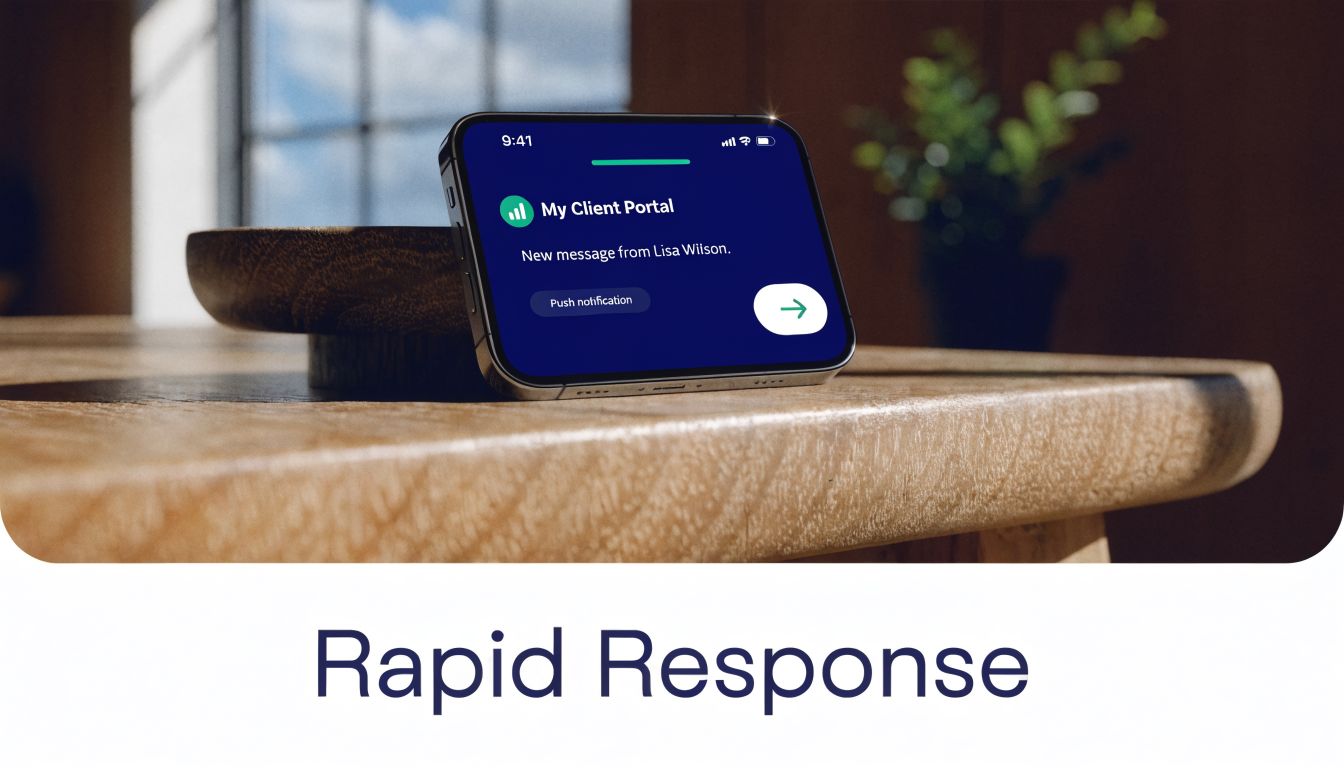
On Upwork, the practical version is simple. Reply quickly when a client messages. If your system can respond within minutes with a clear, relevant acknowledgment and a useful next step, you stay in the live conversation instead of the stale backlog.
What fast replies should actually say
Fast doesn't mean rushed. The message still has to move the sale forward.
A strong first reply usually does three things:
- Confirms relevance: Show that you understood the request.
- Reduces friction: Offer a simple next step, such as clarifying scope or sharing the right portfolio sample.
- Signals availability: Clients often hire the person who seems easiest to work with right now.
For example, if a client asks whether you've handled Webflow migrations before, don't answer with a one-word yes. Answer with a short confirmation, one similar scenario, and one question that matters, like whether content, redirects, or SEO preservation is part of scope.
Speed gets you seen. Relevance gets you the meeting.
For agencies, this gets harder because multiple people may monitor the same account or inbox. That's where routing matters. High-value leads should reach the right closer quickly. Routine inquiries can use a polished first-touch response before a team member steps in.
The mistake is trying to automate a full sales conversation from the first message to the close. The better pattern is to automate the handoff, the acknowledgment, and the scheduling momentum, then bring in a person when nuance matters.
3. Intelligent Lead Qualification and Filtering
More bidding usually feels productive. It often isn't.
The fastest way to waste time on Upwork is to chase every project that looks vaguely relevant. Good outreach starts before the proposal. It starts with filtering. If the client is a poor fit, the project is outside your delivery model, or the budget doesn't support your process, no amount of clever messaging will fix that.
AI-assisted qualification earns its keep. Instead of reading every post from scratch, you train your system to recognize patterns. A design agency might want brand identity work with organized briefs and established businesses. A dev shop might prioritize ongoing builds in specific stacks. A content team might avoid one-off blog jobs and focus on repeat publishing or product-led content.
What to qualify before you bid
The filter needs to be stricter than commonly believed. Start with the basics and tighten over time.
Use criteria like these:
- Service fit: Does the job match what you want to sell?
- Client quality: Look for signs of seriousness in the brief, communication, and hiring history.
- Engagement model: One-off task, pilot project, or likely long-term relationship.
- Team capacity: Can you deliver well without stretching your delivery team thin?
- Margin quality: Is this the kind of work you want more of six months from now?
If you're building that process with automation, this guide on how to qualify sales leads maps well to Upwork workflows.
A common mistake is filtering too loosely because you're afraid of missing opportunities. In practice, weak-fit projects create more damage than missed-fit projects. They consume connects, add admin work, and clog your pipeline with conversations that don't close.
The best proposal is often the one you never send, because the lead was wrong from the start.
Qualification also improves personalization. Once your system knows what "good" looks like, your messaging becomes more confident. You stop sounding like a generalist available for anything and start sounding like a specialist who solves a defined class of problems.
That's when outreach starts to compound.
4. Profile Optimization and Authority Building
Outreach gets the click. Your profile closes the trust gap.
A lot of freelancers obsess over proposal wording while leaving their profile half-finished, broad, or outdated. That's backwards. When a client receives a good proposal, the next thing they do is check whether your profile supports the promise. If the profile looks generic, your outreach loses force.
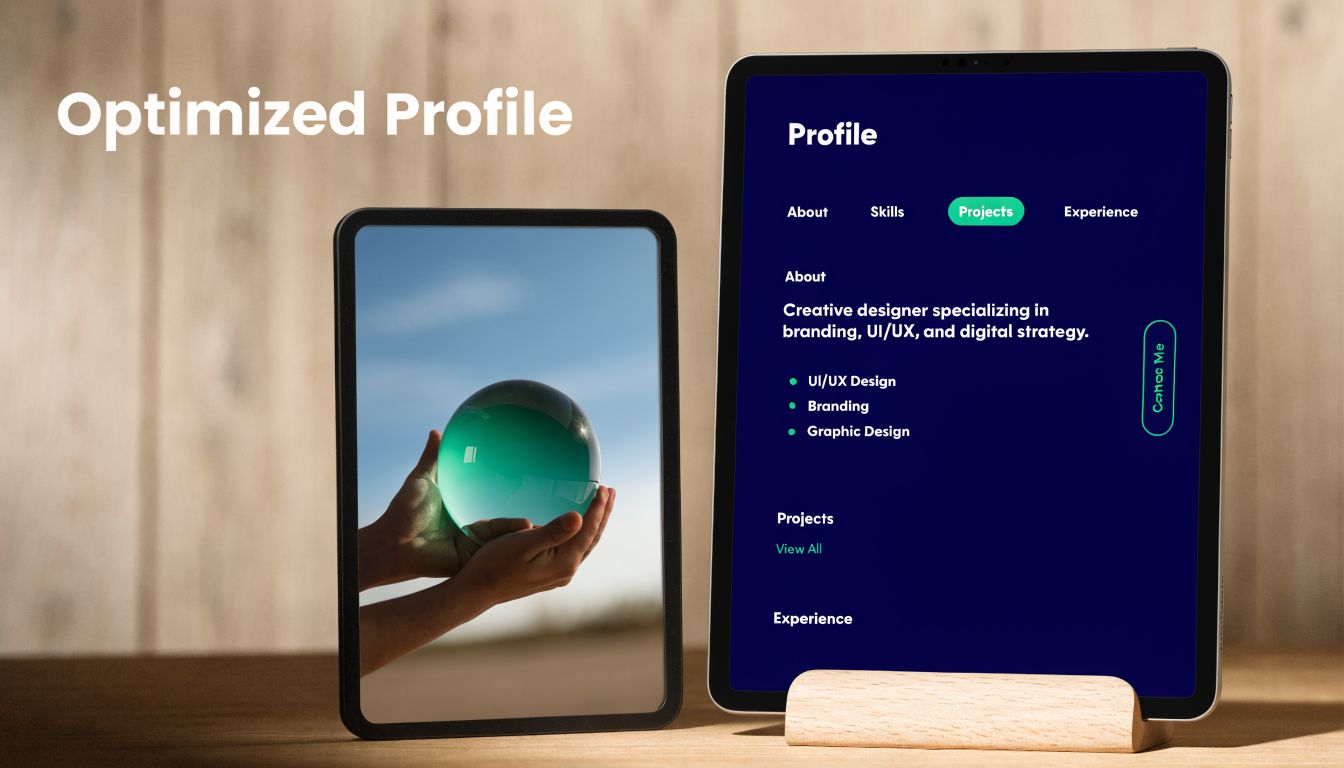
A strong profile doesn't try to impress everyone. It gives the right clients enough confidence to reply. That means clear positioning, relevant proof, and examples that match the work you want next, not just the work you did years ago.
What clients actually scan
Clients rarely read every line. They scan for confirmation.
They usually want answers to these questions fast:
- Do you handle my kind of project?
- Have you solved this problem before?
- Do you communicate clearly?
- Can I trust you with real work, not just a cheap task?
Your headline, overview, featured work, and first portfolio samples do most of that work. If you're an agency, show structure and capacity without sounding faceless. If you're a solo freelancer, show focus without sounding narrow or fragile.
For practical examples, this sample profile for Upwork is a useful starting point.
One more thing helps more than people expect. Keep your evidence current. Swap out stale portfolio items. Rewrite sections that still describe old service lines. Add testimonials when the work is fresh and the client is happiest.
Here’s a useful walkthrough before you revise your own page.
Authority is built through consistency
Your proposal voice, profile language, and portfolio examples should sound like they come from the same business. If your proposal says you specialize in SaaS onboarding UX but your profile leads with logos, social media posts, and random website tasks, clients feel the mismatch immediately.
That consistency matters even more once automation enters the picture. Scaled outreach increases profile visits. If your profile isn't ready, automation just sends more traffic to a weak conversion page.
5. Multi-Channel Outreach Orchestration
One message is easy to miss. A coordinated sequence is harder to ignore.
This is one of the most important effective outreach strategies for agencies because clients don't all respond the same way. Some answer the initial proposal. Some only respond after a follow-up. Some engage once they see a short clarifying message that makes the next step obvious. Across broader marketing data, campaigns using three or more channels achieved 287% higher purchase rates than single-channel efforts, according to Landbase's analysis of multi-channel outreach statistics.
On Upwork, "multi-channel" doesn't mean spamming people across random platforms. It means orchestrating the touchpoints you do control. Proposal, message reply, follow-up, and scheduling nudges should feel like one continuous conversation.
What good orchestration looks like
The sequence should create clarity, not pressure.
A practical pattern looks like this:
- Initial proposal: Address the brief directly and show relevant fit.
- Short follow-up: Add value, ask one useful question, or clarify one likely risk in the project.
- Reply handling: When the client engages, answer quickly and move toward a call or a scoped next step.
- Internal coordination: For agencies, make sure only one person owns the conversation.
What doesn't work is daily "just checking in" messaging. That reads as needy and lazy. Every follow-up needs a reason to exist. Offer a perspective on scope. Mention the implementation detail the client may not have considered. Suggest a cleaner project structure. Give them something that reduces decision fatigue.
Clients don't mind follow-up. They mind follow-up with no value.
Agencies run into another problem here. Duplicate outreach. A founder, account manager, and bidder all notice the same lead and start acting independently. That makes your business look disorganized. Use a shared workflow so the proposal, responses, and ownership are visible to the whole team.
The best orchestration feels calm. The client never feels chased. They just feel like you stayed present and made the buying decision easier.
6. Real-Time Analytics and Conversion Optimization
If you aren't tracking your outreach, you're guessing.
Most Upwork sellers can tell you how many proposals they sent last week. Far fewer can tell you which opening line gets replies, which job types turn into calls, or which kinds of clients waste time after the first message. Volume is easy to count. Conversion quality takes actual discipline.
Outreach guidance often tells teams to "test" and "adapt" without giving a real measurement framework. This deficit is highlighted in the discussion of ROI and attribution gaps in community outreach, which notes that many frameworks emphasize tactics but provide minimal guidance for quantifying effectiveness or assigning outcomes to specific channels.
What to measure on Upwork
Start with a small set of metrics that change your decisions.
Track things like:
- Reply rate: Which proposals get a response.
- Call booking rate: Which replies turn into a real next step.
- Win quality: Which projects become profitable work, not just signed contracts.
- Time to first response: How fast you engage once a client opens the conversation.
- Lead type by outcome: Which project categories produce the best clients.
The key is to test one variable at a time. If you change the opening, offer structure, niche focus, and CTA all at once, you won't know what caused the lift or the drop. Keep experiments narrow.
Small changes compound fast
In practice, the winning changes are often boring. A shorter first paragraph. A stronger first sentence. A better project filter. A tighter handoff from proposal to message. That's good news because it means improvement doesn't require a total rewrite of your process.
For teams, analytics also create coaching material. If one bidder consistently gets replies from e-commerce clients and another performs better with B2B SaaS leads, use that information. Better routing beats generic training.
The teams that improve fastest aren't always the most talented. They're usually the ones that review outreach like a sales system instead of a creative ritual.
7. Relationship-Based Follow-Up and Account Management
You finish a project on Friday, get a five-star review, and hear nothing for two months. Then you're back in the feed writing fresh proposals for clients who do not know you yet. That cycle wastes trust you already paid to earn.
On Upwork, repeat business is usually cheaper, faster, and higher quality than net-new outreach. The client already knows how you work. They have seen your judgment under deadline. They do not need a long sales process. They need a clear reason to come back.
That changes how follow-up should work. The goal is not to "check in" for the sake of staying visible. The goal is to reopen useful conversations at the right moment, with context the client cares about.
A practical post-project system looks like this:
- End with a handoff note: Recap what was delivered, what changed, and what the client should watch next.
- Set one timed follow-up: Reach out after launch, implementation, or the next reporting window, not at a random interval.
- Tie outreach to outcomes: Ask about results, blockers, or adoption instead of asking whether they need anything.
- Log account details: Save stakeholder names, approval patterns, tool stack, communication preferences, and likely next projects.
- Queue relevant ideas: Keep a short list of follow-on opportunities you noticed during the engagement.
The referral and retention upside is real. According to Nielsen's global trust research, people trust recommendations from people they know more than any other form of advertising, which is why client relationships often produce the warmest next opportunity (Nielsen trust in advertising research). On Upwork, that can mean direct rehires, contract expansions, or introductions to another founder on the client's team.
Earlybird AI helps at the operational level. Use it to track when a contract closes, schedule a follow-up around a launch date or delivery milestone, and pull forward notes from the original conversation so the message still sounds like it came from someone who remembers the work. Automation should handle timing and memory. The freelancer should handle judgment.
That trade-off matters. Fully automated follow-up gets sloppy fast. Clients can tell when a message ignores what happened in the project, asks for work too early, or pitches a service that has nothing to do with their priorities. A short manual review before each send is usually enough to keep the message sharp.
One message I have seen work well is simple: reference the completed work, mention one result or implementation milestone, then suggest one next step that fits the client's actual situation. If the project was a landing page build, the follow-up might be about conversion tracking or test variants. If it was app design, the next step might be onboarding screens, empty states, or support content.
Your best past clients do not need a fresh proposal. They need a reason to keep momentum.
Handled well, follow-up turns one project into a small account. That gives you steadier revenue, better forecasting, and more freedom to bid selectively instead of chasing every new posting.
8. Vertical-Specific Positioning and Messaging
Generalists can win on Upwork. Specialists usually sound easier to hire.
Clients aren't just choosing skills. They're choosing confidence. When your profile and outreach clearly match a specific industry, the client spends less time wondering whether you'll understand their world. That's why vertical positioning works so well. It shortens explanation, sharpens trust, and makes your proof more believable.
You don't need to build your entire business around one niche immediately. But you do need to stop sounding interchangeable. "I help SaaS teams improve onboarding UX" is easier to buy than "I do UI/UX for websites and apps." "I write conversion-focused product pages for DTC brands" lands better than "I write marketing content."
How to narrow your message without boxing yourself in
Choose one or two verticals where you already have pattern recognition. That means you know the common objections, timelines, stakeholders, terminology, and success criteria.
Then adjust your outreach around those realities:
- Use the client's language: Match the terms they already use in their brief.
- Lead with relevant examples: Show work from that industry first.
- Call out familiar constraints: Compliance, launch speed, platform limitations, team approval cycles, or migration risks.
- Offer the next sensible step: Industry context helps you suggest a better process.
There's also an adoption angle here. Product and workflow adoption can be difficult across software categories, with reported SaaS-style adoption rates ranging from 20% to 42% in major markets and 42.3% of companies reporting new product adoption between 26% and 50%, according to BARC's infographic on BI and analytics adoption strategies. On Upwork, that translates into a useful lesson: clients don't just buy execution. They buy clarity around implementation and adoption.
If you're proposing work for a SaaS client, mention rollout, user friction, or internal handoff, not just the build. If you're pitching a healthcare or finance client, reflect the review and accuracy pressures they operate under. Vertical messaging works because it shows you understand the environment around the task, not just the task itself.
9. Compliance-Safe Automation and Human-Like Behavior Patterns
Bad automation creates short-term activity and long-term risk.
This is the part many sellers skip because it's less exciting than proposal copy or analytics. But if you're automating outreach on Upwork, account safety matters. You need a process that behaves like a disciplined user, not a machine spraying activity across the platform.
That means pacing matters. Timing matters. Infrastructure matters. It also means you need clear boundaries around what gets automated and when a human should step in.
What should and shouldn't be automated
The safest automation supports a normal workflow. It doesn't try to brute-force the platform.
Reasonable candidates for automation include:
- Job discovery: Monitoring for projects that match your criteria.
- Proposal drafting: Creating a customized first draft from your approved positioning.
- Fast first replies: Sending timely, relevant acknowledgments.
- Follow-up reminders and routing: Keeping leads from slipping through the cracks.
- Performance tracking: Logging replies, calls, and win patterns.
What still needs human judgment:
- Complex discovery conversations
- Pricing negotiation
- Scope conflict or ambiguity
- High-stakes client objections
- Any moment where tone and trust matter more than speed
This balance matters because the broader outreach literature talks a lot about authenticity and personal relationships, but offers little operational guidance for scaling them through automation. That gap is outlined well in this piece on balancing automation with authentic relationship-building in scalable outreach.
Automate repetition. Escalate nuance.
If you're using a platform like Earlybird AI, the practical standard is simple. Keep automation aligned with normal user behavior, monitor account health, and review what the system is doing. Don't outsource responsibility just because software is doing the clicking.
Sustainable outreach beats aggressive outreach. Every time.
10. Cohesive Team Workflow and Distributed Bidding Strategy
Solo freelancers can keep outreach in their heads. Agencies can't.
Once multiple people bid, reply, qualify, and close under one brand, chaos becomes the default unless you build a system. Two people bid the same job. A junior bidder sends a weak proposal for a premium lead. A founder jumps into a thread without context. None of that is unusual. It's just expensive.
A good distributed bidding workflow assigns ownership before activity starts. The team needs a clear rule for who handles what, when a lead gets escalated, and how proposal quality stays consistent across accounts or bidders.
Build a process your team can actually follow
The workflow should be simple enough to use daily, not impressive enough to sit in a Notion doc unread.
At minimum, define:
- Assignment rules: Match projects by service line, seniority, niche, or current capacity.
- Shared messaging assets: Proposal frameworks, proof snippets, objection answers, and portfolio links.
- Escalation paths: Decide which leads require founder review or senior closer involvement.
- Ownership visibility: One system should show who submitted, who replied, and who is responsible next.
- Performance reviews: Compare outcomes by bidder, niche, and project type.
For agencies, automation transitions into an operational advantage, moving beyond mere convenience. A centralized workflow can help keep brand voice steady while still adapting proposals to each opportunity. It also reduces duplicate outreach and gives leadership a clean view of pipeline health.
The hidden benefit is strategic, not administrative. Once your team has shared visibility, you can route better opportunities to the people most likely to close them. Some team members are better at technical discovery. Others are better with founder-led clients. Others write stronger first-touch proposals. Use that.
A distributed bidding strategy works when the client experiences one coherent business, even though several people may be supporting the process behind the scenes.
From Outreach to Opportunity Your Next Steps
Winning on Upwork doesn't come from one clever proposal trick. It comes from building a reliable outreach system that keeps doing the basics well. Find the right jobs. Personalize quickly. Reply fast. Follow up with purpose. Keep your profile strong enough to convert attention into trust. Then measure what works and adjust without guesswork.
Most sellers struggle because they treat outreach as a burst of effort instead of an operating system. They bid hard for a week, get busy with delivery, disappear from the feed, then come back when pipeline pressure hits. That creates inconsistency in lead flow and weakens your ability to learn. Outreach improves when it becomes steady, reviewable, and boring in the right ways.
If you're trying to improve this week, don't overhaul everything at once. Pick one or two changes you can sustain. For most freelancers, that means fixing proposal personalization and tightening profile positioning first. For agencies, it usually means lead qualification and team workflow first, because weak routing creates downstream problems everywhere else.
A simple sequence works well. Start by defining what a good-fit lead looks like. Then make sure your proposal process reflects that positioning. Then review your profile so it supports the same story. Once those pieces are aligned, add faster reply handling and better follow-up. After that, analytics become useful because you're measuring a process that has some consistency.
There's also a real trade-off to manage with automation. It can save time, improve speed, and help teams scale. It can also magnify bad habits if the inputs are sloppy. If your positioning is vague, automation sends vague proposals faster. If your filtering is weak, automation fills your pipeline with low-quality conversations. The tool doesn't replace judgment. It increases the impact of your existing process, good or bad.
That's why the best effective outreach strategies blend automation with selective human involvement. Let software handle repetitive work, fast first-touch actions, tracking, and workflow coordination. Let people handle diagnosis, negotiation, trust-building, and complex client conversations. That split gives you scale without flattening your message into generic noise.
It also helps to think beyond the first contract. The strongest Upwork businesses don't just win projects. They build repeatable ways to attract better-fit clients, deliver well, and reopen conversations after the project ends. Outreach isn't only about getting replies. It's about creating a system that compounds trust over time.
If you want a practical place to start, use the list above as a build order, not just a set of ideas. Tighten your filters. Improve your profile. Test stronger openings. Add structured follow-up. Review performance weekly. If you're ready for automation, use it to support a process you already understand.
Earlybird AI is one option for teams that want help with Upwork job discovery, personalized proposal drafting, rapid client replies, analytics, and multi-user workflows. Used well, that kind of platform can reduce manual sales effort and make outreach more consistent.
The goal isn't to send more for the sake of more. It's to create more opportunities with less wasted motion, and to win the projects you want.
If you want a more consistent way to find jobs, send proposals crafted for each opportunity, reply quickly, and coordinate outreach across your team, Earlybird AI is worth a look. It connects to your Upwork workflow, learns from your feedback, and helps turn outreach into a repeatable system instead of a daily scramble.