← Back To Blog
How Long Should an Electronic Cover Letter Be? 2026 Guide
Most electronic cover letters should be 250 to 400 words, or about three to four short paragraphs. If you're staring at a blank application box right now, that's the range that usually gives you enough room to sound credible without losing the reader.
That matters more than most applicants realize. In digital hiring, nobody is admiring your stamina. They're deciding, quickly, whether you understand the role, whether you can communicate clearly, and whether you're worth a closer look. On Upwork, in email applications, and inside ATS portals, the strongest cover letters rarely feel long. They feel sharp.
A lot of the confusion comes from outdated advice. Some guidance still reflects print-era job hunting, when a formal letter on paper had different expectations. Electronic cover letters work differently. They get skimmed on screens, compared against a stack of other applications, and judged partly on how easy they are to scan.
The better question isn't just how long should an electronic cover letter be. It's how long should it be for the channel you're using. A letter pasted into an ATS field has one job. A direct email has another. A quick message to a recruiter or client has different rules entirely.
Your Guide to Electronic Cover Letter Length
You find a promising role. You click apply. Then the form opens and gives you a text box with almost no guidance.
That's where people usually go wrong. They either write a mini autobiography, or they send something so short it reads like they couldn't be bothered. Neither works well in a fast digital hiring flow.
The practical default is simple. For most electronic cover letters, aim for 250 to 400 words and keep it to three to four short paragraphs. That's long enough to introduce yourself, connect your background to the role, and end with a clear next step. It's also short enough that a recruiter or client can read it without effort.
What that looks like in practice
A strong electronic cover letter usually does four things:
- Opens with relevance by naming the role and showing immediate fit
- Highlights proof with a few tightly chosen qualifications or examples
- Connects to the employer's need instead of summarizing your whole resume
- Closes cleanly with interest, availability, or a call to continue the conversation
Practical rule: If your letter needs scrolling on a laptop screen, it's probably too long for a standard digital application.
This isn't about following a random word-count rule. It's about controlling attention. Hiring managers, recruiters, and freelance clients don't reward the person who says the most. They remember the person who makes the clearest case, fastest.
That baseline changes slightly depending on where the letter appears. Email bodies need a lighter touch. Portal submissions can carry a bit more detail. Direct messages should feel tighter and more conversational. The core principle stays the same. Say enough to create interest, then stop before the reader gets tired.
The Goldilocks Zone for Cover Letter Length
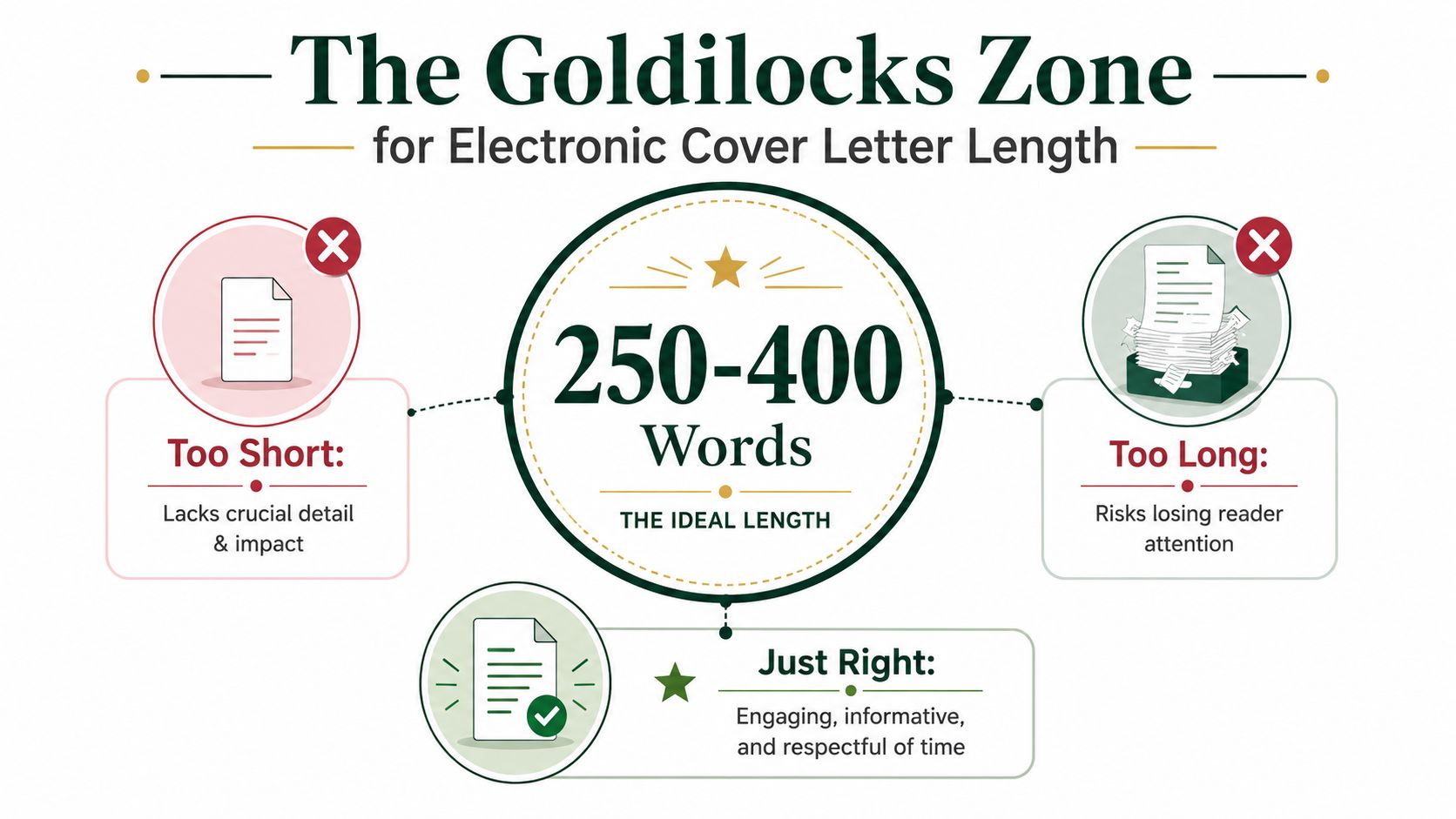
The sweet spot for an electronic cover letter is 250 to 400 words. That's the range most often recommended in modern career guidance, and it's usually described as half a page to one full page with three to four short paragraphs. Indeed notes that cover letters should be “one page or less” and gives 250 to 400 words as the right amount unless an employer says otherwise, in guidance you can review on Indeed's cover letter length advice.
What fits inside that range
Think of this length as enough space for one persuasive argument, not your full professional history.
A solid version often looks like this:
- Paragraph one introduces the role and your most relevant angle
- Middle paragraph or two shows why your background matches the work
- Final paragraph signals interest and gives the reader an easy next move
That's why I call it the Goldilocks zone. Under that range, many applicants sound vague, generic, or underqualified because they haven't given the reader enough substance. Over it, they often start repeating themselves, recapping their resume, or adding details the reader never asked for.
Why this range works
At this length, you can still tailor the letter. You can mention the company, the type of work, and the specific reason you're relevant. But you can't ramble. That constraint is useful. It forces better decisions.
If you want a sense of what strong structure looks like before you draft, these Upwork cover letter examples show how short, targeted writing creates more momentum than a long generic pitch.
The best cover letters don't try to answer every question. They answer the only one that matters first: why should this person keep reading?
When applicants miss this, they usually make one of two mistakes. They write a note that's too thin to build confidence, or they submit a dense block of text that asks the reader to do too much work. The effective middle is concise, specific, and easy to skim.
Why Shorter Is Smarter in a Digital World
Electronic cover letters live on screens, not desks. That changes how people read them.
A practical benchmark from modern career guidance puts electronic cover letters at 250 to 400 words, or about half a page to one page, because that length usually preserves enough whitespace for quick scanning and still stays under one page, as explained in QuillBot's guidance on electronic cover letter length.
Brevity signals judgment
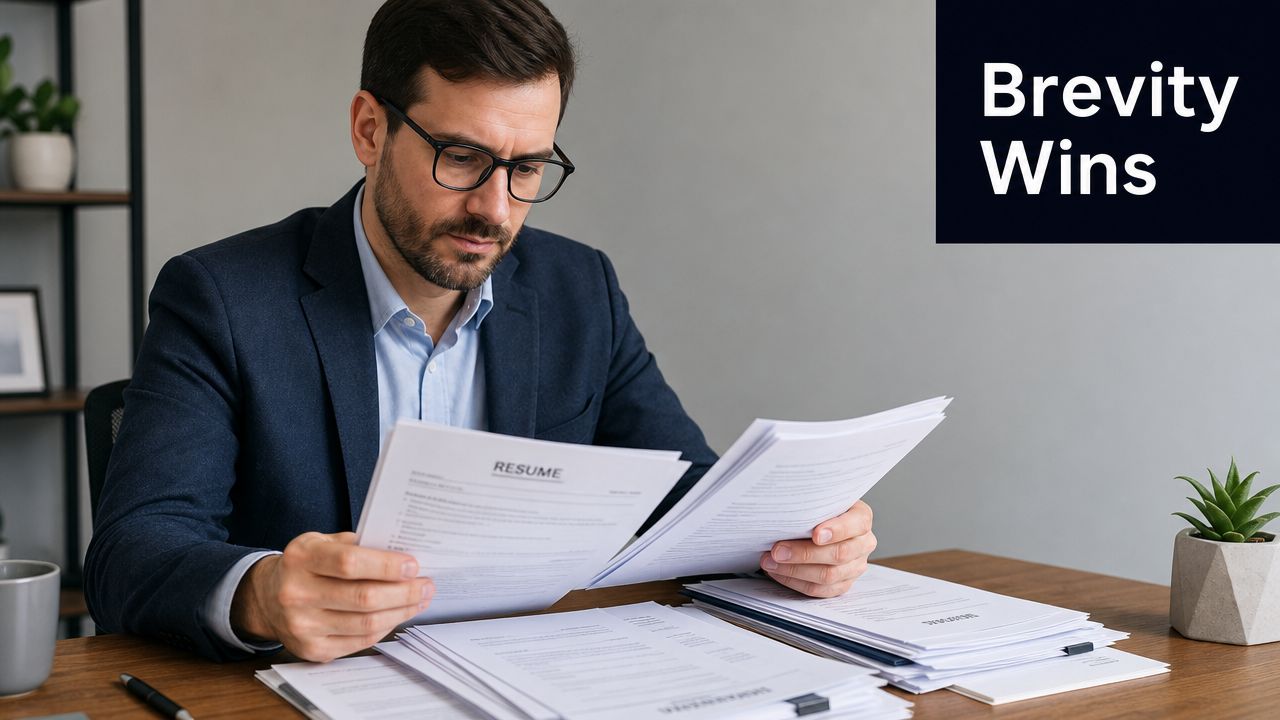
When a recruiter opens your letter, they aren't just reading for content. They're reading your decision-making. Did you understand what mattered? Did you organize information well? Did you make their job easier?
Shorter letters often win because they communicate all of that at once. A concise letter says, in effect, I know how to prioritize. I know how to write for a busy person. I know the difference between relevant and merely available.
Long letters often send the opposite signal, even when the applicant is qualified. They can feel unfocused, self-indulgent, or copied from another application with a few edits.
Dense text creates friction
Online readers skim first and commit second. If they open your letter and see a slab of text, you've already made the experience harder than it needed to be.
Use spacing to your advantage:
- Keep paragraphs short so each point stands on its own
- Lead with relevance instead of warm-up sentences
- Remove duplicate ideas that appear in your resume anyway
- Leave white space so the eye can move quickly
A digital cover letter isn't a writing sample unless the employer asks for one. It's a screening tool.
This is even more obvious on freelance platforms. Clients often review proposals between meetings, on mobile, or while comparing multiple applicants in one session. They don't need your life story. They need confidence that you understand the project and can deliver.
The shorter, cleaner letter usually gets read. The longer one usually gets mined for a sentence or two, then abandoned.
How to Tailor Your Length for Different Channels
The standard range works as a baseline. But channel changes behavior. The same message that feels right in an ATS portal can feel bloated in an email and completely wrong in a direct message.
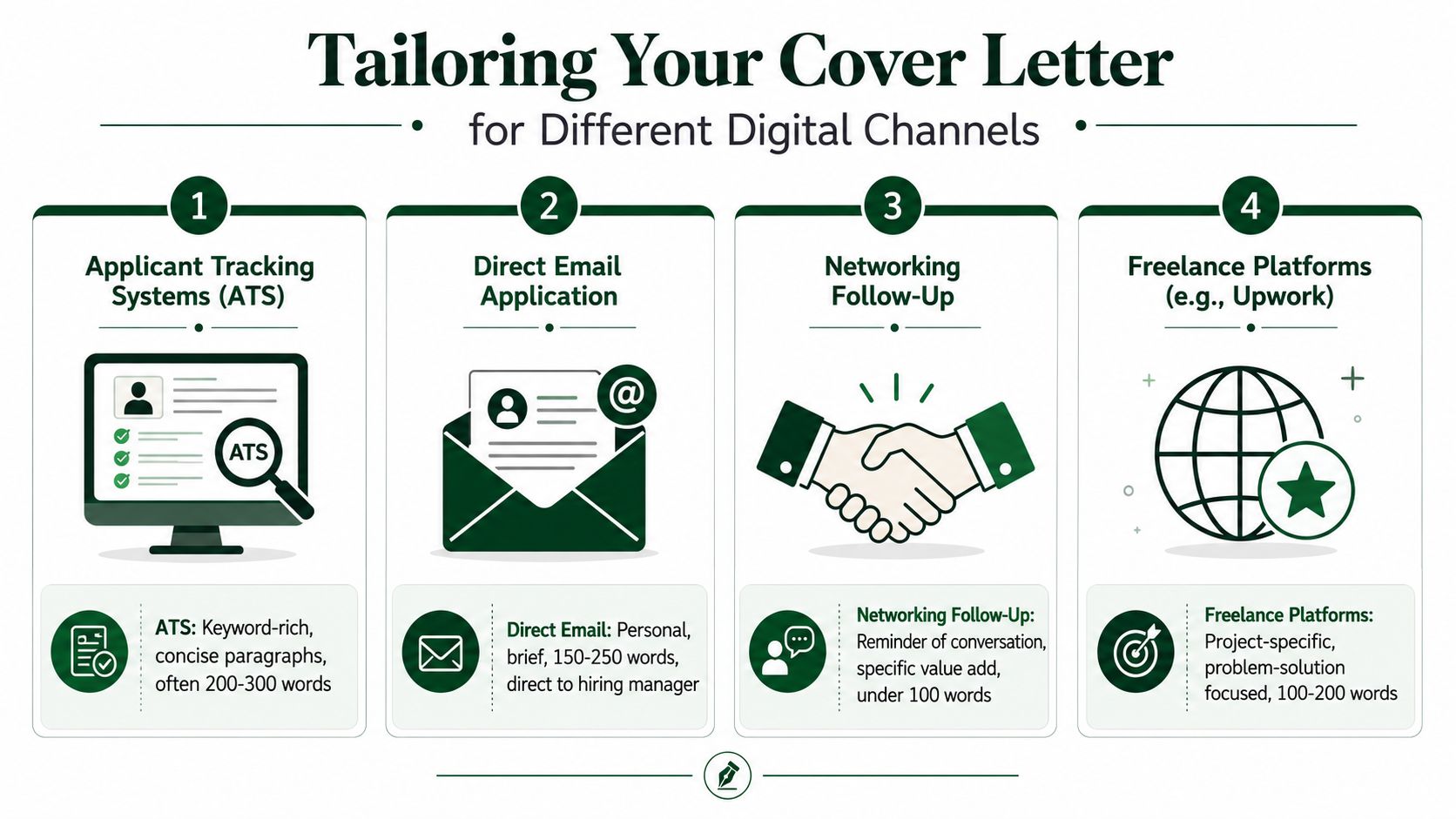
ATS portals and formal application fields
This is the closest match to the classic electronic cover letter. If a company gives you a dedicated field or asks for a separate cover letter upload, the standard length usually makes sense.
Use the space to show fit, not volume. Mention the role, align your experience with the posted need, and include language that naturally mirrors the job description.
What works here:
- A complete but compact letter with greeting, body, and closing
- Role-specific keywords used naturally
- A focused narrative that connects your background to this exact opening
What doesn't:
- Resume duplication
- Generic enthusiasm
- Overexplaining career history
Email applications
Email cover letters should usually feel lighter than portal letters. The email body is already an informal container. The reader knows you're applying. You don't need as much ceremony.
A good email version gets to value fast. Open with the role, the reason you're relevant, and one or two points that justify an interview. Keep the tone professional, but trim the formal filler.
If you're also sending a portfolio, resume, or work samples, the email body should act as a strong introduction, not a second full document.
Direct messages and networking outreach
This includes LinkedIn messages, recruiter outreach, and quick follow-ups after a conversation. Here, brevity wins by a mile.
Your goal isn't to deliver a full cover letter. It's to earn a reply.
A strong message usually includes:
- Context such as the job, referral, or prior conversation
- One clear reason you're relevant
- A simple ask like a quick call or permission to send materials
If the message is short enough to read without scrolling on a phone, it usually feels right for direct outreach.
Freelance platforms such as Upwork
Proposal fields on Upwork are their own channel. They behave like hybrid cover letters. Clients want confidence fast, and they care less about polished corporate format than direct project fit.
That usually means leading with the problem you're solving, then proving you understand the project. Short paragraphs help. So does naming the deliverable, timeline, or similar work in plain language. If you're experimenting with tools that help systematize proposals, this guide to video covering letters is useful alongside workflow tools such as Loom for intros, Grammarly for cleanup, and Earlybird AI for automating Upwork proposals and replies.
The key trade-off is simple. The more informal and immediate the channel, the shorter your message should be. The more structured and formal the channel, the more room you have to build a compact case.
When to Break the Rules and Go Longer or Shorter
Rules help until they start making you less effective.
Some roles reward more detail. Others make even a standard cover letter feel excessive. Good applicants recognize the context and adjust without losing discipline.
When longer can make sense
A slightly longer letter can work when the employer expects explanation, not just introduction. Senior leadership roles, career pivots, academic applications, and mission-driven positions sometimes need more narrative. If your candidacy depends on connecting dots, you may need extra space to do that cleanly.
Even then, longer only works when each paragraph earns its place. More words don't create authority. Better reasoning does.
When shorter is the better move
Sometimes a full letter is too much. Internal applications, warm referrals, recruiter replies, and post-networking follow-ups often work better as compact notes. In those cases, the relationship or context already carries part of the message.
A shorter version also makes sense when the platform itself encourages speed. Many freelance clients don't want a formal letter. They want proof that you understood the brief and can start intelligently.
- Go shorter when familiarity, referral context, or message format reduces the need for formality
- Go longer when complexity, seniority, or unusual career context needs explanation
- Stay disciplined either way, because rambling hurts in every format
The mistake isn't breaking the rule. The mistake is breaking it without a reason.
Actionable Tips for a Concise and Powerful Letter
Strong cover letters are usually edited, not written, into shape. Most applicants don't have a bad first draft. They have an untrimmed one.
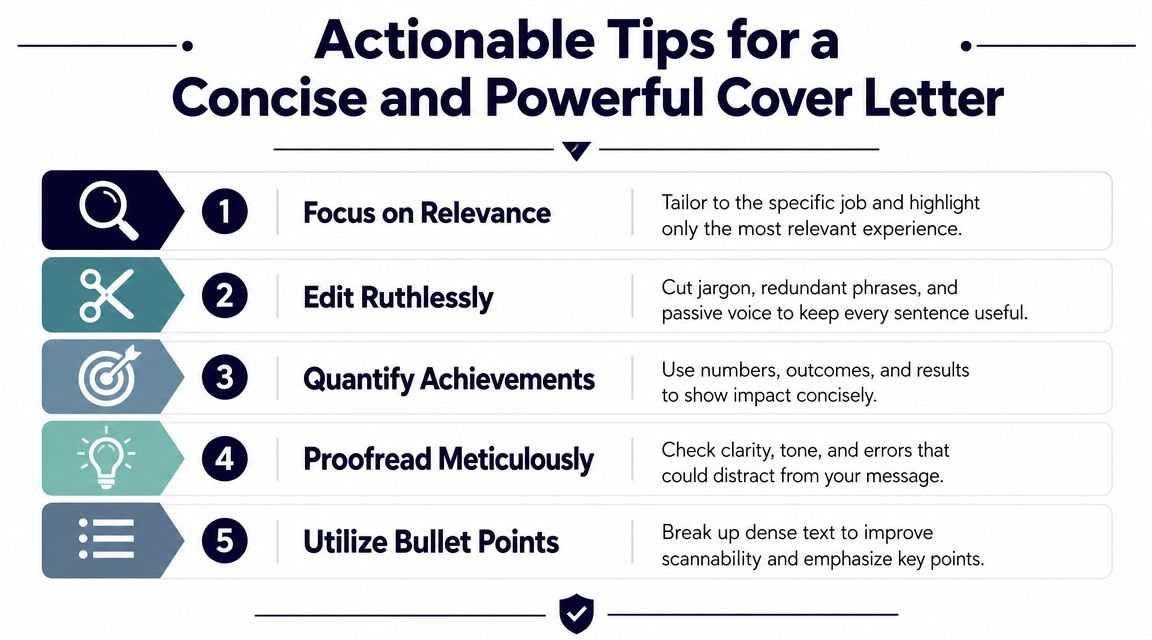
Cut words without cutting meaning
Start by front-loading the value. Don't spend your first lines thanking the reader for their time or announcing that you're excited to apply. Show fit immediately.
Here are practical ways to tighten your draft:
- Lead with relevance by opening on the role and your strongest matching point
- Swap weak phrasing for direct verbs like built, managed, launched, wrote, designed, or improved
- Delete throat-clearing such as “I am writing to express my interest”
- Keep only one proof point per idea instead of stacking similar claims
- Read it aloud because awkward, bloated sentences become obvious when spoken
A quick example helps.
Before: I am writing to express my strong interest in the content strategist position, as I believe my background and experience would make me a strong candidate for this opportunity.
After: I'm applying for the content strategist role because my background in editorial planning and conversion-focused writing matches the work you're hiring for.
Before: In my previous roles, I was responsible for a wide variety of different marketing-related tasks and responsibilities across multiple channels.
After: I managed multi-channel marketing projects across email, web, and social.
For another angle on tightening business writing, this format for a proposal letter is useful because the same discipline applies. Clear writing wins.
A short walkthrough can also help if you edit better by watching than reading:
Final self-edit checklist
Before you send, ask:
- Did I name the role clearly
- Did I show fit in the first paragraph
- Did I remove resume repetition
- Did I keep paragraphs short
- Did I end with a clear next step
If yes, your letter is probably ready. If not, cut again. Most cover letters improve when they're reduced to the point.
If you're sending proposals on Upwork regularly, Earlybird AI is one option for automating proposal drafting, client replies, and follow-up workflows while keeping your outreach moving faster than a fully manual process.