
← Back To Blog
How to Generate Leads Without Cold Calling: A 2026 Playbook
Cold calling used to be the default answer to pipeline problems. It isn't anymore.
When 97% of people disregard cold calls entirely and the economics land at $300 to $500 per meeting, the issue isn't script quality. The channel itself is fighting buyer behavior, according to Prospeo's lead generation analysis. If you're trying to scale an agency, hiring more people to interrupt more strangers is usually the slowest, most expensive way to do it.
The better question is simpler. If you want to know how to generate leads without cold calling, where do modern buyers pay attention, and how do you build a system around that?
Moving Beyond the Dial Tone
Cold calling breaks first at the workflow level.
Agencies rarely fail because they lack effort. They fail because the effort sits in a channel that demands constant manual input and gives buyers almost no reason to respond. A founder hires an SDR, the SDR spends hours building lists, dialing, leaving voicemails, and chasing follow-ups, and the pipeline still depends on catching someone at the exact right moment. That is a fragile system.
The actual cost is operational drag. Cold calling pulls senior attention into list building, script fixes, objection handling, and call review. For small and midsize agencies, that usually means founders spend time managing outreach instead of tightening positioning, improving delivery, or closing warm opportunities already in front of them.
Buyers have changed their process. They research first, compare privately, and respond after they have enough context to believe the conversation is relevant.
What buyers respond to now
Prospects are more likely to engage when the first touch fits how they already buy:
- They discover you while actively looking for a solution
- They can vet your credibility through content, case studies, referrals, or marketplace profiles
- They can reply asynchronously through email, LinkedIn, forms, or platform messaging
- They enter the sales call with context, which shortens the path to a real opportunity
That shift changes how lead generation should be built. The job is no longer to create volume for its own sake. The job is to put your agency in places where intent already exists, then respond faster and with more relevance than slower competitors.
I have seen this play out the hard way. One trained SDR can keep activity high. A better system can produce qualified conversations across several channels at once, with less oversight and fewer handoffs.
What replaces the old model
The agencies that outgrow cold calling usually combine four acquisition paths.
- Inbound content and SEO to capture buyers already searching for answers
- Referrals and partnerships to turn trust into introductions
- Social selling and paid distribution to stay visible with high-fit accounts
- Platform-native automation on marketplaces like Upwork, where clients are already posting active demand
The last one gets overlooked in generic B2B advice, and it should not. Upwork is not just a freelancer directory. For many agencies, it is a live intent feed. Buyers describe the problem, budget, timing, and scope in public. That gives you a cleaner starting point than cold outreach ever will.
The trade-off is real. Platform lead gen comes with fees, competition, and the need to respond fast. But it also gives agencies something cold calling struggles to create. Existing intent. With the right workflow, AI can qualify jobs, draft personalized proposals, route the best opportunities to a human, and keep response times tight enough to compete without hiring a full-time SDR. Teams that support that motion with the best SEO software for agencies usually build a steadier pipeline than teams relying on one outbound channel alone.
The strongest system is not content alone, referrals alone, or Upwork alone. It is the combination. Content builds authority, referrals shorten trust, social keeps you present, and platform automation captures demand that is ready now.
Build Your Inbound Foundation with Content and SEO
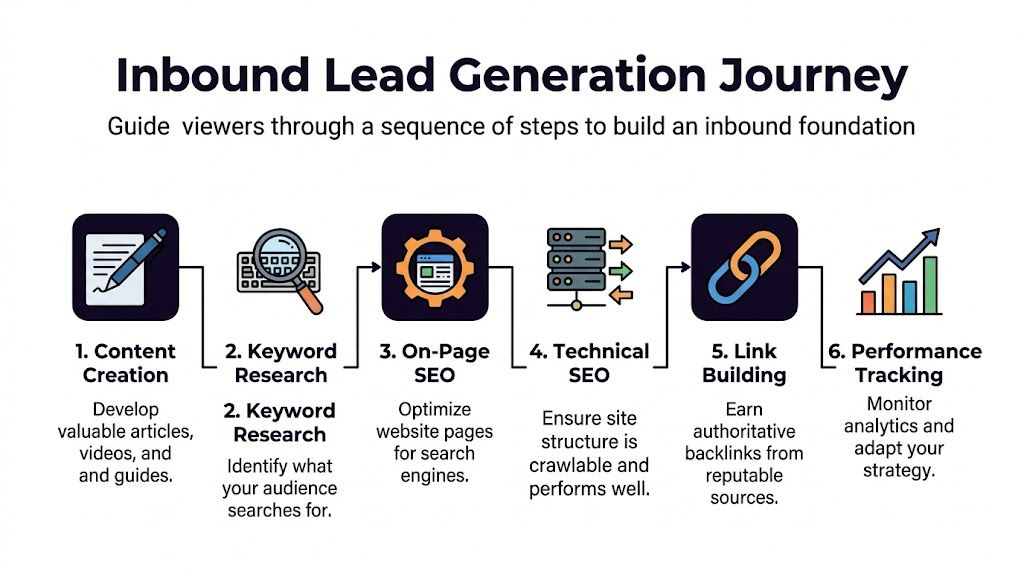
If you want leads without cold calling, content has to do more than "build brand." It needs to answer commercial questions from buyers who are close to action.
That means writing for problem-aware search intent, not for vanity topics. Agency content works when it sits close to money. Buyers search when something is broken, delayed, expensive, or underperforming. Your job is to show up there first, then give them a clear next step.
Content marketing and SEO produce 3x more leads at 62% lower cost than cold calling, and companies that blog actively produce 13x more leads than those that don't, according to Growth List's lead generation benchmarks. That's why a blog isn't a side project. It's an acquisition asset.
Start with the buyer's active problem
A lot of agency blogs fail because they publish broad educational content with no buying signal. "What is SEO?" or "Why social media matters" might bring traffic, but it rarely brings ready buyers.
Write from the situation your prospect is already in:
- They hired before and got weak results
- Their pipeline is inconsistent
- Their team can't execute a specialty in-house
- A deadline, launch, or growth target is creating urgency
- They need to compare tools, vendors, or approaches
Those are lead generation topics. Generic awareness content usually isn't.
A practical structure for agency articles looks like this:
- Name the problem clearly
Use the language buyers use in calls, briefs, and support threads. - Show what causes it
Most prospects don't just want tactics. They want diagnosis. - Offer a point of view
Authority derives from offering a point of view, not from sounding polished, but from being specific. - Give them a next step with low friction
Audit request, contact form, template, checklist, consultation, or platform message.
Build content clusters around services you sell
One page rarely ranks and converts on its own. The better approach is to create a small cluster around each service line.
If you run a design agency, that cluster might include:
- A commercial page for the service itself
- A comparison page for agency vs freelancer vs in-house
- A process page showing how projects run
- A cost page addressing pricing expectations
- A results page built from real examples and delivery screenshots
- A FAQ page answering objections buyers raise before signing
If you run an SEO or growth agency, the same logic applies. Commercial content should connect naturally to support content. That internal linking helps users and search engines understand what your site is about.
For teams tightening their process, this guide to SEO software for agencies is a useful reference point when you're deciding what belongs in your stack and what doesn't.
Good inbound content doesn't read like a school essay. It reads like a pre-sales conversation a smart buyer can have without booking a call yet.
Treat SEO as publishing discipline
You don't need a massive editorial machine to make content work. You need consistency and clean execution.
A simple operating checklist:
- Pick one primary intent per page so the article isn't trying to rank for everything
- Write titles buyers would click
- Use clear H2s and H3s that match the questions prospects ask
- Link to service pages naturally from educational content
- Add proof where possible through process notes, screenshots, examples, and constraints
- Refresh pages when offers, positioning, or search behavior changes
Use lead magnets carefully
Most gated assets are too generic to convert qualified leads. A better magnet is tightly tied to a live buying problem.
Examples that work for agencies:
- Proposal templates
- Audit checklists
- Scope calculators
- Migration plans
- Brief templates
- Creative review frameworks
The best lead magnet doesn't try to impress everyone. It helps the right buyer make a decision sooner.
Activate Your Warm Networks Through Referrals and Partnerships
Referrals don't become a growth channel by hoping happy clients will remember you. They become a channel when you turn goodwill into a repeatable habit.
Most agency owners wait too long and ask too vaguely. They finish a successful project, hear "this was great," and say something like, "Feel free to send anyone our way." That isn't a referral system. That's wishful thinking.

Ask when the value is fresh
The best referral moment is right after a clear win. Not six months later. Not during a quiet quarter when you're suddenly chasing intros.
Use a direct ask tied to a specific fit:
- "If you know another founder dealing with the same issue, I'm happy to take a look."
- "We're taking on a few more projects like this. If someone in your network needs help, an intro would be welcome."
- "If there's a team you know that's stuck where you were before, send them my way and I'll help them think it through."
That works because it reduces cognitive load. You're not asking them to search their entire network. You're naming the problem and the kind of buyer you help.
Build sister-service partnerships
The highest quality partnerships usually come from businesses that serve the same client but don't compete with you.
A few examples:
- A web design agency partnering with an SEO consultant
- A paid media shop partnering with a landing page specialist
- A brand studio partnering with a development team
- A fractional CMO partnering with creative production or analytics support
These relationships work when both sides know exactly when to refer, what a good-fit client looks like, and how the handoff happens.
A simple partner message is enough:
We help this type of client solve this specific problem. You already work with the same audience from another angle. If it makes sense, let's compare notes and see whether a referral flow or co-marketing piece would help both sides.
Don't overcomplicate the first collaboration
Agencies often try to formalize everything too early. Start smaller.
Good first moves include:
- Joint webinars where each side teaches one piece of the puzzle
- Shared guides for a mutual audience
- Newsletter swaps with a specific offer
- Private introductions to a few known-fit accounts
- A light referral agreement with expectations written in plain language
The point is to test alignment before building anything heavier.
Keep a referral operating rhythm
Referrals slow down when nobody owns follow-up. Put it on the calendar.
A workable monthly rhythm:
- Review recent wins and identify who might refer
- Reach out to past clients with a useful update, not just an ask
- Check in with active partners and share who you're looking for
- Record every introduction source in your CRM
- Thank referrers quickly and close the loop when something progresses
Warm leads close faster because trust is borrowed at the start. Your job is to make that trust easy to transfer.
Engage High-Intent Prospects with Social Selling and Paid Channels
Social selling works when it stops pretending to be mass outreach. Most weak LinkedIn campaigns fail for the same reason bad cold calling fails. They prioritize volume over context.
The strongest outreach starts with pattern recognition. Look at the clients you've already won. What industries repeat? What company sizes tend to buy? What tools do they use? What hiring patterns or funding signals show up before they need you? That becomes the basis for a targeted list, not a broad one.
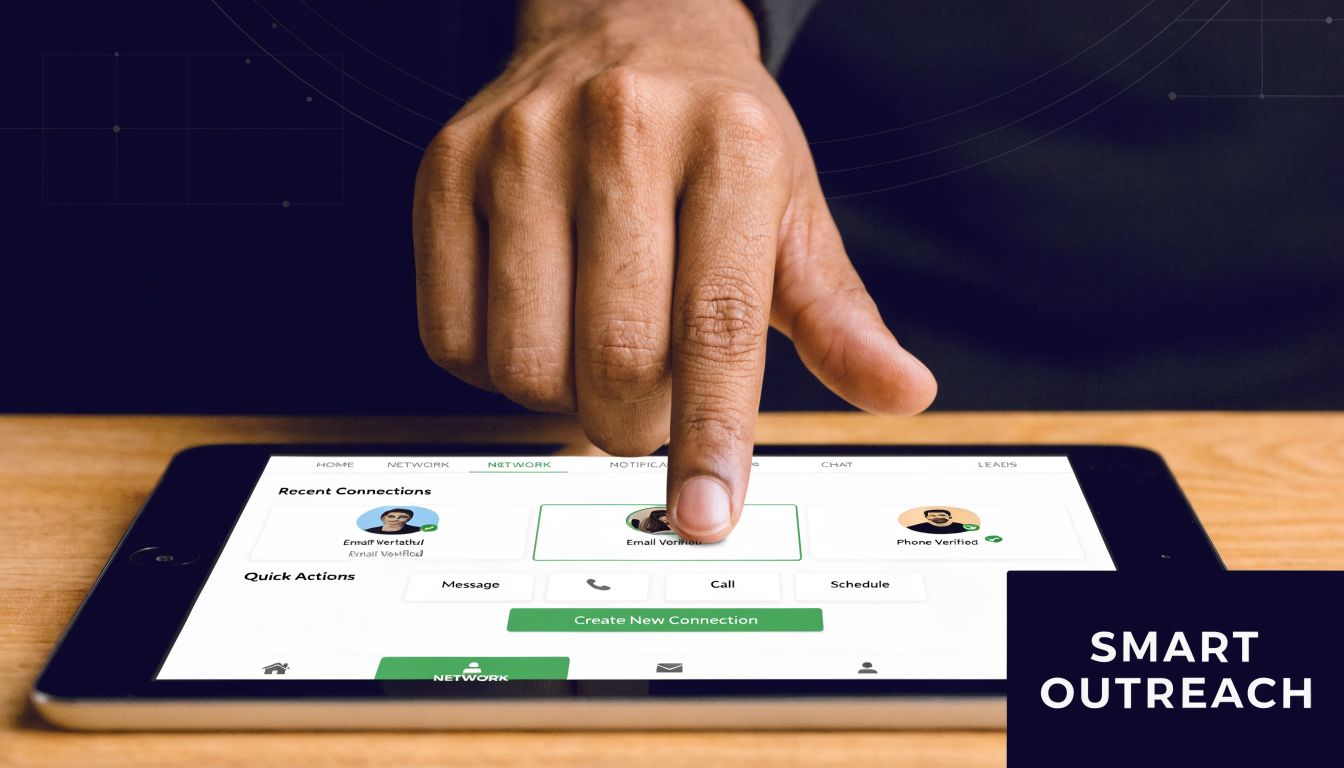
A refined LinkedIn outreach methodology can reach a 45% connection acceptance rate and a 19.98% reply rate, which outperforms many cold email campaigns that struggle to hit a 10% reply rate, according to SalesBread's guide to generating leads without cold calling.
What good LinkedIn outreach looks like
Start with a short, deliberate workflow.
- Analyze current buyers
Pull patterns from recent clients. Industry, team size, service mix, growth stage, and buying trigger matter more than job title alone. - Build a tighter list in Sales Navigator
Use filters to narrow the field. Broad lists create generic copy. Generic copy kills reply quality. - Personalize beyond first name tokens
Mention something real. A recent hire, positioning shift, service launch, post, funding event, or visible operational issue. - Follow up with value
Not "just bumping this." Send an observation, a framework, a teardown, or a useful question.
A practical message often sounds like this:
Saw your team is investing more heavily in outbound design support. A lot of agencies hit delivery bottlenecks at that stage. We've helped teams tighten handoff and reduce revision drag. Open to comparing notes?
That works better than forcing a pitch in the first line because it sounds like someone who understands the context, not someone blasting automation.
For a more focused breakdown, this article on lead generation with LinkedIn maps the channel in more detail.
Common mistakes that tank reply rates
The issue isn't that LinkedIn is saturated; it's that the outreach feels lazy.
Watch for these mistakes:
- Generic personalization that only inserts a name and company
- No trigger that explains why this person is being contacted now
- Pitching too early before earning attention
- Over-automating until the account behavior looks unnatural
- Ignoring the profile itself, even though prospects will check it before replying
Add paid channels where intent is already visible
Paid acquisition works best when you use it to amplify proven offers, not to rescue weak positioning.
Good agency paid campaigns usually fall into one of these buckets:
- Search ads for commercial-intent terms
- Retargeting for visitors who hit service pages and left
- LinkedIn promotion for a strong piece of content or webinar
- Traffic campaigns to comparison pages, calculators, or audits
The key is alignment. If the ad promises one thing and the landing page explains another, lead quality drops fast. Paid traffic is expensive feedback. It shows you whether your message is clear.
This walkthrough is worth watching if you want a visual overview of non-cold-call outreach in practice.
Use social and paid together
The most reliable pattern isn't choosing between social selling and paid media. It's using each for what it does well.
- Social selling creates direct, contextual conversations.
- Paid media creates repeat exposure around offers and ideas already working.
- Retargeting keeps your name visible after someone has shown interest.
- Content gives both channels something useful to point at.
That combination feels warmer than a cold call because the buyer can check you before they reply.
The Automation Engine Dominating Platforms Like Upwork
Most lead gen content skips a category that matters a lot for service businesses. Freelance marketplaces and job platforms aren't just directories. They're active demand environments.
That's why platform-native automation deserves its own playbook.
A major gap in mainstream advice is practical guidance on automating outreach on freelance platforms like Upwork, even though this model lets AI tools submit proposals within 10 minutes of a job posting and achieve double-digit reply rates, according to LeadLoft's discussion of non-cold-call lead generation. For agencies, that changes the math because you're no longer trying to manufacture intent. You're responding to it.
Why platform-native lead gen behaves differently
When a client posts on Upwork, they are already signaling need. The budget, timeline, scope, and category may not be perfect, but the intent is there.
That creates three advantages over traditional outbound:
- The conversation starts warm because the client initiated the opportunity
- Speed matters immediately because the first relevant proposals get seen earliest
- Context is built into the listing so messaging can be adapted fast
This is why manual bidding eventually hits a ceiling. Someone has to watch the feed, sort real opportunities from junk, write proposals, respond to messages, and follow up. Once volume rises, founder attention gets dragged into a repetitive loop.
What automation should actually do
A useful automation layer doesn't just spray templated bids. It should help the team behave like a disciplined human operator at scale.
That means:
- Finding relevant jobs continuously
- Matching against your preferred project types
- Drafting proposals that reference the job context
- Submitting quickly after posting
- Replying to client messages without long delays
- Following up until the conversation becomes a call or closes out
The best systems also need guardrails. Speed without targeting burns connects, pollutes your inbox, and lowers team confidence in the channel.
Where agencies usually get this wrong
There are two common failures.
The first is staying fully manual. That keeps quality high for a while, but it doesn't scale. Somebody always becomes the bottleneck.
The second is chasing raw automation with no strategic layer. That creates generic proposals, poor-fit work, and account risk if the behavior looks unnatural.
The right middle ground is structured automation plus human judgment.
Fast proposals don't win because they're fast alone. They win because the buyer sees a relevant answer before the inbox fills with noise.
A practical operating model for Upwork teams
For agencies managing one or more bidders, a clean workflow looks like this:
- Define job fit clearly
Decide what industries, budgets, services, and project shapes are worth bidding on. - Create proposal foundations
Build modular intros, proof points, objection handlers, and call-to-action lines that can be adapted to each listing. - Use feedback loops
Mark good jobs, weak jobs, good replies, and low-quality threads. The system should learn from that input. - Tighten message response time
Once a client replies, delay becomes expensive. Buyers often continue talking to whoever responds clearly first. - Track outcomes by bidder and proposal type
Don't just watch reply volume. Watch which service angles, openings, and client segments convert into calls.
Teams that want a broader grounding in workflow design should start with the fundamentals of sales automation, then apply them to the platform environment instead of generic outbound.
The tool layer that can replace SDR effort
An Upwork-focused platform performs work that a general CRM or outreach tool cannot.
One option is Earlybird AI, which connects to an Upwork account, learns preferred project types from simple thumbs-up and thumbs-down feedback, searches for jobs, drafts personalized proposals, replies to client messages, and follows up until a call is booked. In the publisher context for this article, it's described as submitting proposals within about 10 minutes of posting and replying in under 5 minutes, with multi-user workflows, profile optimization, and analytics built for agencies.
That matters because it turns Upwork from a manual bidding task into a managed acquisition channel.
Why this channel is overlooked
A lot of general lead gen advice was built around search, email, ads, and social. All useful channels. But marketplaces sit in a different category. They are closer to inbound than outbound because buyers are already searching for help. Agencies that ignore them often do so for one of three reasons:
- They assume marketplaces only produce low-value projects
- They tried manual bidding inconsistently and concluded the channel was weak
- They never built a real system for speed, qualification, and follow-up
In practice, the platform isn't the actual issue. The operating model is.
Building Your Lead Generation Tech Stack
A lead generation system stops feeling random when each tool has one job and the handoffs are clear.
Too many agencies collect software without designing a workflow. They have a CMS, a CRM, a scheduling link, LinkedIn tabs open, an inbox full of half-replied leads, and a spreadsheet nobody trusts. That's not a stack. That's clutter.
There is also a real content gap around integrating AI-driven, platform-native lead generation with real-time analytics and coaching, especially for agencies that want safe, compliant automation on marketplaces like Upwork, as noted by Silver Bell Group's discussion of the 2026 trend. The opportunity isn't just adding more tools. It's connecting the right ones.
The core stack for an agency
A practical setup usually includes five layers:
- Website and CMS
This is where SEO pages, case studies, service pages, and lead magnets live. - CRM
Every referral, form submission, LinkedIn reply, and platform conversation needs a home. - Social prospecting layer
LinkedIn Sales Navigator is usually the cleanest option for targeted list building. - Email and calendar workflow
Once someone is interested, scheduling and follow-up should be frictionless. - Platform automation layer
If Upwork matters to your business, this should be treated as a dedicated channel, not a side task.
What to track by channel
The easiest way to lose confidence in lead gen is to lump every source into one bucket. Separate the signals.
Track things like:
- Source of lead so you know what created the conversation
- Reply quality because not every response is worth the same
- Call booking rate from each channel
- Sales cycle notes to see where deals slow down
- Proposal or message variants that consistently start useful conversations
- Reason-lost patterns so bad-fit leads don't distort your channel read
You don't need a complex dashboard at the start. You need consistency. If one lead came from content, another from a partner intro, and another from Upwork automation, that difference matters.
Standardize the assets behind the tools
Organizations often focus on software first and messaging second. It should be the reverse.
Create a library of:
- Proposal blocks
- LinkedIn opener variants
- Referral request templates
- Follow-up messages
- Objection responses
- Calendar booking prompts
- Short proof snippets by service line
Once those assets are stable, tools become multipliers instead of amplifiers for weak copy.
The stack matters less than the system behind it. Good tools can't rescue unclear positioning or sloppy follow-up.
Keep the handoffs visible
A clean stack creates a visible path:
Traffic becomes inquiry.
Inquiry becomes conversation.
Conversation becomes booked call.
Booked call becomes opportunity.
Opportunity becomes revenue.
If any stage feels murky, inspect the handoff. That's where most leaks happen.
Frequently Asked Questions About Non-Cold-Call Lead Gen
Is warm outreach the same as inbound
They are different demand states, and that distinction matters because it changes how you follow up.
Inbound starts with buyer action. They search, read, ask for an intro, fill out a form, or post a project on a platform like Upwork. Warm outreach starts with your action, but there is already context behind it. They know your name, match a clear trigger, or came through a trusted connection.
The practical difference is sales posture. Inbound needs fast response and strong qualification. Warm outreach needs a reason to contact them now.
Where should a small agency start
Use a simple two-question filter.
First: do you already have attention, or do you need to create it?
Second: do buyers come to you with intent, or do you need to surface that intent?
If you already have attention through past clients, peers, or a founder network, start with referrals and partner channels. If buyers are actively searching for your service, start where intent is visible. That could mean SEO if your niche has search demand, or Upwork if your category gets steady project volume and short buying cycles.
A small agency usually loses by choosing a channel that fights its current strengths. Start with the one that gives you proof fastest.
How much budget do you need
Budget is less about total spend and more about where the labor sits.
Content-heavy lead gen is cash-light and operator-heavy. Paid acquisition shifts more of the burden into spend. Platform-led acquisition, especially on Upwork, often sits in the middle because software can take over job monitoring, drafting, routing, and follow-up while a human still handles judgment calls.
The better question is this: are you short on money, time, or sales capacity? Your answer should determine the channel.
How do you use automation safely
Use one rule. Automation should compress admin, not impersonate trust.
That keeps the standard clear. If a workflow helps you respond faster, keep records cleaner, or sort opportunities by fit, it is doing useful work. If it tries to manufacture personal relevance that is not there, it creates risk.
What if I still need direct outreach
Then treat direct outreach as account selection plus timing, not volume.
Cold calling forced reps to create urgency through interruption. Non-call outbound works better when the prospect can inspect your credibility on their own schedule. A short LinkedIn note, a well-timed email after a trigger event, or a referral-backed introduction gives them room to evaluate without pressure.
This is also where agencies make a useful split. Use content and referrals to build baseline demand. Use direct outreach to fill specific account gaps or target a service line you want to grow.
How long does this take to work
Judge channels by feedback speed, not just deal speed.
Upwork and referrals can tell you within days whether your positioning is landing. Paid campaigns can produce signal quickly if the offer is clear. SEO and content are slower, but they improve sales efficiency later because prospects arrive better educated.
I usually look for an early proof window first. Are the right people replying? Are conversations qualified? Revenue takes longer. Signal should not.
If your agency wants a non-cold-call channel that behaves more like an always-on sales workflow inside Upwork, Earlybird AI is built for that use case. It automates job discovery, proposal drafting, client replies, follow-up, and team workflows so you can replace repetitive SDR-style effort with a faster, more structured process.