← Back To Blog
How to Get Clients for Website Design Proven Strategies
The secret to getting a steady stream of web design clients isn't just about being a great designer. It's about laying a powerful foundation that does the selling for you. This means shifting your portfolio from a pretty picture book to a collection of business wins, carving out a profitable niche, and creating crystal-clear pricing packages that build trust right away.
Building Your Foundation to Attract Premium Clients
Before you even think about sending that first outreach email or proposal, the groundwork you lay will dictate the kind of clients you land. Too many designers get hung up on aesthetics alone. But the clients with bigger budgets? They're looking for partners who deliver real, tangible outcomes. Your job is to position yourself as a strategic asset, not just a pair of creative hands.
The first move is to completely reframe how you present your portfolio. Stop just showing off slick screenshots of websites you've built. Instead, turn every project into a short, compelling case study. Decision-makers don't buy "design"—they buy results. They're silently asking themselves how your work will grow their business.

Showcase Business Results, Not Just Designs
A portfolio packed with beautiful visuals is just table stakes. A portfolio that details actual business growth is what seals the deal. For every project you feature, you need to answer that one crucial question every potential client has: "How is this going to help my business?"
Focus on the metrics that actually move the needle. Think about things like:
- Conversion Rate Lifts: Did the redesign get more people to sign up, buy, or inquire? Put a number on it. "Boosted lead form submissions by 45% in the first 30 days."
- Better User Engagement: Did visitors stick around longer? "Slashed the bounce rate from 70% to 40%, showing a much more engaging experience."
- Stronger SEO Performance: Did the new site structure help with rankings? "Secured a first-page ranking for three critical sales-focused keywords."
- Faster Load Times: Did your optimization work make a difference? "Cut page load time by 2 seconds, dramatically improving Core Web Vitals."
Don't have a deep client roster yet? No problem. Create a few mockup projects for hypothetical businesses. Design a homepage for a fictional e-commerce store with the clear goal of cutting down cart abandonment. This shows you're a strategic thinker, even without a long list of past clients.
Define a Profitable Niche
Generalists are a dime a dozen and have to compete on price. Specialists, on the other hand, compete on their expertise. Niching down is hands-down the fastest way to build authority and start charging what you're worth. When you try to be everything to everyone, your marketing message gets so watered down it doesn’t appeal to anyone.
Stop being "a web designer for small businesses." Become "the go-to web designer for private practice therapists" or "the e-commerce expert for sustainable fashion brands." This laser focus makes finding clients a whole lot easier because you know exactly who you're talking to and what their biggest pain points are.
When you position yourself as an expert in one industry, you're no longer just a vendor—you're a trusted advisor. Clients will happily pay a premium for a specialist who already gets their market and their customers.
Structure Your Pricing and Service Packages
Nothing kills a potential deal faster than confusion. Vague pricing or a messy list of services makes clients nervous. They immediately start worrying about hidden fees and endless scope creep. Transparent, well-defined packages build confidence from the very first click.
Create a few tiered packages that solve problems for different types of clients. Something like this works well:
- The Starter Package: A solid foundation for new businesses. Includes the essentials: Home, About, Services, and Contact pages.
- The Growth Package: Everything in the Starter, but adds a blog, foundational SEO, and lead capture integration for businesses ready to grow.
- The Scale Package: The all-in solution for established businesses, featuring e-commerce functionality, custom integrations, and ongoing support.
List exactly what’s included in each package and put the price right there. This does a lot of the qualifying for you, so you don't waste time on discovery calls with people who can't afford you. It anchors your value and sets a professional tone from the start. A clear structure also makes your sales process smoother; you can learn more about how to formalize these steps by understanding what is sales automation. It’s all about creating a predictable way to get clients for website design.
Winning on Marketplaces Like Upwork and Fiverr
Freelance marketplaces like Upwork and Fiverr are absolute goldmines. They are packed with clients who need web design work right now. But let's be real—it's also a crowded battlefield. Winning here isn't just about placing bids; it’s a game of speed, relevance, and making a genuine connection before anyone else does.
The moment a good project gets posted, it's flooded with generic, copy-pasted proposals. Your entire mission is to slice through that noise. You need a killer profile that speaks directly to your ideal client and a proposal so on-point it feels like it was written just for them, delivered in minutes.

Crafting a Client-Centric Profile
Think of your profile as your digital storefront. Does it just list what you can do, or does it scream, "I am the solution to your problem"? Most freelancers get this wrong. Their profiles are all about them—their skills, their tools, their awards.
Flip that script. Make your profile all about the client.
Instead of a generic headline like "Expert WordPress Developer," try something that grabs your target client by the collar: "WordPress & Shopify Expert for E-commerce Brands | I Build Sites That Convert Visitors into Customers." See the difference? You’re not just a developer; you’re a problem-solver for a specific audience.
Your summary should feel like a conversation. Touch on their common frustrations and then position your services as the clear answer. Use bullet points to showcase real results you’ve delivered, not just a laundry list of skills.
The Art of the High-Speed, Personalized Proposal
On Upwork, speed is everything. The first few proposals get all the attention. If you can get your bid in front of the client while they're still at their computer, your odds go way up. In fact, being among the first five applicants can dramatically boost your chances of getting viewed. This is where manually bidding becomes a huge time-sink, especially if you're an agency with multiple people bidding.
The secret sauce is combining lightning speed with genuine personalization. Here’s what a winning proposal does:
- Mentions a specific detail from their post. It’s the fastest way to prove you actually read it.
- Asks a smart question. This shows you're already thinking strategically. For example, "I see you're redesigning your SaaS homepage. Have you mapped out how the new design will affect your current user onboarding flow?"
- Shares hyper-relevant work. Don't dump your entire portfolio on them. Send one or two links to projects that mirror what they need.
- Closes with a clear, low-friction next step. End with something simple like, "I have a few initial ideas for this. Are you free for a quick 15-minute chat tomorrow to discuss?"
Your proposal's only job is to sell the next step: a conversation. Keep it short, focused on them, and incredibly easy to respond to.
Using Automation Safely and Effectively
Let's be honest, manually sifting through hundreds of jobs and writing custom proposals is not a scalable way to get clients for website design. It’s a fast track to burnout. This is where smart automation becomes your secret weapon. Think of it as a tireless assistant that filters jobs and sends out perfectly tailored first-touch proposals for you.
This frees you up to focus on the things that actually make you money—talking to qualified leads, strategizing, and doing brilliant design work. For an agency, it means a small team can have the reach of a much larger one.
Of course, you have to use these tools responsibly. Make sure any automation you use respects the platform’s terms of service, mimics human behavior to keep your account safe, and puts security first. This is about working smarter, not spamming the system.
Managing and Scaling Your Marketplace Presence
Treat your marketplace profiles as a primary client acquisition channel, because that's what they are. That means you need to track your numbers. Keep an eye on your proposal view rate, interview request rate, and hire rate. These metrics tell you what’s working and what’s not.
If you’re juggling platforms, it can be tough to know where to focus. We break down the pros and cons in our guide on Upwork vs Fiverr to help you decide what fits your business best.
For agencies, a consistent workflow is non-negotiable. Use a shared system to track bids, manage client messages, and handle follow-ups. A structured process ensures every client gets a professional, seamless experience, which is how you build a rock-solid reputation that brings in even more projects.
Building a Referral System That Actually Works
Hoping referrals will just show up is not a business strategy. The best web designers I know aren't just lucky; they’ve built a deliberate system to turn happy clients into a reliable source of new leads.
This isn't just a nice-to-have, either. Even with a booming market, getting new clients is still the number one headache for most of us. In fact, a staggering 80% of small agencies rely heavily on word-of-mouth to land new projects. That tells you everything you need to know: trust and a solid recommendation beat a slick marketing campaign almost every time. You can see this reflected in industry reports, like the 2025 marketing agency industry trends from Digital Agency Network. The takeaway is clear—you need a referral engine.
The Perfect Moment to Ask for a Referral
Timing is absolutely everything here. If you ask at the wrong time, it feels forced and awkward. But if you nail the timing, it feels like the most natural thing in the world.
The golden rule is to ask when the client is at their "peak happiness" point. This is that magic moment when they’re most impressed with your work and genuinely thrilled with the results.
Look for these specific windows of opportunity:
- Right after the site goes live: The excitement is high, and they're showing it off to everyone.
- When they share a win: They just emailed you to say "the new contact form is blowing up!"—that's your cue.
- During the final project sign-off: You can simply build it into your offboarding conversation.
Putting a Simple Rewards Program in Place
Many happy clients will refer you without any prompting, but a small incentive can make the process feel more official and keep you top of mind. This doesn't have to be some complicated, expensive program. The idea is to show genuine appreciation, not to start a pyramid scheme.
A good, simple rewards program could look like this:
- A cash bonus or commission: A flat fee or a percentage (think 5-10%) of the new client's first invoice is always appreciated.
- Service credits: Offering a credit for a few hours of future maintenance or a small design update is a great way to reward them and encourage more work with you.
- A thoughtful gift: A nice gift card to their favorite local restaurant or an Amazon card can feel much more personal and memorable than cash.
A quick tip on phrasing: Make sure it feels like a "thank you," not a "payment." I always frame it like this: "As a small token of my appreciation for sending such great people my way..." This keeps the focus on the relationship.
Staying in Touch with Past Clients
The single biggest mistake I see designers make is ghosting their clients the second the final invoice clears. The project might be over, but the relationship shouldn't be. Consistent, valuable communication is what turns a one-time project into a long-term referral partnership.
You just need a simple, non-pushy system to stay connected. Try sending out a quarterly email with a few useful tips on SEO or website management. Or, just a quick, personal email every six months to check in and ask how their business is doing goes a surprisingly long way. When you keep providing value, your name will be the first one they think of when someone in their network needs a new website.
Cold Outreach That Delivers Real Conversations
Let’s be honest: most cold outreach is garbage. It’s generic, self-serving, and gets deleted faster than you can say “spam.” If you want to land web design clients this way, you have to completely flip the script. Stop selling, and start helping from the very first sentence.
Your mission is to make your email impossible to ignore because it leads with genuine, undeniable value. Forget the boilerplate templates about your awesome services. Instead, find a real, demonstrable problem with a prospect's website and offer them a clear, helpful insight.
Identify Problems Before You Pitch
The best cold emails don't feel cold at all. They come across as a helpful heads-up from an expert who just happened to notice something was off. You need to put on your digital detective hat and pinpoint specific issues that are likely costing the business real money.
Hunt for clear, objective problems you can solve:
- Slow Mobile Speeds: Run their site through a tool like Google PageSpeed Insights. A slow mobile experience is a known conversion killer.
- Poor User Experience (UX): Is their navigation a confusing mess? Is the main call-to-action button buried below the fold?
- Broken or Outdated Elements: Look for the easy stuff—broken links, distorted images, or a copyright date that’s stuck in 2019.
- Lack of Responsiveness: Just pull up their site on your phone. If you have to pinch and zoom to read anything, you’ve found a major pain point.
Once you find a tangible issue, you have your "in." You’re no longer just another designer begging for work; you're an expert offering a specific solution to a problem they might not even know they have.
Craft a Hyper-Personalized Message
Now that you have your ammunition, it’s time to write an email that feels like it was crafted for an audience of one. The key is to be brief, helpful, and laser-focused on them.
A great structure is surprisingly simple. Start by pointing out the specific issue you found. Next, briefly explain the negative business impact of that problem. Then, offer a quick, actionable tip they could implement themselves. Only after you've provided that value do you gently introduce yourself as someone who can handle the bigger fix.
This value-first approach works. When potential clients see hard evidence of their website's shortcomings paired with a specific recommendation, conversion rates can jump dramatically. We know that a well-built user experience can boost conversions by up to 400%, and good UI design alone has been shown to double them. Agencies that nail this type of personalization in their outreach see, on average, a 20% higher client lifetime value and 15% lower acquisition costs. The data doesn't lie.
The goal of your first email isn't to sell a website; it's to start a conversation. Spark their curiosity, position yourself as a helpful expert, and you'll be amazed at the replies you get.
This simple workflow shows how to turn every successful project into your next lead source.
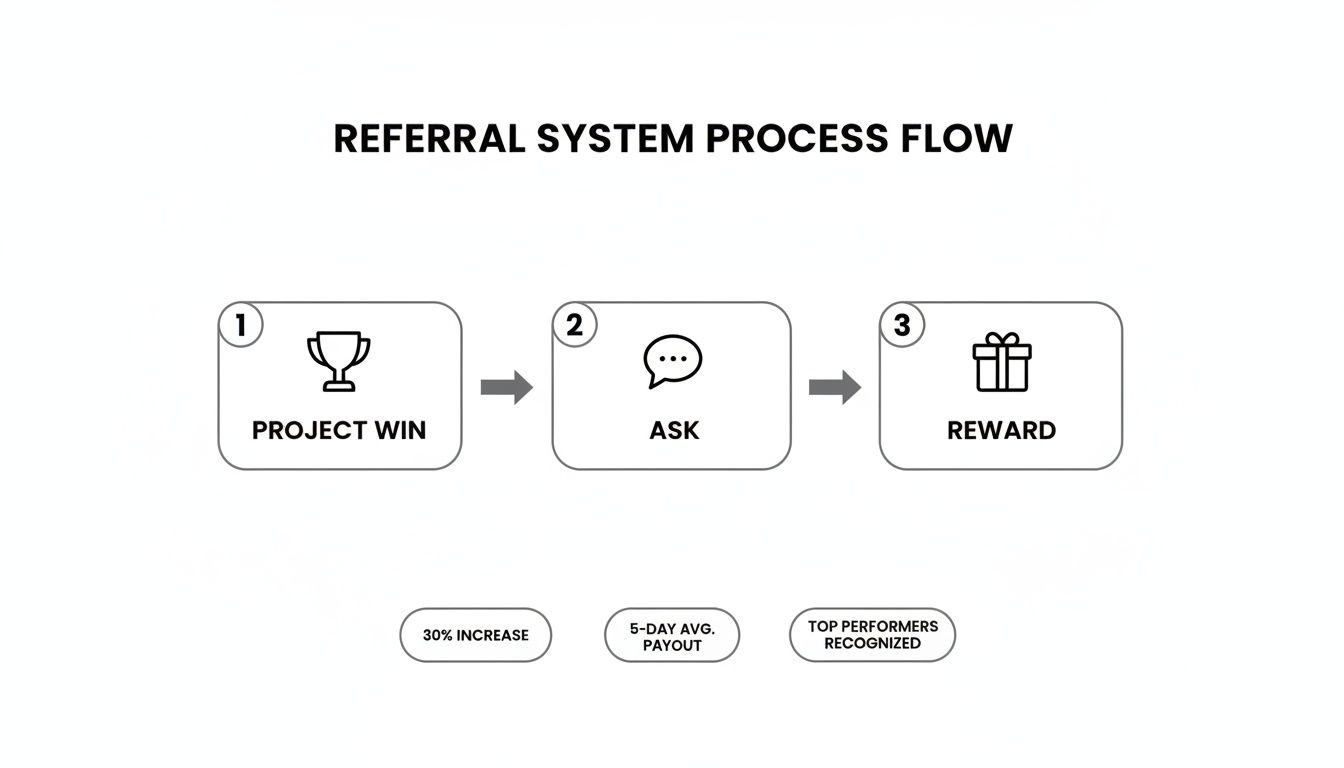
The idea is straightforward: a great project outcome is the perfect trigger to ask for a referral. Reinforce that with a small reward, and you’ve built a repeatable engine for new business.
Manage Your Outreach Without Being Annoying
A single email, no matter how good, often gets lost in the shuffle. A smart, respectful follow-up sequence is where the magic really happens. The key is to be structured and consistent, but never pushy.
A simple three-email sequence, spaced out over a week or two, is usually plenty. The first email provides the value, the second is a gentle nudge, and the third is a polite "closing the loop" message. By focusing on being helpful, you build trust and ensure that even if they don't need you right now, you'll be the first person they think of when they do.
Using Content and Partnerships for Long-Term Growth
Direct outreach is great for filling your pipeline now, but if you want to build a business that lasts, you need a system that brings clients to you. That’s the magic of combining content marketing with strategic partnerships—it shifts you from constantly hunting for work to consistently attracting it.
Think of it as building two powerful engines that run in parallel. One engine is your content, which answers the questions your ideal clients are googling at 2 a.m. The other is your network of allies, other pros who serve the same clients and can send amazing referrals your way.

Create Content That Pulls in Your Dream Client
Let's be clear: this isn't about churning out generic blog posts. The goal is to create strategic "content assets" that scream "expert" to anyone in your niche who finds them. These are deep, genuinely helpful resources that solve a real problem, proving your value long before you ever send a proposal.
Here’s what these assets actually look like:
- Niche SEO Guides: Instead of a generic post, write something hyper-specific like "The Ultimate Website Checklist for Boutique Fitness Studios." You're targeting a clear audience with a problem they're actively trying to solve.
- In-Depth Case Studies: Your portfolio shows the "what," but a case study shows the "how" and "why." Walk readers through a real project: the client's initial headache, your strategic fix, and the tangible business results you delivered.
- Industry Trend Reports: Position yourself as a forward-thinker. You could analyze data and create a report like "2024 E-commerce Design Trends for Sustainable Brands," full of actionable takeaways.
Remember, quality trounces quantity every time. One exceptional guide that people bookmark and share is worth a hundred forgettable blog posts.
Forge Powerful Strategic Partnerships
While your content machine is warming up, you can generate a steady stream of high-quality leads by partnering with other professionals. Just think: who do your ideal clients already know, like, and trust? Those are your future partners.
You're looking for non-competing businesses who serve the same type of client. It's a natural fit, creating a two-way street for referrals that benefits everyone involved.
Some of the best partners for a web designer are:
- Digital Marketers & SEO Specialists: They're the first to spot an outdated website that's tanking a client's performance.
- Copywriters & Brand Strategists: Their work is the soul of a website; they need a great designer to build the body.
- Business Coaches & Consultants: Their clients are often leveling up and desperately need a website that reflects their new growth.
- Photographers & Videographers: They create stunning visuals and their clients always need a professional site to display them.
A solid partner network is a total game-changer. You go from being a lone wolf hunting for leads to having a whole team of trusted pros sending warm introductions your way.
How to Structure a Win-Win Alliance
When you reach out to potential partners, keep your pitch professional and focused on mutual value. A simple reciprocal referral agreement is often the best way to start. Offering a standard 10% referral fee on the first project invoice is a powerful and well-understood incentive.
This simple structure gets everyone on the same page. Your partners are rewarded for sending qualified leads their way, and you get access to potential clients who are already warmed up.
While referrals have always been a staple, the most successful modern agencies blend this strategy with others. By combining a strong partner network with high-value content and data-driven outreach, you build a resilient, scalable system to get clients for website design. You can find more data on web design industry pricing and client acquisition trends to see how this fits into the bigger picture.
Common Questions About Finding Web Design Clients
Jumping into client acquisition can feel like you're trying to drink from a firehose. There are so many strategies, so much advice, and probably a dozen questions running through your mind right now. Let's cut through the noise and tackle some of the most common ones I hear from designers just like you.
How Much Outreach Is Enough to See Results?
This is the big one, isn't it? The honest, no-fluff answer is that it really depends, but the one non-negotiable is consistency. Sending a massive blast of emails for a week and then going silent for a month just won't cut it. You need a system you can actually stick with, day in and day out.
For cold outreach, a good rhythm to aim for is 10-20 personalized emails every single day. That's a volume you can manage without sacrificing quality. When you're on marketplaces like Upwork, it’s less about volume and more about speed. Firing off 5-10 hyper-targeted proposals to brand-new, quality job posts is a solid daily goal.
It's never just about the raw numbers. It’s about the quality of each touchpoint. I'll take ten well-researched, value-packed messages over a thousand generic, copy-paste templates any day of the week.
Just remember, this is a numbers game with a long tail. You might send 100 emails before you get that first real conversation. Don't let that get you down. Keep an eye on your open rates, reply rates, and how many meetings you book. That data will tell you what’s working so you can double down on it.
What Is the Best Way to Price My Services When Starting Out?
Pricing can feel like a total mystery when you're new, but it doesn’t have to be. The biggest mistake you can make is trying to be the cheapest option out there. That’s a race to the bottom, and it’s a magnet for nightmare clients who will burn you out for pennies. The goal is to price based on value, right from the start.
Even if your portfolio isn't massive yet, you can still put together packages that solve real business problems. Here’s a simple framework that works:
- Do Your Homework: Check out what other designers in your niche with a similar level of experience are charging. This isn't to copy them, but to get a feel for the ballpark.
- Create Three Tiers: Build out "Good," "Better," and "Best" packages. This is a classic psychological strategy called price anchoring, and it works wonders. It naturally pushes people toward your middle option, making it feel like the best value.
- Price the Outcome, Not the Hours: Stop trading time for money. Instead of an hourly rate, price the project based on the result it will deliver. A new e-commerce site that could pull in six figures for a client is infinitely more valuable than a simple brochure site, and your pricing should reflect that.
Pick a starting price that feels just a little bit scary, but one you can stand behind and justify with confidence. As you rack up wins and glowing testimonials, you'll have all the proof you need to raise your rates with every new client.
Can I Safely Use Automation on Freelance Platforms?
Yes, absolutely—as long as you're smart about it. Automation isn't about spamming the platform into oblivion. It's about getting a strategic edge by being faster and more relevant than everyone else bidding on the same job. The trick is to use tools that are built to be safe and act like a human.
When you're looking at automation tools, make sure they check these boxes:
- Mimics Human Actions: The tool shouldn't act like a robot. It needs to operate in a way that’s completely indistinguishable from a real person using the site.
- Puts Security First: Check that the service uses secure connections and, most importantly, never stores your platform passwords directly.
- Respects the Rules: Go with tools built by people who actually understand the platform's terms of service and are dedicated to playing by the rules.
Smart automation takes the soul-crushing, repetitive work of hunting for jobs and sending that first proposal off your plate. That frees you up to do what really matters: personalizing follow-ups, nailing discovery calls, and writing proposals that win. It’s how you scale your client acquisition without burning yourself out.
Ready to stop spending hours searching for jobs and start having conversations with qualified clients? Earlybird AI acts as your 24/7 sales team on Upwork, automatically finding the perfect projects and sending personalized proposals in minutes. See how our members are landing more clients with less effort. Discover the smarter way to grow your web design business at https://myearlybird.ai.