← Back To Blog
5 Sample oDesk Cover Letter Examples for 2026
You're staring at a job post that fits you perfectly. The budget looks solid, the scope is clear, and you know you can do the work. Then the friction starts. What do you write so your proposal doesn't sound like every other sample odesk cover letter floating around online?
That old playbook doesn't hold up well anymore. oDesk became Upwork in 2015, and a lot of older templates still read like they were written for a slower, less crowded platform. Current Upwork cover letter guidance says effective proposals are typically 200 to 300 words or fewer, and many winning proposals land around 100 to 200 words unless the client asks for a detailed plan.
That shift changes everything. Long introductions, generic “I am very interested in your project” openings, and full autobiography-style pitches now waste the most valuable part of the proposal, which is the first few lines. Clients want fast relevance, proof of fit, and a low-friction next step.
The strongest sample odesk cover letter today isn't really an old oDesk letter at all. It's a compact Upwork proposal that borrows what still works from the past, then strips out the filler. Below are five practical examples built for how clients read proposals now, including when to use them, when they backfire, and how to scale them with automation tools like Earlybird AI without sounding automated.
1. Short Pitch Cover Letter
The fastest-winning proposal is often the shortest one.
When a client posts a simple Shopify fix, logo refresh, blog assignment, or small dev task, they usually don't want a miniature business plan. They want proof that you understand the task, that you've done similar work, and that you can start without friction. That's where a short sample odesk cover letter works best.
Upwork's own guidance says many winning proposals are about 100 to 200 words and recommends a simple structure with a personalized opening, body, and call to action, plus measurable evidence from past work in the proposal itself or supporting materials in your profile. That's the cleanest benchmark for a modern short pitch.
What this looks like in practice
A weak short pitch says:
Hi, I am interested in your project and believe I am the right freelancer for the job.
That tells the client nothing.
A stronger version sounds like this:
Hi Sarah, I saw you need a Shopify landing page cleaned up before launch. I recently handled a similar store update, including product page fixes, mobile spacing, and checkout UX cleanup. I can review your current setup today and send back the quickest path to launch. Want me to start with the landing page or the cart first?
That works because it does three things fast. It mirrors the task, signals recent relevant experience, and ends with an easy question.
Here's another version for content work:
You need blog posts that are clean, readable, and easy to publish fast. I write product-led and SEO-focused content for software and service businesses, and I can match your existing tone from the first draft. If you'd like, I can review one current article and show how I'd improve structure and flow before we start.
For more live examples of compact proposals, this roundup of Upwork proposal examples from Earlybird AI is useful as a pattern library.
When short wins and when it fails
Short works best when the job post is simple, urgent, or crowded. It also works well when you're responding quickly and want to get seen before the inbox fills up.
It fails when the project is clearly strategic, messy, or expensive enough that the client expects thinking, not just availability.
Use a short pitch when
- The scope is obvious: bug fixes, page design, content batches, ad creatives, minor edits.
- The client sounds rushed: launch deadlines, urgent handoff, same-day revision work.
- Your fit is immediate: same niche, same tool stack, same deliverable.
Don't use it when
- The brief is layered: migrations, full rebrands, complex app builds, audits with multiple stakeholders.
- The client asks for process: milestones, methodology, dependencies, or discovery.
- You need to de-risk concerns: unclear scope, legacy systems, or unclear ownership.

Practical rule: If the client can understand your fit in two sentences, don't send six paragraphs.
If you use Earlybird AI or a similar workflow, short pitches are the easiest to scale. The key is to automate the skeleton, not the final wording. Personalize the opening with one detail from the post, then keep the rest stable.
2. Detailed Proposal with Project Breakdown
Some jobs need more than a quick hit. If the client is hiring for a redesign, system overhaul, content strategy, or multi-phase marketing engagement, a short pitch can make you look shallow even if you're highly qualified.
A detailed sample odesk cover letter still has a place. Not a bloated one. A structured one.
Independent cover-letter advice for higher-value Upwork work recommends a three-part format: lead with a past result similar to the client's goal, summarize relevant experience in one sentence, and end with a question that starts the conversation. It also argues that short letters are usually stronger because attention is limited, while supporting proof can live in attached PDFs or portfolio items. That's a helpful middle ground. You can be consultative without dumping your whole process into the message itself, as explained in this piece on winning high-paying Upwork clients.
A breakdown template that feels senior
Here's a version I'd use for a web rebuild:
Hi Daniel, your site sounds like it has two issues at once: inconsistent UX and a backend that's slowing down simple updates. I recently worked on a similar rebuild where the main win came from separating design cleanup from CMS restructuring so the team could improve both without creating rollout chaos.
I handle projects like this in three parts:
• audit the current site and identify high-friction pages
• map the rebuild into clear milestones with approvals at each stage
• launch the highest-impact pages first so you get progress without waiting for the full rebuild
I've worked across redesigns, CMS migrations, and launch planning, so I can help shape scope before development starts. If you want, send the current site and any must-keep pages, and I'll outline the first phase.
That proposal is still compact. But it feels more expensive because it reduces uncertainty.
For a strategic marketing project, the same structure works:
Open with the business problem. Don't open with yourself.
Show your thinking. Give a phased plan, not a feature dump.
End with a scope question. That moves the conversation forward.
The trade-off most freelancers miss
Detailed proposals can impress. They can also waste time.
If you send a long custom breakdown on every mid-budget job, you'll spend your week consulting for free. That's why I like using a reusable framework and only customizing the pressure points: the client's goal, the likely risk, and the first milestone.
A good support resource for that structure is this guide on how to write a proposal for Upwork, especially if you want a repeatable format that still leaves room for customization.
Clients don't hire detail. They hire clarity. Detail only helps when it reduces uncertainty.
Older online-work templates from the oDesk era often leaned hard on self-description, availability, and broad capability statements, including claims about hours available and years of experience. That style still appears in archived samples such as the sample cover letters for online work PDF. Today, that same energy works better when translated into scope control, deliverables, and a clear first step.
3. Technical Role Cover Letter
Technical clients don't need you to sound impressive. They need you to sound accurate.
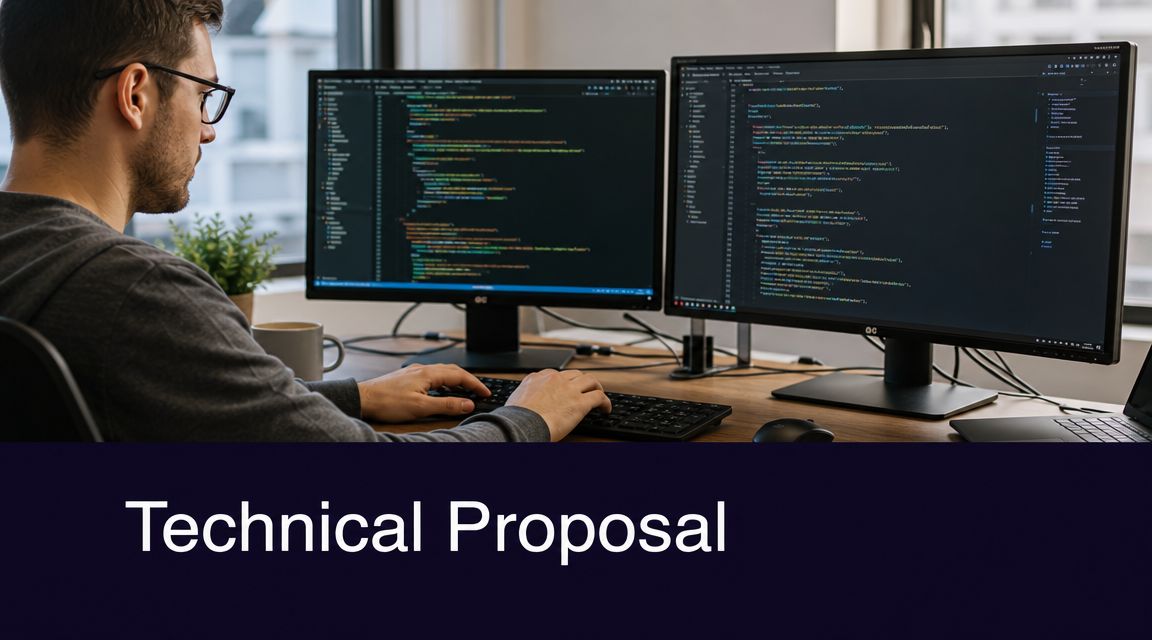
That's the biggest difference between a generic sample odesk cover letter and one that wins React, Python, DevOps, data, or backend work. If the client mentions Next.js, Prisma, Docker, AWS, CI/CD, or a flaky payment integration, your proposal should speak directly to that stack and that pain.
What a strong technical proposal sounds like
A bad technical proposal says:
I am a full-stack developer with experience in many frameworks and can build scalable applications.
That reads like you didn't even glance at the brief.
A better one says:
Hi Mark, I saw you need help stabilizing a React frontend and cleaning up API latency on the Node backend. I've worked on similar debugging-heavy projects where the real issue wasn't the framework choice, but state handling on the frontend and slow database queries behind the API. If helpful, I can start by reviewing the current repo structure and identifying the fastest fixes before proposing larger changes.
That works because it sounds like someone who has solved technical messes before.
What to include and what to leave out
Technical buyers often screen for signal density. They want to know whether you understand the stack, whether you can reason through trade-offs, and whether you communicate clearly enough to work with a product team.
Include
- Exact stack language: mirror the tools named in the post when it's truthful.
- One relevant artifact: GitHub repo, code sample, architecture note, or technical portfolio piece.
- Decision logic: explain why you'd audit, refactor, cache, split services, or delay a rebuild.
- Availability context: overlap, handoff rhythm, or ability to join existing standups.
Skip
- Big skill lists: twenty frameworks in a row lowers trust.
- Buzzwords: scalable, reliable, cutting-edge, best-in-class.
- Generic confidence lines: “I can do this perfectly” means nothing.
- Premature certainty: don't quote deep fixes before seeing the codebase.
For technical work, I also recommend a specific close:
If you share the repo structure or current issue summary, I can tell you whether this looks like a quick fix, a refactor, or an architecture problem.
That gives the client a useful next move without forcing a call.
Why automation helps technical roles differently
Technical proposals are easier to templatize than many freelancers think. Your base format can stay stable. What changes is the diagnosis.
If you're using Earlybird AI, build role-specific templates by stack family. One for React and frontend performance. One for backend and API work. One for DevOps and deployment issues. Then swap in job-specific nouns, risk points, and one relevant sample.
That's how you scale without sending bland engineering wallpaper.
4. Creative Role Cover Letter
Creative clients buy taste before they buy execution.
That's why a design, content, brand, or video proposal shouldn't read like a technical services bid. A creative sample odesk cover letter has to show that you understand voice, positioning, audience, and mood. If the proposal itself feels flat, the client assumes the work will too.
Lead with a creative read, not a résumé
If a skincare founder says they want a clean premium identity, don't respond with software-style lines about process optimization and deliverables. Show that you understand the brand tension.
Try this:
Hi Emma, your brand sits in a space where “minimal” can easily become forgettable. The stronger direction is probably clean but tactile, so the identity still feels premium and human instead of sterile. I've worked on brand and content systems where that balance mattered, and I'd approach yours by tightening the visual language first, then applying it consistently across packaging, web, and social.
That doesn't just say “I'm a designer.” It says “I can think with you.”
A copywriter version could sound like this:
Your audience sounds busy and skeptical, so the copy can't be clever for its own sake. It needs to get to the point fast, show authority without sounding stiff, and make the next action feel easy. I write in that lane often and can draft against your current brand voice or help sharpen it if it's still evolving.
A template for designers, writers, and brand freelancers
Use this flow:
Creative observation about the brand, audience, or market
Relevant proof from similar work or similar type of problem
Simple process with one or two stages, not a giant agency diagram
Low-friction next step like a sample concept, outline, or short call

This kind of proposal also benefits from external proof. Portfolio links, short PDFs, and visual references often carry more weight than extra paragraphs.
The proposal should sound like the kind of thinking the client wants to buy.
Creative roles are where blind automation breaks fastest. If you use a tool-assisted workflow, keep the research and first draft automated if you want, but always review tone by hand. Creative clients notice generic language immediately.
5. Profile Optimization and Multi-Proposal Strategy
Most freelancers search for a single perfect sample odesk cover letter. That's the wrong model.
What wins consistently is a system: one short pitch, one consultative version, one role-specific variant, and a repeatable follow-up pattern. Then you watch what gets replies and cut what doesn't.
Build a small proposal library
Start with three templates.
Template one: short pitch for fast-moving, obvious-scope jobs
Template two: detailed breakdown for larger projects
Template three: niche version for your core service, like Shopify design, SaaS copy, or React debugging
That gives you range without creating proposal chaos.
Recent proposal advice has emphasized leading with proof of fit, keeping many proposals under about 200 words, and using bullets plus a low-friction next step. That's a useful signal for how to shape your template library, as discussed earlier in modern proposal guidance. The key advantage comes from combining that brevity with a strong profile, because even a good proposal weakens if the client clicks through and sees an outdated headline, mismatched portfolio, or unclear positioning.
If you want to tighten that side too, this set of oDesk profile examples from Earlybird AI is helpful for seeing how profile messaging and proposal messaging should match.
How to scale without becoming generic
Automation is useful when it removes repetitive typing, not when it removes judgment.
A strong operating rhythm looks like this:
- Use one stable opening pattern: proof of fit, not greeting fluff.
- Swap in one real job detail: platform, audience, scope issue, deadline, or tool.
- Attach the right proof: portfolio, sample, PDF, or relevant profile item.
- Follow up once: brief, useful, and specific if the client hasn't replied.
For example, a developer might use the same base proposal for React jobs but change the middle lines depending on whether the post is about performance, debugging, UI polish, or API work. A content agency might route proposals by writer specialty instead of sending one generic agency pitch every time.
Don't over-explain career gaps in proposals
A lot of freelancers worry that they need to defend a break in work history inside the proposal. Usually, they don't.
Current expert advice says if the gap is only three to six months, you can usually skip it. If it's longer, keep it to one sentence and pivot quickly back to skills, training, or outcomes, according to this guidance on explaining a career break in a cover letter. That advice applies especially well to Upwork proposals, where over-explaining personal history often pulls attention away from fit.
If your proposal starts sounding like a defense statement, you've already drifted away from the client's problem.
Your Blueprint for Winning More Upwork Bids
A strong sample odesk cover letter isn't one magic template. It's a decision system.
Use the short pitch when the job is simple, urgent, or crowded. Use the structured breakdown when the client is buying judgment and wants to see how you think. Use the technical version when stack accuracy matters. Use the creative version when taste, tone, and positioning are part of the deliverable. Then connect all of that to a profile that backs up what your proposal promises.
The biggest mistake freelancers make is treating every job the same. They send a long proposal to a client who wanted speed. Or they send a two-line pitch to a client who wanted strategic thinking. The fix usually isn't “write better.” It's “match the proposal shape to the buying context.”
Brevity matters now more than it did in the old oDesk era. Upwork's guidance favors concise proposals, and that aligns with what most experienced freelancers see in practice: clients scan first, then decide whether to read more. Your opening has to prove fit fast. After that, everything in the proposal should lower friction.
That's also where automation becomes useful. Not as a substitute for judgment, but as infrastructure. If you build a small set of role-specific templates, personalize the opening, attach the right proof, and track which version gets replies, bidding stops feeling random. It becomes a process you can improve. Earlybird AI is one option for that kind of workflow if you want help with proposal drafting, personalization, analytics, and follow-up inside an Upwork-focused system.
The best way to improve from here is simple. Pick one template from this article. Rewrite it in your own voice. Use it on a tightly matched set of jobs. Watch which opening lines start conversations. Keep the parts that earn replies, and cut the ones that only sound good to you.
If you want to turn proposal writing into a repeatable system instead of a daily scramble, Earlybird AI can help you automate job discovery, draft personalized Upwork proposals, follow up with leads, and spot profile or messaging issues before they cost you replies.