← Back To Blog
10 Best SEO Enterprise Software for Agency Keyword Tracking

Managing keyword tracking for one enterprise client is hard enough. Multiply that by a portfolio of accounts, each with different locations, reporting expectations, and stakeholder demands, and the process breaks fast. Spreadsheets drift out of sync, rankings conflict between tools, and account managers lose hours every month rebuilding the same reports.
That's usually the point where an agency realizes keyword tracking isn't just a reporting function. It's operations. If your stack can't track daily movement, segment data cleanly, and give clients a version of the truth they trust, growth starts to hurt instead of help.
That's why choosing the right SEO enterprise software for agency keyword tracking matters so much. The best platform isn't always the one with the biggest feature list. It's the one your team can run at scale without creating more work, more confusion, or more cost than the agency can absorb. Daily updates now matter because weekly snapshots miss too much volatility, and top-tier platforms such as AccuRanker and Semrush are built to reflect ranking changes within 24 hours for stronger client reporting, as noted by seoClarity's review of rank tracking tools.
What follows is a practitioner's comparison, not a vendor brochure. I'm looking at these tools through the agency lens that matters: multi-client management, automation, reporting depth, workflow fit, and total cost of ownership.
1. seoClarity
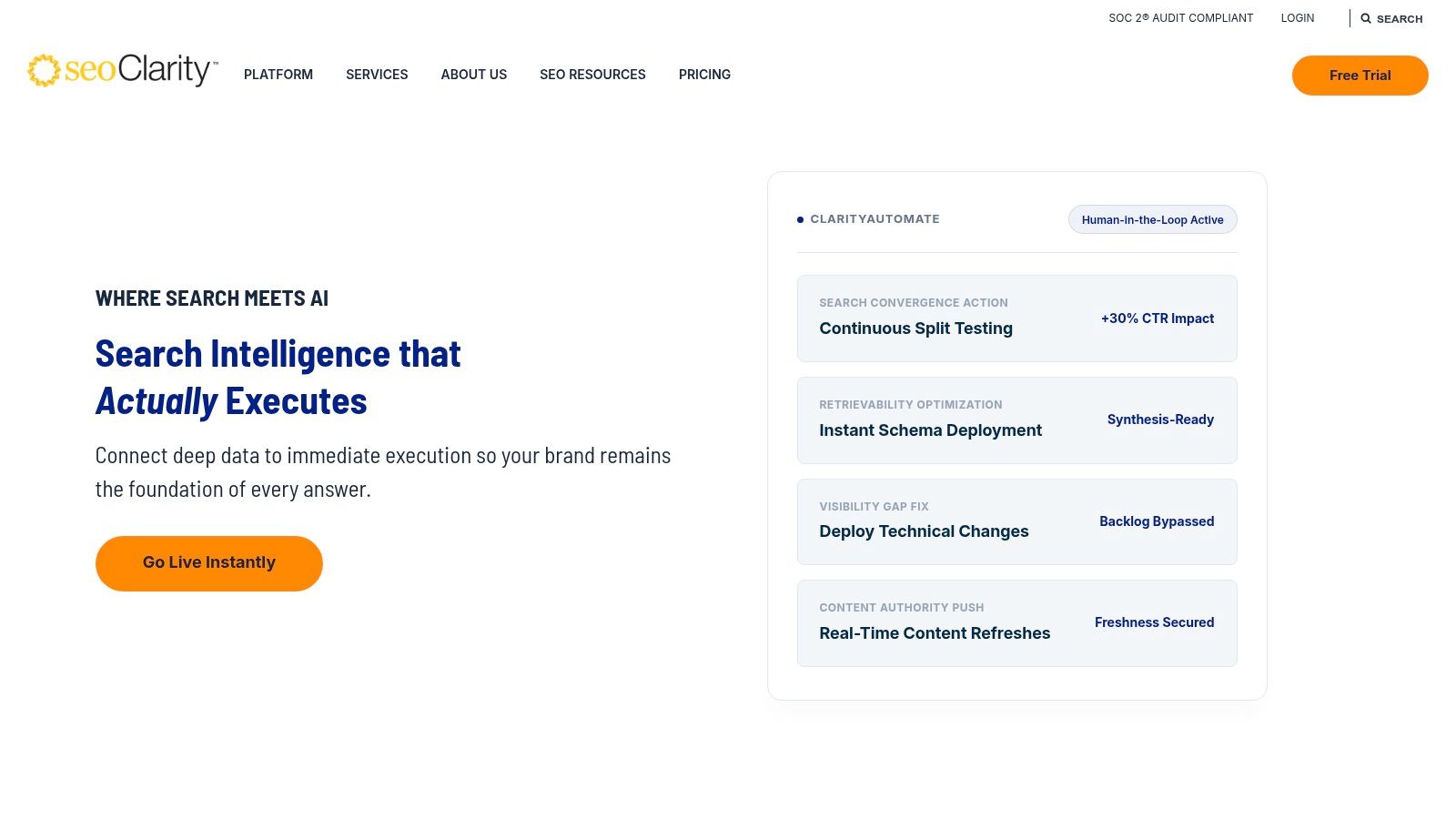
seoClarity makes the most sense when an agency has already outgrown lightweight trackers. If you're managing massive keyword sets, multiple domains per client, and executive teams that want polished visibility reporting, this platform feels built for that operating model.
The biggest advantage is structure. seoClarity supports daily desktop and mobile rankings, visual rank analysis for SERP features, local tracking across granular geographies, and dashboards that can be shaped for different client audiences. Strategy leads, analysts, and client services teams usually need different views. This is one of the tools that can support that without forcing everyone into the same dashboard.
Where it fits best
For agencies with layered account teams, governance matters as much as rank data. seoClarity is strong when you need API access, permissioning, roll-up reporting, and a cleaner way to unify SEO data across systems.
A few practical strengths stand out:
- Enterprise-grade segmentation: Teams can separate branded, non-branded, local, or SERP-feature-heavy keyword groups without turning tagging into a mess.
- Location depth: State, city, ZIP, and even GPS-level views are useful when a client's local footprint drives lead quality.
- Executive reporting: This is the kind of platform that helps when a CMO wants trend lines and market visibility, not a raw export.
Practical rule: Buy seoClarity when reporting complexity is your bottleneck, not just tracking volume.
The trade-off is predictable. Implementation can be heavy, and agencies that don't have clear naming conventions, ownership rules, or reporting logic often struggle early. Premium enterprise pricing also means it's hard to justify for smaller retainers.
If your agency wins larger accounts by proving operational maturity, seoClarity supports that story well. If you just need quick rank checks and simple client exports, it's probably more platform than you need.
2. BrightEdge
BrightEdge has been in enterprise SEO long enough that many large brands and holding-group agencies already know the name. That matters more than people admit. When you're pitching or onboarding enterprise clients, familiarity lowers friction.
The appeal isn't just rank tracking. BrightEdge combines keyword monitoring, topic discovery, site auditing, anomaly detection, and executive reporting into a single platform. For agencies that want one system tied closely to content performance and stakeholder communication, that broad footprint can reduce stack sprawl.
What agencies tend to like
StoryBuilder is one of the more useful parts of the platform for client-facing teams. Agencies that struggle to turn raw SEO data into a boardroom-ready narrative usually benefit from BrightEdge's presentation layer. It also pairs well with a stronger reporting process, especially if your team is rethinking SEO agency reporting workflows.
BrightEdge also works well when content and SEO teams need to stay tightly aligned.
- Data Cube support: Useful for surfacing topic and content opportunities beyond a narrow keyword list.
- Workflow depth: Better suited than many tools for agencies that need cross-functional handoffs between strategy, content, and technical teams.
- Large-client fit: Standardization across business units is one of its stronger use cases.
BrightEdge is often less about “what's my rank today?” and more about “how do I run enterprise organic search as a managed program?”
The downside is contract weight. Smaller agencies or specialist shops can find the platform expensive and broader than necessary. The learning curve is also real. Teams that don't invest in setup discipline tend to use only a fraction of what they're paying for.
BrightEdge is strongest when an agency wants a mature enterprise platform with reporting credibility and internal workflow support. It's weaker when speed, simplicity, and cost predictability matter more than breadth.
3. Conductor
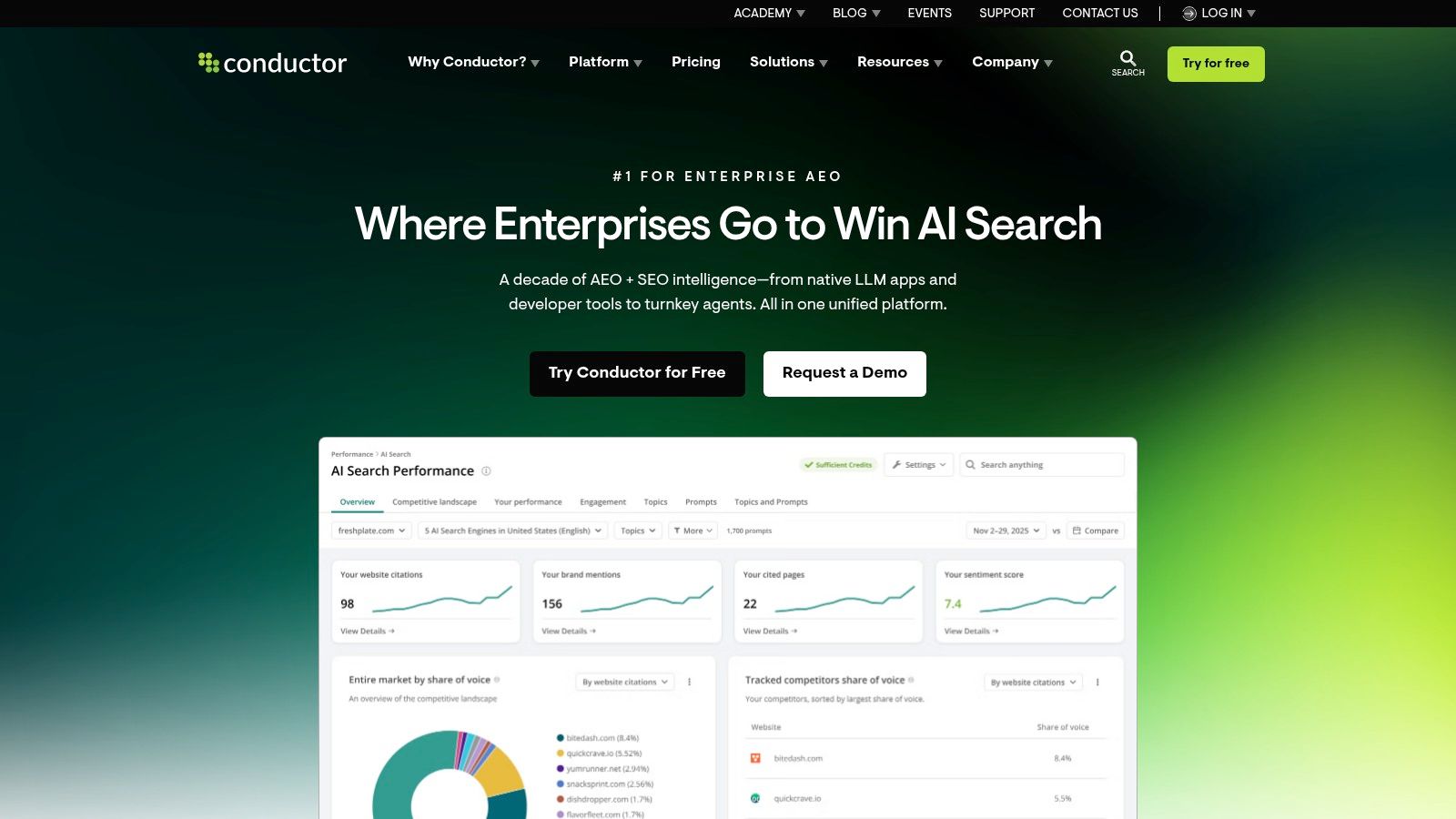
Conductor stands out because it doesn't stop at classic Google rank tracking. For agencies trying to future-proof reporting, that matters. A lot of enterprise SEO content still over-focuses on traditional SERPs, even though recent industry analysis says modern agencies need AI-driven search visibility analysis that includes AI Overviews to stay competitive, and fewer than 15% of reviewed tools offer dedicated LLM tracking metrics, according to The Digital Project Manager's enterprise SEO agency software analysis.
That gap is exactly where Conductor gets interesting. It's positioned for agencies that want daily keyword tracking plus visibility across major AI surfaces such as ChatGPT, Gemini, Copilot, and Claude.
Why that changes the buying decision
If your clients are asking why rankings look stable while traffic behavior changes, classic position tracking won't always answer the question. Conductor's value is in connecting visibility with business reporting, not just showing rank movement.
A few agency implications are worth calling out:
- AI visibility coverage: Helpful for teams that need to explain how search behavior is changing beyond the standard SERP.
- Enterprise roll-ups: Better fit for multi-brand or multi-market clients that want one reporting layer.
- Permissions and SSO: Important for large teams with strategists, executives, and client-side users all touching the same system.
For some agencies, this is overkill. If your clients only care about Google rankings, landing page shifts, and local packs, a dedicated tracker may be more efficient.
The practical question isn't whether AI visibility matters. It's whether your agency can afford not to measure a channel your clients are already asking about.
Conductor also comes with familiar enterprise drawbacks. Procurement is sales-led, pricing is premium, and smaller account teams may not use enough of the platform to justify the cost. But for agencies serving larger brands, especially those with executive stakeholders who want visibility tied back to conversions and revenue, Conductor solves a problem that many trackers still ignore.
4. STAT Search Analytics (by Moz)
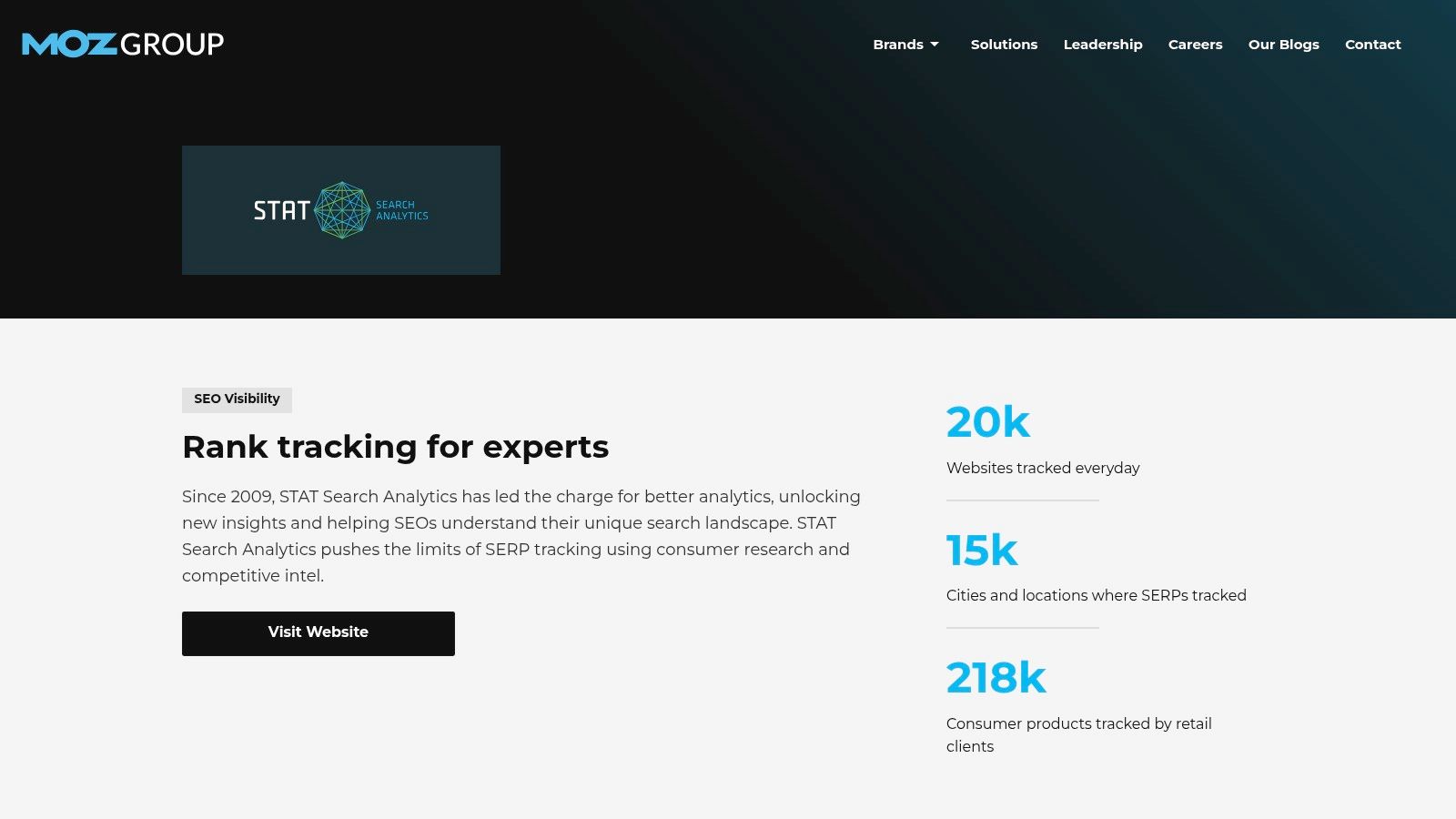
STAT Search Analytics is what I'd call a tracker-first platform. That's a compliment. Plenty of enterprise suites do rank tracking as one module among many. STAT is for agencies that want SERP intelligence to be the center of the system.
This matters when your team works across very large keyword sets and needs detailed segmentation by market, device, tags, and SERP feature ownership. Agencies doing competitive monitoring at scale often prefer purpose-built trackers because they tend to expose search result nuance more cleanly than broader all-in-one suites.
Best for agencies that live in the SERP
STAT's strength is depth. Daily tracking at scale, share-of-voice views, and SERP feature monitoring all support a more analytical workflow. If your team regularly diagnoses lost visibility by device, geography, or feature type, this setup is strong.
Use cases where STAT tends to shine:
- Large daily collections: Useful for agencies handling substantial keyword portfolios across multiple clients.
- Custom segmentation: Analysts can slice visibility with more precision than many generalist platforms allow.
- Competitive SERP monitoring: Good fit when your team tracks market shifts, not just client rankings.
The weakness is obvious. STAT isn't trying to be your all-in-one SEO operating system. You'll likely still need separate tools for audits, link intelligence, content work, or broader reporting layers.
That can be perfectly fine. In fact, many mature agencies work better with a dedicated rank intelligence tool plus a separate reporting or analytics stack. The key is accepting the trade-off up front. If you want a single login that handles everything, STAT won't feel complete. If you want serious keyword tracking infrastructure, it earns a place on the shortlist quickly.
5. Similarweb (Rank Ranger)
Similarweb Rank Tracker is compelling for agencies that don't want rankings in isolation. Some clients don't just ask where they rank. They ask whether visibility is translating into share, traffic context, and competitive movement. Similarweb's advantage is that rank tracking can sit closer to broader market intelligence.
That's especially useful when account teams need to explain why a ranking win didn't produce the expected business result, or why a small ranking drop isn't the primary problem.
The context layer matters
The inherited Rank Ranger DNA gives agencies practical tracking capabilities such as daily rankings, device and location filters, group analysis, and API access. The Similarweb layer adds a wider strategic frame that many pure trackers don't provide.
That creates real operational benefits:
- Better client conversations: Rankings become part of a market story instead of a standalone KPI.
- API flexibility: Stronger fit for agencies building custom reporting environments.
- Competitor benchmarking: Useful when clients care as much about category movement as they do about their own domain.
There is a trade-off after acquisitions like this. Packaging changes can affect workflow consistency, especially if an agency was used to the older product structure. Historical continuity can also become a concern during platform transitions.
For some teams, that's manageable because the upside is strategic context. For others, especially agencies that just want fast, stable, dedicated keyword tracking, the broader platform can feel less focused than specialist tools. Similarweb is a better buy when your agency sells intelligence, not just reporting.
6. AccuRanker
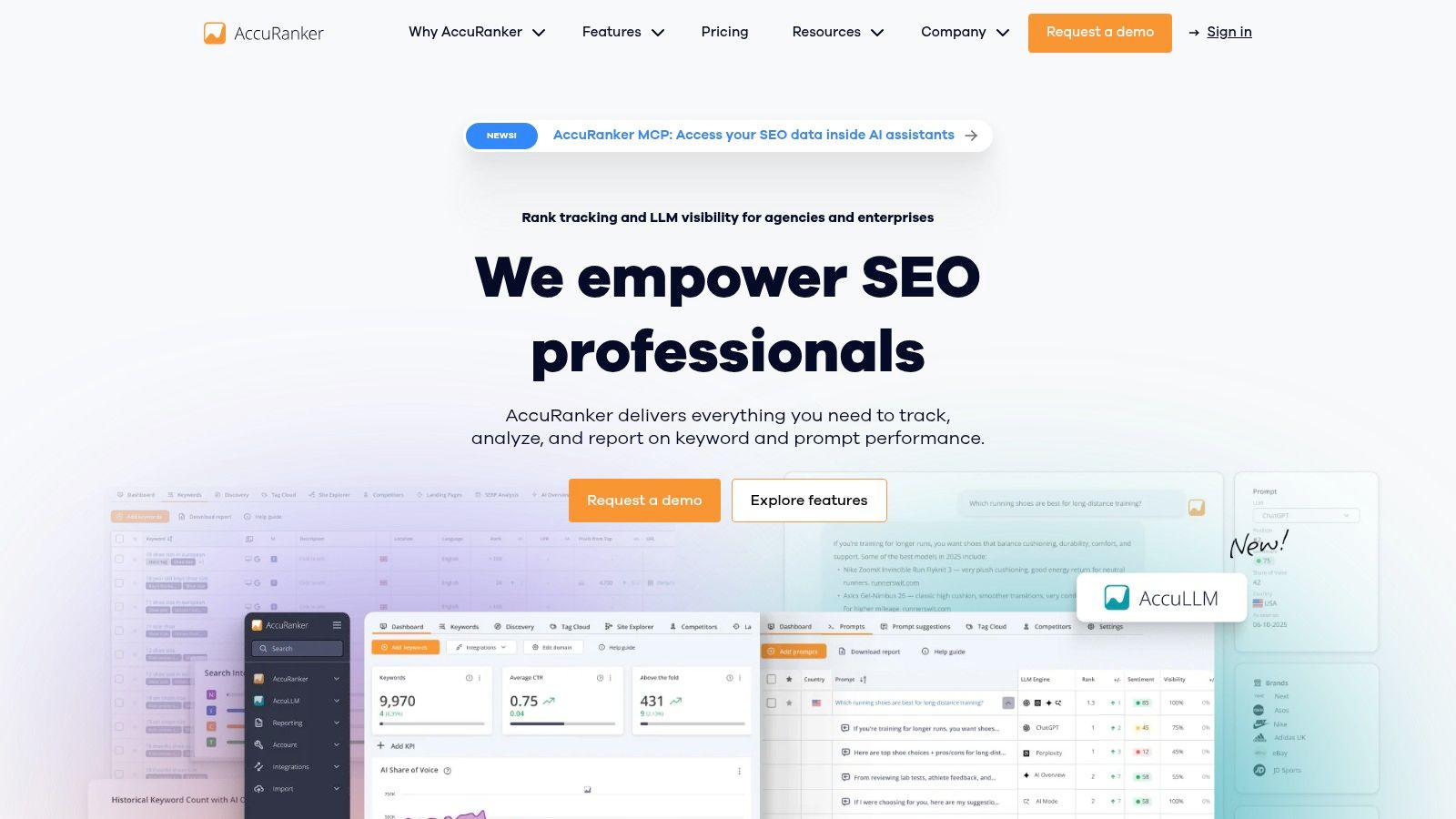
AccuRanker has become a favorite for agencies that care about speed, reporting automation, and fewer surprises in billing logic. It's a dedicated rank tracker, and that focus shows. The platform is built for teams that need frequent checks, strong segmentation, white-label reporting, and API-driven workflows without dragging along a giant all-in-one suite.
That matters when your reporting operation is under pressure. A lot of agencies don't need another content module or another audit crawler. They need rank data they can trust and pipe into client-facing dashboards fast.
Where AccuRanker earns its keep
Independent testing cited by MeasureMinds Group's enterprise SEO keyword tracking guide found that cloud-based tools like AccuRanker and SEMrush Enterprise deliver 98%+ data accuracy for hyper-localized results, while budget alternatives often fall to 85% accuracy under high-volume loads. For agencies running city-level or ZIP-level campaigns, that difference isn't academic. It changes what clients believe.
AccuRanker is particularly strong in a few areas:
- On-demand refreshes: Helpful when a client wants verification after a launch, rollout, or fix.
- Unlimited API access: Valuable for agencies standardizing reporting in BI tools or custom dashboards.
- White-label delivery: Easier to operationalize than stitching together exports every month.
Operator's view: The cheaper tool stops being cheap when account managers have to explain inconsistent local rankings every reporting cycle.
The limitation is scope. AccuRanker won't replace broader SEO suites for link analysis, auditing, or full research workflows. At very high scale, advanced add-ons can also push total cost higher than expected.
Still, if your agency wants a dedicated tracker that scales cleanly and plays well with automation, AccuRanker is one of the strongest operational choices in this list.
7. Semrush (Position Tracking)
Semrush remains one of the easiest enterprise buys for agencies that want rank tracking connected to a broader marketing stack. Position Tracking is only one part of the product, but that's exactly why many agencies choose it. PPC teams, content teams, local SEO teams, and account managers can all work from the same environment.
For growing agencies, that consolidation can be worth a lot. Fewer tools means fewer exports, fewer disconnected narratives, and a simpler onboarding process for new team members.
Why agencies keep standardizing on it
Semrush's 2025 Share of Voice 2.0 update adjusted the metric to account for pixels occupied by ads and AI features, giving a more realistic view of actual screen real estate than legacy visibility metrics, as covered in Yotpo's overview of keyword tracking tools. That's a meaningful shift because standard ranking reports often overstate visibility when AI elements and paid placements push organic listings downscreen.
For agencies, the practical upside is broad:
- Multi-channel context: SEO, content, PPC, and local data can sit closer together.
- Agency-ready reporting: Integrations, portals, and templates make it easier to scale recurring deliverables.
- Useful middle ground: It's broad enough for a wide range of teams without always requiring an enterprise-only stack.
If you're evaluating broader platforms, it also helps to compare Semrush against other SEO software for agencies based on how much of your workflow you want in one system.
The downside is cost creep. Add-ons, extra seats, and adjacent modules can materially change what the platform costs over time. Some agencies also find the upsell structure frustrating.
Semrush is often best when your agency values ecosystem breadth as much as rank tracking depth. If your process lives or dies on specialized tracking nuance, a dedicated platform may still do that one job better.
8. Ahrefs (Rank Tracker)

Ahrefs is rarely the most specialized rank tracker in an enterprise evaluation. It still makes this list because many agencies don't buy rank tracking as a standalone function. They buy a workflow. Ahrefs gives teams rankings, backlink intelligence, keyword research, and useful exports in one place, which is enough to make it highly practical.
That's especially true for agencies where link strategy and content strategy are tightly tied to ranking reviews. Instead of moving between multiple systems, teams can investigate why rankings changed inside the same environment.
Strong when research and tracking need to stay connected
According to Prosperity Media's review of enterprise SEO tools, top enterprise SEO tools such as Ahrefs cover up to ten different platforms for keyword research and tracking, including tracking specific SERP features like featured snippets and local packs. That matters for agencies diagnosing visibility beyond blue links.
Operationally, Ahrefs works well when you need:
- Deep backlink context: Useful for explaining ranking movement tied to authority shifts.
- Large keyword datasets: Good support for campaign planning alongside tracking.
- Clean exports and connectors: Helpful for teams feeding external dashboards and reports, including more robust SEO reporting software for agencies.
Ahrefs is often the best choice when the strategist doing rank analysis is the same person doing competitor, link, and content gap research.
The trade-off is customization. Ahrefs Rank Tracker is capable, but it usually won't match specialized trackers for segmentation depth or agency-specific reporting flexibility. Pricing also sits firmly in premium territory, especially once teams expand usage.
If your agency values unified research and strong SEO intelligence more than highly customized rank-tracking workflows, Ahrefs is a sensible choice.
9. Serpstat
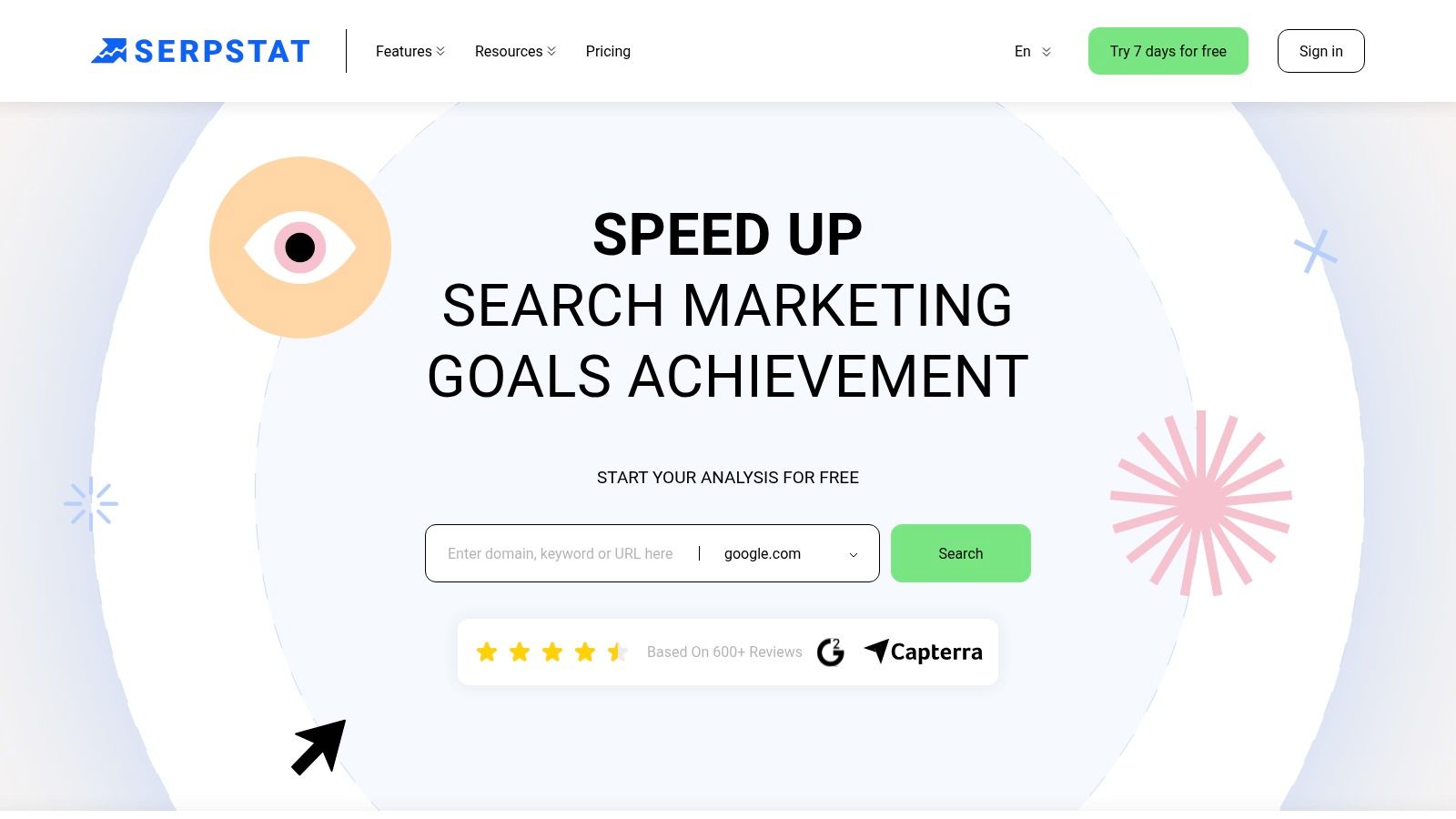
Serpstat is one of the more practical options for agencies that need a broad feature set without stepping straight into heavyweight enterprise contracts. It combines rank tracking, competitive research, and auditing in a way that can work well for small to midsize agencies handling a rising client count.
I don't usually put Serpstat in the same category as the most mature enterprise platforms for governance or executive reporting. I do think it deserves attention from agencies trying to balance scale with cost discipline.
Where it can be a smart buy
The rank tracker includes daily and local tracking, SERP feature detection, reporting support, and migration utilities for historical data. That last part matters more than most sales pages admit. Historical continuity can become a real issue when agencies switch systems and suddenly lose trend context in client conversations.
Serpstat tends to make sense in these situations:
- Keyword volume pressure: Agencies can often track more without jumping immediately to enterprise pricing models.
- Balanced workflow: Useful when one team wants tracking, research, and audit basics in one tool.
- Migration needs: Import utilities can reduce the pain of switching from another provider.
The downside is polish. Compared with top-tier enterprise suites, the interface and documentation can feel less mature for large-team operations. Data depth may also trail the leaders in more demanding competitive environments.
That doesn't make it a bad choice. It makes it a fit question. For agencies that need a capable all-rounder and can accept some compromises in enterprise refinement, Serpstat can be an efficient way to scale keyword tracking without overcommitting to a more expensive stack.
10. Keyword.com
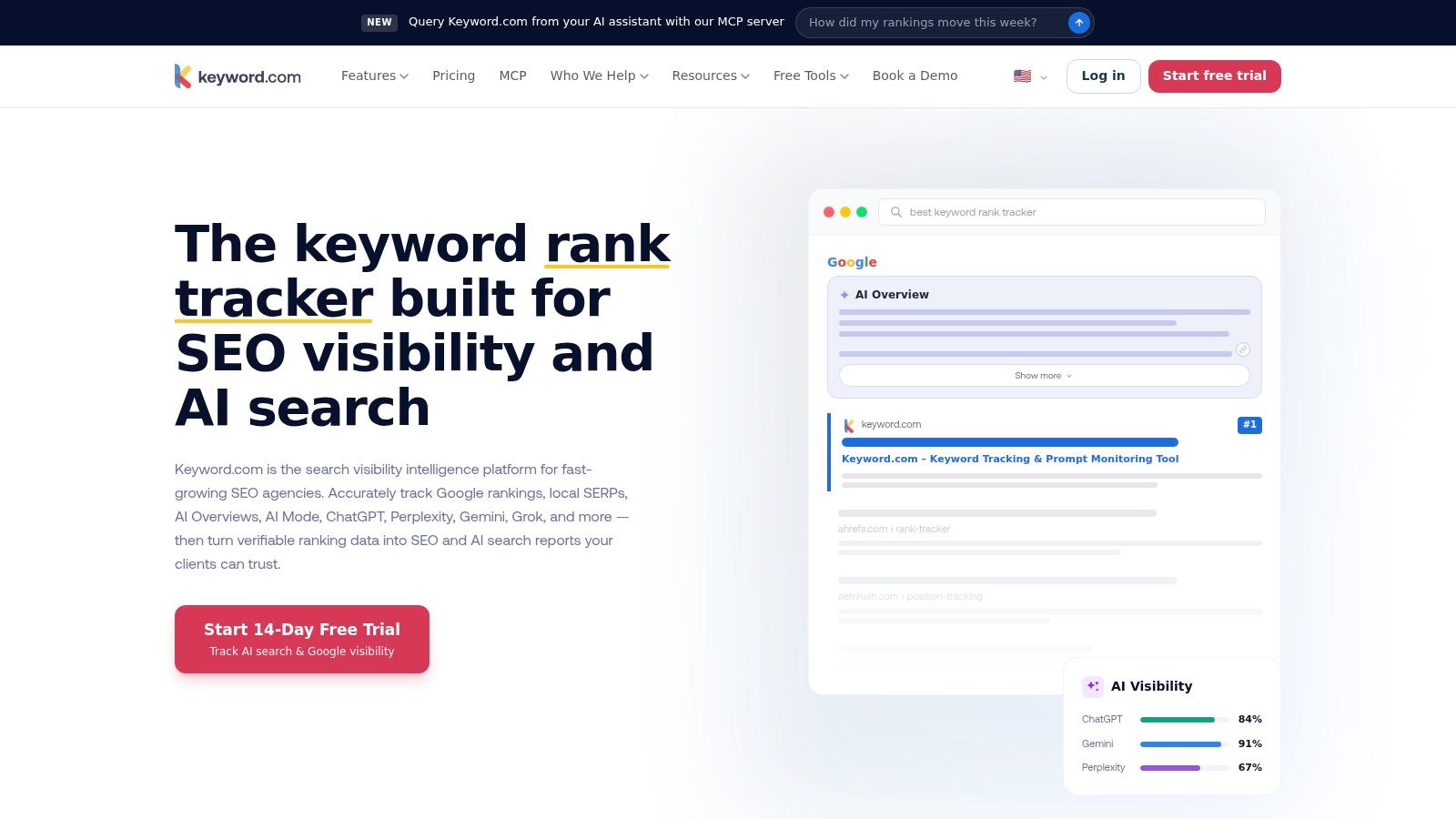
Keyword.com is one of the cleaner agency-focused options if you want a dedicated rank tracker with straightforward reporting and modern visibility features. It doesn't try to be everything. That's part of the appeal.
Agencies that are tired of buying giant suites just to get dependable rankings often respond well to Keyword.com's more focused setup. It handles daily Google tracking, SERP feature reporting, white-label delivery, client-facing links, and API access in a way that's easier to operationalize than many bloated platforms.
Strong fit for reporting-first agencies
Orbit Media notes that agencies using dedicated rank trackers like Keyword.com can monitor performance across hyper-localized regions down to the city or zip-code level, and can track mobile and desktop Google rankings separately while generating insights on average position and the share of keywords in the Top 3, Top 10, or Top 100, in its review of SEO software for agencies. For local and multi-market client work, that level of granularity matters in day-to-day account management.
Keyword.com also stands out for a few agency-specific reasons:
- White-label client access: Useful when clients want visibility without needing a full platform seat.
- Looker Studio and API support: Good fit for agencies automating dashboards.
- AI visibility options: Helpful for teams that want tracking beyond standard rankings.
The trade-off is familiar. It's narrower than an all-in-one SEO stack, so you'll still need other tools for audits, links, and broader research. Advanced AI visibility or heavier API use can also add cost depending on how your agency builds around it.
If your agency wants dedicated keyword tracking that scales cleanly, especially for local reporting and client-facing dashboards, Keyword.com is an easy tool to shortlist.
From Selection to Success: Integrating Your New SEO Platform
Choosing a platform is only the start. The agencies that get value from enterprise tracking software don't just buy access and import a keyword list. They build the platform into delivery, reporting, QA, and account communication until it becomes part of how the agency operates every day.
The selection itself should reflect the shape of your agency. If you need immense scale and very granular SERP analysis, STAT is a strong fit because it treats rank intelligence as the core product. If your clients want rankings in the context of broader market behavior, Similarweb gives you more strategic framing. If your team cares most about efficient client reporting, automation, and predictable scaling, AccuRanker is often one of the most operationally efficient choices.
Migration is where most tool changes succeed or fail
Start by cleaning your keyword universe before you move anything. Remove duplicate terms, archive keywords no one reports on, and separate strategic terms from vanity terms. Agencies often migrate years of clutter into a new system and then wonder why reporting still feels chaotic.
Set up the new platform with a clear hierarchy from day one. That means naming conventions for clients, markets, devices, keyword groups, competitors, and user permissions. If your team can't tell at a glance how a keyword set is organized, reporting debt starts building immediately.
A few implementation habits make the transition much smoother:
- Audit before import: Keep only keywords that still map to a client goal, page set, or reporting segment.
- Standardize tags early: Use one tagging logic across every account for locations, intent, service lines, and priority terms.
- Define permissions: Decide who can edit tracking sets, who owns QA, and who publishes client reports.
- Run parallel reporting: Keep the old and new systems live for at least one reporting cycle so you can validate patterns before cutting over.
Don't switch platforms at the same time you redesign your reporting logic, rewrite your KPIs, and reshuffle account ownership. Too many moving parts make every discrepancy harder to diagnose.
Build workflows around rhythm, not around the tool
The tool should support a cadence your team can maintain. Daily spot checks make sense for high-value keyword groups, local campaigns, and volatile client segments. Weekly reviews work well for tagged groups, page-level shifts, and competitive changes. Monthly reporting should be automated as much as possible, but reviewed by a strategist before it reaches the client.
The best agencies don't stop at average position. They use the platform to watch for URL changes, SERP feature ownership, visibility trends, and local market movement. That's how rank tracking turns into strategy instead of just scorekeeping.
For enterprise and multi-location accounts, governance matters almost as much as the tracking itself. The technical trade-offs between local and cloud-based infrastructure, along with access control and compliance concerns, are often overlooked in standard buying guides. Yet agency teams regularly ask how to scale tracking across thousands of keywords for multiple clients without sacrificing data quality or creating compliance issues. If your client portfolio includes regulated industries or distributed teams, this part of implementation deserves real planning, not an afterthought.
Success with SEO enterprise software for agency keyword tracking comes from consistency. Clean taxonomy, clear ownership, disciplined QA, and reporting that connects rankings to client decisions will get more value from a mid-tier tool than sloppy operations ever will from an expensive one. The software matters. The operating model matters more.
If your agency wants to grow without adding more manual sales work, Earlybird AI helps you automate Upwork lead generation, personalized proposals, follow-ups, and team workflows so your pipeline keeps moving while your delivery team stays focused on client results.