
← Back To Blog
AI Powered Sales Tools for Upwork: 10 Compared
You open the laptop, coffee still hot, and the first hour disappears into the same loop. New job posts, a scan for budget and fit, a proposal rewritten from yesterday's version, then a refresh to see whether anyone answered. By the time a reply lands, the client has often already shortlisted someone who wrote back sooner.
That pattern is why AI powered sales tools split into two groups, and mixing them up wastes money. Marketplace-native automation works inside an existing Upwork account. It watches job searches, drafts proposals, and handles client messages. Outbound prospecting platforms do something else. They find companies and contacts, then run email, LinkedIn, or call sequences outside any freelance marketplace.
A 2025 sales-development report found representatives spend about 30% of their working week on actual selling while roughly 70% goes to non-selling work. The same report cites a benchmark of approximately 15 meetings booked per month. If your pipeline is Upwork posts, those non-selling hours are bids and admin, not cold calls. If your pipeline is named accounts, they are research and sequences.
This list follows that split. The first entry is built for Upwork bidding. The rest are outbound, CRM, enrichment, or conversation tools. I judge each one on who it fits (a solo Upwork seller, an agency with several bidders, or a team running cold campaigns), what it automates, where it falls short, and what you will pay.
1. Earlybird AI
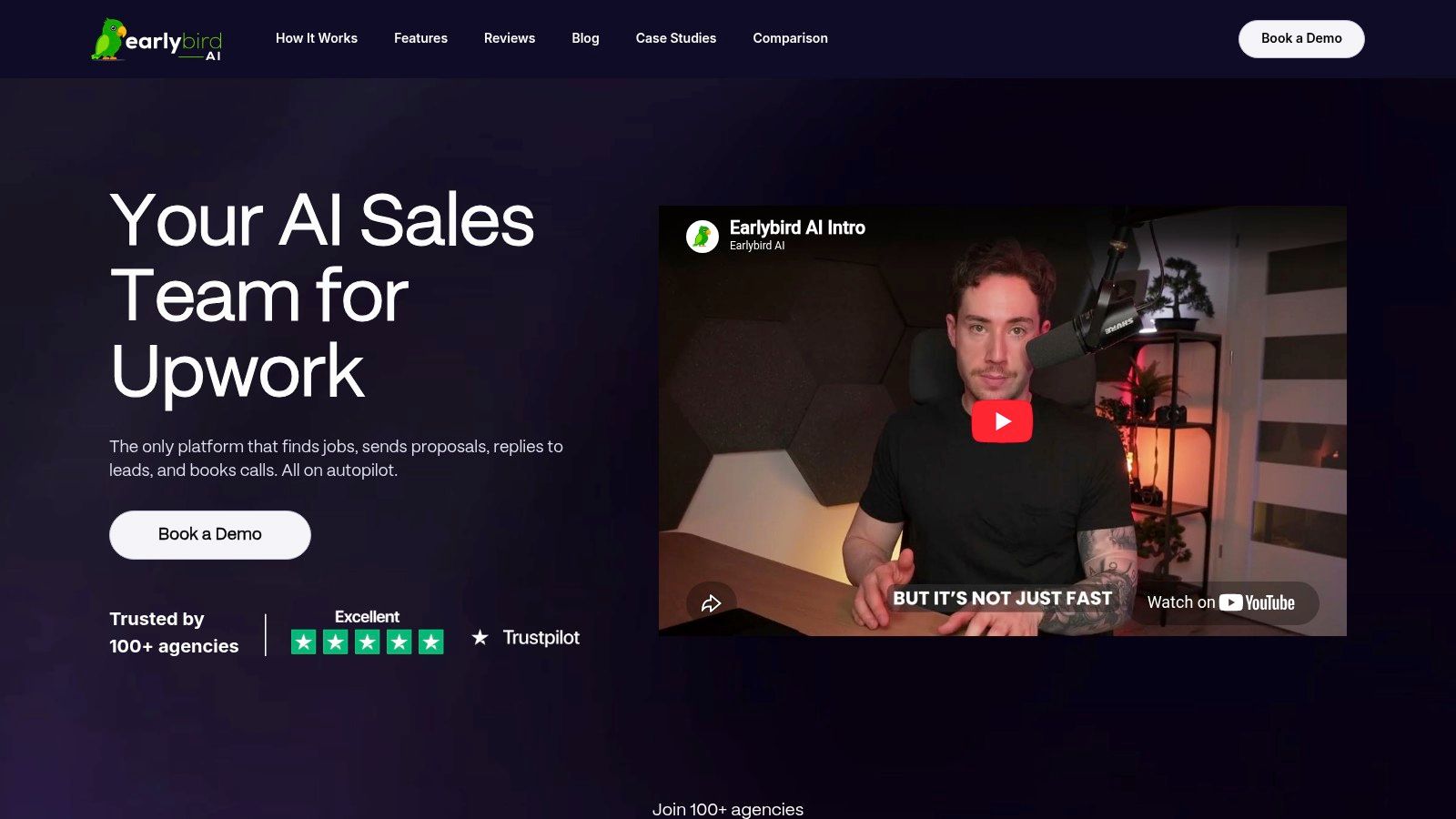
If your pipeline starts with Upwork job posts, Earlybird AI works inside your existing account. It monitors saved searches around the clock, uses thumbs-up and thumbs-down feedback to learn which projects fit, and filters by niche rather than relying on keyword lists. It then writes personalized proposals, replies to client messages, follows up, and books calls.
Proposals are submitted within about 10 minutes of a job posting. Replies go out in under five minutes, with follow-up continuing until a call is booked. You still handle the sales call and close the work. Real-time analytics track performance from views to replies to booked calls; profile tools use industry keywords and trends to help optimize your Upwork profile. Agencies can use multi-user workflows with multiple freelancers or bidders. Each customer also gets a dedicated Success Agent for ongoing coaching on profiles, filters, and targeting.
Speed with a human still in charge
Earlybird AI has sent over 10,000 proposals and closed over $500K in deals. In one case study, Dave won 5 data analytics projects worth $7,306 in 30 days from 171 AI-sent proposals. Ben said the product paid for itself in new clients, and described the practical payoff: “Now I just open my calendar and close. Earlybird finds the jobs, sends the proposals, and books the calls, I haven't sent a manual bid since June.” A broader look at seven AI tools for sales growth offers context, but Earlybird is specifically built for prospecting within Upwork.
Practical rule: Review high-ticket or ambiguous opportunities before relying on an automated proposal. Speed matters only if the pitch fits the client's brief.
Upwork's automation guidance covers bots and third-party services that act faster than a person, and says unauthorized automation can lead to a warning, temporary restriction, or permanent block. The Upwork Terms of Use also restrict robots and scrapers without written permission and prohibit account sharing. Earlybird says it is built with account safety in mind, mimics human behavior, uses regional IPs, and does not store your password. Read Upwork's terms before choosing any automation. Earlybird's pricing is fixed and not listed publicly; use the website's Book a Demo button to see the workflow on your Upwork account.
2. Apollo.io
A sales team targeting named companies needs contacts, email sequences, and a way to track deal activity. Apollo combines those tools with a B2B contact database and AI writing support. It is built for cold outbound, not for finding Upwork projects or submitting bids.
Contact search, filters, email sequences, testing, and workflow automation sit in one product. AI research, lead scoring, and writing assistance can help with early drafts. CRM integrations, enrichment, and call recording are available on eligible plans. A free plan lets teams try basic workflows. Paid tiers are priced per seat on annual billing, and the Organization tier requires at least three seats.
Apollo's main advantage is bringing contact data and outbound activity together. Its limits are credits and usage caps on data, plus contact accuracy that still needs checking in your target market. For a clearer view of AI for sales prospecting, compare tools designed for cold outbound with platforms that work inside a freelancer's existing marketplace account.
A HubSpot report on AI adoption in sales provides broader context for teams assessing AI in their sales stack. Apollo can suit a small outbound team that needs company contacts and sequences. If revenue depends mainly on Upwork, it is the wrong primary tool.
3. HubSpot Sales Hub
When several people manage the same B2B accounts, HubSpot Sales Hub gives them a shared place to track deals, activity, and follow-up. It works as a CRM, not as a tool for bidding on freelance marketplace jobs.
The platform includes CRM records, pipelines, and activity tracking, with AI prospecting and deal scoring available alongside sequences, sales automation, and guided selling. Meeting and conversation tools keep call details with the account record. A free tier is available. Paid plans are priced per seat across Starter, Professional, and Enterprise. List prices change often, and higher tiers may include onboarding fees, so check HubSpot's current pricing page before budgeting.
Shared visibility is the main benefit. The trade-off is that advanced automation and AI may require a higher tier or credits, while teams that only need outbound copy may find the platform larger than the job. Pair it with a focused sender, or track marketplace bidding separately. Teams defining sales stages can compare pipeline tracking software before choosing seats and workflows.
4. Clay
Clay turns prospect research into a repeatable workflow. Build tables that combine company and contact data from different providers, then use Claygent to research details that filters miss. Teams can use the results to prepare records for a sequencer or CRM. A free plan lets you test tables.
Clay sells tiered paid plans, with lower monthly rates for annual billing. Confirm current tier pricing and trial terms on Clay's site before budgeting. Data actions use credits, so account for that spend separately from the plan price.
Custom tables let an agency build a distinct research workflow for each client instead of applying one generic ICP. Clay focuses on preparing prospect data; you still need a separate tool to send campaigns and manage deals.
For cold B2B teams, Clay is useful when research is the bottleneck and someone can configure the workflow. For a solo Upwork seller who needs proposals sent quickly, it is the wrong fit. Setup takes time, and a table does not find marketplace jobs or book calls.
5. Regie.ai
Regie.ai compresses the early outbound stack: lead research, enrichment, message drafts, sales agents, and prebuilt plays. RegieGO has a self-serve path, which is why smaller teams try it before they hire an SDR.
Discounted list prices are $41 per month for Pro and $125 per seat per month for Team. A free plan includes one-time credits. The Team plan uses a shared credit pool. Email and CRM connectors depend on how you configure the account.
In Salesforce survey data, 82% of sales professionals already using generative AI pointed to basic content creation, 74% to market-data analysis, and 71% to automating personalized sales communications. That is the job Regie is selling. Campaign volume still burns credits, and generated copy needs a human pass for accuracy and tone. Larger teams should read plan limits and integrations before they assume every play connects to the CRM they already run.
6. AiSDR
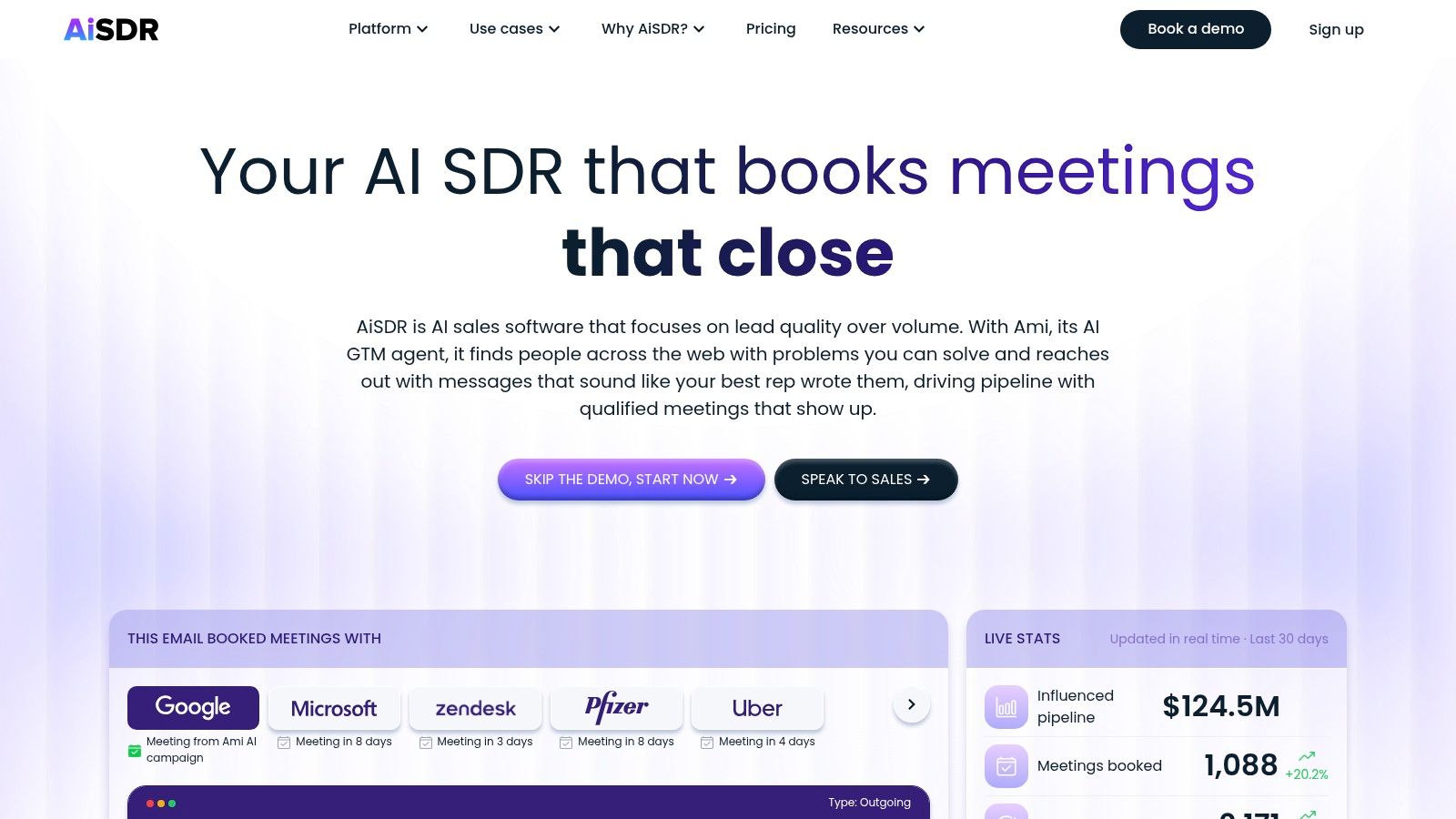
AiSDR automates B2B prospecting through lead research, enrichment, and email and LinkedIn sequences. Campaign planning and lead generation are part of the same product, with human support available on some tiers. It serves outbound teams building a pipeline outside a freelancer's marketplace account.
Plans range from an entry-level Solo tier to high-volume options priced well above it. Contract terms and included volumes vary, and pay-as-you-go is also available. Check AiSDR's current pricing page before budgeting, especially if you need higher sending volume or a quarterly commitment.
A Berkeley Haas California Management Review summary reports that only 21% of sales leaders feel confident in their understanding of generative AI.
Set review rules before enabling automated outreach. Decide which messages can send without approval and which need a person to check them. That distinction matters when sequences use both email and LinkedIn: automation can save prospecting time, but teams still need to monitor message quality and account activity.
7. lemlist
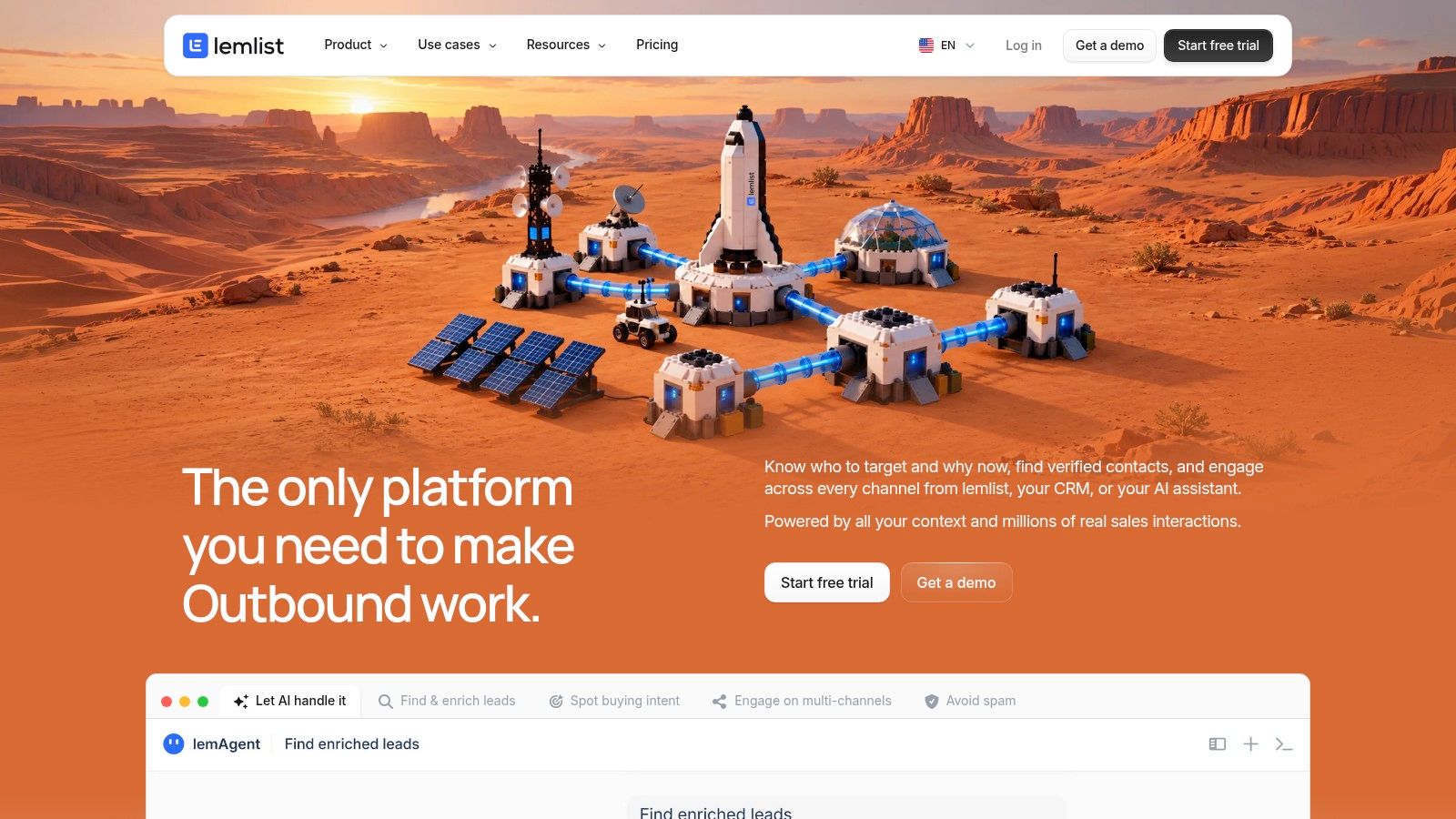
A freelancer working from an Upwork inbox has different needs from an agency running email, LinkedIn, and calling sequences. lemlist is built for the latter: it combines multichannel sales engagement with contact finding, enrichment, AI personalization, deliverability tools, and shared campaigns.
Its paid tiers are annual per-seat plans, with the main difference being channel coverage. Email-only keeps the setup narrower; multichannel adds LinkedIn and calling. Enrichment and some AI actions use credits, and team permissions and shared campaigns depend on the plan.
LinkedIn automation can increase reply volume, but it also requires oversight. Activity that looks automated can put an account at risk, so check current platform rules before enabling sequences across every seat. Apply the same caution to sales outreach automation across third-party networks.
Choose email-only if that covers your campaigns. Multichannel adds reach, along with cost and monitoring work.
8. Instantly
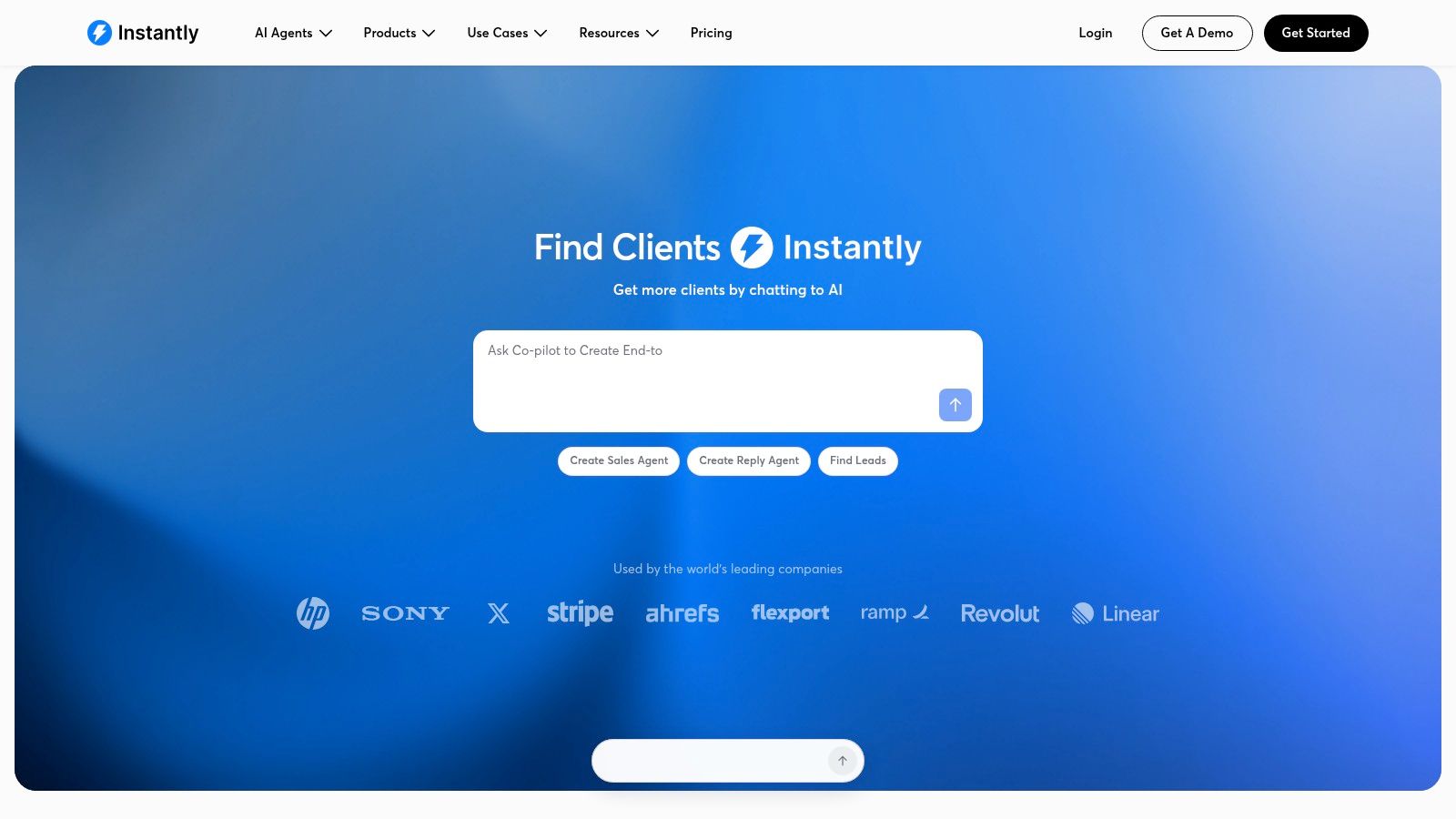
A team running cold email across several inboxes needs to manage sending operations, not Upwork bids. Instantly supports inbox connections, campaigns, warm-up, and separately priced credits for lead search, enrichment, and AI features. It suits outbound teams; freelancers working inside their Upwork account need a different kind of tool.
Monthly cost depends on the base plan, its current limits, and how many credits you use. Check those allowances before estimating costs at volume. The trade-off is straightforward: one platform can support email operations, but data and AI usage add separate costs.
Fast replies matter in outbound, but the benchmark figures here concern inbound B2B leads, not cold email or Upwork proposals. Independent benchmark reporting says teams responding within five minutes close at roughly two to three times the rate of teams that wait a day; it also reports a median response time of approximately 42 to 47 hours, with about 23% responding within five minutes. Use that as context for response speed, not as a forecast of campaign results. Keep an eye on sending and credit limits as volume grows.
9. Gong
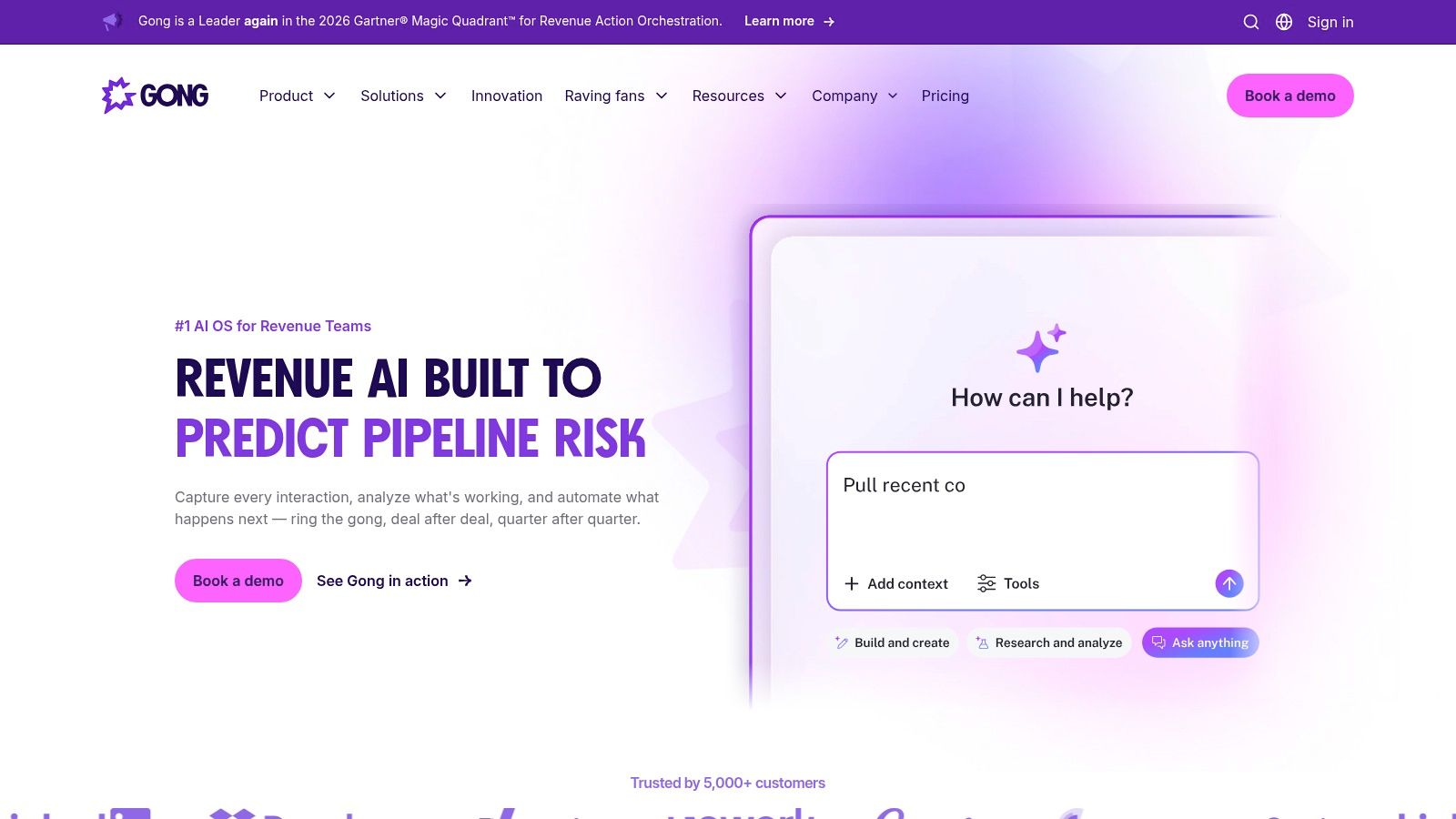
Gong records calls and other customer interactions, then turns them into summaries, coaching, deal-health signals, forecasts, and a layer of sales engagement for what to do next. It pays off when you already have enough conversations to analyze. A solo seller with a handful of Upwork calls a month will not feed it.
Public pricing is not readily listed, so you talk to sales. Value tracks adoption and the quality of the CRM and activity data you connect. Managers can see patterns across calls. Enablement and revenue-operations teams get a shared view of what was said.
Allego's 2025 Revenue Enablement Report found that 100% of 346 surveyed B2B revenue-enablement leaders reported using generative AI for sales, marketing, or customer success. Adoption at that layer is not the same as a tool that writes your Upwork proposals. Gong will not submit a bid. It will tell a team with real call volume which deals are slipping and which talk tracks keep showing up in wins. If you have few recorded conversations, skip it until the calendar is full.
10. Salesloft
Salesloft is revenue orchestration for a structured sales team: AI agents that research, draft, and surface next steps, workflows ranked by buyer signals and seller activity, conversation transcription and coaching, plus deal and pipeline tools. Pricing is quote-based, so early comparisons take a sales call. Confirm which AI features are in the quote before you assume they are included.
I would not put a solo freelancer or a two-person shop on this. The product assumes repeatable stages, manager visibility, and enough sellers that coaching is a job, not a side task. It does not automate an Upwork account.
Gartner survey findings reported that 53% of chief sales officers classified their organizations as GenAI first movers, and Gartner projected that more than 80% of sales-technology vendors would embed GenAI in enterprise applications by 2025, up from fewer than 20%. Salesloft sits in that enterprise motion. If your sellers do not already work a defined process, the agents will not invent one for you.
How the 10 AI-Powered Sales Tools Compare on Price, Free Access, and Best Use
The key distinction is where each tool works: Earlybird AI automates prospecting inside an Upwork account, while the other options support broader B2B sales workflows. Compare the pricing model and free access alongside the intended use.
| Item | Starting Price | Free Plan | Best For |
|---|---|---|---|
| Earlybird AI | Fixed; demo confirms pricing | No public free plan; demo on request | Freelancers and agencies automating Upwork prospecting |
| Apollo.io | $49/seat/month, billed annually | Available | B2B prospecting and outbound campaigns |
| HubSpot Sales Hub | $7/seat/month for Starter | Available | Teams managing sales activity in a broader CRM |
| Clay | $167/month, billed annually | Available | Custom, research-heavy prospecting workflows |
| Regie.ai | $41/month for Pro | Available with one-time credits | Teams exploring AI-assisted outbound sales |
| AiSDR | $250/month for Solo | Not specified | Sellers automating email and LinkedIn outreach |
| lemlist | $55/month for Email, billed annually | No free plan listed; 14-day trial | Agencies running multichannel outbound campaigns |
| Instantly | $47/month for Email Outreach Growth | Trial allocation available | Teams running cold-email campaigns |
| Gong | Quote-based | Not specified | Sales teams analyzing calls and deal activity |
| Salesloft | Quote-based | Not specified | Structured sales teams managing engagement and revenue workflows |
Earlybird's pricing is fixed, with the details confirmed through a demo. Its use case is specific: finding Upwork jobs, sending customized proposals, replying to leads, and booking calls through the customer's account. The other tools in the table focus on CRM, research, cold outreach, or sales-team workflows.
Matching the Tool to Your Pipeline
Start with where the lead is born. If the work arrives as Upwork job posts, marketplace-native automation is the fit for a solo seller and for an agency running several bidders on compliant accounts. If you already have a CRM, stages, and a team that must see the same deals, put HubSpot Sales Hub or a conversation platform like Gong under that process before you add another sender. If you are opening cold B2B pipeline, pick an outbound stack and stop there: Apollo.io or Clay for data, Regie.ai, AiSDR, lemlist, or Instantly for sending, and Salesloft only when the team is large enough to run a formal motion.
Do not buy on hours saved alone. LinkedIn's 2025 research found that 56% of sales professionals use AI daily and that 69% of AI users report shortening sales cycles by an average of one week. The same discussion of ROI notes that advanced GenAI implementations in functions including sales more often produced below-expectation than above-expectation ROI in Deloitte's findings, even when almost all organizations reported some measurable return. Faster outreach that attracts weak projects is not a win.
A separate Salesforce State of Sales survey of 5,500 sales professionals across 27 countries found that in 2024, 81% of sales teams were experimenting with or had fully implemented AI. Access is no longer the advantage. How you wire the tool to booked calls is.
A short buying checklist
- Budget: Use the published seat or credit price, then add data credits, onboarding, and the inboxes or accounts you will risk.
- Seat count: A solo plan and a three-seat minimum are different products. Count bidders, not just founders.
- Oversight: Write down which messages can send automatically and which need a person. If you cannot, do not turn full auto on.
- Reporting: Decide the numbers that matter before the trial ends. Qualified opportunities per 100 bids or per 100 emails, reply-to-call rate, time to first response, and revenue per account beat raw send volume.
- Account rules: On Upwork, keep ownership clean and stay inside permitted automation. On LinkedIn and email, treat deliverability and platform rules as part of the cost.
For a wider outbound set, see AI SDR tools compared for 2026. Then match one tool to one pipeline. Stacking five senders on the same leads usually creates noise, not revenue.
Earlybird AI runs Upwork prospecting as an always-on workflow: it finds fitting jobs, sends customized proposals within about 10 minutes, replies in under five minutes, and follows up until a call is booked, with analytics and coaching for solo sellers and multi-bidder agencies. If your pipeline still starts in the job feed, see how that loop works on your own account at Earlybird AI.


