
← Back To Blog
Best Freelance Work App: Top Tools for 2026 Success
Stop Juggling Apps: Build Your Ultimate Freelance Stack for 2026
If your workday starts in a job board, moves into a proposal doc, jumps to Slack, then ends in an invoicing tool, you're not running a clean freelance business. You're patching one together. That usually works at the beginning, but once client volume picks up, admin work starts eating the hours you should be billing.
The bigger problem is that many still perceive that a freelance work app is just a marketplace. It isn't. The best setup handles lead flow, proposal speed, client communication, delivery, and payment without forcing you to babysit every step. That matters in a market that's already huge. Grand View Research estimates the global freelance platforms market will be worth USD 6.37 billion in 2025 and projects it to reach USD 24.16 billion by 2033, with online gig workers estimated between 154 million and 435 million worldwide.
That scale changes the game. More freelancers means more competition, and more competition means speed, positioning, and workflow discipline matter more than they used to.
The tools below aren't just marketplaces. They cover the full operating stack, from finding work and automating proposals to managing contracts, invoicing, and getting paid. If you choose them by use case instead of hype, you can build a system that reduces chaos instead of adding one more login.
1. Earlybird AI
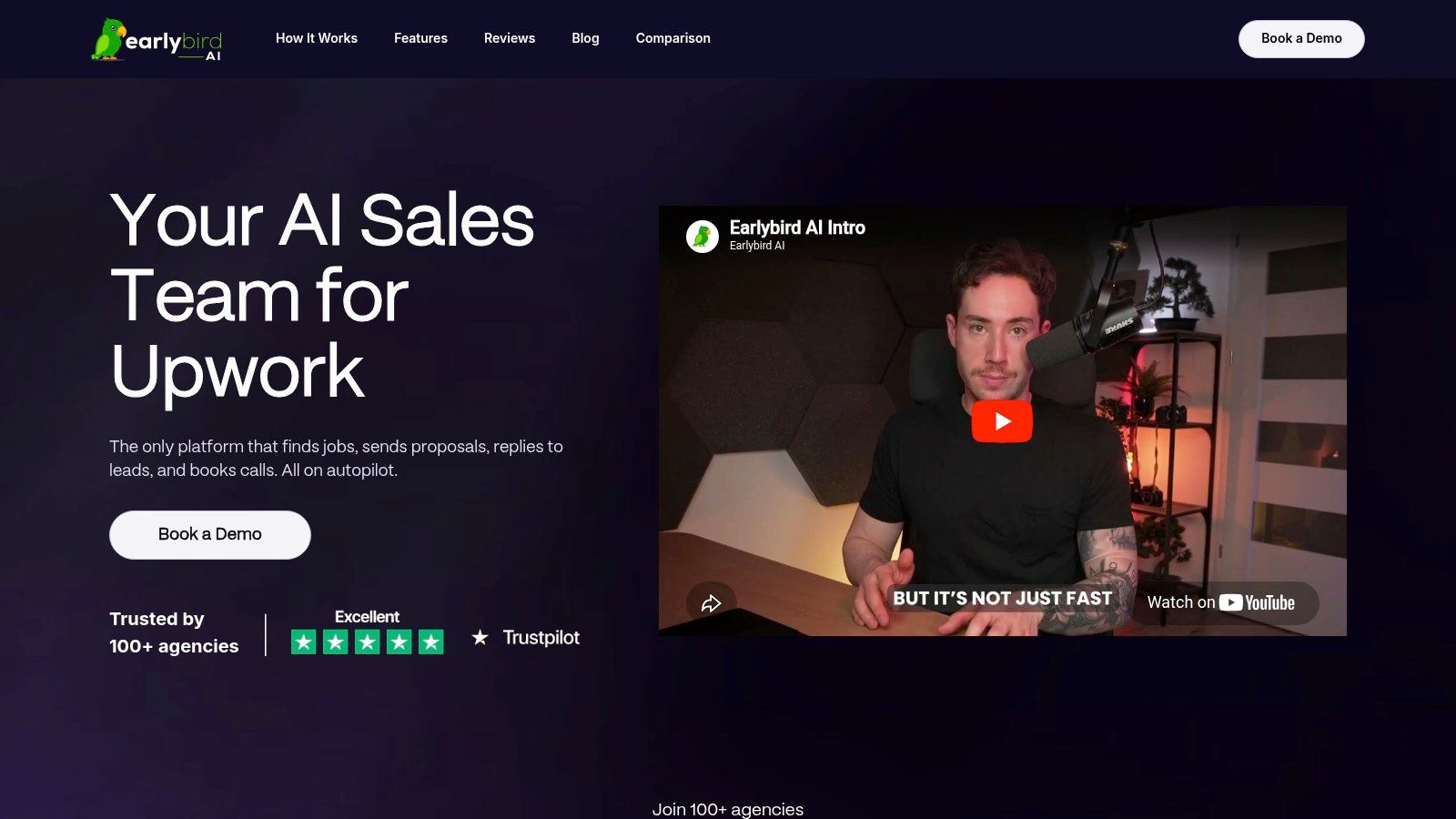
A familiar Upwork problem looks like this. A strong-fit job appears, you plan to reply after finishing client work, and by the time you get back to it the client has already seen 20 proposals and started shortlisting. Earlybird AI is built for that bottleneck.
It sits above Upwork as a sales workflow tool, not just another place to browse listings. The product focuses on the repetitive work that slows freelancers down: identifying relevant jobs, drafting proposals, replying quickly, and following up until a prospect is ready for a call. That makes it a different kind of freelance work app from the marketplace entries later in this list.
How it helps
The clearest advantage is response time. Earlybird says proposals are often submitted within about 10 minutes of a job posting and replies can go out in under 5 minutes. On a platform where clients often review early applicants first, that speed can change how many conversations you start each week.
It also covers more of the workflow than many proposal tools do. Instead of stopping at first-draft copy, it helps with job discovery, personalized outreach, message replies, and follow-up. For freelancers trying to build a stack by use case, that matters. Earlybird handles the top of the funnel so your project tools and invoicing tools are not carrying work they were never meant to do.
Practical rule: Automate the repetitive steps. Keep judgment on positioning, pricing, and client fit.
That trade-off is why the product makes the most sense for people who already know what a good Upwork lead looks like. If your niche, offer, and profile are still loose, automation can scale weak targeting. If those pieces are dialed in, it can save serious time. Their guide on how to be successful on Upwork is a useful starting point before you automate anything.
For agencies, the team workflow is often more valuable than the writing itself. Shared bidding, analytics, and profile optimization support are practical features when more than one person handles outbound.
If you want to improve proposal quality before adding automation, their guide to AI tools for proposal writing is worth reviewing.
Trade-offs and risks
Earlybird is specialized. That is its strength and its limit. If Upwork is already a core acquisition channel, the product fits neatly into your process. If your pipeline comes from referrals, outbound email, LinkedIn, or retained clients, it will not fix the main constraint in your business.
There is also no public pricing, so evaluating fit requires a demo. For an agency sending proposals every day, that extra step is usually fine. For a solo freelancer bidding occasionally, a manual system may still be the cheaper and simpler option.
Account safety needs a realistic read. Earlybird says it was built with account protection in mind, uses clean regional IPs, and does not store your password. Those are good operational choices. They are not a reason to stop monitoring your account, your proposal quality, or how aggressively automation is being used.
2. Upwork
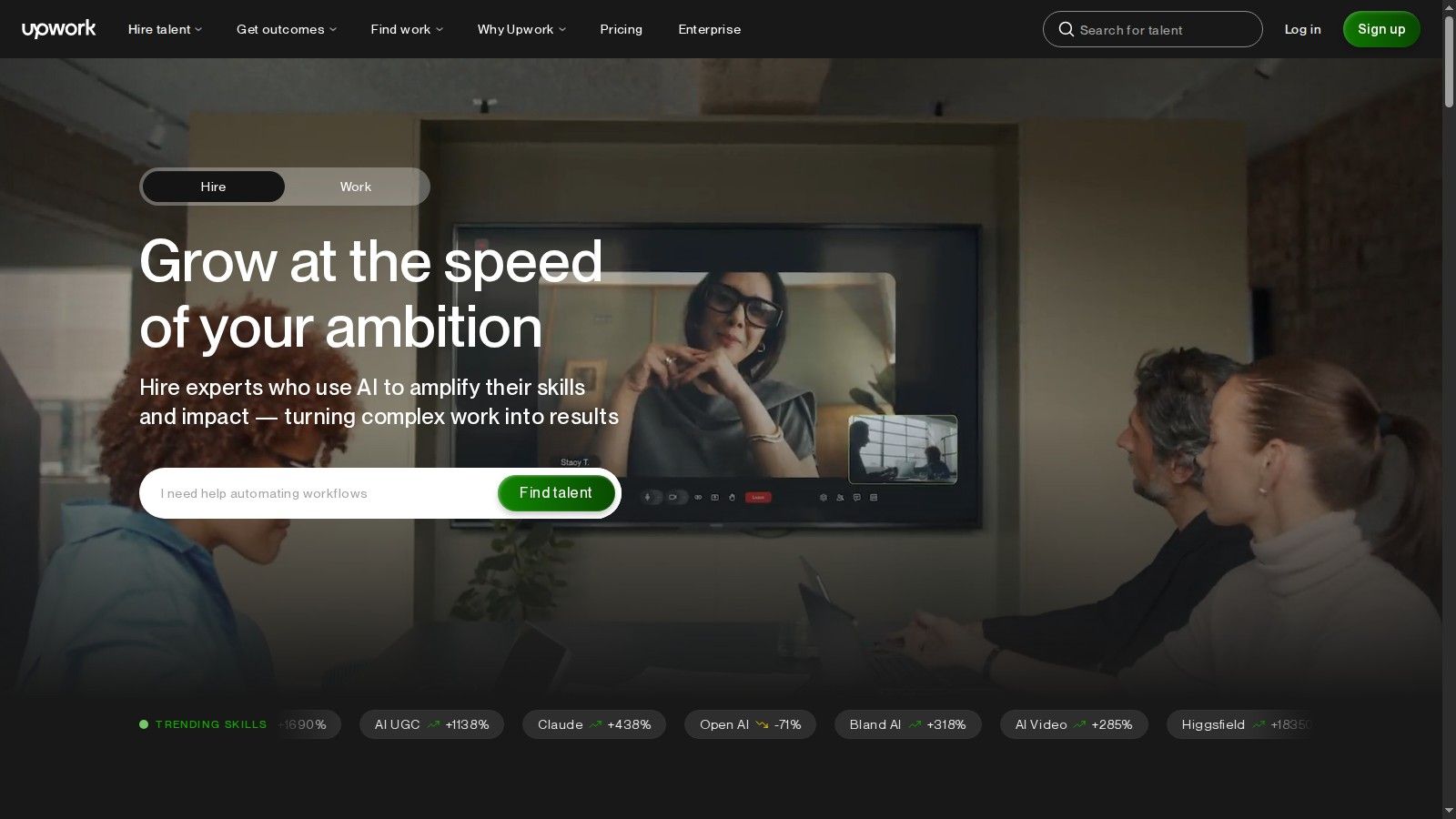
Upwork is still the default answer when people ask for a freelance work app, and for good reason. It has broad client demand across design, development, marketing, writing, and operations, plus the payment rails and dispute structure that make new client work less risky than cold outreach.
The scale is real. Upwork's freelancing statistics say 39% of all U.S. workers freelance, and the same source says freelancers generated $1.5 trillion in earnings in 2024. That tells you why Upwork remains central. It sits inside a labor market that's already mainstream, not fringe.
What works and what doesn't
Upwork works best if you treat it like a sales channel, not a profile directory. Saved searches, tight niche positioning, strong work history, and disciplined proposal habits matter more than polishing every profile section for weeks.
What doesn't work is spraying low-fit applications. Connect costs add pressure fast, and high competition punishes generic bids.
Fast replies matter on Upwork, but relevance matters more. A quick weak proposal still loses to a specific one.
A few things are in Upwork's favor:
- Managed payments: Hourly protection and fixed-price workflows reduce a lot of collection friction.
- Broad demand: Few platforms offer as much category coverage.
- Direct Contracts option: If you bring your own approved client, Upwork gives you a way to manage the project with a different fee structure.
If you're trying to get more from the platform before adding automation, this guide on how to be successful on Upwork is a useful companion.
The downside is simple. Upwork has volume, but it also has noise. You'll find good clients there, but you'll work for that visibility.
Visit Upwork.
3. Fiverr
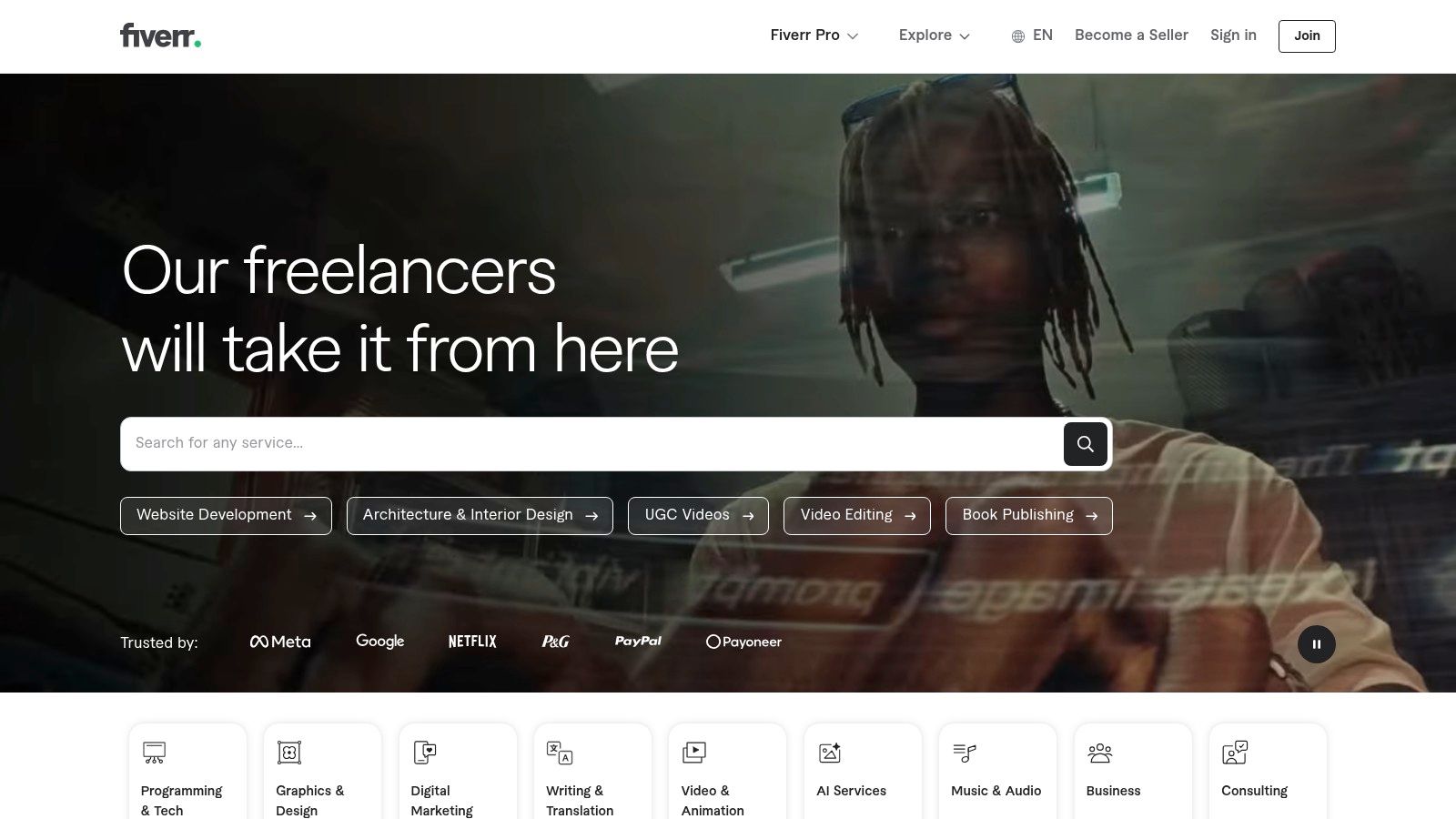
Fiverr is better for productized services than for custom consultative work. If you can package what you do into clean, fixed-scope offers, it can generate straightforward demand without requiring a long proposal process every time.
That's why it suits logo design, short-form video editing, simple landing pages, basic SEO deliverables, voiceover work, and similar repeatable services. Buyers browse, compare, and buy based on positioning, samples, and offer clarity.
Best fit for standardized offers
Fiverr rewards freelancers who know how to define boundaries. The best gigs are specific, easy to understand, and hard to misread. If a buyer can tell what they get, how fast they get it, and what costs extra, your listing does most of the selling before a message is sent.
That's also where many sellers fail. They treat Fiverr like a portfolio site, then wonder why conversion is weak. It's closer to an ecommerce listing than a traditional pitch environment.
- Storefront model: Packages and add-ons help you upsell without a custom sales process every time.
- Fast buyer discovery: Good for quick-turn services buyers already understand.
- Premium tracks: Fiverr Pro and seller programs can help if you qualify.
Fiverr's main weakness is price pressure. In many categories, buyers compare offers aggressively. The platform also takes a meaningful cut, so margin discipline matters.
If you're deciding between major platforms, this breakdown of Fiverr vs Upwork vs Freelancer helps clarify the trade-offs.
For freelancers who want custom, high-ticket, consultative projects, Fiverr can feel restrictive. For freelancers who want repeatable services and less back-and-forth before purchase, it can work well.
See Fiverr.
4. Toptal
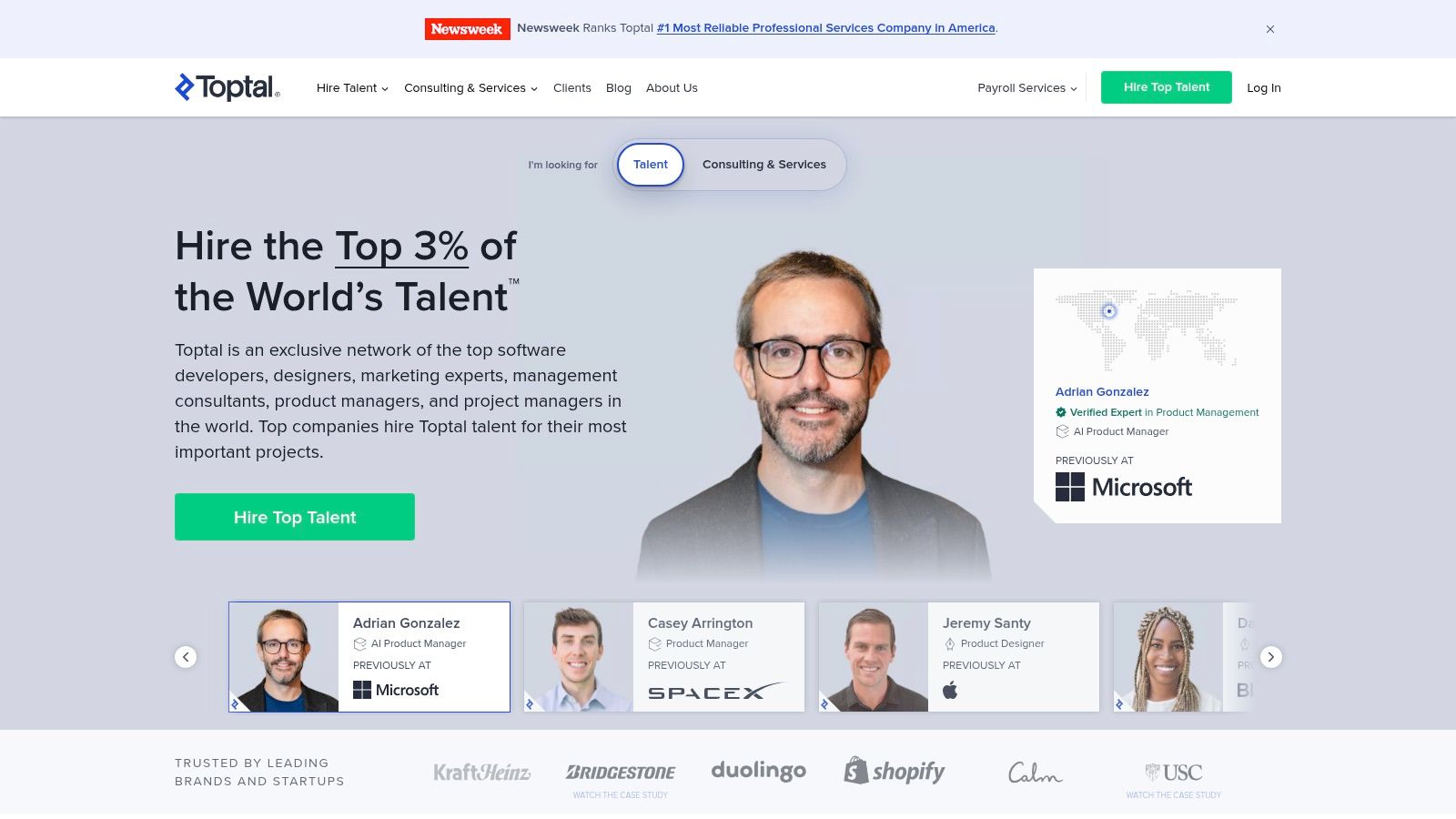
Toptal isn't for beginners, and that's exactly why it appeals to senior freelancers. It focuses on vetted talent in software, design, product, project management, and finance, with a matching process built for clients who want less browsing and more certainty.
If your offer is strategic, senior, and expensive, curation can save a lot of wasted selling time. You won't have the same open-market volume as Upwork, but you also won't compete in the same way.
Why senior freelancers like it
Toptal works when your problem isn't lack of skill, but lead quality. A curated network can reduce low-intent inquiries and cut down on proposal churn.
That matters more in a market where independent work keeps expanding. Market Research Future projects the freelance platforms market will grow from USD 14.5 billion in 2024 to USD 132.8 billion by 2035, with North America remaining the largest regional market. Premium networks stand to benefit when buyers want vetted talent instead of open bidding.
What to expect in practice:
- Rigorous screening: Good for credibility if you're accepted.
- Structured matching: Less time spent chasing poor-fit leads.
- Higher-end engagements: Better suited to complex projects than one-off gigs.
The trade-off is obvious. Entry is selective, and many opportunities lean toward longer commitments. If you want a stream of short projects, Toptal may feel too narrow.
Browse Toptal.
5. Braintrust
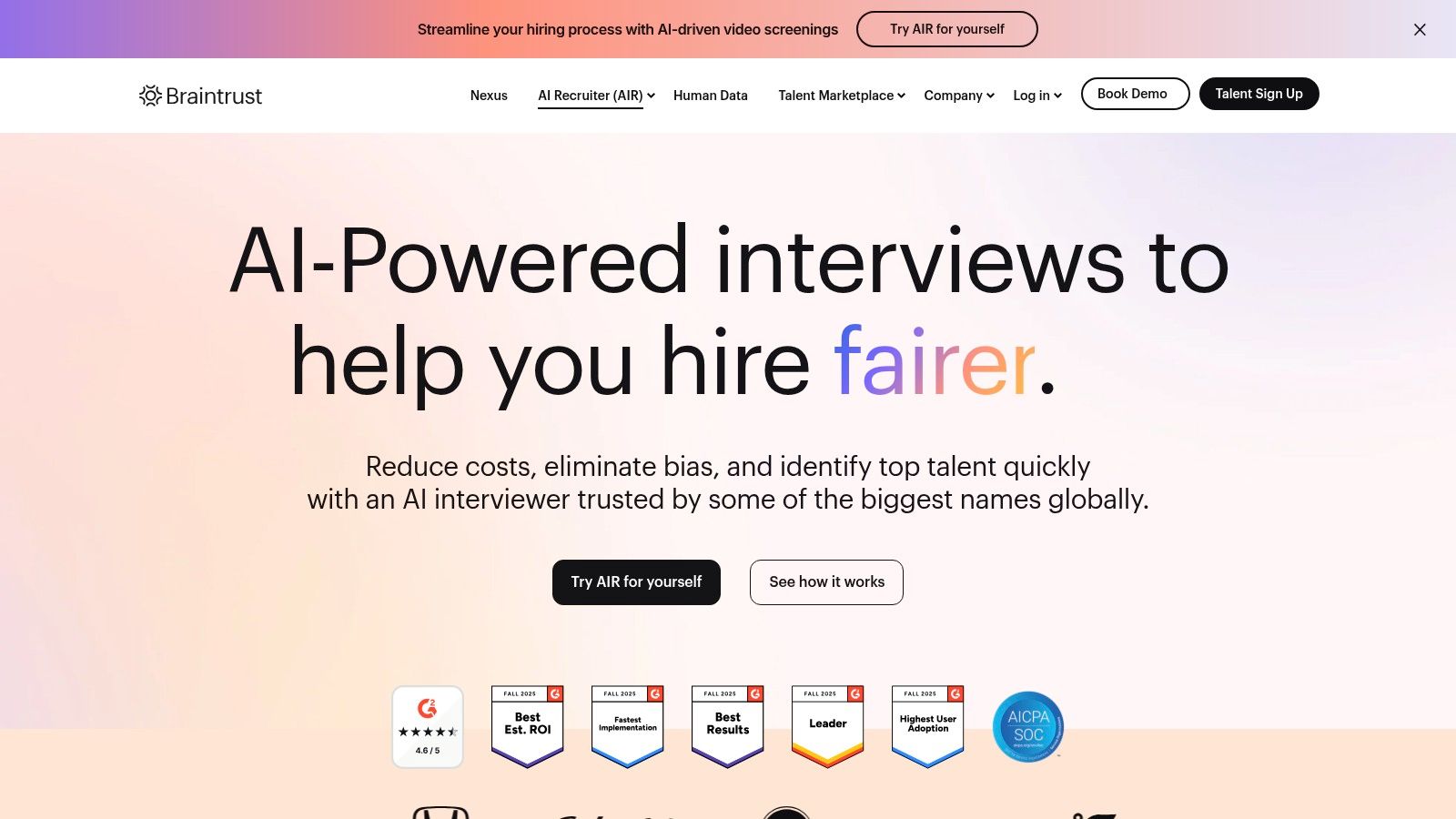
Braintrust stands out because it charges 0% fees to talent. That gets attention immediately, especially from technical freelancers who are tired of watching margin disappear through platform deductions.
It's strongest for engineering, data, and AI work. If your skills map to technical enterprise demand, Braintrust can be a compelling alternative to more general marketplaces.
The real appeal
Keeping your full billed rate is the headline, but the better reason to consider Braintrust is fit. It's built around vetted professionals and enterprise-style roles, not broad marketplace browsing.
That aligns with where a lot of freelance demand is concentrated. One industry summary projects global gig-economy revenue at USD 455 billion by 2026 and highlights software development at 42% of project demand and digital marketing at 31%. Technical specialists benefit most when a platform is designed around those buying patterns.
Braintrust makes the most sense when you already sell specialized expertise. It's less useful if you still need a broad marketplace to test positioning.
The strengths are clear:
- No talent fee: Easier to protect your rate.
- Technical role focus: Better alignment for engineering and data professionals.
- Integrated admin support: Helpful for invoicing and U.S. tax paperwork.
The limitation is access. Vetting and role flow can make it feel less immediate than open platforms. You may find fewer total opportunities, even if the average fit is better.
Visit Braintrust.
6. Contra
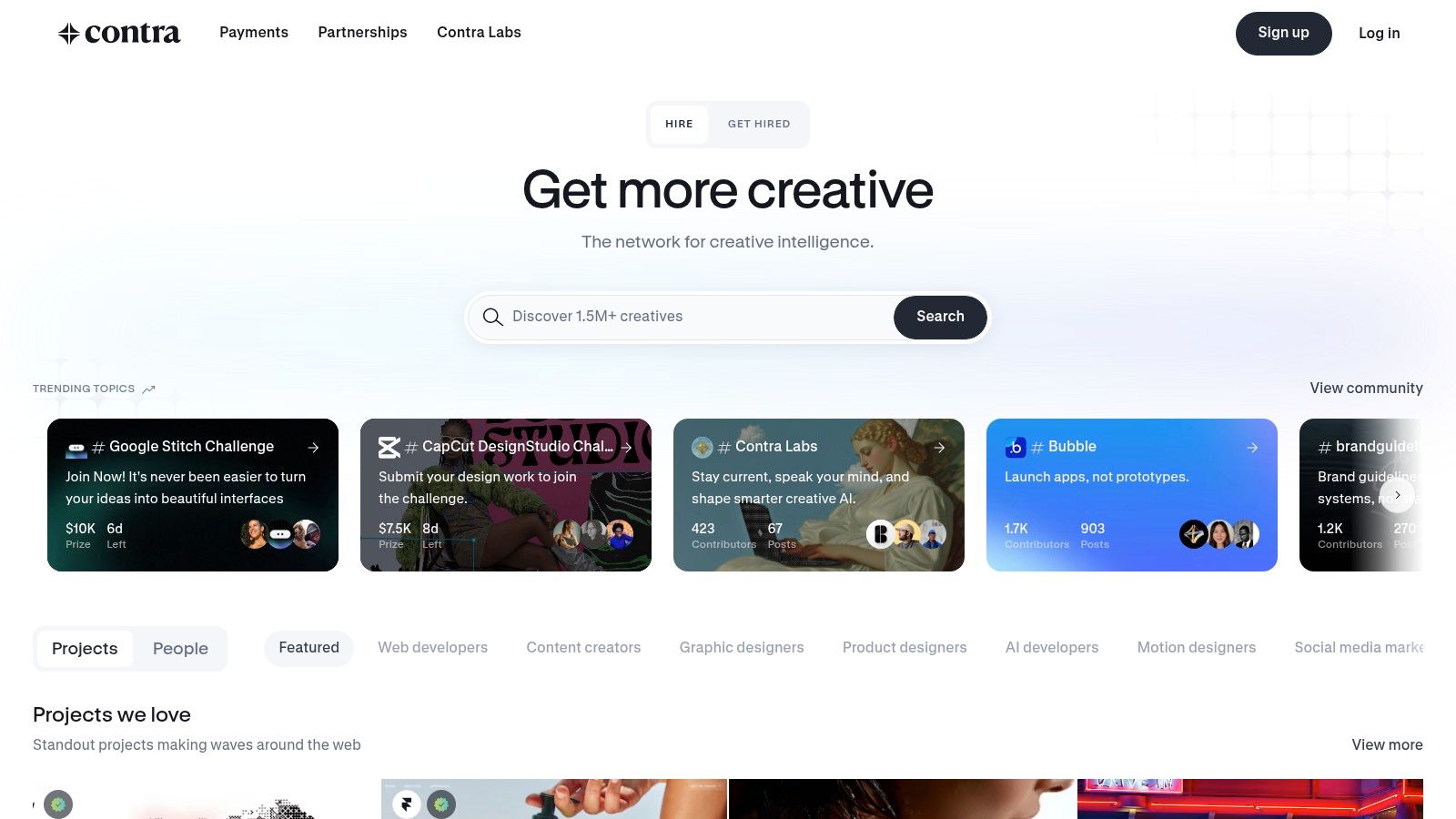
Contra is one of the better picks if your pain point isn't lead generation alone. It's useful when you want a cleaner client-facing workspace that combines profile, contracts, invoicing, and payment without taking a commission from your platform payouts.
For many freelancers, that's the missing layer. They don't need another crowded marketplace. They need a place to present work well and close projects without duct-taping tools together.
Where Contra fits in a stack
Contra works well for creative freelancers, consultants, and small agencies that already have some inbound traffic or referrals. The profile feels more like a modern professional storefront than a traditional gig listing.
Its built-in workflow tools are the bigger reason I'd consider it. Contracts, invoicing, and payment handling in one place remove a lot of annoying handoffs.
- Commission-free payouts: Useful if you care about net revenue, not just gross bookings.
- Multiple payout options: Helpful for freelancers working internationally.
- Simple workflow: Good for reducing operational clutter.
The catch is discovery. If you don't already have momentum, visibility can be competitive. Optional paid membership may matter more than some freelancers expect.
Contra is at its best as part of a stack, not necessarily as your only source of work. See Contra.
7. MarketerHire
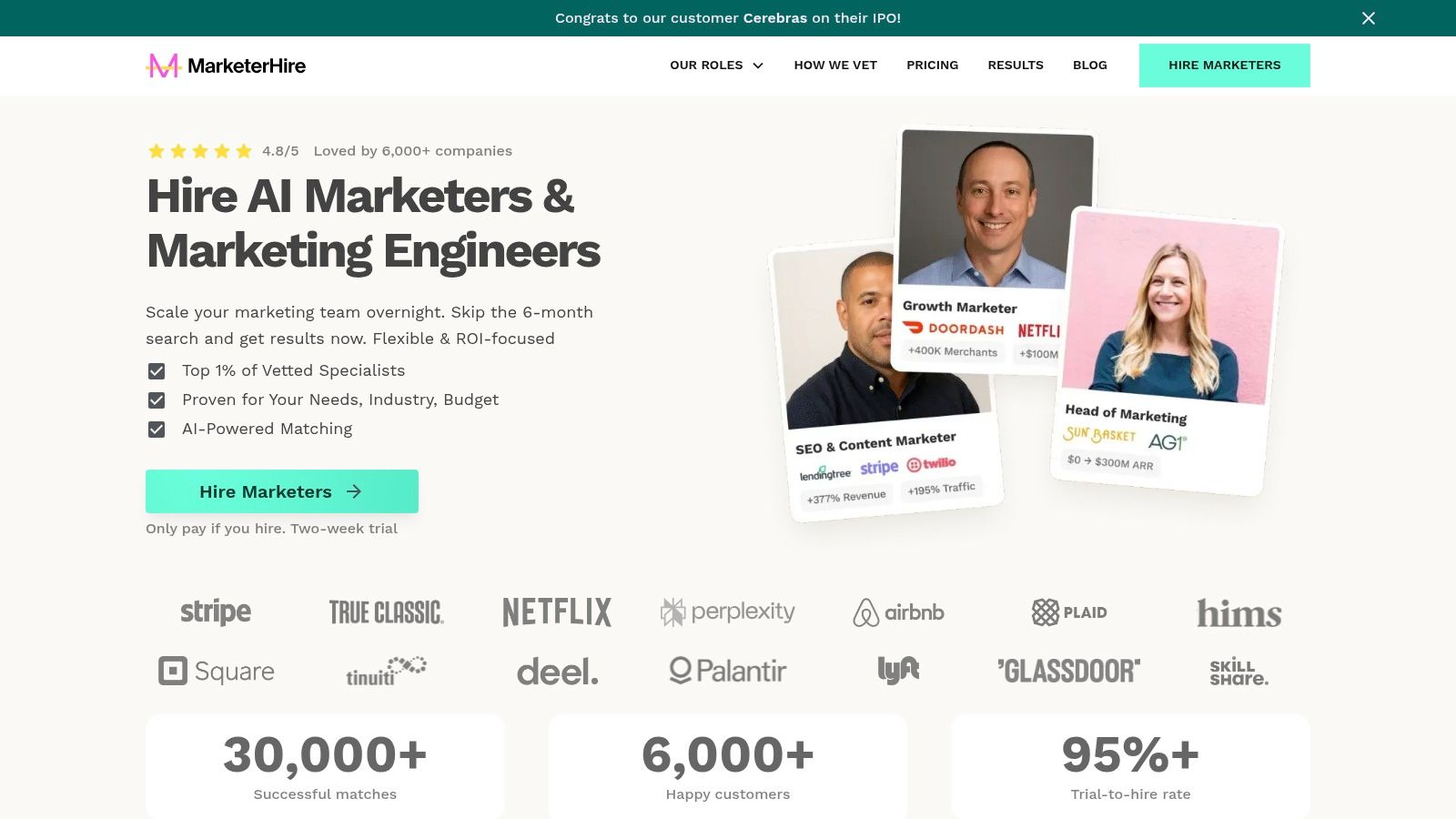
General platforms can be frustrating when you sell specialized marketing work. Clients often write vague briefs, compare unlike services, or struggle to scope what they need. MarketerHire solves that by staying narrow.
It focuses on vetted marketing talent across SEO, paid media, email, brand, and fractional leadership. That specialization is its advantage.
Better for serious marketing engagements
MarketerHire is a strong option for experienced marketers who want buyers that already understand the category. You spend less time explaining basics and more time talking about goals, channel mix, and execution.
That tends to produce better matching than broad marketplaces for roles like performance marketing or fractional CMO work. Agencies can also use it to fill capability gaps quickly when they need a specialist inside an account.
A few practical takeaways:
- Niche focus: Better conversations with buyers who need marketing help specifically.
- Structured kickoff support: Helpful when the brief still needs shaping.
- Flexible engagement style: Good for ongoing specialist support.
The downside is that it's narrow by design. If you're multi-disciplinary or not firmly positioned as a marketer, it won't fit. It also leans toward senior talent, so newer freelancers may find the bar high.
Explore MarketerHire.
8. A.Team
A.Team is built for a different tier of freelance work. This isn't where you go for ad hoc gigs or small one-off projects. It's where senior builders, especially in AI, product, engineering, data, and design, plug into larger company initiatives.
The platform's appeal is depth. Clients can bring in individual experts or assemble full teams around a product or delivery goal.
Enterprise-oriented by default
For senior independent talent, A.Team can be attractive because it matches the way enterprise work gets staffed. Companies don't always want a freelancer in isolation. They want embedded expertise that can work inside existing toolchains and delivery processes.
That makes it a fit for consultants and operators who are comfortable inside structured environments. If you like loose, fast, solo execution, it may feel heavy.
A.Team is closer to embedded consulting than classic freelancing. That distinction matters before you apply.
What stands out:
- Invite-only network: Strong signal if you're accepted.
- Team-based options: Useful when clients need coordinated delivery.
- AI and product focus: Good for senior builders with current technical depth.
The trade-off is flexibility. Engagements tend to be larger and more formal. Great if you want substance. Less great if you want small projects you can slot between retainers.
Check A.Team.
9. FlexJobs
FlexJobs isn't a marketplace in the usual sense. It's a screened job board for remote, hybrid, and freelance roles. That difference matters because sometimes the best freelance work app for you isn't the one that manages payments. It's the one that filters junk out before you waste time applying.
If you're tired of scrolling through scammy listings, vague commission-only “opportunities,” or recycled job posts, FlexJobs has a clear value proposition.
Best when your issue is signal-to-noise
FlexJobs is useful for freelancers who are open to contract roles, part-time remote work, or project-based work that looks more like hiring than marketplace bidding. It's also helpful if you want a calmer search environment.
You still need to apply, interview, and sell yourself. There's no escrow layer and no built-in payment protection. That means it's less of an operating system and more of a lead source.
Its strengths are practical:
- Screened listings: Less spam, fewer obvious scams.
- Search filters and alerts: Better for focused hunting.
- Remote-first orientation: Helpful if you want location-flexible work.
The weakness is just as practical. It doesn't handle delivery or billing. You'll still need other tools for contracts, project management, and invoicing.
Visit FlexJobs.
10. Guru
Guru doesn't get talked about as much as Upwork or Fiverr, but that can be part of its appeal. It's a long-running marketplace with a simpler interface, SafePay escrow, milestone support, and flexible payment terms.
For some freelancers, simpler is better. You don't always need a platform with endless layers, gamified visibility systems, and heavy upsell mechanics.
Why some freelancers still prefer it
Guru is worth considering if you want straightforward escrow and a platform that feels less noisy. The core workflow is easy to understand, and milestone billing is clear enough that clients rarely get confused by it.
Membership tiers can also change the fee picture, which may matter if you plan to stay on the platform consistently.
- SafePay escrow: Clear payment handling for milestone work.
- Simple interface: Simpler to use than some bigger marketplaces.
- Private transaction options: Useful in certain client relationships.
The main drawback is demand. There's less volume than the larger platforms, so you may wait longer for the right-fit opportunities. And if you move work into private transactions, that may help operations while doing less for your public reputation on the platform.
See Guru.
Choosing the Right Freelance App for Your Business
The perfect freelance work app doesn't exist. The perfect stack does.
That's the shift most freelancers need to make. Stop asking which single platform does everything, because none of them do. A marketplace is good at demand aggregation. An automation tool is good at speed and consistency. A workspace tool is good at contracts, invoicing, and delivery. Trying to force one app to cover the whole business usually creates friction somewhere else.
Start with your actual bottleneck. If you already know your niche and just need more qualified conversations on Upwork, Earlybird AI is the strongest option here because it attacks the highest-friction parts of the sales cycle. It helps with job discovery, proposal speed, messaging, follow-up, and team workflows. That's the right move for freelancers and agencies whose main problem is outreach volume and response speed.
If your issue is access to broad client demand, Upwork is still one of the most practical foundations. If your services are highly standardized, Fiverr may convert more cleanly because buyers can purchase around a packaged offer. If you're senior and want curated, higher-trust matching, Toptal, Braintrust, MarketerHire, and A.Team all make more sense than open bidding.
For operations, Contra is one of the better support layers because it keeps contracts, invoices, and payments in one place without taking commission on payouts. FlexJobs is useful when you want cleaner remote and freelance listings, while Guru remains a decent choice for freelancers who value simple escrow and lower platform complexity.
A good stack usually has two or three layers, not ten. One way to build it is:
- Lead source: Upwork, Fiverr, FlexJobs, or a curated network
- Sales acceleration: Earlybird AI for Upwork-based outreach
- Operations layer: Contra or your preferred project and billing setup
That combination solves more real problems than endlessly testing marketplaces. You get demand, speed, and cleaner delivery.
The right choice comes down to how you win work. If you win through speed, automate. If you win through specialization, choose curated networks. If you win through repeatable packaged services, pick a storefront model. And if your backend is messy, fix that before chasing more leads. More demand won't help if your system can't absorb it.
If Upwork is already part of your business, Earlybird AI is worth a serious look. It helps freelancers and agencies stop losing time on repetitive bidding, slow replies, and inconsistent follow-up, then turns that process into something more scalable. For teams that want more qualified conversations without hiring more SDRs, it's one of the few tools in this category built around the full outreach cycle instead of just proposal drafting.