
← Back To Blog
10 Lead Generation Examples: Automate Client Acquisition
Are you still hunting for leads one job post at a time, or have you built a system that brings qualified opportunities to you even when you are busy delivering client work?
That question separates freelancers and agencies that stay booked from those that keep restarting their pipeline. On Upwork and similar platforms, lead generation is rarely a talent problem. It is usually a systems problem. Manual searching, inconsistent follow-up, and slow proposal timing create uneven results, even for strong operators.
The fix is to treat lead generation like an acquisition workflow with clear inputs, filters, and feedback loops. For freelancers, that can mean reducing the hours spent scanning job boards and writing from scratch. For agencies, it often means creating a repeatable process across multiple specialists without turning outreach into generic spam.
The trade-off is straightforward. More automation gives you speed and coverage, but only if your positioning is already tight. A weak profile, broad offer, or poor qualification logic will waste more connects, more time, and more attention at a larger scale. Good systems do not replace judgment. They protect it by removing repetitive work and pushing your effort toward the right prospects.
That is the angle behind these lead generation examples. They are not broad B2B ideas lifted from a generic playbook. They are practical systems freelancers and agencies can replicate on platforms like Upwork, especially when paired with tools and workflows such as Upwork proposal automation systems that handle repetitive execution while you stay focused on positioning, sales conversations, and delivery.
Here are 10 examples that show how to build that system piece by piece.
1. Automated Proposal Submission with AI Personalization
The first lead generation example is the one most Upwork sellers feel immediately. Speed changes outcomes. If you're submitting strong proposals hours after a job goes live, you're often competing after the client has already started shortlisting.

Earlybird AI is built around that timing problem. It connects to your Upwork workflow, learns from feedback, and submits personalized proposals within about 10 minutes of posting. For solo freelancers, that can replace hours of repetitive searching. For agencies, it can keep multiple specialists active without hiring a full manual bidding team.
What makes this work
Fast submission by itself isn't enough. Bad fast proposals still lose. The useful version of automation matches the posting to your service, pulls in relevant details, and frames your offer around the client's problem instead of sending a generic wall of text.
I've seen teams get this wrong by automating before tightening their profile, portfolio, and service positioning. That creates a high-volume machine pointed at the wrong audience. If your profile is vague, automation just helps you get rejected faster.
- Set a narrow lane: Define the project types, budget range, and client profile you want before turning on automated bidding.
- Train the system: Use thumbs-up and thumbs-down feedback consistently so matching improves over time.
- Audit the first batch: Review early proposals closely. You're checking tone, relevance, and whether the AI is pulling the right proof points.
Practical rule: Automate submission only after your profile reads like a specialist, not a generalist.
A design agency might use this to target brand identity and landing page projects only. A development shop might route React jobs to one bidder account and backend jobs to another. The point isn't more activity. It's more qualified first-touch activity, delivered early.
If you want a closer look at how that workflow is structured, this guide on Upwork proposal automation breaks down the moving parts.
Later in the process, teams usually pair this with response automation and follow-up so the first message doesn't become a dead end.
A short walkthrough helps if you want to picture the sequence in action.
2. Intelligent Lead Scoring and Qualification
Not every job post deserves a proposal. That sounds obvious, but many freelancers still burn connects and attention on low-clarity, low-budget, low-intent clients because they don't have a qualification model.
Lead scoring becomes one of the most useful lead generation examples for agencies. Instead of asking, “Can we do this work?” ask, “Should we pursue this client?” Those are different questions.
Score the opportunity before you write
Strong lead scoring usually looks at client signals, project signals, and fit signals. Client signals include payment verification, review quality, and whether the brief sounds serious. Project signals include budget clarity, scope definition, and urgency. Fit signals include whether the work matches your proven strengths.
Teams that use AI filters often prioritize verified-budget clients and deprioritize unclear one-off requests. That's a smart trade-off. A vague brief with a low anchor budget can eat as much pre-sales time as a strong prospect and produce nothing.
The best scoring models are simple enough to use every day:
- Prioritize clarity: Well-written job posts usually convert better than vague shopping lists.
- Weight fit heavily: If your strongest work is B2B SaaS design, score that above broad “need a designer ASAP” posts.
- Exclude obvious friction: Skip clients with incomplete setup, erratic communication, or signs they're collecting ideas instead of buying.
Measurement matters here too. Turtl recommends pairing a money-linked metric with distribution metrics, defining cost per lead as total marketing spend divided by leads generated, and using click-through rate plus landing-page conversion rate as supporting diagnostics in broader lead generation reporting in its lead generation KPI guide. The practical lesson for freelancers and agencies is the same even on Upwork. Don't judge opportunity quality by top-line activity alone. Judge it by efficient conversion through each stage.
For a useful framework, this piece on how to qualify sales leads is worth applying directly to your bidding filters.
The cheapest lead is often the one you never chase because you qualified it out early.
3. Automated Client Outreach and Response Systems
Most freelancers focus heavily on winning the first reply and barely think about what happens after that. But response speed inside the conversation matters almost as much as speed at proposal submission.
If a client messages you and waits hours for a reply, momentum drops. If they hear back quickly with a relevant question and a clear next step, the conversation moves. That's why automated response systems are one of the strongest lead generation examples for service businesses selling on marketplaces.
Keep the thread moving
Earlybird AI can reply in under 5 minutes and continue follow-up until a call is booked. That matters because many clients are comparing several providers at once, and the seller who keeps the exchange active often controls the next step.
The key is not sounding automated. A useful response acknowledges the client's brief, asks one or two clarifying questions, and gives them an easy path forward. A weak response sounds like a canned support bot.
A development agency, for example, might auto-reply with: a quick acknowledgment, one question about stack or timeline, and an invitation to share access or book a short call. A design freelancer might confirm availability, reference the deliverable, and ask whether the scope includes only design or also implementation support.
Where operators usually mess this up
They overbuild the script. Long first replies feel heavy. They also ask too many questions at once, which turns a warm inquiry into homework.
Use a tighter structure:
- Open with relevance: Mention the exact project type or pain point the client posted.
- Advance qualification: Ask only the next useful question, not every possible one.
- Reduce friction: Offer a calendar link or a short call option when it makes sense.
This guide to lead generation emails is helpful even if your primary channel is Upwork messaging, because the same principles apply. Short, specific, and action-oriented wins.
Field note: Fast replies help most when they move the buyer toward a decision, not when they simply say “thanks for reaching out.”
4. Profile Optimization and SEO for Discoverability
What happens when a client lands on your profile after reading your proposal? That moment decides more deals than many freelancers realize.
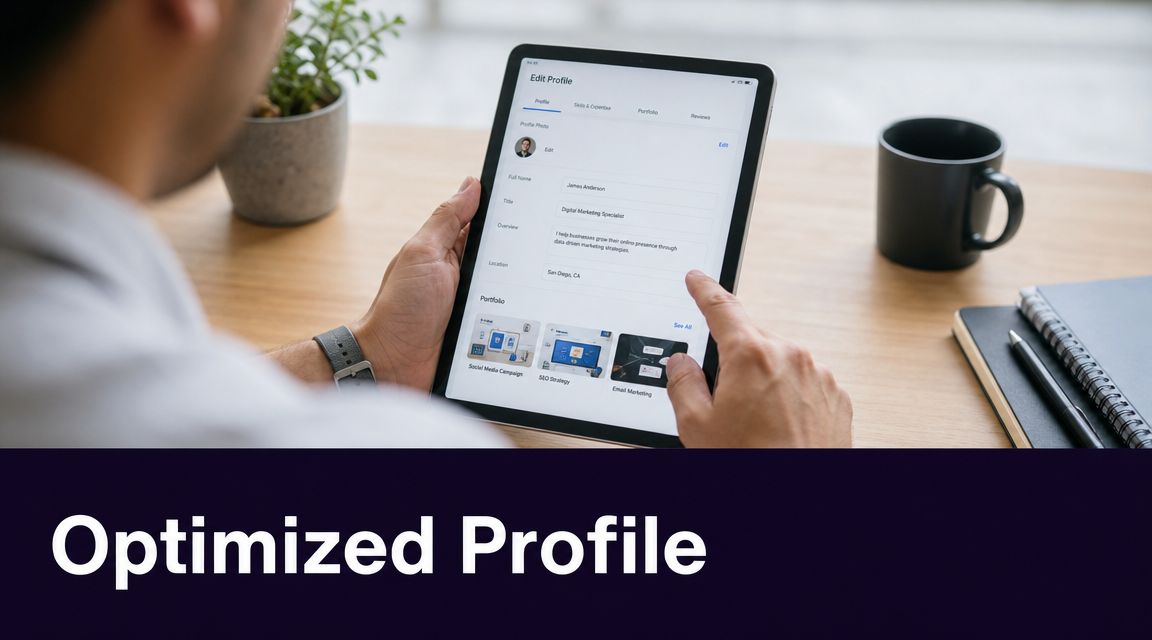
On Upwork, the profile is not a background asset. It is the page clients use to verify whether your pitch is credible, whether your niche is clear, and whether your past work looks close enough to their project to justify a reply. If the profile is vague, automation just scales a weak first impression. If the profile is tightly positioned, every proposal benefits.
Turn the profile into a filtering and conversion asset
Generalist messaging creates friction. A client looking for help with SaaS onboarding emails, Shopify CRO, or HubSpot cleanup does not want to decode broad claims like “I help brands grow online.” Clear positioning gets you found by the right searches and reduces doubt once a buyer clicks through.
That means writing for intent, not for ego. Your headline should match the jobs you want. Your overview should describe the business problem, your process, and the result you usually help clients get. Your portfolio should show adjacent work, not every project you have ever touched.
A practical structure looks like this:
- Headline: Name the service and buyer type in plain language.
- Overview: Open with the problem you solve and the situations you handle best.
- Portfolio: Feature samples that match the projects you want next.
- Proof: Use reviews, outcomes, and repeat-client signals to lower perceived risk.
There is a trade-off here. Narrower positioning may reduce the total number of searches you appear in, but it usually improves fit and reply rates. For freelancers and agencies using Upwork as a primary acquisition channel, that is often the better bet. More impressions do not help if the wrong buyers keep landing on the page.
This also connects directly to automation systems like Earlybird AI. Proposal automation performs better when the source profile is specific. The tool can mirror your niche, service language, and proof points more accurately, which makes personalized proposals feel consistent instead of stitched together.
I usually treat profile optimization as conversion rate work, not branding work. The goal is simple. Help the buyer answer three questions fast: Do you handle this kind of project, have you done it before, and are you likely to be easy to work with?
Profiles that answer those questions clearly tend to earn more qualified views, better proposal-to-reply performance, and stronger inbound invites over time.
5. Multi-Account and Team Workflow Automation
Solo freelancers usually think in terms of one account and one pipeline. Agencies can't. They need a coordinated system across multiple specialists, service lines, and buyer types.
That makes multi-account workflow automation one of the most practical lead generation examples for growing teams. The idea is simple. Don't let every bidder improvise. Build one operating model, then assign lanes.
Centralize the process, specialize the accounts
A web agency might maintain separate Upwork-facing specialists for design, development, and SEO. A content shop might split accounts by copywriting, strategy, and technical writing. This reduces confusion for the buyer and keeps each account's profile tightly aligned to the jobs it pursues.
The mistake is running several accounts with overlapping positioning and no shared view of pipeline. Then two people answer the same opportunity differently, or the team can't tell which service line is converting.
A better structure includes:
- Defined ownership: Each account owns a service category or buyer segment.
- Shared CRM visibility: Everyone can see conversation history and proposal status.
- Template standards: Proposals follow a consistent brand logic without sounding identical.
- Weekly review rhythm: Team leads review quality, not just activity.
I've found that agencies scale outreach more cleanly when they standardize decision-making, not just messaging. Who gets bid on, who gets ignored, who gets a follow-up, and when a conversation becomes a sales call should all be documented.
That's the difference between a team that “uses automation” and a team that has a lead generation machine.
6. Behavioral Automation Mimicking Human Activity Patterns
Automation only helps if it stays sustainable. If your behavior looks robotic, repetitive, or unnatural, you create account risk and damage client trust.
That's why behavior-aware automation belongs in any serious discussion of lead generation examples for Upwork sellers. The goal isn't to trick anyone. It's to automate repetitive work in a way that still behaves like a real operator would.
Safety is part of the system
Good automation varies response timing, activity windows, and wording. It doesn't blast identical proposals or reply instantly at impossible hours every day. It also avoids suspicious account patterns that a real freelancer or agency would never produce.
Earlybird AI is built with account safety in mind and uses human-like behavior patterns plus clean regional IPs. That matters because compliance isn't separate from lead generation. If your account gets flagged, your pipeline disappears.
A few rules are worth keeping in mind:
- Vary timing naturally: Don't make every reply land with machine precision.
- Avoid duplicate phrasing: Similar structure is fine. Identical wording across clients is risky.
- Watch account health: Review notices, client feedback, and behavior patterns regularly.
Good automation should look like a disciplined salesperson, not a script gone loose.
The broader point is that reliability beats aggression. Many sellers over-automate too early, thinking maximum activity is the goal. It isn't. Consistent, credible behavior produces a better pipeline over time.
7. Analytics-Driven Proposal Optimization and A/B Testing
Most freelancers “improve” proposals by instinct. That's slower than it needs to be. The stronger method is to test messaging the same way marketers test landing pages and ads.
This is one of the most underused lead generation examples on service platforms. Proposal writing feels personal, so people resist making it measurable. That's a mistake. If you send proposals every week, you have enough repetition to learn what drives replies and call bookings.
What to test
Start with one variable at a time. Change the opener, not the entire proposal. Test CTA phrasing separately from portfolio placement. Keep the rest stable long enough to learn something.
Useful tests include:
- Opening angle: direct diagnosis versus brief credibility lead
- Proposal length: concise pitch versus slightly expanded context
- CTA style: ask a question versus suggest a call
- Proof placement: portfolio link early versus later
The wrong way to test is changing everything at once and guessing why one version worked. The right way is to create deliberate variations and review them against the outcomes you care about.
Madison Marketing reported a case where overall traffic fell 8% because ad spend was lower, yet organic traffic rose 5%, leads increased 173%, and sales-qualified leads increased 91% in its B2B lead generation case studies. That's a valuable lesson for proposal testing too. Surface activity can move in the wrong direction while qualified outcomes improve. Measure for quality, not noise.
For freelancers and agencies, that usually means reply rate is only the middle metric. The primary metric is whether the proposal starts conversations that become qualified sales calls and signed work.
8. Niche Specialization and Vertical Targeting
Generalists can survive on Upwork. Specialists usually sell more cleanly. They write better proposals, command more trust, and waste less time explaining why they're relevant.
That makes niche specialization one of the most effective lead generation examples in this list. Instead of chasing every available job, you build a market position that attracts and converts a narrower slice of buyers.
Pick a market you can speak to clearly
Examples are everywhere. A copywriter who focuses on B2B SaaS onboarding emails will often beat a generic “content writer.” A designer who specializes in fintech product interfaces can sound more credible faster than a broad UI/UX profile. A developer who understands marketplace architectures will frame solutions differently from a generic full-stack bidder.
Specialization improves three things at once. Your profile gets sharper. Your proposals get easier to personalize. Your case studies become more persuasive because they resemble the client's situation.
A good niche is usually one where you have at least one of these advantages:
- Existing proof: You've already done credible work in that vertical.
- Fast learning curve: You understand the terminology and buying logic quickly.
- Better economics: The clients in that niche can support ongoing work.
I don't recommend picking a niche purely because it sounds profitable. If you can't speak the client's language, buyers notice. The strongest vertical positioning comes from real familiarity with how that business operates, what slows it down, and what outcomes matter most.
9. Integrated Discovery Call Booking and Sales Sequences
A lot of lead generation systems break right before the sale. The proposal works. The client replies. Then the conversation drifts because nobody owns the transition to a call.
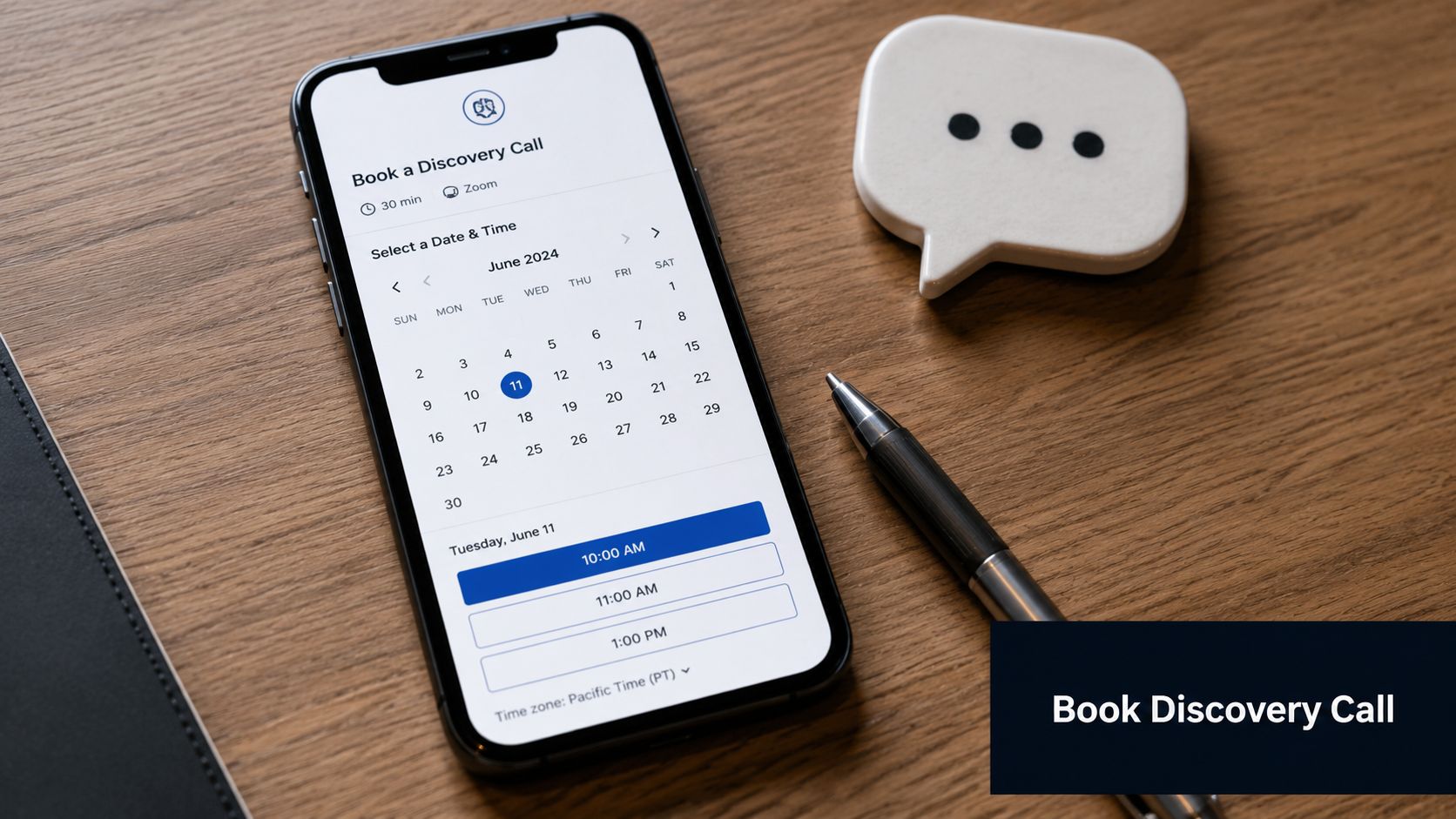
That's why integrated call-booking sequences matter. They turn interest into a scheduled next step instead of a loose chat thread. For agencies especially, this is one of the most profitable lead generation examples because a booked call is where qualification, scope, and pricing finally become concrete.
Build a short sequence with a clear progression
The cleanest sequence usually starts with the proposal, then moves into a clarifying question, then a proof point or relevant sample, then a direct invitation to talk. You don't need a long nurture flow for most marketplace leads. You need momentum.
A design agency might ask whether the client needs only design or also development handoff. A dev team might ask about stack constraints or timeline pressure. Those questions do two jobs at once. They qualify the project and create a natural reason for a call.
Use these principles:
- Keep the sequence short: Persistent follow-up works. Endless follow-up annoys.
- Increase commitment gradually: Start with a small question before asking for a meeting.
- Offer low-friction options: A quick call often feels easier than a formal meeting.
Madison Marketing also reported average gains of 21% more SQLs by the fourth quarter and 229% more by the sixth, alongside 47% more leads by the fourth quarter and 178% more by the sixth in its case study series already noted earlier. The broader takeaway is that lead generation systems compound when follow-up and qualification stay consistent over time. Discovery call workflows are a big part of that compounding effect.
10. Reputation Management and Review Acceleration Programs
The last lead generation example is easy to overlook because it happens after the work is done. That's exactly why it matters. Reviews, testimonials, and reputation signals don't just validate past performance. They improve future conversion.
On Upwork, reputation is part of distribution. It shapes whether clients click your profile, trust your proposal, and feel safe replying. Strong review systems make every future sales interaction easier.
Turn completed work into future demand
Most freelancers ask for feedback casually, if they ask at all. Strong operators make it part of project closeout. Once the client is satisfied and the result is visible, they request a detailed review while the experience is fresh.
The request matters. “Please leave a review” often produces generic praise. A better prompt asks the client to mention the problem solved, the working style, and the outcome. That gives future buyers more useful proof.
A practical closeout system looks like this:
- Ask promptly: Don't wait until the project is no longer top of mind.
- Guide the review: Suggest the kinds of details that help future buyers understand the engagement.
- Curate proof: Pull strong testimonials into portfolio pieces and proposal snippets.
- Protect the relationship: Resolve concerns quickly before they harden into a bad review.
This section is where many agencies create long-term lift without buying more attention. Better reviews improve profile trust. Better trust improves response rates. Better response rates improve the economics of every proposal you send afterward.
Your Blueprint for Automated Lead Generation
These lead generation examples work best when you stop treating them as separate tactics. They're parts of one system. Proposal automation gets you into the race earlier. Lead scoring keeps you from wasting effort on weak-fit opportunities. Fast response systems preserve momentum once a client engages. Profile optimization improves conversion before the conversation even starts.
Then the second layer takes over. Team workflows let agencies scale without chaos. Human-like behavioral controls keep automation sustainable. Analytics show what messaging works. Vertical specialization sharpens every asset in the funnel. Call-booking sequences move interest into sales conversations. Review systems make the next round of outreach easier than the last one.
That's the shift. You stop “looking for leads” and start managing inputs, stages, and conversion points. The work becomes more operational and less emotional. Instead of asking why one random week was slow, you can inspect where the system is leaking. Are you targeting the wrong jobs? Are proposals getting opened but not answered? Are conversations starting but not reaching calls? Are calls happening but weak-fit leads are slipping through? Those are solvable problems.
That measurement mindset matters in lead generation generally. In broader B2B reporting, credible programs are judged not just by top-line lead volume but by what happens deeper in the funnel. That's why qualified outcomes, conversion-stage ratios, and efficiency metrics matter more than raw activity. Freelancers and agencies need the same discipline, even if the toolset looks different from a standard marketing funnel.
If you're building from scratch, don't try to implement all 10 at once. Start with the bottleneck that's costing you the most. For many freelancers, that's proposal speed and consistency. For agencies, it's usually qualification and follow-up discipline. Fix one stage, measure the effect, then layer in the next process.
If you already have volume but weak conversion, focus on scoring, proposal testing, and call booking. If you have decent conversion but not enough opportunities, improve profile discoverability, niche focus, and submission coverage. If your team is growing, standardize workflow before you expand volume. More activity without shared rules usually creates more confusion, not more revenue.
Earlybird AI fits naturally into this kind of system because it handles several of these functions together. It can help freelancers and agencies search for projects, personalize proposals, reply quickly, follow up toward booked calls, and manage workflow with analytics and profile support. Used well, that doesn't replace judgment. It gives your judgment a system to operate through.
The agencies and freelancers that grow most predictably usually aren't the ones doing the most manual hustle. They're the ones who built a process they can trust.
If you want to turn these lead generation examples into a working acquisition system, Earlybird AI is one practical option for automating Upwork proposals, replies, follow-ups, and team workflows without handing your pipeline over to guesswork.