
← Back To Blog
Outsourced Sales Development: A 2026 Agency Guide
You're probably in one of two situations right now.
Either your agency does great work and still lives with a shaky pipeline, or you've tried to fix that by doing sales yourself and discovered that client delivery plus prospecting is a terrible combo. You spend the morning reviewing designs, estimates, or sprint tickets, then jump into Upwork, LinkedIn, email, referrals, and follow-ups. By the end of the week, you've been busy the whole time and still can't say whether next month's revenue is safe.
That's why outsourced sales development keeps coming up. Agency owners don't usually want “an SDR function.” They want fewer dry weeks, fewer frantic proposal sprints, and fewer deals lost because nobody followed up fast enough.
For creative and technical agencies, this gets harder, not easier. Your offer is nuanced. Your positioning changes by niche. A generic rep can't explain why your Shopify migration process is better, why your Webflow builds convert, or why your dev team is strong on API-heavy work. That's why traditional outsourced sales development can help, but it can also backfire fast.
When Manual Sales Development Is Holding Your Agency Back
A lot of agencies hit the same ceiling. The founder is still the top salesperson, the account lead is doing half-sales by accident, and lead generation happens in inconsistent bursts. When work is heavy, outreach stops. When work slows down, everyone panics and starts pitching.
That cycle wrecks momentum.
Manual sales development looks manageable at first because each task seems small. Review a few leads. Send a few messages. Reply to a few invites. Clean up the CRM later. But sales development is not one task. It's a chain of tasks that only works when someone owns it every day.
What usually breaks first
For agencies, the first problem isn't effort. It's context switching.
A founder can write a strong proposal. A strategist can run discovery well. A delivery lead can identify a good-fit account. But if nobody consistently handles the top of funnel, opportunities leak before they become conversations.
Common symptoms show up fast:
- Follow-up stalls: A good lead gets one response, then sits because the team moved back into delivery work.
- Lead quality drifts: Outreach starts broad because nobody has time to refine targeting.
- Proposal speed drops: On platforms like Upwork, late proposals often mean invisible proposals.
- Sales data disappears: You can't tell what's working because everything lives in inboxes, chats, and memory.
Manual outreach usually fails quietly. Not because the agency lacks talent, but because nobody protects the process.
Outsourced sales development offers a solution. In plain terms, you hire an external team to do the repetitive top-of-funnel work your agency never manages to do consistently. They prospect, reach out, qualify, and try to create sales conversations for your closers.
That can work. It's also a very traditional answer to a modern problem. In 2026, agencies should look at it with open eyes, especially if most of their new business comes through marketplaces, inbound project requests, or fast-moving outbound plays.
Understanding Outsourced Sales Development Models
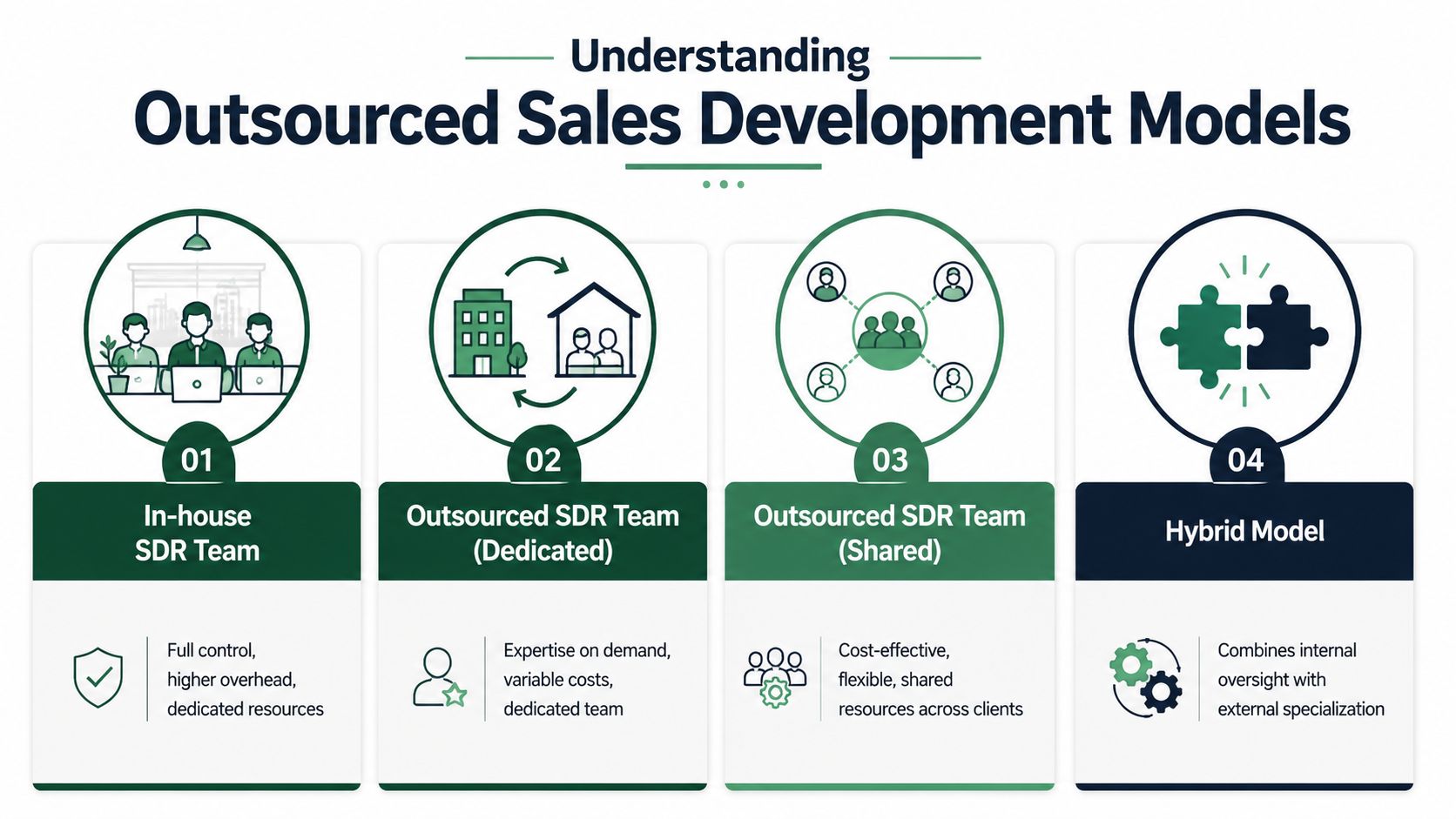
Outsourced sales development means giving the top-of-funnel job to an external team. Their role is simple: find likely buyers, contact them, qualify interest, and hand real opportunities to someone on your side.
It's comparable to hiring a specialist contractor. You can build the whole thing in-house, or you can bring in a team that already has the people, systems, and management layer. The trade-off is obvious. You gain speed and experience, but you give up some control.
The category itself isn't small or temporary. The global outsourced sales service market was valued at USD 3.37 billion in 2026 and is projected to reach USD 4.89 billion by 2035, with a 4.2% CAGR from 2026 to 2035, according to Business Research Insights market analysis.
The work these teams actually do
Most outsourced SDR teams handle some version of the same three jobs:
- Prospecting: Building target lists based on industry, role, company type, budget fit, or buying signals.
- Outreach: Running email, phone, LinkedIn, or marketplace messaging to open conversations.
- Qualification: Filtering early interest so your closers spend time on real opportunities, not random calls.
If you want a basic primer on the role itself, this explanation of what a sales development representative does is useful before you evaluate vendors.
The three pricing models that matter
Most firms package outsourced sales development in one of three ways.
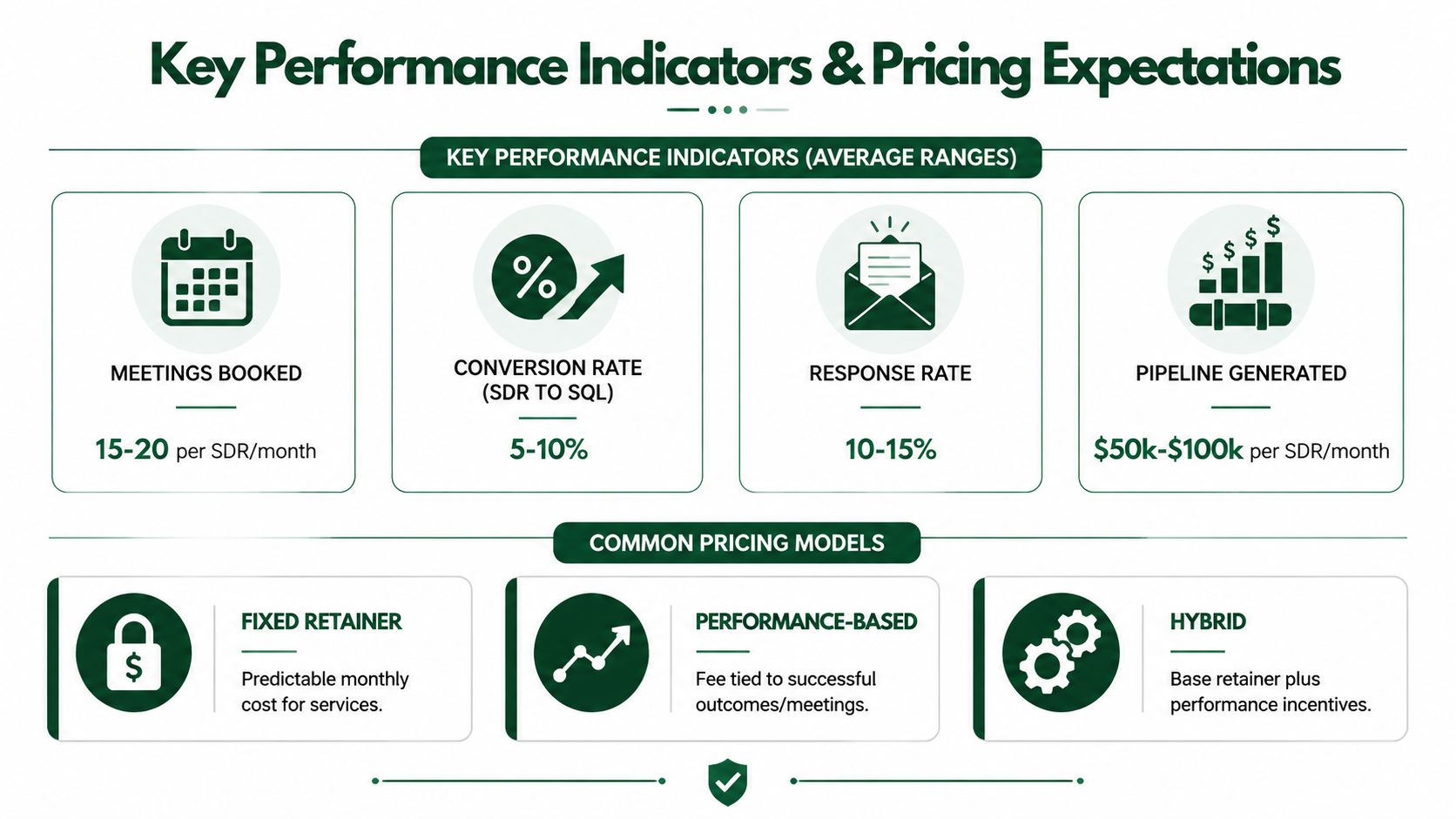
Fixed retainer
This is the cleanest model. You pay a monthly fee for a team, a process, and an agreed scope. It's like hiring a contractor on a fixed monthly engagement. Good for agencies that want steady execution and clear accountability.Pay per appointment
This sounds attractive because it feels low risk. It often creates bad behavior. If a vendor gets paid when a meeting lands on the calendar, they may optimize for volume instead of fit. Your team ends up taking weak calls.Hybrid
Part base retainer, part performance fee. This can work if qualification criteria are strict and both sides define what counts as a valid meeting. If those rules are vague, you'll get arguments every month.
Which structure fits agencies best
For creative and technical agencies, a retainer or carefully designed hybrid usually makes more sense than pure pay-per-appointment. Your deals often need context. A rep has to understand service scope, technical constraints, and buyer intent. That's hard to reduce to raw meeting counts.
If you want another perspective on how providers structure these teams, hireSDR.io's outsourced sales insights give a useful overview of common team models and trade-offs.
The Real Trade-Offs of Outsourcing Your SDR Team
Outsourcing sales development is not a magic fix. It's a trade. Sometimes a smart one. Sometimes an expensive mistake.
The upside is obvious. You skip the pain of hiring, training, and managing an in-house SDR from scratch. For many B2B companies, outsourced teams can reduce operational sales development costs by approximately 30% to 50%. The same comparison shows a fully loaded in-house SDR at about $11,500 per month versus an outsourced SDR retainer around $5,000 per month, based on the verified data provided earlier.
That cost gap is why so many agency owners get interested fast. On paper, it looks efficient. In practice, the value depends on what kind of pipeline the vendor produces.
Where outsourcing helps
A decent outsourced SDR partner can solve a few ugly operational problems quickly:
- You stop hiring for a role you don't know how to manage. Most agencies are not built to recruit, ramp, coach, and retain SDRs.
- Outbound activity becomes consistent. Consistency matters more than occasional founder heroics.
- Your closers get time back. Account executives, founders, and strategists can spend more time in discovery and deal progression.
- Testing gets faster. A specialized team can run messaging, targeting, and channel experiments without dragging your delivery team into every change.
For agencies entering a new vertical, that speed can be valuable. If you've decided to go after fintech design retainers, Shopify rebuilds, RevOps implementation, or enterprise content production, an external team can create structured top-of-funnel motion faster than an internal hire.
Practical rule: outsource execution when you already know who you want to sell to and what problem you solve.
Where outsourcing hurts
Now the bad news. Most failures happen for predictable reasons.
Generic outreach damages the brand
Agencies sell trust and specificity. If an outsourced rep sends broad, stale, template-heavy outreach, buyers don't blame the vendor. They blame your agency. That damage is hard to reverse, especially in tight niches where prospects know each other.
Bad meetings waste expensive time
A calendar full of weak discovery calls is not pipeline. It's distraction. Founders and senior sellers often underestimate the cost of taking unqualified meetings. If your closing time is expensive, low-quality appointments are a hidden tax.
You lose direct market feedback
A founder doing outreach hears objections firsthand. An outside team can shield you from those signals unless reporting is excellent. That matters when you're still refining offer, niche, or positioning.
Nuanced offers take longer to learn
This is the core issue for agencies. Selling dev retainers, CRO engagements, brand systems, SEO content operations, or fractional product design is not like selling a simple commodity. A third party needs time to understand edge cases, delivery constraints, and what your team does better than competitors.
The agency-specific truth
Outsourced sales development works better for agencies with a clear niche, stable offer, and enough margin to absorb ramp time. It fails when the agency is still changing its offer every few weeks, chasing every kind of client, or expecting an outside rep to invent positioning for them.
If your agency can't clearly explain who you serve, what projects you want, what disqualifies a lead, and what a good call sounds like, don't outsource yet. You'll just pay someone else to create noise.
KPIs and Pricing You Should Actually Expect
If a vendor leads the conversation with activity metrics, be careful. Dials made, emails sent, and sequences launched are workload metrics. They are not business outcomes.
The right way to manage outsourced sales development is to treat it like an input-to-revenue system. Mature teams track lead-source efficiency, engagement rates, sales-cycle length, qualified-lead volume, conversion rate, and sales-accepted leads, as explained in Altisales' guidance on outsourced sales development metrics.
The KPIs that deserve your attention
For agencies, these are the metrics that matter most:
Sales-accepted leads
This tells you whether your team wants the meeting after reviewing it. It's a hard filter against junk appointments.Meeting-to-opportunity conversion
If meetings happen but opportunities don't, the problem is usually targeting, qualification, or messaging.Pipeline value generated
This shows whether the vendor is creating real commercial potential, not just filling calendars.Average lead-response time
Speed matters. Slow follow-up kills warm interest, especially on marketplaces and service inquiries.Cost per qualified meeting
This is one of the cleanest numbers for comparing an outsourced team against an internal SDR motion.
If your current lead process is messy, this guide on how to qualify sales leads is a useful reference before you lock a vendor into the wrong definition of “qualified.”
What good reporting should reveal
A proper dashboard should answer specific questions:
- Are leads responding but failing qualification?
- Are meetings accepted by sales and then stalling?
- Are certain channels producing low-intent conversations?
- Is one segment converting while another only creates noise?
That diagnostic layer matters because outsourced sales development often fails gradually. At first, activity looks healthy. Then no-shows rise, fit drops, and the closing team's confidence in the leads erodes.
If you can't trace performance from outreach to accepted lead to opportunity, the vendor is managing optics, not revenue.
Pricing expectations without fantasy
Pricing depends on team structure, outreach channels, vertical specialization, and how much customization your agency needs. Some vendors price like appointment shops. Others price like an embedded outbound team.
The more your offer depends on technical understanding, nuanced qualification, and close coordination with your CRM and closers, the less realistic bargain pricing becomes. Low-cost proposals often hide shared reps, weak onboarding, generic messaging, or thin reporting.
For agencies, the better question isn't “What's the cheapest retainer?” It's “Can this vendor prove they understand what a qualified opportunity looks like for our service model?”
Your Vendor Selection and Onboarding Checklist
Most outsourced sales development deals don't fail because the vendor lied. They fail because the buyer bought too fast, asked weak questions, and treated onboarding like admin work.
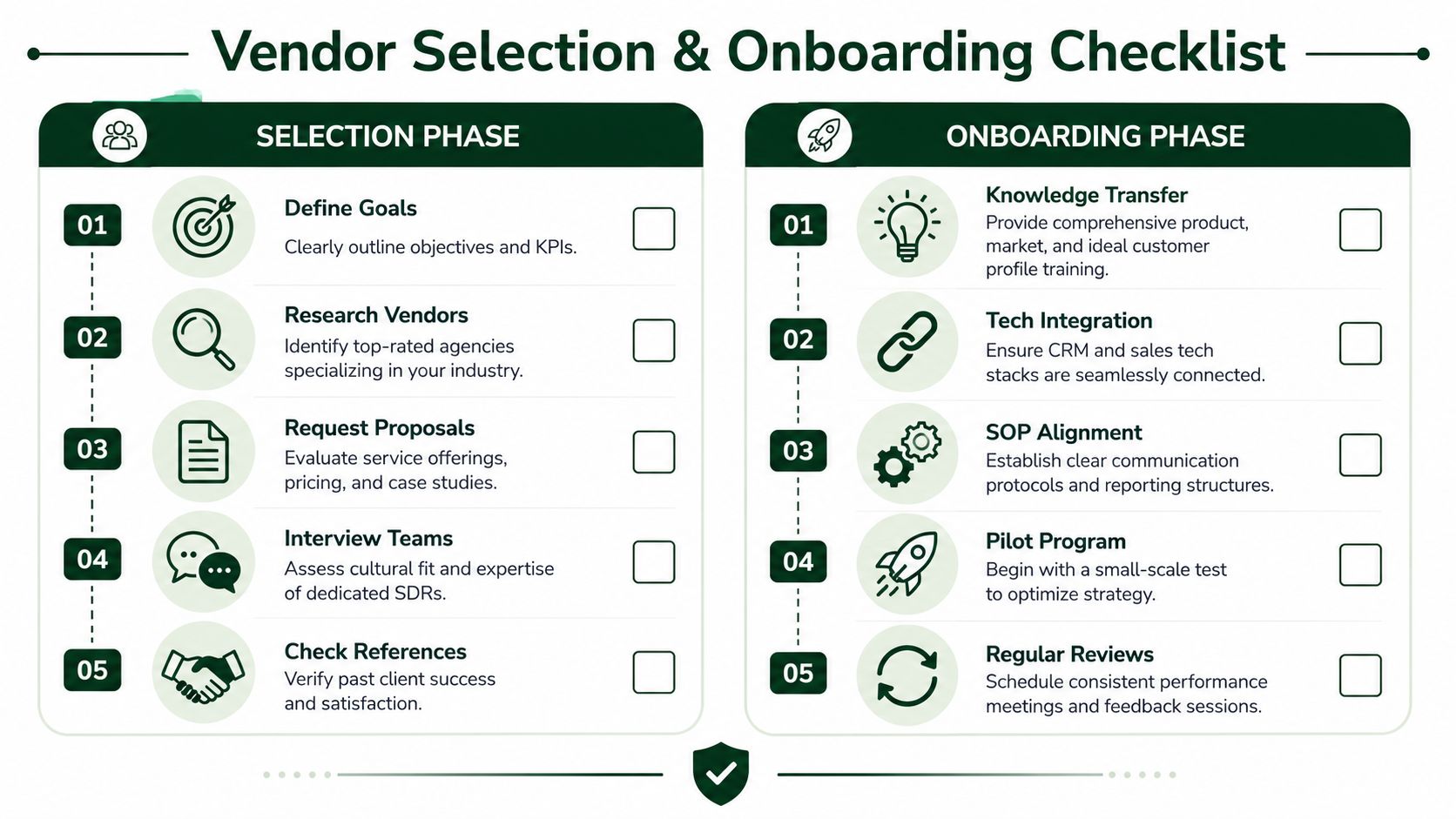
A strong partnership needs structure before the first message goes out. The essentials are a detailed ICP, a documented sales playbook, clear definitions of a qualified meeting, and an integrated CRM with weekly or bi-weekly calibration meetings, as outlined in LeadSatscale's outsourcing guide.
Questions to ask before you sign
Don't ask vendors if they can “generate leads.” Every vendor says yes. Ask questions that expose how they think.
How do you learn our ICP?
If their answer is vague, they'll default to broad targeting.How do you define a qualified meeting?
You need specifics. Budget fit, service fit, urgency, authority, project type, or platform behavior.How do you report lead quality?
If reporting starts and ends with meeting count, walk away.How do you handle niche offers?
Agencies sell expertise, not generic software demos. The rep needs to understand your services well enough to avoid fake personalization.What happens when conversion drops?
Good vendors talk about diagnosis, not hustle. They should mention targeting, messaging, and handoff quality.
What you must provide during onboarding
This is the part agency owners often skip because they assume the vendor will “figure it out.” That assumption burns money.
Your side should hand over:
A real ICP
Not “startups needing marketing.” Tighten it. Industry, project scope, team size, buying context, budget signals, and bad-fit indicators.A sales playbook
Include positioning, objection handling, proof points, disqualifiers, and examples of good opportunities.Clear meeting standards
Spell out what qualifies for your calendar and what doesn't.CRM access and reporting flow
If data lives in disconnected systems, quality drifts fast.
This video is a helpful supplement if you want another practical view on structuring outsourced sales work.
How to run the first month properly
The first month shouldn't be passive. It should be a calibration cycle.
- Review live messaging early: Don't wait until a month-end report to discover the tone is off.
- Audit recorded calls or transcripts: You'll hear qualification problems faster than you'll see them in summary slides.
- Flag false positives fast: If bad leads reach your closers, update the definition immediately.
- Meet weekly at minimum: Shared context disappears quickly when an external team operates without feedback.
Treat onboarding like training a new internal team, because that's effectively what you're doing. External doesn't mean automatic.
When to Avoid Outsourced Sales Development
Sometimes the right move is not to outsource.
Outsourcing fits best when a company has a defined offer, larger deal sizes, or long sales cycles, and it works best as an execution layer, not a substitute for product-market fit or weak positioning, according to ISales' view on when outsourced SDR works.
Situations where it usually fails
If your agency is in one of these situations, pause.
Your offer keeps changing
If you're still shifting from branding to web design to paid media to dev retainers, an external SDR team won't create clarity for you.Your deals are too small
If average project value is low, the economics get tight fast. You need very efficient acquisition, not a layered sales process.Your service is technical and founder-led
Some agencies sell work that depends on trust in specific senior operators. Outsiders can open doors, but they may struggle to represent the nuance.You need raw market feedback more than pipeline volume
Early-stage agencies often learn more from doing outreach themselves because they hear objections directly.
A better filter
Ask one question before you outsource: Are we hiring execution, or are we hoping a vendor will fix our positioning?
If the answer is the second one, don't sign. Tighten your offer first. Clarify your ICP. Prove your messaging with founder-led selling. Then decide whether outsourced sales development belongs in the stack.
Augment or Replace Your SDR with AI Automation
For agencies selling through Upwork, traditional outsourced sales development isn't always the best fit. The platform rewards speed, consistency, message relevance, and relentless follow-up. Human teams can do that. They usually do it unevenly, expensively, and with a lot of management overhead.
That's why many agencies should consider automation before hiring a classic outsourced SDR team.
Why AI fits the Upwork sales motion better
Upwork is not a standard outbound environment. It's a reaction-speed environment. New jobs appear, multiple agencies bid fast, and early relevance matters. A traditional SDR team often introduces lag because someone has to review jobs, decide fit, draft proposals, submit manually, then monitor replies.
Automation handles that flow better when the work is repeatable and the feedback loop is fast.
For example, tools in this category can:
- Search for matching projects continuously
- Draft personalized proposals based on your offer and preferences
- Reply quickly to client messages
- Follow up without relying on a human rep's calendar discipline
- Keep activity consistent even when your team is buried in delivery
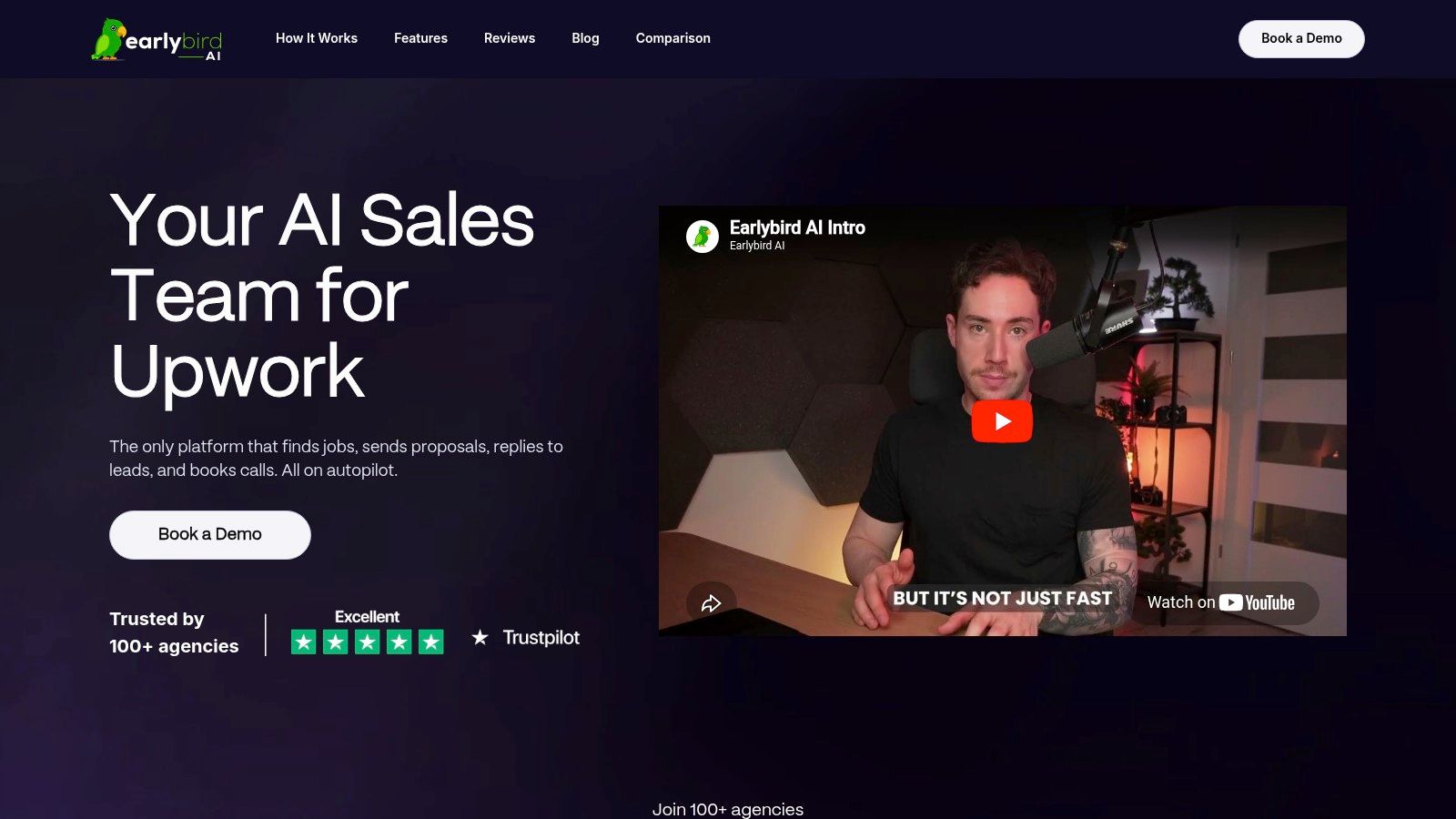
One option in this category is Earlybird AI, which connects to an Upwork account, learns from thumbs-up and thumbs-down feedback, searches for relevant jobs, drafts personalized proposals, and automates replies and follow-up. If you want a broader overview of this category, this explanation of what sales automation means in practice is a useful place to start.
Where automation beats human outsourcing
For Upwork-focused agencies, automation solves three big problems at once:
Cost pressure
You avoid building a full human SDR layer for work that is repetitive and rules-based.Control
You keep message standards, targeting preferences, and account behavior closer to your internal process.Response speed
On marketplaces, faster action often matters more than more activity.
That doesn't mean AI replaces every sales function. It doesn't run high-stakes discovery. It doesn't negotiate nuanced scopes better than an experienced founder or sales lead. What it can do is remove the manual bottleneck at the top of the funnel so your human team spends time where humans matter most.
If your agency wins work on Upwork, this is the modern alternative worth serious consideration before you sign a traditional outsourced sales development contract.
If your agency is still relying on inconsistent manual outreach, Earlybird AI is worth evaluating as a practical alternative for Upwork lead generation. It automates project discovery, proposal drafting, client replies, and follow-up so your team can spend less time chasing work and more time closing and delivering it.