← Back To Blog
10 Best Sites Like 99designs for Creatives in 2026

If you only compare platforms by price or by how many concepts you might get, you miss the core question. Do you want a contest that gives you breadth up front, or do you want a direct relationship that compounds over time?
That's the gap in most roundups of sites like 99designs. They treat every alternative as interchangeable, even though the working model changes everything. A contest-first platform helps when you need style exploration, stakeholder buy-in, or a quick read on multiple directions. A direct-hire platform works better when the project is complex, the brand needs consistency, or you already know what good looks like and want one designer to carry it through.
99designs itself built a strong position with that contest model. It's a global creative platform that has connected hundreds of thousands of clients with freelance designers worldwide, and its design contests remain the core differentiator of the marketplace via 99designs. If you're still shaping your visual direction, that model can be useful. If you're already operational and need repeatable execution, there are often better fits.
So this guide sorts the best sites like 99designs by strategy, not just by brand name. Some give you broad creative exposure. Others help you hire with more control and less noise. If your team is still polishing its presentation before sourcing talent, these top online portfolio builders are also worth a look.
1. crowdspring
crowdspring is one of the cleaner alternatives if you like the 99designs model but want a platform that feels more structured around buyer protection. It supports open contests and one-to-one hiring, which matters because not every project should start with speculative work.

What makes it practical is scope range. You can use it for logos and brand identity, then stay on the same platform for packaging, web design, or naming. That broader category support is useful when a startup begins with a logo but soon realizes it also needs messaging and launch assets.
Best fit
Crowdspring fits teams that want the optionality of a contest but don't want to be locked into that model forever. If a contest surfaces a designer whose thinking matches the brand, moving into one-to-one work is a sensible next step.
A few trade-offs show up fast:
- Contest flexibility: You can run an open brief when you need range, then switch to direct hiring for follow-on work.
- Buyer protection: The guarantee language is a real comfort for cautious clients, especially first-timers.
- Category breadth: Naming support is a differentiator if you want more than visual work.
The downside is the same one I see on most contest platforms. Quality varies across entrants, and the client has to do editorial work. If you leave vague feedback like "make it pop," the contest gets worse, not better.
Practical rule: Contest platforms reward decisive clients. The better your brief and mid-project feedback, the stronger your shortlist.
If you're still deciding whether contest work or direct proposals make more sense operationally, this breakdown of Fiverr vs Upwork vs Freelancer helps frame the difference from the hiring side.
2. DesignCrowd
DesignCrowd is one of the closest functional substitutes for 99designs. It stays firmly in the contest-first camp, but gives clients more direct control over prize setting and optional contest upgrades.
That control is useful if you're trying to manage budget tightly. Instead of buying into a rigid package structure, you can shape participation through the prize, privacy settings, and featured placement. Some teams like that because they can test interest before committing heavily.
Where it works well
DesignCrowd is strongest when the brief is simple enough for parallel exploration. Logos, simple packaging concepts, event graphics, and landing page mockups tend to fit. It's less efficient when the project depends on deep onboarding, research, or close brand stewardship.
Here's the practical upside:
- Budget control: You set the prize, which gives you more room to calibrate spend.
- Broad category coverage: It spans more than logo work, so you're not boxed into one design type.
- Direct-hire option: You can work outside the contest model after identifying a designer you trust.
The friction point is time. A contest gives you many options, but someone still has to review, rank, and steer them. If a founder wants "lots of ideas" but won't log in to give feedback, this model usually underperforms.
More concepts don't automatically mean better outcomes. They often mean more sorting work.
If you're comparing broader marketplace routes instead of contest platforms, this guide to alternatives to Upwork is useful for thinking through different sourcing models.
3. Designhill
Designhill is one of the clearer examples of a platform that sits between the two models in this article. You can use it as a Contest-First option when you need range, then shift into a Direct-Hire relationship if one designer proves they understand the brand and can keep the work consistent.
That matters for teams that are still deciding how much risk they want to take upfront. A contest lowers the risk of choosing the wrong designer too early, but it adds review work. Direct hire cuts down the noise, but only after you trust the person on the other side. Designhill gives you both paths in one place.

What to watch
I'd put Designhill in front of a team with several decision-makers and a real approval process. Its polling, comments, and annotation features help keep feedback attached to the actual design instead of getting scattered across email threads, Slack messages, and meeting notes. That sounds small until three stakeholders are all reacting to different versions.
The practical advantages are pretty specific:
- Flexible sourcing model: Start Contest-First for exploration, then switch to Direct-Hire if you find a designer worth keeping.
- Invite options: You can bring selected designers into the process instead of relying only on open submissions.
- Better review flow: Visual comments and polls help marketing leads, founders, and product teams give clearer feedback.
The trade-off is setup complexity. Designhill asks buyers to make more decisions around packages, upgrades, and contest terms than some simpler platforms. If no one on your team is going to read the rules closely, that creates avoidable confusion around refunds, guarantees, and what level of commitment you are making before the brief even goes live.
For the right project, that extra configuration is useful. For a rushed founder who just wants a logo by Friday, it can feel like too many knobs to turn.
4. Hatchwise
Hatchwise is for buyers who know they'll need repeated contest activity over a short period. Its standard contest setup is familiar, but the more distinctive angle is Hatchwise Infinite, a subscription model for running successive contests.
That makes Hatchwise a different kind of alternative. 99designs is often compared only against one-off project marketplaces. Hatchwise is more useful when a business wants recurring bursts of concepts for naming, logos, or campaign graphics without reopening the sourcing process every time.

Best use case
Use Hatchwise when you have volume and internal review capacity. A startup studio, small agency, or serial product team can get value from repeated contests. A single busy founder usually can't.
What stands out in practice:
- Recurring contest model: The Infinite plan is the main reason to consider it.
- Moderation and privacy settings: Helpful if you're sensitive about IP or public visibility.
- Support for contest extensions: Useful when a brief needs more iteration time.
The catch is curation overhead. A high-volume contest setup only works if someone can write sharp briefs, reject weak directions early, and keep feedback consistent from one contest to the next. Without that discipline, volume becomes clutter.
5. LogoTournament
LogoTournament is narrower and that's exactly why some clients should choose it. If your scope is strictly a logo, a logo-only contest platform can be easier to manage than a broader marketplace trying to serve every creative category.
This is not the place for a full brand system, packaging rollout, or app design engagement. It's for clients who want a predictable logo contest workflow and don't need much beyond that.

Why specialization helps
Focused platforms reduce decision fatigue. On LogoTournament, the packages are built around one problem, not ten. That often makes budgeting and expectation-setting easier for smaller businesses that don't have an in-house creative lead.
The practical advantages are straightforward:
- Logo-only focus: Easier brief writing because the scope is obvious.
- Fixed contest tiers: Simpler budgeting than open-ended setups.
- Clear contest workflow: Good for clients who don't want to learn a complex platform.
The limitation is just as straightforward. A logo is rarely the end of the job. Once the mark is done, most brands still need typography rules, color usage, social templates, and file organization. If you already know that broader work is coming, a more flexible platform may save time.
6. 48HoursLogo
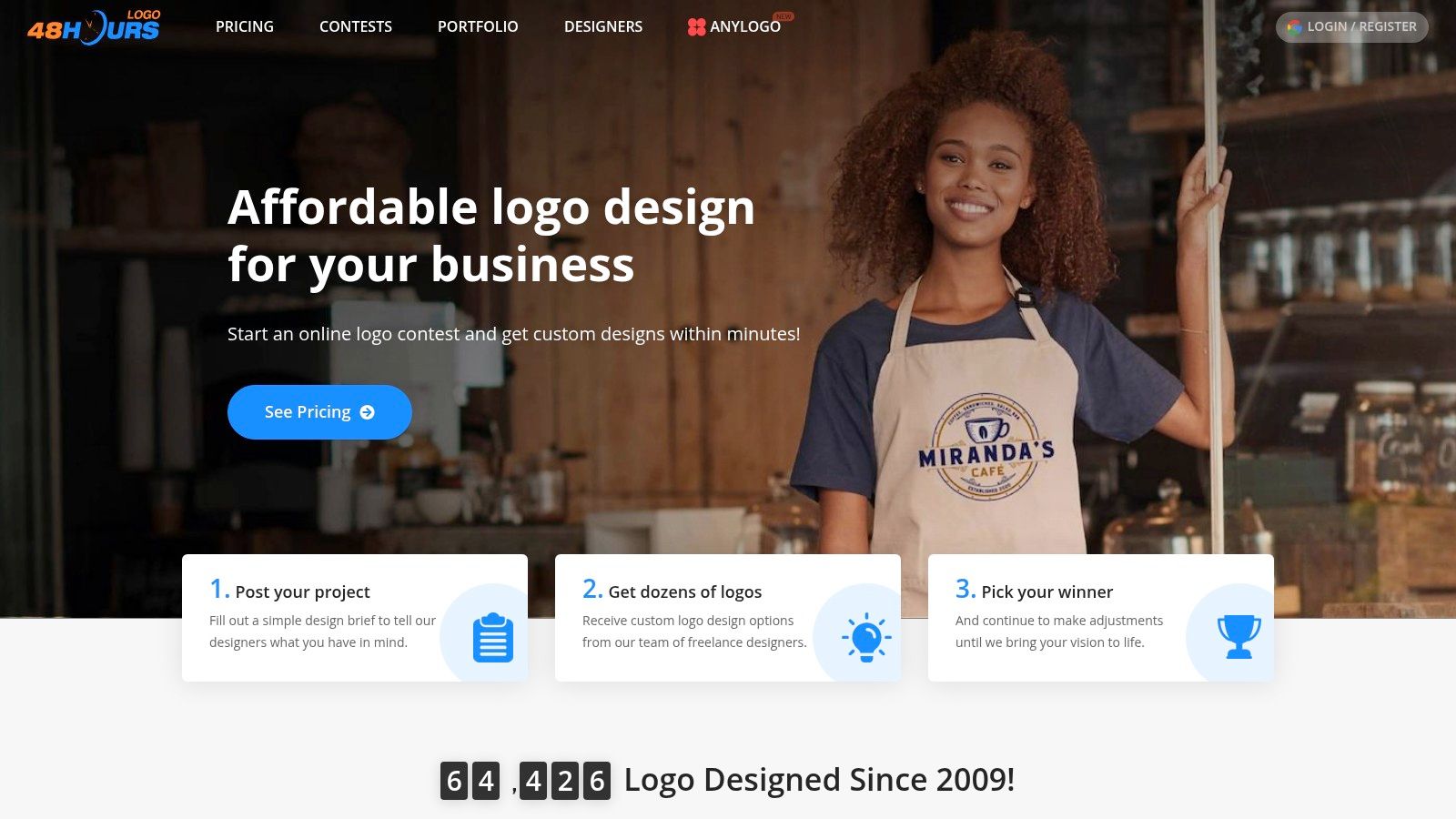
48HoursLogo is built for speed and narrow scope. If the brief is simple and the deadline is real, this platform is one of the more practical picks among sites like 99designs.
Its package structure is unusually transparent for a contest platform. Timelines are clearly framed around short sprints, and the service is aimed at quick logo delivery rather than broad creative partnership.
Fast isn't always better
Fast turnaround is valuable when the business need is tactical. Maybe a local service company needs a passable logo to launch ads this week. Maybe an event needs a temporary mark. In those cases, speed matters more than strategic depth.
Where it performs:
- Short contest windows: Good for compressed launch timelines.
- Transparent packaging: Easier to estimate what you're buying.
- Logo-specific workflow: Less setup friction than broad platforms.
Where it falls short is obvious to any creative lead. Rapid logo contests don't replace identity development. You might get a usable mark, but you usually won't get the kind of strategic system that supports packaging, web, signage, and campaign work without more design input later.
7. LogoMyWay
LogoMyWay leans hard into certainty. It's logo-only, contest-driven, and framed around guaranteed concept volume and a guided handover process. For small businesses that are nervous about getting too few options, that positioning is attractive.
The dedicated design specialist angle also matters. On pure self-serve contest platforms, nervous buyers often freeze when submissions start coming in. A guided layer can help them narrow the field.

When to choose it
LogoMyWay makes sense for SMB owners who want a lot of options quickly and don't need broader brand consulting. It's less appealing for teams that already know they'll need naming, packaging, or campaign design immediately after the logo decision.
A few practical notes:
- Concept minimums: Helpful if your main fear is weak participation.
- Structured handover: Useful for non-designers who need final files organized.
- Contest clarity: The workflow is simple to understand.
The quality question still comes back to the brief. Contest guarantees can promise quantity, but they can't guarantee that the concepts will express the right positioning. If the company can't describe its audience, personality, and competitive space, more entries won't solve the core problem.
8. DesignContest
DesignContest is a broader contest marketplace that handles logos, web work, print, and related categories. One practical feature stands out. You can preview expected entry ranges based on budget before paying, which helps clients tie spend to likely participation.
That sounds minor, but it solves a common planning problem. Many contest buyers don't know whether a lower budget will still create enough competition to be useful. A visible budget-to-entry expectation gives them a better planning anchor.

Good for pragmatic buyers
DesignContest is useful when the client wants a contest but also wants some forecasting before committing. It's not a premium-brand destination in the same way a more famous platform might be, but that isn't always a problem. Sometimes a less noisy marketplace is easier to manage.
Strengths worth noting:
- Budget visibility: Entry expectations help buyers calibrate before launch.
- Multiple design categories: Better fit than logo-only sites if your needs may expand.
- Source file handover: Important for real-world usability after the contest ends.
The trade-off is brand recognition and, sometimes, confidence. Stakeholders often feel safer approving a well-known platform. If internal politics matter more than process fit, that can influence the decision more than it should.
9. Dribbble Hiring
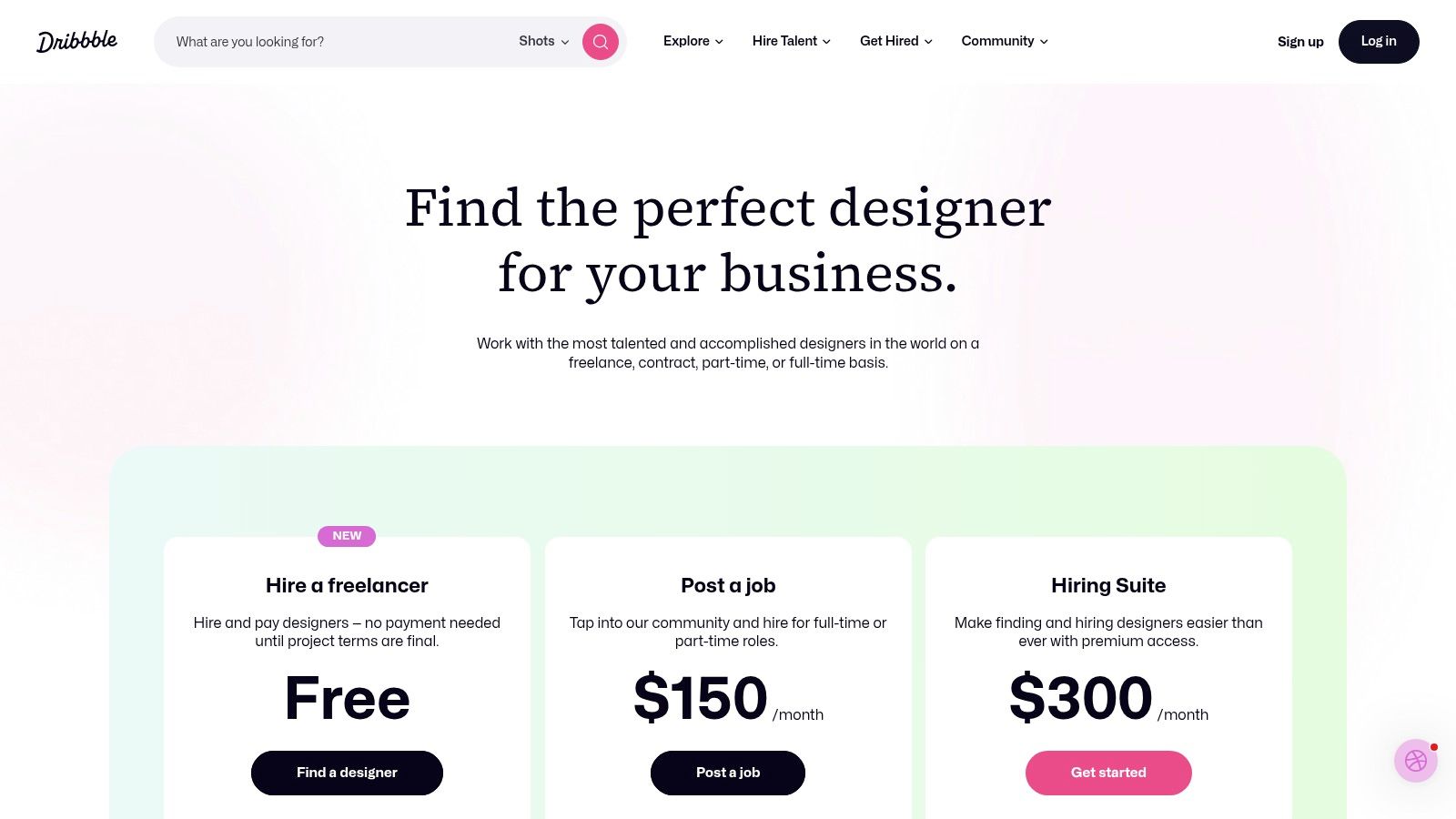
Dribbble Hiring belongs in a different bucket entirely. This is direct-hire, not contest-first. You browse portfolios, post roles, and hire based on proven style and capability instead of speculative submissions.
For many mature brands, that's the smarter model. You don't need thirty directions. You need one designer who already speaks the visual language you want.
Why direct hire changes the outcome
Direct-hire platforms reduce noise and increase accountability. Instead of reviewing rough speculative concepts from strangers, you assess finished portfolio work, interview the designer, and scope the project properly. That usually leads to stronger consistency on website design, product design, and long-term brand work.
What makes Dribbble Hiring useful:
- Portfolio-first selection: Better for style-sensitive projects.
- Flexible engagement: You can post a job or reach out directly.
- Managed payments: Helpful if you want some platform infrastructure without full contest mechanics.
99designs gives clients a built-in concept spread. Depending on package tier, its contest mechanism guarantees between 30 and 90 design concepts, with Bronze at $299, Silver at $499, Gold at $899, and Platinum around $1,300, alongside a 60-day money-back guarantee and full copyright ownership, according to this 99designs overview video. That's useful if you need breadth. Dribbble is the better move when breadth is the wrong goal.
If your need is specifically digital product or web talent, this guide on how to find a web designer is a helpful companion.
10. Behance Job Board / Recruiter Pro
Need a designer for one project, or someone you can bring back for the next six months? That question matters with Behance, because this is a direct-hire platform, not a contest-first marketplace.
Behance Hiring works best when the brief depends on taste, craft, and range more than raw concept volume. You are not buying a stack of speculative entries. You are recruiting from a very large portfolio database, then doing the work to verify who can solve your problem.
That makes Behance a better fit for brand systems, illustration-led campaigns, motion design, editorial work, and multidisciplinary creative roles. It is less efficient for clients who want fast comparison shopping and minimal involvement.
Best for deliberate recruiting
Behance rewards teams that know how to review portfolios. Search by style, medium, and toolset, then shortlist candidates whose published work already looks close to the outcome you need. If your workflow already runs through Adobe products, that context helps too, because many candidates present work in a way that maps cleanly to real production handoff.
The practical advantages:
- Broad creative discovery: Strong for branding, illustration, motion, UI, and hybrid roles.
- Portfolio-led evaluation: You judge finished work, not rough contest submissions.
- Useful filtering: Easier to screen for software familiarity, industry style, and niche specialties.
- Better long-term fit: More suitable when you may want an ongoing freelancer or future hire.
The trade-off is time. Behance asks the client to act like a recruiter. You need a clear brief, a review rubric, and someone on your side who can tell the difference between a polished portfolio and a designer who can handle feedback, deadlines, and production constraints.
That is the core distinction between contest-first and direct-hire models. Contest-first platforms reduce hiring effort and increase idea volume. Direct-hire platforms like Behance reduce speculative noise and give you more control over quality, fit, and working style.
One caution. Behance does not solve vetting for you. Strong thumbnail work can hide weak systems thinking or inconsistent execution across a full project. Review case studies closely, ask how the designer approaches revisions and file prep, and treat the platform as a sourcing tool, not a quality guarantee.
Your Next Great Design Starts With a Choice
The best alternative to 99designs depends less on the platform's homepage and more on how your team works. If you need broad exploration, a contest-first model can be useful. It gives you options, surfaces different visual takes, and helps non-design stakeholders react to something concrete. That's why contest platforms still work well for logos, naming, and early-stage brand exploration.
But contests aren't automatically the better deal. They shift a lot of work back to the client. Someone has to write a sharp brief, respond quickly, reject weak directions, and guide the process. If your team won't do that, a contest becomes a gallery of almost-right ideas.
Direct-hire platforms ask for a different kind of discipline. You need to review portfolios carefully, interview well, and define scope before work starts. In exchange, you usually get stronger continuity, clearer accountability, and a better shot at building a real creative relationship. For web design, product design, packaging systems, or ongoing campaign work, that relationship matters more than seeing dozens of speculative comps.
That's the practical framework I'd use:
- Choose contest-first when you need style exploration, fast comparative feedback, or broad input on a contained project.
- Choose direct-hire when the project is complex, brand-sensitive, or likely to extend beyond one deliverable.
- Choose a hybrid platform when you want to start with discovery and keep the option to continue with one designer.
One more point matters if you're evaluating sites like 99designs for agency use. Don't just compare features. Compare management load. A platform that looks cheaper on paper can cost more in creative direction time, stakeholder wrangling, and revision cleanup. The right pick is the one your team can run well.
Success on any of these platforms still comes down to the same basics. Write a real brief. Include examples of what you like and what you want to avoid. Name the audience, business goal, and practical constraints. Then give specific feedback. Not "make it better." Say what needs to change, why it matters, and what the design should communicate instead.
That's how you turn a marketplace into a useful sourcing tool instead of a time sink. Pick the model that matches your project, your tolerance for ambiguity, and your team's capacity to manage the work. Then commit to the process and give the designer enough clarity to do strong work.
If your agency is winning design work through Upwork, Earlybird AI can help you fill the pipeline without turning outreach into a full-time job. It connects to your Upwork account, learns which projects fit your team, automates proposal writing and replies, and helps you get in front of clients while the opportunity is still fresh. For agencies juggling delivery and business development at the same time, it's a practical way to stay active on Upwork without adding more manual sales work.