
← Back To Blog
10 Unique Value Proposition Examples (2026 Analysis)
If your offer vanished from your profile headline tomorrow, would a client still know why to pick you?
That's the gap most freelancers, agencies, and B2B SaaS teams miss. They think a unique value proposition is a slogan. It isn't. It's a decision shortcut. It tells a buyer who it's for, what outcome they get, and why your approach beats the alternatives. “High quality work” doesn't do that. “Fast, reliable, results-driven” doesn't do it either. Those phrases are market wallpaper.
The best unique value proposition examples do something harder. They narrow the audience, name the outcome, and remove overlap with competitors. That discipline matters because strong strategy starts with a distinct promise of value for a defined customer, and a novel value proposition can even expand a market rather than just compete inside it, as the Institute for Strategy and Competitiveness explains in its overview of unique value propositions.
For service businesses, especially on Upwork, a good UVP has to survive contact with real buyers. It has to work in a profile, a proposal, a landing page, and a sales call. Below are 10 unique value proposition examples you can adapt. Each one comes with the trade-offs that matter in practice, plus before-and-after rewrites you can use immediately.
1. UVP 1 The Time-Saving Automation Angle

This angle works when your buyer already believes client acquisition is necessary but hates the manual grind. It's strong for freelancers who want more billable time, not more admin.
A weak version sounds like this: “We help freelancers get more leads with AI.”
A stronger version sounds like this: “Automate Upwork proposals, replies, and follow-ups so you can spend more time delivering paid client work.”
Why this one converts
The promise is concrete. It ties the benefit to repetitive tasks buyers already resent: checking job feeds, writing fresh proposals, replying fast, and chasing follow-ups.
What makes this kind of messaging credible is mechanism. If the system searches for projects, crafts personalized proposals, responds to messages quickly, and keeps following up until a call is booked, the time-saving claim feels earned rather than decorative. That's the difference between a UVP and copy fluff.
Practical rule: If your UVP claims “save time,” immediately answer “doing what?” and “how?”
For teams using automation, one helpful reference point is Earlybird AI's guide to automate repetitive tasks. The reason this framing works is simple: buyers don't pay for automation itself. They pay to stop doing low-impact work manually.
- Best fit: Solo freelancers, lean agencies, and anyone juggling delivery plus sales.
- Upside: Clear operational benefit, easy to understand in one line.
- Trade-off: If you stop at “save time,” the message can feel generic unless you name the exact tasks being removed.
2. UVP 2 The Revenue Multiplication Engine
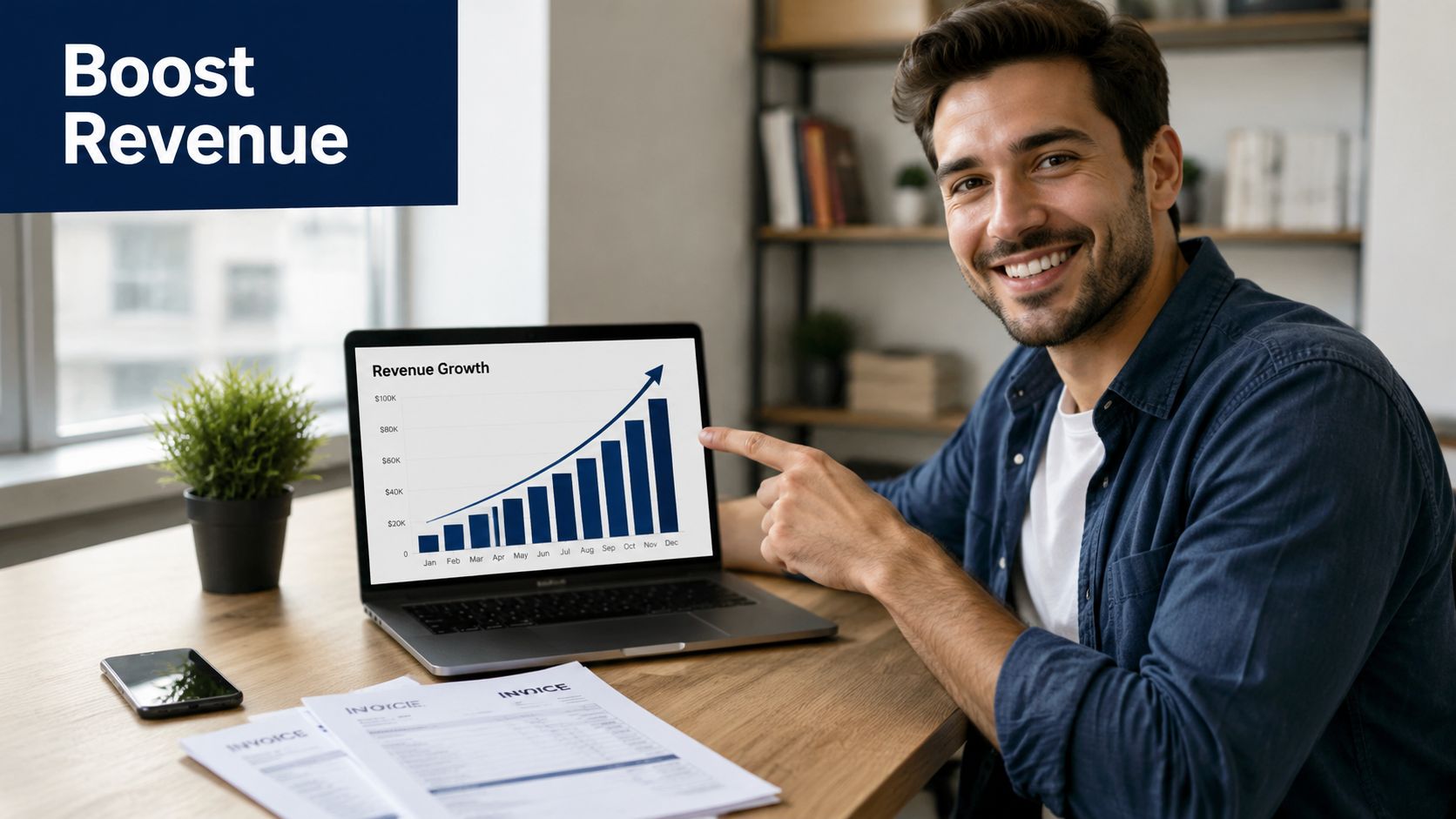
Some buyers don't care about reclaiming time. They care about turning outreach into signed work. For them, the stronger unique value proposition examples focus on income, pipeline, and reply quality.
The weak version: “Win more projects with smarter proposals.”
The sharper version: “Turn Upwork outreach into a repeatable revenue channel with targeted proposals, faster responses, and conversion tracking.”
Before and after rewrite
Before: “I write compelling proposals for freelancers.”
After: “I help agencies turn proposal outreach into booked sales conversations by improving targeting, response speed, and follow-up consistency.”
That rewrite does three useful things. It shifts from activity to business outcome, identifies the buyer, and implies a process.
This angle works especially well when the product includes analytics, feedback-based targeting, and continuous follow-up. A tool that learns which projects fit, prioritizes early submission, and tracks reply or conversion patterns can credibly claim it helps build a revenue engine, not just a convenience layer.
- Best fit: Agency owners, growth-minded freelancers, B2B SaaS teams with pipeline goals.
- Upside: Easier to justify budget when the message maps to revenue.
- Trade-off: This UVP falls apart if the buyer can't close. Better leads help, but they don't replace sales skill.
3. UVP 3 The First-Mover Advantage
Speed is a real differentiator when buyers review options in sequence. On marketplaces, early visibility often matters because clients start screening before the posting is old.
A lazy UVP says: “We help you respond quickly.”
A strong one says: “Be first in the client's inbox with personalized proposals and fast replies while competitors are still drafting.”
Why speed works, and when it doesn't
This message wins because it captures a decision pattern buyers recognize. Fast response signals attentiveness. It also gives you more room to shape the conversation before the inbox fills up.
But speed alone is dangerous. Fast and generic is worse than slightly later and clearly relevant. If the proposal reads automated, the first impression turns negative just as quickly.
Being first only helps if your message sounds like it belongs to that project.
That's why the best first-mover UVPs combine timing with relevance. Early submission, quick message replies, and ongoing inbox presence are useful mechanisms. Personalization is the part that keeps the advantage from collapsing.
- Best fit: Competitive Upwork categories, agencies that need constant lead flow, sellers in fast-moving service niches.
- Upside: Easy for buyers to understand and easy for sales teams to operationalize.
- Trade-off: If competitors adopt similar automation, your edge shifts back to targeting and copy quality.
4. UVP 4 The Safety and Compliance-First Choice

Risk-sensitive buyers don't want “more aggressive automation.” They want automation they can trust with their account, reputation, and income stream.
The weak version: “Safe AI for Upwork.”
The better version: “Automate outreach with account safety in mind through human-like behavior, secure access methods, and compliance-focused workflows.”
What makes this UVP believable
This angle only works if the product design supports it. Human-like behavior, clean regional IPs, secure integrations, and not storing passwords all strengthen the claim. Expert involvement also matters. Buyers trust a safety-first message more when the product is built by people who understand the platform environment, not just generic automation.
The important trade-off is that safer systems often avoid the most aggressive tactics. That can make them feel less flashy. In practice, that's usually a feature, not a weakness.
- Best fit: Established freelancers, agencies with meaningful account risk, cautious operators.
- Upside: Removes a major objection before the sales call even starts.
- Trade-off: Skeptical buyers will want specifics. If your UVP says “safe,” your product experience has to prove it.
5. UVP 5 The Learning System for Personalization at Scale
What happens after the first 100 proposals. If your answer is "we keep sending the same style faster," the UVP is too weak.
This angle works when your offer gets sharper with use. For freelancers, that can mean proposals that adapt to the jobs you secure. For agencies, it can mean a repeatable feedback loop across bidders. For B2B SaaS, it usually means the product improves fit based on usage data, not just output volume.
The weak version: “AI writes better proposals.”
The improved version: “A proposal system that learns which projects match your positioning and improves personalization from win-loss feedback.”
The pattern behind high-performing UVPs
A strong UVP in this category needs three parts: who it gets better for, what outcome improves, and what learning mechanism drives the improvement.
CXL's value proposition examples guide is useful here because it pushes teams to connect relevance, value, and differentiation. That matters even without a hard metric. Buyers still need to see a concrete outcome tied to a specific method.
Here's the practical framework I use:
- Input: feedback signals such as wins, skips, edits, client replies, or project type
- Learning loop: the system uses those signals to refine targeting, messaging, or recommendations
- Scaled outcome: personalization improves without forcing the user to rewrite everything manually
That last part matters on Upwork and in B2B sales. Buyers do not pay extra for "personalization" as a slogan. They pay for a system that helps them stay relevant across volume without sounding generic.
A before-and-after rewrite shows the difference.
Before: “Personalized proposals at scale.”
After: “Turn proposal feedback into better-fit outreach, so each round of activity improves how you target, personalize, and qualify opportunities.”
Earlybird AI uses this angle well. The value is not just automation. The stronger promise is that outreach gets more aligned with your target work over time.
There is a real trade-off here. Learning systems rarely look impressive on day one. They become compelling after enough feedback has passed through them. That makes this UVP a poor fit for buyers who expect instant results, and a strong fit for buyers with a niche, a process, and enough volume to benefit from compounding improvements.
- Best fit: Data-driven freelancers, specialized agencies, B2B SaaS teams selling process improvement.
- Upside: Strong retention story. The system can improve fit as usage grows.
- Trade-off: The buyer has to trust the ramp-up period. If they want immediate perfection, lead with a different angle.
6. UVP 6 The Agency and Team Scaling Solution
Individual freelancer messaging rarely works for agencies. Agency buyers think in terms of capacity, coordination, and process control. Your UVP has to reflect that.
A weak agency claim says: “Get more clients with AI proposals.”
A stronger one says: “Scale Upwork outreach across multiple bidders without creating overlap, inconsistency, or management chaos.”
What agencies actually buy
They buy control as much as output. Multi-user workflows, shared analytics, role-based access, and coordination rules all strengthen this proposition because they solve management problems, not just bidding problems.
This is one of the most overlooked unique value proposition examples because founders often lead with features that matter to solo users. Agencies don't care that a tool drafts proposals. They care whether a manager can see performance, prevent duplicate effort, and allocate opportunities to the right person.
Agency UVPs should answer one question fast: “How does this help me scale without adding process mess?”
- Best fit: Small to midsize agencies, teams with multiple Upwork sellers, lead generation managers.
- Upside: Clear business case for operational scale.
- Trade-off: Requires a more mature buyer. Solo freelancers usually won't respond to team-control messaging.
7. UVP 7 The Profile and Market Positioning Optimizer
This angle expands beyond outreach. It positions the offer as a visibility and credibility system, not just a proposal machine.
The weak version: “Optimize your profile for better results.”
The stronger version: “Improve how clients find and evaluate you with profile positioning, competitive insight, and visibility analytics.”
Why this message sticks
A buyer on Upwork doesn't assess you from one touchpoint. They see your proposal, your profile, your niche clarity, and your perceived authority. If your profile is vague, even a good proposal has to work harder.
That makes this UVP valuable because it addresses the whole decision surface. Search visibility, positioning language, category fit, and competitive differentiation all shape whether the buyer sees you as a specialist or just another option. For a useful framework on that piece, Earlybird AI's article on competitive positioning lines up with how strong UVPs strip away claims every rival can also make.
- Best fit: New Upwork sellers, repositioning agencies, specialists moving upmarket.
- Upside: Builds compounding value by improving inbound and outbound performance together.
- Trade-off: Positioning gains usually take longer to show than direct outreach improvements.
8. UVP 8 The Sales Cycle Accelerator
A slow pipeline creates cash flow pressure. That's why some of the best UVPs focus less on lead generation and more on deal velocity.
The weak version: “Stay on top of leads.”
The stronger version: “Shorten the path from project post to booked call with rapid replies and follow-up that doesn't stop after the first message.”
A practical rewrite
Before: “I help freelancers manage client communication.”
After: “I help service teams book discovery calls faster by tightening response time and follow-up across the full outreach cycle.”
The improvement is subtle but important. “Manage communication” sounds administrative. “Book discovery calls faster” sounds commercial.
This angle works when your workflow keeps momentum alive. Fast replies, persistent follow-up, and analytics tied to booking outcomes all support the promise. If your buyers care about speed to conversation, this UVP can outperform broader revenue claims because it names the bottleneck more precisely. A related operational view appears in Earlybird AI's guide to shortening your sales cycle.
- Best fit: Freelancers who need faster deal flow, agencies managing pipeline velocity, sales-led service businesses.
- Upside: Easy to tie to a painful business problem.
- Trade-off: Persistent follow-up has to stay useful. If it feels pushy, the same mechanism can hurt trust.
9. UVP 9 The Single-Client Payback Guarantee
This is the budget-justification angle. It works because it reduces decision complexity. Buyers stop asking, “Should I spend on this?” and start asking, “Can one client reasonably cover it?”
The weak version: “Affordable growth software.”
The better version: “Win one client and the tool pays for itself.”
Why simplicity matters here
This framing is effective because it translates software spend into client economics. It's not trying to be overly complex. It's trying to make the purchase obvious.
Use this angle carefully, though. If the product can't help a buyer create real opportunity, the payback framing feels like a gimmick. The claim is strongest when the tool also provides visibility into proposal activity, lead quality, and conversion behavior so the buyer can connect usage to outcomes.
- Best fit: Budget-conscious freelancers, agency owners approving spend, pragmatic buyers.
- Upside: Strong for purchase decisions because it creates a plain-English business case.
- Trade-off: It can oversimplify value if your audience cares more about brand risk, workflow control, or strategic differentiation.
10. UVP 10 The Dedicated Success Partner Model
Many products sell software. Fewer sell progress. That's why a support-led UVP can work so well in categories where implementation quality determines results.
The weak version: “Expert support included.”
The stronger version: “Get a dedicated success partner who helps you refine targeting, improve messaging, and get more from the system over time.”
Service wrapped around software
This proposition is strong because buyers don't only fear bad tools. They fear stalled adoption. A dedicated success partner lowers that risk. Onboarding gets faster, feedback gets sharper, and teams are more likely to keep improving instead of drifting into shallow usage.
University of Phoenix makes an important point here: strong value propositions should be clear, relevant, compelling, and quantifiable where possible, and one practical test is to create two options and split-test them by showing 50% of the audience one version and 50% the other. That applies directly to support-led messaging. Test whether buyers respond more to “software with automation” or “an always-on sales system plus expert guidance.”
Don't guess which UVP is strongest. Write two versions and test them in market.
- Best fit: Buyers who want guidance, new teams, agencies adopting a new workflow.
- Upside: De-risks implementation and makes the offer feel less disposable.
- Trade-off: Some experienced operators will care more about autonomy than coaching, so this angle won't win every segment.
From Example to Execution Build Your Winning UVP
A great UVP isn't a clever line you paste onto a homepage. It's your sales strategy compressed into a sentence. The strongest unique value proposition examples work because they do three jobs at once. They identify the right buyer, promise a clear outcome, and explain why your method is different enough to matter.
If you're a freelancer, start with the bottleneck clients already feel. Maybe they need faster turnaround on outreach, better-fit proposals, or a safer way to automate repetitive work. If you're an agency, lead with scale and control instead of solo-user convenience. If you're in B2B SaaS, tie the promised result to a mechanism buyers can understand quickly. The message gets stronger when the outcome and the delivery method sit side by side.
A simple drafting framework works well:
- Audience: Who is this for?
- Problem: What frustrating or expensive issue are they dealing with?
- Outcome: What practical result do they want?
- Mechanism: How do you deliver that result differently?
That gives you a working formula: “For [audience], we help you [outcome] by [mechanism], without [common pain].”
Here's the mistake to avoid. Don't write your UVP from your feature list. Write it from the buyer's decision. Features support the proposition. They aren't the proposition. “AI-crafted proposals” is a feature. “Stay first in the client's inbox without babysitting job feeds” is a value proposition.
Good UVPs also need pressure testing. Strip out any phrase a competitor could copy without changing a word. Compare your message against several alternatives in your market and remove whatever isn't distinct. Then test two versions in the world. Put one in your profile headline, another in your landing page hero, and watch which one drives better conversations. Clarity usually beats cleverness.
The final standard is simple. A buyer should hear your message and think, “That's exactly what I need.” Not “That sounds nice.” Not “That seems professional.” A real UVP makes the next step easier because it removes uncertainty.
Choose one angle from the examples above. Rewrite it for your niche. Tighten it until every word earns its place. Then put it in front of actual buyers and let the market judge it.
If you want a UVP that doesn't just sound good but helps you win more Upwork work, Earlybird AI is built around the outcomes buyers care about: faster outreach, personalized proposals, quick replies, safer automation, and a workflow that keeps improving through feedback. It's a strong fit for freelancers and agencies that want an always-on sales system instead of another manual task list.