
← Back To Blog
Upwork How To Hire: Attract Top Talent

You are probably staring at the same problem most hiring managers hit on Upwork.
You need someone good, soon. Not someone who can technically do the task, but someone who can understand the brief, communicate clearly, hit deadlines, and avoid turning a simple project into a messy management job.
That is where most Upwork hires go wrong. The platform is not the issue. The process is. Clients rush the brief, post vague jobs, skim proposals, and then act surprised when they attract generic applicants and get generic work back.
Used well, Upwork is a strong hiring channel. Upwork reports an average client rating of 4.95 out of 5 stars across its marketplace, which is a strong trust signal at scale and one reason many teams treat it as a reliable option for finding freelance talent (Upwork hiring guidance). But that result does not come from posting “Need expert ASAP” and hoping the right person appears.
The playbook that works is more deliberate. Good hiring on Upwork starts before the job post, gets sharper during shortlisting, and only pays off if you manage the first week well enough to turn a one-off project into a dependable working relationship.
Laying the Groundwork for a Successful Hire
A strong Upwork hire starts before you log in.
Most bad outcomes can be traced back to one of three issues: fuzzy scope, unrealistic budget, or no shared definition of success. If you fix those first, the rest of the process gets easier.

Define the problem before the role
Do not begin with “I need a designer” or “I need a developer.”
Begin with the business outcome. Are you trying to launch a landing page, clean up a CRM, produce ad creative, or rebuild a reporting workflow? A freelancer can only price and plan accurately if the problem is concrete.
A practical brief should answer these questions:
- What needs to be delivered: Name the final asset, not just the function.
- What exists already: Brand files, access, past drafts, current stack, internal notes.
- What constraints matter: Deadline, approval chain, tool preferences, compliance limits.
- What success looks like: Faster turnaround, cleaner design system, fewer revisions, better handoff documentation.
If you are still deciding what you want, hire for discovery first. That means a short paid consultation, audit, or prototype. It is much cheaper than pretending the scope is clear when it is not.
For teams new to the platform, this overview of how Upwork works is useful context before you build the brief.
Scope tightly enough to prevent drift
Scope creep usually starts with a sentence that sounds harmless. “We may also need help with a few related items.”
That line tells strong freelancers one thing. This project may expand without structure.
Instead, split the work into phases:
- Phase one is the smallest meaningful outcome.
- Phase two is optional expansion.
- Phase three covers ongoing support or optimization.
That framing does two things. It makes pricing easier, and it protects the relationship. Good freelancers do not mind additional work. They mind undefined work.
Write the brief so a stranger could repeat the assignment back to you accurately. If they cannot, the brief is not done.
Choose a pricing model that matches the work
Hourly contracts work best when the scope will evolve, the work is collaborative, or you need ongoing support.
Fixed-price contracts work best when the deliverables are clear, approvals are defined, and milestones can be reviewed cleanly.
A simple rule helps:
- Use hourly for research, iteration, consulting, support, and open-ended execution.
- Use fixed-price for assets, pages, audits, migrations, and projects with a clear endpoint.
The mistake is not choosing one over the other. The mistake is using fixed-price for vague work or hourly for work you never plan to review closely.
Set success metrics before hiring
Many clients wait until the project is late to decide what “good” means.
Set those standards early. They do not need to be complicated. They need to be visible.
Good examples include:
- Delivery standard: Files are handed off in named folders and final formats.
- Communication standard: Replies within the agreed window, blockers flagged early.
- Quality standard: Work meets brand guidelines, acceptance criteria, and revision policy.
- Timeline standard: Milestones have dates and review owners.
That gives you something better than instinct. It gives you a baseline for hiring, onboarding, and feedback.
Writing a Job Post That Attracts Top Talent
Most weak job posts read like procurement forms.
They list software, years of experience, and a pile of tasks. Then they wonder why the best applicants skip them while low-effort proposals flood in.
Top freelancers do not just choose projects. They choose clients. Your job post has to show that you know what you want, how you work, and why the project is worth their time.
The weak version
A generic post sounds like this:
- Need experienced UX designer
- Must know Figma
- Need wireframes and final design
- Good communication required
- Start immediately
That post creates three problems. It tells experts nothing about the business context, nothing about the decision criteria, and nothing about what kind of client they will be working with.
The stronger version
A better post gives a candidate enough detail to decide whether they should care.
It might say you are redesigning a SaaS onboarding flow, the current friction point is activation drop-off, the first deliverable is a lightweight audit plus revised wireframes for three screens, and you want someone who can explain design choices in plain language to a non-design stakeholder.
That attracts a different type of freelancer. The person who has solved similar problems will recognize the assignment immediately. The person sending copy-paste bids will not.
What to include in the post
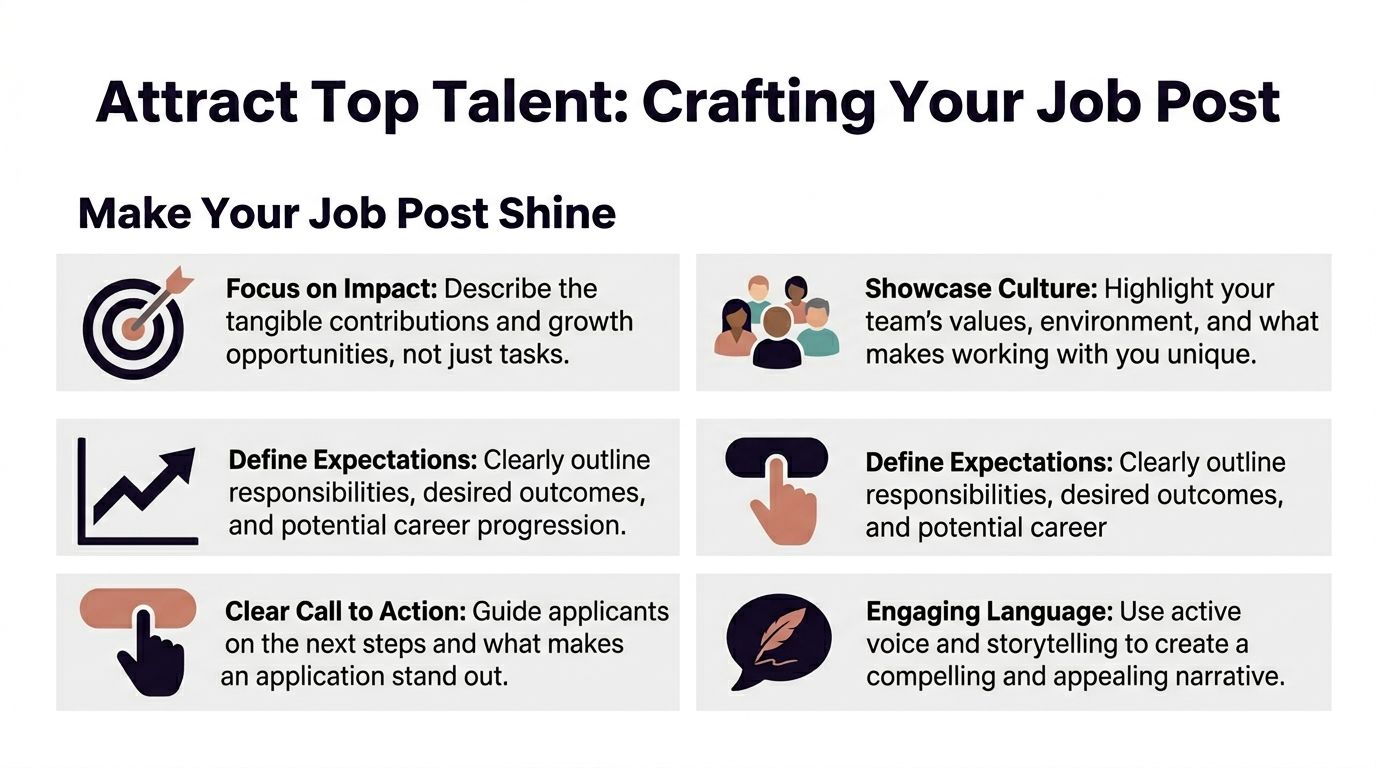
A good Upwork job post usually has five parts:
- A specific title: “UX designer for onboarding flow audit and wireframes” beats “Need designer.”
- Context: Explain the business, product, team, and current issue.
- Deliverables: Name what the freelancer will produce.
- Working style: Mention communication cadence, tools, and stakeholder setup.
- Screening prompts: Ask a few questions that require thought, not yes or no answers.
Screening questions matter more than most clients realize. Ask questions that expose process, not polished self-promotion.
Good examples:
- What would you want to review before starting?
- How would you approach this if the first version had to ship quickly?
- Show one similar project and explain what you changed and why.
Those questions make templated proposals easier to spot.
The best job posts do not try to sound impressive. They make the work legible.
A template worth adapting
Project overview
We are a small team improving an existing product, not starting from zero. We need help with [specific project].
Current situation
We already have [assets, stack, brand docs, prior work]. The main issue is [problem].
What we need
The first phase includes [deliverables]. If the work goes well, we may expand into [clearly defined next phase].
What a strong fit looks like
You have done similar work, explain decisions clearly, and can work within existing constraints instead of forcing a full rebuild.
To apply
Please answer these questions:
- What would you review first?
- Which similar project in your portfolio is most relevant?
- What risk or unknown would you want clarified before starting?
One more thing matters here. Do not hide the rough edges. If stakeholders are busy, if brand assets are incomplete, or if the first milestone needs to move quickly, say so. Experienced freelancers appreciate honesty more than polished vagueness.
Sourcing and Shortlisting Your Best Candidates
Once proposals start arriving, speed matters. So does restraint.
The worst move is reading all proposals with the same attention. You do not need a long list. You need a sharp shortlist.
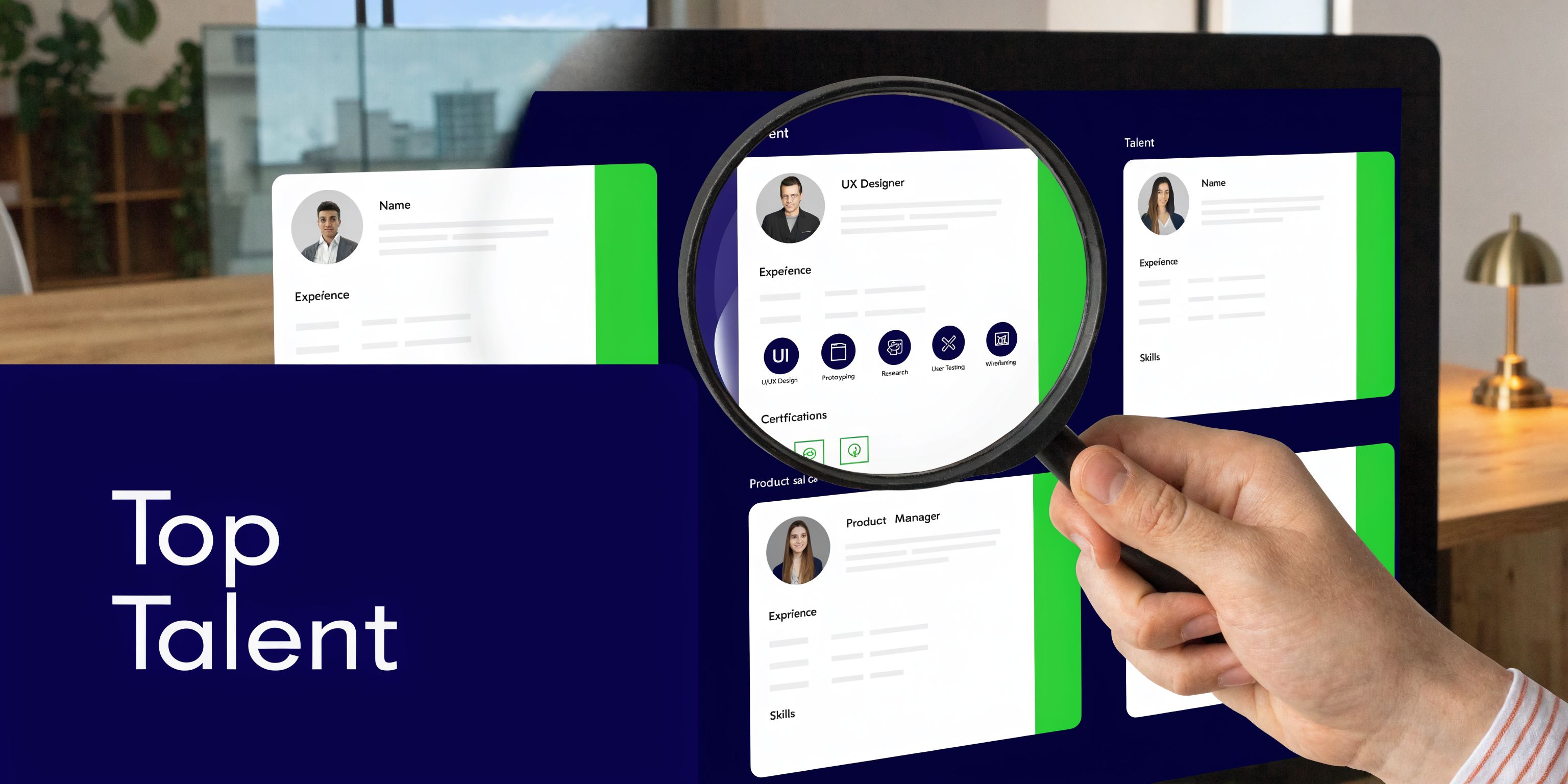
Read proposals for signal, not charm
Most proposals can be filtered fast.
A strong proposal usually does three things in the opening lines. It reflects your project, shows the freelancer understands the likely challenge, and makes a practical suggestion or asks a smart question.
A weak one usually does the opposite. It starts with “Dear client,” lists broad experience, and asks for a call before proving relevance.
Look for signs of real engagement:
- Specificity: They reference your workflow, deliverables, or constraints.
- Judgment: They identify a likely risk, trade-off, or missing input.
- Communication: They write clearly without overexplaining.
- Relevance: Their examples match your project type, not just their category.
Writing quality is a serious signal. Upwork notes that many agencies use a structured process to hire, including shortlisting through profiles and Job Success Score badges, targeting Top Rated Plus, and using scorecards that emphasize writing clarity over pure technical ability (Upwork recruitment effectiveness guidance).
That aligns with what works in practice. Strong freelancers make complex work easier to manage because they communicate well.
Use a scorecard before instinct takes over
A scorecard keeps you from falling for polished profiles that do not fit the assignment.
Keep it simple. Rate each shortlisted candidate on a few criteria such as:
- Relevant portfolio fit
- Proposal quality
- Clarity in written communication
- Signs of reliability
- Ability to work within your constraints
If you hire often, build your own recurring checklist. This guide on building a strong portfolio in Upwork is a useful companion when you are deciding what portfolio evidence should carry the most weight.
Read feedback like a hiring manager
Do not just glance at star ratings and move on.
Read the comments for patterns. A freelancer can have strong overall feedback and still be wrong for your setup. One client may praise speed while another hints at poor attention to detail. Those are not contradictions. They are context.
Green flags include repeated comments about responsiveness, clarity, and smooth delivery. Caution signs include reviews that sound polite but thin, or profiles packed with work that looks broad but shallow.
Later in the process, this quick video is useful if you want another perspective on evaluating talent on the platform.
Invite selectively
If you want better applicants, do not rely only on inbound proposals.
Use search filters, review badges, and invite a small set of freelancers who match the work. A narrow invite list usually performs better than casting too wide a net. It produces better conversations and less noise.
Shortlists improve when you reject fast. The longer a weak candidate stays in the maybe pile, the more likely you are to rationalize them into the final round.
Interviewing, Testing, and Making the Offer
By this stage, you should have a handful of plausible candidates, not a dozen maybes.
The final evaluation should answer one question. Can this person do the work in a way that is easy to manage?

Keep interviews short and operational
A long interview rarely gives better signal. A short one often does.
For most Upwork roles, a brief video call is enough to assess communication, preparation, and judgment. Focus on how the candidate thinks, not how well they perform confidence.
Useful questions include:
- What would you do in the first few days of this project?
- What part of this brief would you want clarified before starting?
- Tell me about a project where the original scope was off. How did you handle it?
- How do you prefer feedback to be delivered during active work?
Listen for practical answers. Strong freelancers usually ask sharp follow-up questions, identify hidden risks, and explain trade-offs without drama.
Use paid tests carefully
Free test tasks create resentment and bad data.
If you need proof of execution, use a small paid test tied to the actual work. That could be a sample audit, a draft outline, a single page revision, or a limited prototype. Keep it modest and relevant.
Good test tasks have three traits:
- They mirror the actual job
- They fit into a short time window
- They have a clear review standard
This approach respects the freelancer’s time and gives you much better signal than theoretical interview answers.
If a candidate is excellent but your test is abstract, you will learn less about them than you think. Test the actual work, not a puzzle.
Make the offer with precision
Once you choose someone, the offer should remove uncertainty.
Spell out the contract type, first milestone, required access, communication channel, review timing, and what counts as complete. If it is fixed-price, define the first milestone narrowly enough that both sides can confirm a win early. If it is hourly, define what progress reporting looks like.
Before work begins, confirm:
- Deliverables for the first phase
- What the freelancer needs from you
- Who approves the work
- How revisions will be handled
- When the first check-in happens
A clean offer does more than close the hire. It sets the tone for the relationship.
Managing Your Project for a Smooth Delivery
A surprising number of Upwork projects fail after a good hire.
The freelancer was capable. The client was serious. The work still drifted because nobody established a working rhythm.
Post-hire management matters because freelance work moves on trust and clarity. That is one reason larger businesses are committing more substantial budgets through the platform. Upwork reported that in 2025, high-value work contracts worth $1,000 or more grew 31% among large businesses, with flexibility cited by 25% and speed to hire by 23% as key drivers (Upwork monthly hiring report). When companies put bigger projects on Upwork, they still need disciplined management after the contract starts.
Run a proper kickoff
Do not treat kickoff as a formality. A proper kickoff aligns everyone on goals, deliverables, constraints, and communication norms. Even a short project benefits from one clear written onboarding note plus an initial conversation.
That onboarding note should include:
- Project objective
- Files and access
- Stakeholders and approval flow
- Milestones and due dates
- Preferred communication rhythm
If you want a stronger operating model, these client communication best practices are useful for setting expectations early.
Keep communication in one place
Scattered communication creates project risk.
Use Upwork Messages consistently so decisions, approvals, and clarifications stay visible. That helps both sides. The freelancer can reference earlier decisions, and you have a clean record if the work needs review or adjustment.
You do not need constant check-ins. You need predictable ones.
A simple rhythm works well:
- a kickoff note
- a first progress update early
- milestone review comments in one thread
- immediate notice when blockers appear
Approve milestones with standards, not vibes
Clients often slow projects down by reviewing work loosely.
Instead of saying “looks good” or “not quite there,” respond against the acceptance criteria you set at the beginning. Is the file complete? Does it match the requested format? Were the agreed revisions addressed? Was handoff documentation included?
That creates a healthier loop. The freelancer knows how you judge quality, and you avoid endless subjective revisions.
The easiest projects to manage are not the ones with the best freelancer. They are the ones where both sides know what done means.
Build toward the second project
If someone performs well, do not let the relationship reset to zero after delivery.
Good freelancers get booked. If you want continuity, define the next step while the current project is still fresh. That might be a maintenance retainer, a new phase, or a small monthly block for ongoing support.
Long-term value on Upwork comes from reducing re-hiring friction. The first successful engagement is only the entry point.
Frequently Asked Questions About Hiring on Upwork
A lot of Upwork hires go wrong after the shortlist looks promising. The proposals sound sharp, the profiles look strong, and then the project stalls because the contract type was wrong, the test was poorly designed, or small scope changes never got priced. These are the questions that usually decide whether you get a reliable long-term freelancer or an expensive reset.
Should I use hourly or fixed-price contracts
Choose the contract based on uncertainty.
Hourly works better when the work depends on feedback loops, changing priorities, or investigation. Strategy work, ongoing design support, and development tasks with unknowns usually fit here.
Fixed-price works better when you can define the output, review it against clear criteria, and approve in stages. If the project could go either way, start with a paid discovery milestone. That gives both sides a low-risk way to test speed, judgment, and communication before committing further.
How many freelancers should I interview
Usually three to five is enough.
If you feel the need to interview eight or ten people, the problem is often upstream. The brief may be too vague, or the shortlist may be too loose. A disciplined hiring process on Upwork narrows hard before interviews, then uses the call to confirm fit, not to rescue weak sourcing.
What if a proposal looks great but the portfolio feels generic
Treat that as a warning sign.
Strong freelancers usually show relevant work, not just polished work. A beautiful portfolio in the wrong category does not reduce your project risk. Ask for one example close to your use case, plus a short explanation of what they owned in that project. If the answer stays vague, pass.
Are badges and profile metrics enough to make a decision
They help with filtering. They should not make the hire for you.
Use profile signals to narrow the field:
- badges, earnings history, and Job Success Score can show consistency
- proposal quality, project questions, and interview answers show how this person will handle your work
I have hired freelancers with impressive profile metrics who were poor fits for the job in front of them. I have also hired lower-profile specialists who outperformed because they understood the brief, flagged trade-offs early, and delivered clean handoffs.
Should I ask for a test task
Sometimes yes.
Use a paid test when the role depends on judgment you cannot verify from past work alone. Good examples include copywriting for a new brand voice, UI work inside a complex product, or technical research where the process matters as much as the output.
Skip the test if the portfolio already proves the skill and the interview confirms how they think. A weak test wastes time for both sides. A paid, narrow, real-world task gives you useful evidence.
What if the freelancer starts strong and then slips
Address the change as soon as you can point to something concrete.
Name the missed expectation, explain the business impact, and ask what changed. That conversation tells you a lot. Strong freelancers usually respond with context, a correction plan, and better communication. If the pattern continues, reduce the scope, tighten approvals, or end the contract before a manageable issue turns into a messy one.
How do I avoid scope creep without damaging the relationship
The cleanest way is to separate revision from expansion.
A revision improves agreed work. Expansion adds a new deliverable, a new use case, or a new round of effort. Put that distinction in writing early. If new requests appear, acknowledge them, define the added work, and convert it into a new milestone or an updated contract.
That protects the relationship because you are not arguing about effort after the work is underway. You are making a clear commercial decision together.
Is Upwork good for long-term hires or just one-off tasks
It is good for both. The hiring approach should change based on the goal.
For one-off work, speed matters. For long-term hires, proof matters more. Start with a narrow paid assignment that reflects the desired working relationship you want. Then evaluate four things: quality, reliability, communication, and how the freelancer handles ambiguity.
Many of the strongest Upwork relationships start small and expand fast after trust is earned. That is how you reduce hiring risk without missing out on top talent.
If your team wants to win more on Upwork from the other side of the market, Earlybird AI helps freelancers and agencies automate proposal outreach, reply faster, and manage Upwork activity with more consistency. For teams building a serious Upwork motion, it can reduce manual bidding work and support a more disciplined pipeline.